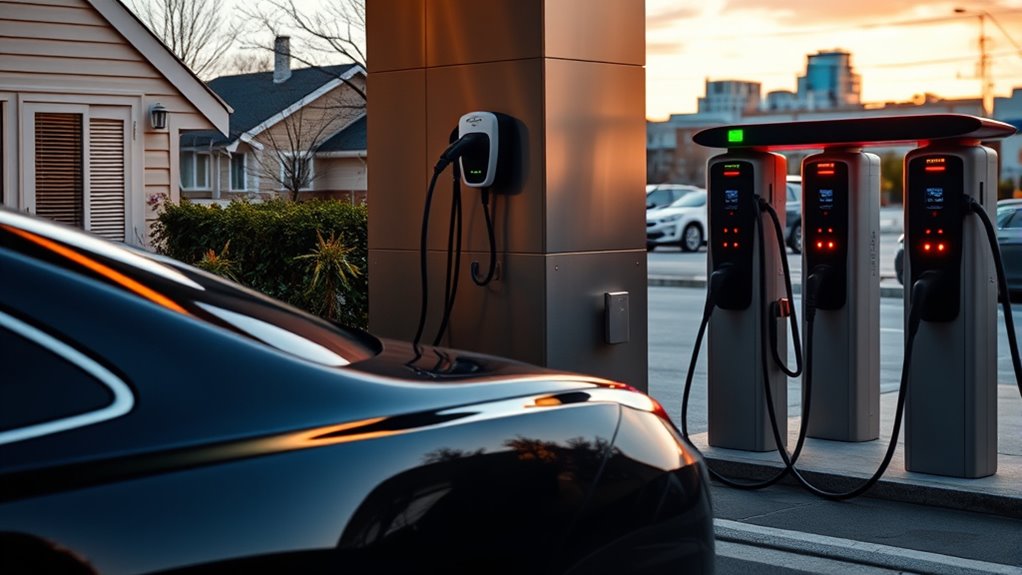

For ideal EV battery health and convenience, charging at home is best because it allows slow, routine charging and keeps costs low. Work charging provides a helpful boost during the day, especially if you lack a home charger. Public chargers are ideal for long trips or emergencies, but frequent use can accelerate battery wear. Balancing these options based on your habits helps extend your vehicle’s lifespan—continue to explore how to make the most of your charging choices.
Key Takeaways
- Home charging is most cost-effective, convenient, and best for battery health due to slow, routine charging.
- Work charging offers convenient daytime top-ups, reducing reliance on public stations and fast charging.
- Public charging is essential for long trips or when home/work infrastructure isn’t available but may accelerate battery wear.
- Balancing slow home/work charging with occasional public fast charging optimizes battery longevity and vehicle readiness.
- Dedicated home chargers are ideal for long-term battery health, while public chargers are best reserved for emergencies or travel.

Charging your electric vehicle involves more than just plugging in; it’s about choosing the right option for your lifestyle. You need to contemplate where you spend most of your time and how that impacts your vehicle’s battery longevity. The way you charge can influence the health of your battery over the long term, so it’s worth thinking about your charging habits. For instance, frequent fast charging from public stations might be convenient, but it can accelerate battery degradation if used regularly. On the other hand, slower charging at home or work typically helps preserve your battery, making it last longer and perform better over time.
Charging habits impact your EV’s battery health; slow home charging extends battery life.
The charging infrastructure available to you plays a significant role in this decision. If your home has a dedicated charging station, you can plug in overnight, which is ideal for maintaining a healthy battery and ensuring you always start the day with a full charge. This setup is usually the most cost-effective and convenient, especially if you have a garage or dedicated parking spot. When you rely on work chargers, you get the benefit of topping off your vehicle during the day, especially if you spend many hours at a single location. This can help you avoid the need for public charging stops and reduce the number of fast charges, which are less gentle on your battery.
Public charging stations are essential for longer trips or if your daily routine doesn’t include a place to charge at home or work. While they offer great flexibility, they often lack the same infrastructure support as home charging. Public chargers tend to be faster, which is helpful when you’re in a hurry, but frequent use of these quick chargers can impact your battery’s health over time. Plus, public charging can sometimes be less reliable or more expensive, depending on the provider and location.
Ultimately, the best way to charge your EV balances convenience, cost, and battery longevity. If you have the option, charging at home is usually the best for maintaining your battery’s health and ensuring your vehicle is ready when you need it. When home charging isn’t available, work chargers serve as a great supplement, especially if they’re located conveniently. Public charging should be reserved for trips or emergencies, not daily needs. By understanding your routine and the charging infrastructure around you, you can make smarter choices that extend your EV’s lifespan and fit your lifestyle seamlessly. Additionally, understanding the different types of charging options can help optimize your charging habits to preserve battery health over time.
Frequently Asked Questions
How Do Charging Costs Compare Across Different Locations?
Charging costs vary depending on the location due to electricity rate variations and charging station accessibility. At home, you typically pay lower rates, making it more economical. Work charging stations often offer free or discounted rates, while public stations can be more expensive, especially fast chargers. To save, consider your access to different stations and compare electricity rates, as these factors directly impact your charging expenses across locations.
Are There Safety Concerns With Public Chargers?
Sure, public chargers are generally safe, right? Well, don’t forget safety protocols exist for a reason—like reducing vandalism risks and ensuring proper use. Irony’s on your side here: you might worry about safety, but neglecting protocols could lead to more hazards. Always pay attention to posted guidelines, keep valuables out of sight, and choose well-lit stations. That way, you can charge confidently without inviting trouble.
Can I Charge My EV Overnight at Work?
Yes, you can charge your EV overnight at work if your workplace offers amenities like dedicated charging stations, making overnight convenience feasible. Check with your employer to see if they provide accessible charging options and guarantee the stations are reliable and safe. This way, you maximize your vehicle’s range and save time, turning your work hours into an efficient charging period without needing to visit public chargers or rely solely on home charging.
What Are the Charging Speed Differences Between Locations?
Charging speeds vary like a race car on different tracks. At home, you often have Level 1 or 2 chargers with lower power transfer rates, taking several hours. Work and public charging stations typically offer faster DC fast chargers, providing high power transfer rates that can top up your EV in 30 minutes or less. The type of charging station determines how quickly your vehicle gets back on the road.
How Do Weather Conditions Affect Public Charging Stations?
Weather impact can considerably affect public charging stations, causing issues like freezing connectors or overheating components during extreme temperatures. Cold weather might slow charging speeds and reduce station reliability, while heat can lead to equipment malfunctions. Rain or snow can also cause accessibility problems, making it harder to find a reliable station. To avoid surprises, check station conditions beforehand and plan your charging around weather forecasts to guarantee consistent, reliable charging.
Conclusion
Choosing the right charging method is like picking the perfect tool for a job—you want what suits your needs best. Home charging offers convenience, work charging saves time, and public stations provide flexibility. By understanding your daily routine, you can blend these options seamlessly. Think of it as crafting a balanced playlist—each method plays its part, creating a smooth, hassle-free EV experience that keeps you moving effortlessly.