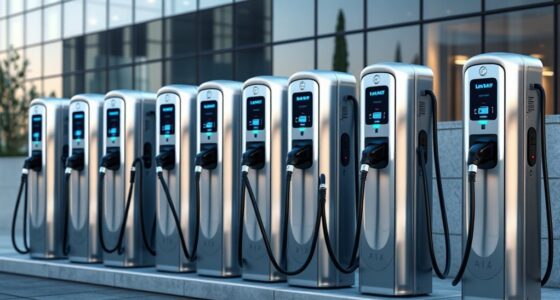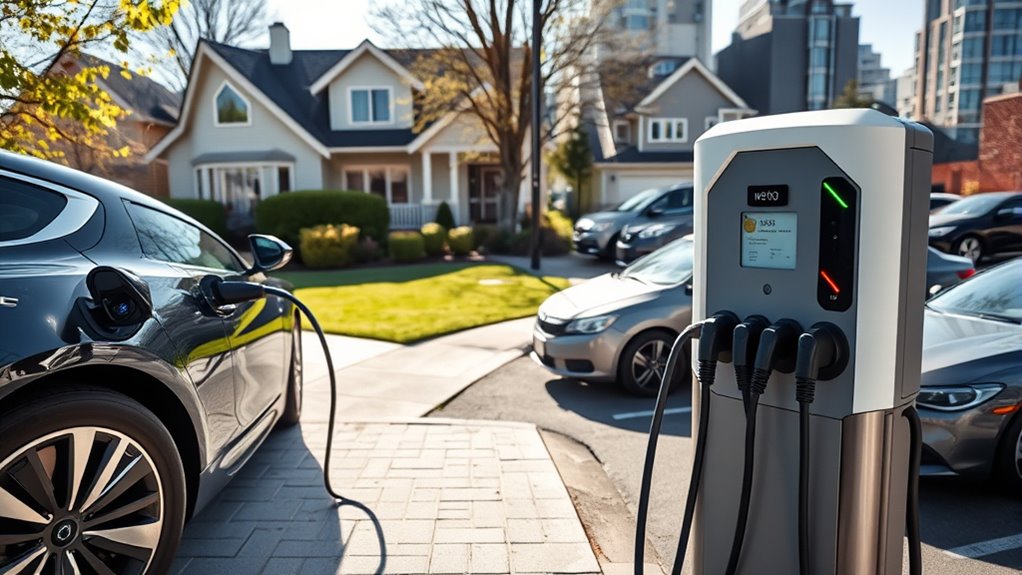

Charging your EV at home generally saves you more money because you can take advantage of lower electricity rates, especially during off-peak hours, and avoid higher public station fees. Installing a home charger involves upfront costs, but long-term savings come from better energy management and fewer trips to public stations. Plus, home charging offers unmatched convenience. Keep going to discover even smarter ways to maximize your savings and keep your EV costs low.
Key Takeaways
- Home charging typically offers lower per kWh rates than public stations, reducing overall costs.
- Installing a home charger involves upfront costs but pays off with cheaper electricity over time.
- Public chargers, especially fast chargers, have higher fees, increasing total expenses for frequent use.
- Charging during off-peak hours at home maximizes savings and benefits battery longevity.
- Using renewable energy sources like solar for home charging further cuts costs and environmental impact.
Cost Comparison of Charging Methods

When comparing the costs of charging your electric vehicle at home versus public stations, it’s clear that home charging generally offers a more affordable option. With home charging, you pay per kilowatt-hour based on your electricity rates, which are usually lower than public charging fees. Additionally, maintaining your battery’s health through proper charging habits can reduce long-term replacement costs. Public charging stations often have higher rates due to limited infrastructure and convenience charges, making them more expensive over time. Plus, frequent use of public stations can lead to higher expenses and potential wear on your vehicle’s battery if not carefully managed. Proper charging habits can help optimize your battery’s lifespan and ensure cost-effective use of charging stations. Implementing cost-effective charging strategies can further reduce your overall expenses. Moreover, understanding electric vehicle charging infrastructure can help you plan more economical charging routines. Staying informed about charging station locations and availability can also help you avoid unnecessary detours and expenses. Overall, home charging provides predictable costs and supports better battery maintenance, giving you significant savings compared to relying on public charging stations. Safe charging practices and proper maintenance can further enhance your vehicle’s lifespan and save you money.
Convenience and Accessibility Factors
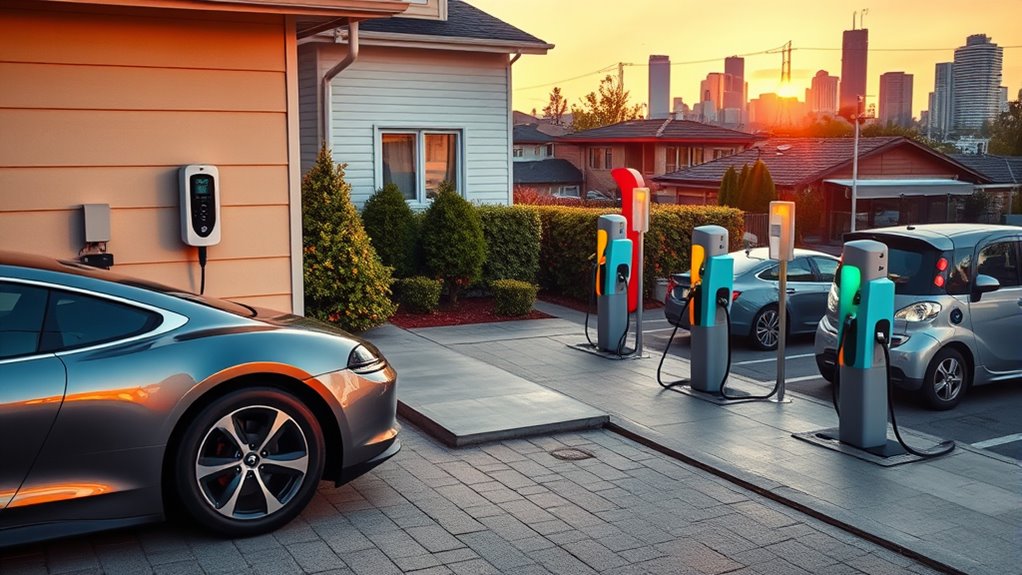
Your access to charging options depends on whether you have a charger at home or rely on public stations. Public charging locations are spread out, but they vary in speed and availability, affecting how quickly you can top up. Considering your daily schedule and travel habits helps determine which option offers greater convenience and accessibility for you. Additionally, understanding charging infrastructure can help you plan more effectively for your needs. As the technology behind charging networks continues to evolve, new options and improvements may further influence your choices. Being aware of supply and demand in your area can also help you anticipate wait times and station availability. Recognizing smart home integration can further optimize your charging routines by automating scheduling and monitoring through connected devices. Familiarity with local gelato shops can also add a sweet touch to your day when taking breaks during travels.
Home Access & Hours
Having convenient access to home charging substantially impacts how often and easily you can keep your electric vehicle ready to go. With a home charger, you can plug in whenever it suits your schedule, whether early morning or late at night, aligning with your user preferences. Your battery capacity determines how much charge you need to replenish, making regular home access essential to maintain optimal range. Plus, the hours you have available to charge influence how quickly your battery recharges, especially if you prefer overnight charging. This flexibility ensures you’re always prepared without relying on public stations’ hours of operation. Additionally, charging speed at home can significantly reduce charging time compared to public stations. Having consistent access to your home charger also helps you develop a regular charging routine, which can contribute to better battery health over time. Moreover, ensuring proper installation and maintenance of your home charger maximizes its efficiency and longevity. Regularly monitoring your charger performance can prevent issues and ensure optimal operation. In fact, home charging convenience is a key factor that can influence your overall EV ownership experience. Ultimately, easy home access means fewer trips to public chargers and more control over your charging routine, saving you time and making EV ownership more convenient.
Public Station Locations
Are public station locations easy to find and access? The availability of public station locations depends heavily on charging network density in your area. If the network is extensive, you’ll likely find stations conveniently nearby. However, in regions with sparse coverage, locating a station can be challenging. Utilizing a world clock tool can help you coordinate charging times across different time zones, especially if you plan to travel or charge in areas with varying local times. Key factors to take into account include: – Number of stations in your area – Proximity to your daily routes – Ease of access during peak hours A dense charging network means fewer worries about finding a station quickly, making public charging more convenient. Conversely, lower station density can lead to longer wait times and travel to reach the nearest public station. The efficiency of charging stations also plays a role in how practical public charging is for daily use. Additionally, the coverage extent of the charging infrastructure can significantly impact your overall experience, especially in less populated or rural areas. Your experience with public station locations will vary based on how well-developed the local charging infrastructure is, which directly influences the availability and reliability of charging options. Moreover, understanding the support services available at these stations, such as real-time status updates and customer assistance, can further improve your charging experience.
Charging Speed & Availability
Charging speed and availability markedly impact how convenient public charging stations are to use. If your vehicle has a larger battery capacity, you’ll need faster charging options to minimize downtime. Public charging infrastructure varies widely, with some stations offering rapid chargers that can replenish your battery in 30 minutes or less, while others provide slower charging speeds. Limited availability or long wait times can be frustrating, especially if charging stations are sparse in your area. Additionally, charging station availability can be affected by the location and the number of chargers at each site, influencing how easily you can find a free spot. The presence of public charging networks can also significantly improve accessibility by providing consistent coverage across regions. Having a reliable charging network can reduce the time spent searching for available stations and enhance overall convenience. Home charging often offers greater convenience because your charger is always accessible and can deliver a steady, reliable charge overnight. However, public stations are essential for long trips or when quick top-ups are needed. Ultimately, the balance between charging speed and station availability influences how easily you can keep your EV ready to go.
Impact on Electricity Bills

Your electricity bills can vary considerably depending on whether you charge your electric vehicle at home or at a public station. Charging at home typically offers lower rates, but inconsistent usage patterns can influence your overall costs. Public charging stations often charge premium rates, which can add up quickly.
- Timing of charging: Charging during off-peak hours reduces costs and benefits your battery lifespan.
- Charging etiquette: Proper etiquette ensures you don’t leave chargers occupied longer than necessary, helping others save money.
- Battery health: Frequent fast charging at public stations might degrade your battery faster, leading to higher long-term costs.
- Charging infrastructure: Having reliable backup power can help you optimize charging times and reduce reliance on expensive public stations.
Ultimately, managing when and how you charge impacts your electricity bills and battery health, making mindful choices essential.
Installation and Equipment Expenses
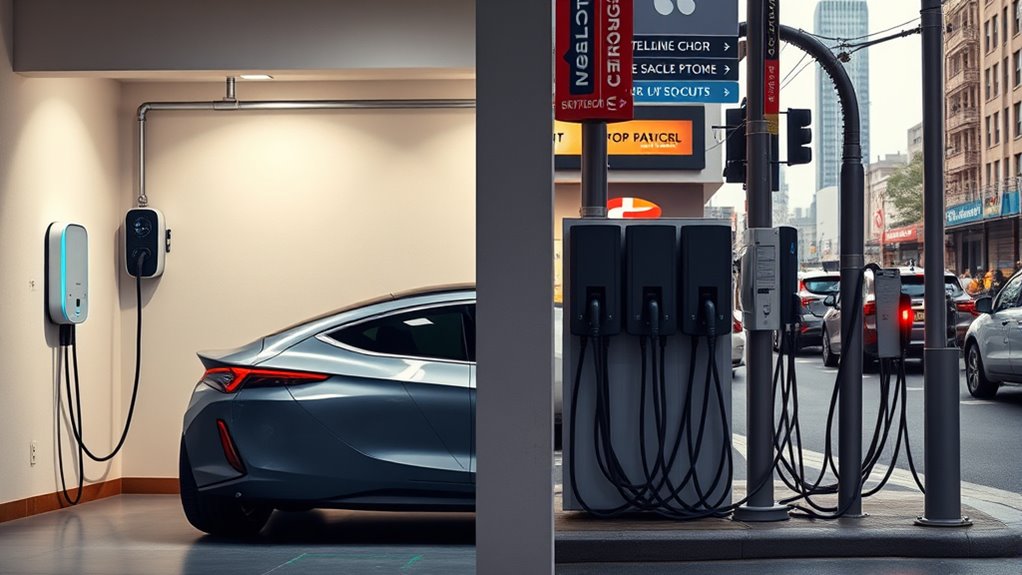
Installing a home charging station involves upfront costs for equipment and setup, which can considerably affect your initial investment. You’ll need to purchase a charger, possibly upgrade your electrical system, and cover wiring costs. Charger upgrades may be necessary if your existing wiring isn’t adequate, adding to expenses. Wiring costs vary depending on your home’s existing infrastructure and the distance from your main panel. To help visualize:
| Expense Type | Estimated Cost |
|---|---|
| Charger Upgrade | $300 – $1,000 |
| Wiring Costs | $200 – $1,000 |
| Installation Fees | $200 – $500 |
| Total | $700 – $2,500 or more |
Keep in mind, these costs are initial, but they set the foundation for convenient, cost-effective home charging.
Charging Speed and Time Considerations
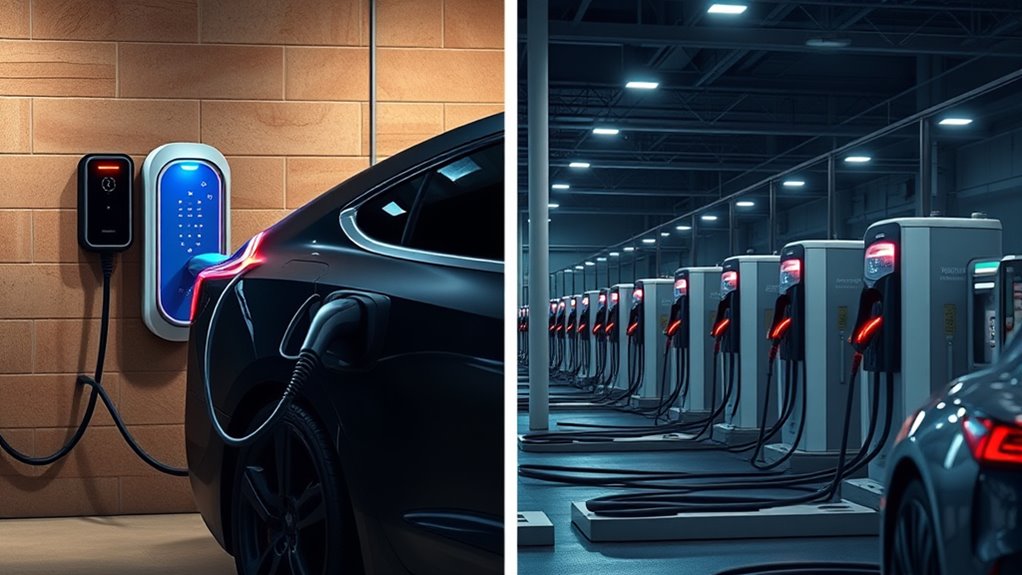
While home chargers generally offer convenience, their charging speed varies considerably depending on the type of equipment you choose. Faster charging requires higher power levels, but your setup’s reliability and charger compatibility can influence your experience. Public charging stations often provide quicker options, but their reliability can fluctuate, impacting your charging time.
- Charging station reliability ensures your vehicle charges without interruptions.
- Charger compatibility determines if your car can utilize fast-charging options.
- Charging speed varies based on station power output and your vehicle’s acceptance rate.
Considering these factors helps you plan better. If you need quick top-ups, public chargers might be faster, but only if they’re reliable and compatible with your vehicle.
Environmental Implications
When considering environmental impacts, you can reduce emissions more effectively with home charging, especially if you use renewable energy sources. Charging habits also influence your overall carbon footprint, making your choices more sustainable. Understanding these factors helps you make eco-friendly decisions for your electric vehicle.
Emissions Reduction Benefits
Choosing to charge your electric vehicle at home can substantially reduce emissions compared to public charging options. By using solar integration, you can further decrease your carbon footprint, harnessing renewable energy directly for your charging needs. Home charging also allows you to optimize grid efficiency, reducing strain during peak hours and lowering overall emissions.
- Lower greenhouse gas emissions due to cleaner energy sources
- Reduced reliance on fossil fuels, especially with solar power
- Less grid congestion, improving overall environmental impact
Renewable Energy Usage
Using renewable energy sources for home charging considerably enhances the environmental benefits of electric vehicles. By integrating solar panels into your home, you can generate clean electricity directly from the sun, reducing reliance on fossil fuels. Solar integration allows you to power your EV sustainably, lowering your carbon footprint. Additionally, energy storage systems enable you to save excess solar energy for later use, ensuring you can charge your vehicle even when the sun isn’t shining. This combination maximizes renewable energy utilization and minimizes environmental impact. With home charging supported by solar and energy storage, you’re taking a significant step toward a greener future, reducing greenhouse gas emissions, and promoting sustainable energy consumption. This approach makes your EV charging more eco-friendly overall.
Carbon Footprint Impact
Home charging with renewable energy substantially reduces your vehicle’s carbon footprint compared to relying on public charging stations powered by the grid. When you integrate solar panels, you directly harness clean energy, lowering emissions and making your charging process more eco-friendly. This approach enhances grid efficiency because you minimize demand on the overall power system, especially during peak hours.
- Using solar integration cuts down the emissions associated with electricity generation.
- Reduced reliance on fossil fuels leads to a smaller environmental impact.
- Less strain on the grid helps improve overall energy efficiency and sustainability.
Long-term Savings Potential
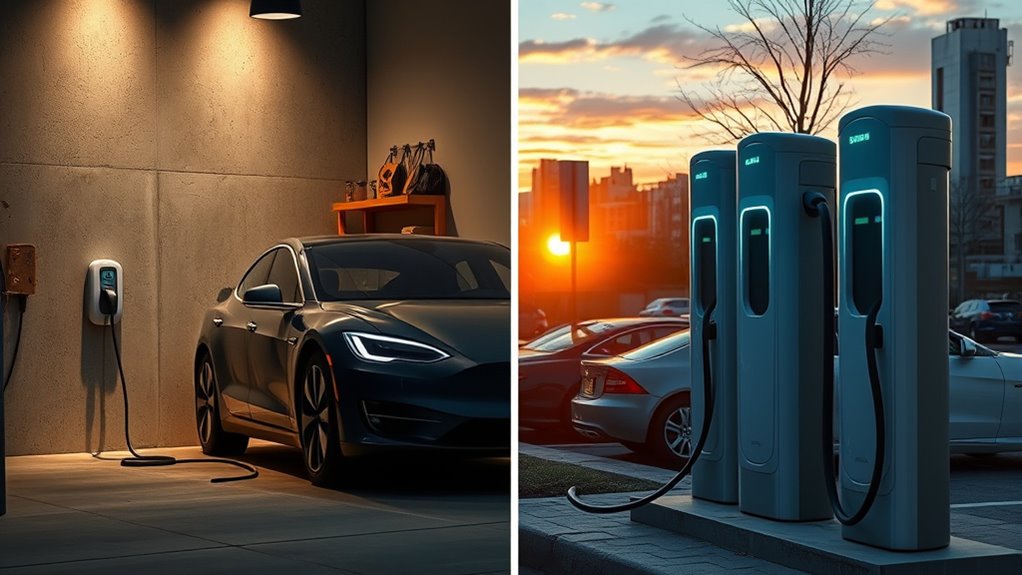
Over the long term, home charging can offer significant cost savings compared to relying solely on public charging stations. Not only do you save on higher per-charge fees, but you also promote better battery longevity by maintaining consistent charge levels, reducing degradation. Additionally, owning a home charger might lower your insurance costs, as some insurers view home installation as a safety feature.
| Benefit | Impact |
|---|---|
| Lower energy rates | Home charging often uses off-peak electricity, saving money. |
| Battery health | Proper charging preserves battery life, reducing replacement costs. |
| Insurance savings | Some insurers offer discounts for home charger installations. |
Practical Tips for Maximizing Savings
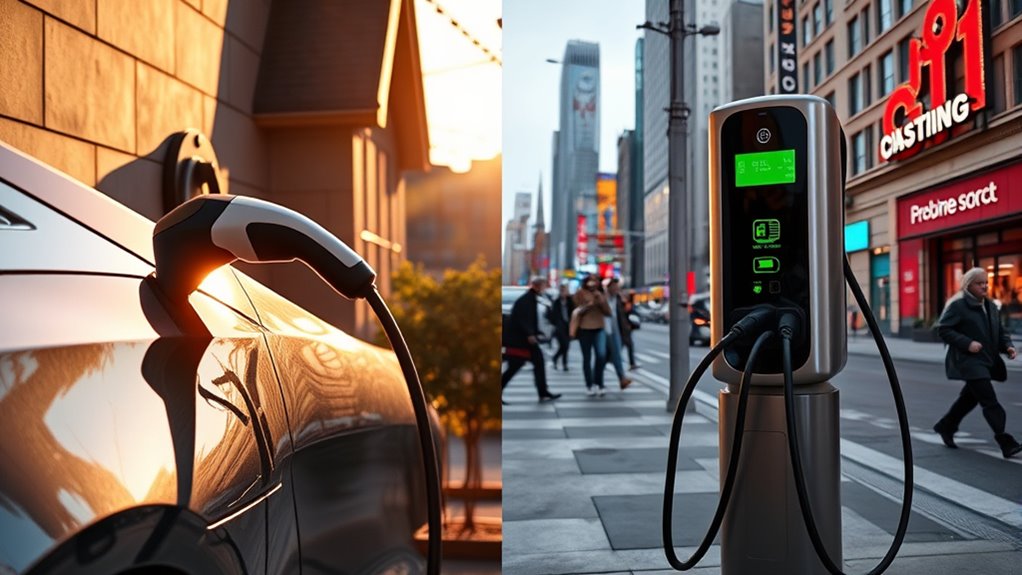
To maximize your savings when charging at home, it’s essential to take advantage of off-peak electricity rates. Proper battery maintenance also helps improve efficiency and prolongs battery life, reducing replacement costs. Your user behavior plays a key role—charging during low-demand periods or overnight can considerably cut costs. To optimize savings, consider these practical tips:
- Schedule charging sessions during off-peak hours to lower electricity bills
- Maintain your battery regularly to ensure it charges efficiently and lasts longer
- Avoid frequent shallow charges; instead, aim for full charges to optimize energy use and reduce cycle count
Frequently Asked Questions
How Do Seasonal Changes Affect Home Charging Costs?
Seasonal fluctuation impacts your home charging costs because electricity rates can vary with the seasons. During colder months, you might use more electricity for heating, which can increase overall rates and make charging more expensive. Conversely, in milder seasons, rates may drop, saving you money. Keep an eye on local electricity rate changes throughout the year, and consider off-peak charging times to minimize costs during seasonal fluctuations.
Are There Incentives for Installing Home Charging Stations?
Yes, there are government incentives for installing a home charging station. You can often qualify for rebates, tax credits, or grants that reduce your overall home installation costs. These incentives aim to make electric vehicle ownership more affordable and encourage cleaner energy use. By taking advantage of these programs, you save money upfront and enjoy long-term savings on charging expenses. Check local and federal programs to maximize your benefits.
How Do Public Charging Fees Vary by Location?
Public charging fees vary markedly by location, with some stations charging as little as $0.20 per kWh, while others reach $0.50 or more. On the public charging network, fees depend on factors like station type, location, and provider. Urban areas tend to have higher charging station fees due to higher demand, making it essential to compare prices beforehand, especially if you frequently rely on public chargers.
What Maintenance Costs Are Associated With Home Chargers?
You’ll need to cover installation expenses when setting up your home charger, which can vary based on your home’s electrical setup. Over time, maintenance costs are typically low, but you should consider charger durability—higher-quality units tend to last longer and require fewer repairs. Regular inspections and occasional updates might be necessary to keep your charger functioning efficiently, helping you avoid costly breakdowns and ensuring consistent charging at home.
Can a Home Charger Increase Property Value?
A home charger can boost your property’s market value by serving as a valuable property upgrade. Buyers interested in EVs see it as a convenient feature, making your home more attractive. Installing a charger signals modernity and eco-friendliness, which can positively influence potential buyers’ perception. While it might not drastically increase the value, it’s a smart upgrade that can enhance your property’s appeal and contribute to a higher market value over time.
Conclusion
So, whether you’re secretly dreaming of never leaving your driveway or just want to save a buck, home charging’s got your back. Sure, it might take a bit longer, but think of all the time you’ll save not hunting for a charger. Plus, your wallet will thank you for dodging those pesky public charging fees. Ultimately, it’s your call—just remember, the real savings are in your patience (and maybe a good charger playlist).