
To prevent frozen charge ports and cables in cold weather, keep the connectors clean and dry, and use protective caps when not charging. Plug in your EV early to allow thermal systems to warm the port, or use portable heaters like block heaters and heated blankets. Parking in a heated garage helps, too. For more tips on winter-proofing your EV charging, explore ways to stay ahead of frigid temperatures and guarantee reliable charging all season.
Key Takeaways
- Cover charge ports with protective caps when not in use to prevent moisture entry and freezing.
- Keep charging stations and connectors clean, dry, and debris-free to reduce ice formation risks.
- Use pre-conditioning and portable heaters to warm the battery and port area before charging in cold weather.
- Plug in your EV early or in heated garages to allow thermal systems to maintain optimal temperature.
- Regularly inspect and maintain charging equipment to ensure moisture doesn’t accumulate and cause freezing issues.

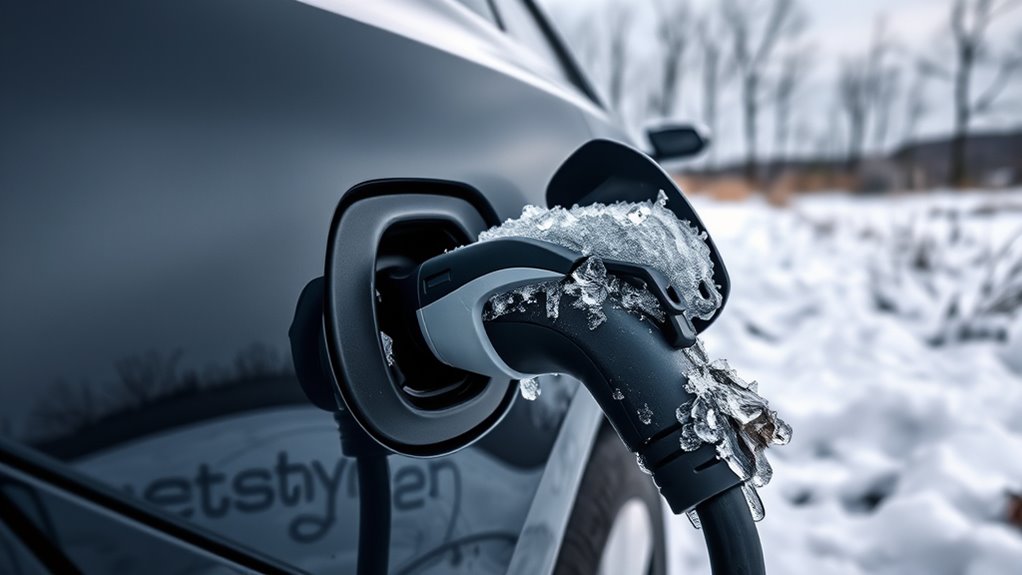
As winter temperatures drop, your electric vehicle’s charge ports and cables become vulnerable to freezing, which can prevent you from charging your car when you need it most. Cold weather causes moisture to accumulate around the charging port and cable connectors, leading to ice formation that blocks proper connection. To prevent this, regular charging station maintenance is essential. Make certain that charging stations are clean, dry, and free of debris, and consider covering the port with a protective cap when not in use. This simple step helps keep moisture out and reduces the risk of freezing. Additionally, inspecting your EV’s charging cable for tears or damage can prevent moisture ingress that could freeze inside the connector.
Battery thermal management plays a critical role in winter resilience. Many electric vehicles are equipped with systems designed to maintain ideal battery temperatures, which also help keep charge ports and internal components warm. When the battery’s temperature is properly managed, it’s less likely that moisture will freeze and cause issues. Some vehicles have pre-conditioning features that warm the battery and port area before charging, which you should activate in cold weather. If your EV lacks this feature, you might need to manually warm the port area with a portable heat source or by parking in a heated garage, if available. Keeping the battery and port components at a stable temperature prevents ice buildup and ensures reliable charging.
In addition to vehicle-specific measures, adapting your charging routines can make a difference. Plugging in your EV early in the day or before a cold snap begins allows the thermal management system to work proactively, reducing the risk of freezing. If you’re caught in extremely cold conditions without access to a heated garage, consider using a portable block heater or a heated blanket designed for automotive use to keep both the port and cable warm. These devices can be plugged in hours before charging, ensuring the connectors stay above freezing temperatures. Utilizing innovative European cloud solutions for remote monitoring of your vehicle’s battery health and charging status can also enhance winter charging reliability.
Frequently Asked Questions
Can I Use a Standard Household Hairdryer to Defrost My EV Charge Port?
Yes, you can use a standard household hairdryer to defrost your EV charge port, but you should prioritize hairdryer safety. Keep the dryer at a safe distance and avoid direct contact with water or wet areas. For alternative defrost methods, gentle warming with a cloth or using a portable heater can work. Always make certain your safety first and avoid using excessive heat that might damage the port.
Are There Any Specific Winter Maintenance Tips for Charging Cables?
Think of your charging cable as a winter traveler needing protection. Store it in a dry, insulated container when not in use, and avoid leaving it exposed to snow and ice. Proper cable insulation keeps moisture out, preventing freezing and damage. Regularly inspect for cracks or wear, so your cable remains a reliable partner against the cold. This simple care guarantees your EV charging experience stays smooth, even in the harshest winter weather.
How Often Should I Inspect My Ev’s Charge Port for Ice Buildup?
You should inspect your EV’s charge port for ice buildup at least once a week during freezing temperatures. Regular inspections help you catch ice accumulation early, preventing potential charging issues. If you notice ice forming, gently remove it with a soft cloth or use a warm, dry cloth to thaw the buildup. Consistent inspection guarantees your charge port stays clear and functional throughout winter, avoiding inconvenient charging disruptions.
What Are the Best Storage Practices for EV Charging Cables in Winter?
Forget the Arctic expedition—your EV cables deserve better winter storage. Wrap your cables in quality insulation, avoiding frostbite, then tuck them into dedicated storage containers that shield from snow and ice. Never toss them in a random corner; treat them like royalty. Proper storage keeps your cables flexible, safe, and ready to charge, so you’re not left stranded in a winter wonderland, cable-less and chilled!
Does Cold Weather Affect the Charging Speed or Efficiency of My EV?
Cold weather can reduce your EV’s charging efficiency because battery temperature drops, causing slower charging speeds. When temperatures are low, your vehicle’s battery management system works harder to warm the battery, which can further impact charging performance. To minimize effects, try pre-conditioning your battery before charging and keep your vehicle in a garage or sheltered spot. Maintaining ideal battery temperature helps improve charging efficiency during winter months.
Conclusion
Think of your EV’s charge port and cable as essential lifelines—without them, your journey stalls. By taking simple precautions, you’re safeguarding these lifelines against winter’s icy grip, ensuring your vehicle remains ready to go. When you protect your EV from freezing, you’re not just avoiding inconvenience; you’re nurturing a resilient connection that keeps you moving forward, no matter how cold the world gets. Stay vigilant, and let your journey thaw winter’s hardships.