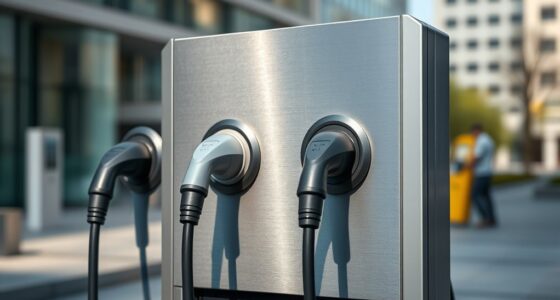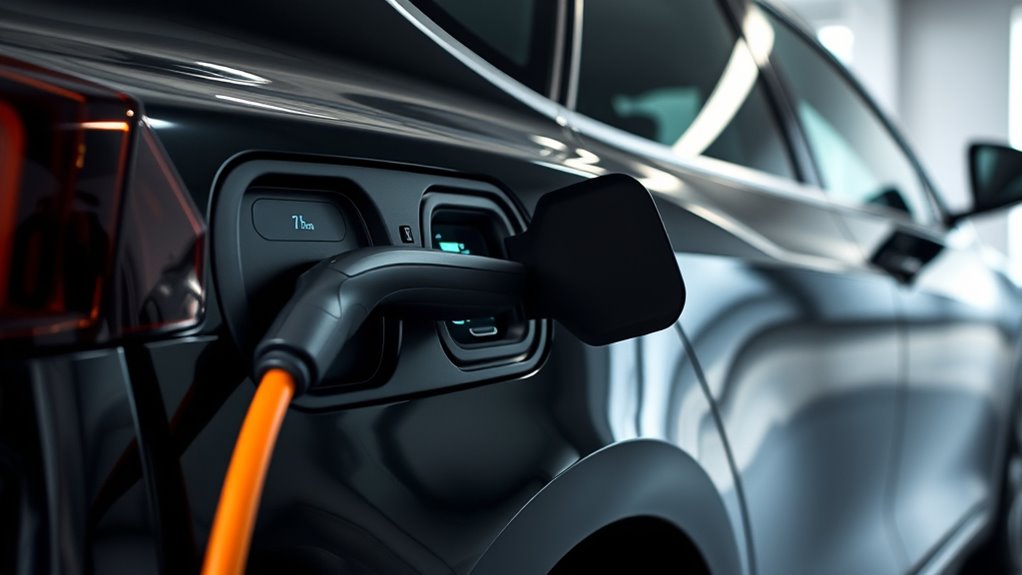

You can leave your EV plugged in for extended periods safely if you follow some key guidelines. Avoid overcharging by unplugging once it reaches 80-90%, and use charging schedules or limits to prevent unnecessary battery stress. Also, guarantee your equipment is well-maintained, and avoid leaving your vehicle in extreme temperatures for long durations. Proper practices help protect your battery’s health and safety. If you keep these tips in mind, you’ll master safe charging habits for long-term use.
Key Takeaways
- Unplug the EV once it reaches the desired charge level, typically 80-90%, to prevent battery stress.
- Use charging schedules or limits to avoid overcharging and reduce heat buildup.
- Regularly inspect cables and connectors for wear or damage before extended parking.
- Avoid leaving the vehicle plugged in in extreme temperatures or during adverse weather conditions.
- Follow manufacturer guidelines and safety standards to ensure safe, healthy charging practices.

Extending the duration of your electric vehicle (EV) charging sessions can be beneficial, but it also requires careful attention to avoid potential issues. When you leave your EV plugged in for longer periods, it’s essential to contemplate how it impacts your battery health and charging safety. Overcharging or leaving the vehicle connected after reaching a full charge can lead to unnecessary stress on the battery, which may degrade its capacity over time. Modern EVs have built-in safeguards to prevent overcharging, but relying solely on these features isn’t enough; you should still be mindful of how long you keep your car plugged in.
Leaving your EV plugged in too long may stress the battery and affect its lifespan.
One key factor to keep in mind is battery health. Continuous charging beyond a full charge can cause the battery to heat up or experience stress, especially if the charging rate is high or the environment is warm. Excessive heat during prolonged charging sessions accelerates battery aging, reducing overall lifespan and performance. To protect your battery’s longevity, it’s a good practice to unplug your EV once it reaches around 80-90% charge, especially if you don’t need a full charge immediately. Some vehicles allow you to set charging limits or schedules, which can help you avoid overcharging without constantly monitoring the process.
Charging safety is equally important when leaving your EV plugged in for extended periods. While most charging stations and EVs are designed with safety features, issues such as faulty connectors or power surges can still occur. If you’re charging at home, ensure that your charging equipment is up to date and properly maintained. Avoid leaving your vehicle unattended for long durations in extreme weather conditions, as temperature fluctuations can increase risk. It’s also wise to periodically inspect the charging cable and port for any signs of wear or damage, which could compromise safety or cause charging interruptions. Additionally, understanding the European cloud infrastructure standards and safety protocols can help ensure your charging environment remains secure and reliable.
Furthermore, consider the environment and your daily routine. If you’re parking your EV for several days, it’s better to unplug it once it’s adequately charged. For daily charging, setting a charging schedule that aligns with your typical departure time can prevent overcharging and reduce the risk of battery stress. Many EVs now come with smart charging features that allow you to automate this process, giving you peace of mind while maintaining ideal battery health and charging safety. Ultimately, extending your charging sessions can be convenient, but staying mindful of how long your vehicle remains plugged in helps preserve battery performance and ensures safe charging practices.

2026 Upgraded Level 1&2 Portable EV Charger, 8-16Amp Adjustable Current & Timer, 110V-240V, NEMA 5-15 & 6-20 Plug, 21Ft EV Charging Cable, J1772 Electric Car Charger for All PHEV/EV Charging Cord
[2026 INTELLIGENT CHARGING UPGRADE — PRECISION CONTROL MEETS SMART SCHEDULING] After surveying 100K+ U.S. EV owners, the Raylix…
As an affiliate, we earn on qualifying purchases.
As an affiliate, we earn on qualifying purchases.
Frequently Asked Questions
Can Leaving My EV Plugged in Drain the Battery?
Leaving your EV plugged in won’t drain the battery or harm it. Modern EVs are designed for battery preservation, managing charge levels to prevent overcharging. When plugged in, the vehicle typically stops charging once the battery reaches a set level, preserving its health. However, regularly leaving it plugged in for extended periods can increase charging cycles, which may slightly impact battery longevity over time. It’s best to unplug when fully charged for ideal battery health.
Is It Safe to Leave My EV Charging Overnight?
Yes, it’s generally safe to leave your EV charging overnight, as long as you use a proper charging station with good safety features. Make certain your EV plug is compatible with the station and that all connections are secure. Modern chargers have safeguards to prevent overcharging, so you don’t need to worry about battery drain. Just double-check the charging station’s safety standards and compatibility to keep everything running smoothly overnight.
Will Extended Charging Harm My Vehicle’s Electronics?
You won’t damage your EV’s electronics by extended charging; think of it as nurturing a delicate garden. Modern vehicles are designed to protect battery health during long charging sessions, managing charging cycles to prevent overtaxing. As long as you use a quality charger and avoid extreme temperatures, your car’s electronics stay safe, and your battery remains healthy. Rest assured, your EV can handle extended charging without turning into a fragile glass sculpture.
How Does Ambient Temperature Affect Long-Term Charging?
Ambient temperature considerably impacts your EV’s long-term charging, affecting battery degradation. In hot climates, high temperatures speed up battery wear, so avoid leaving your vehicle plugged in excessively. Cold weather can reduce charging efficiency but isn’t as harmful. Make sure your charging infrastructure is suitable for the climate, and consider pre-conditioning your vehicle to protect the battery during extreme temperatures. Proper care helps extend your EV’s battery life and optimizes charging.
Should I Unplug My EV if I Won’T Use It for Weeks?
Yes, you should unplug your EV if you won’t use it for weeks. Keeping it plugged in can affect battery maintenance and slow discharge, but prolonged charging might cause unnecessary wear. To maintain ideal battery health, it’s best to unplug and store your vehicle in a cool, dry place. Adjust your charging habits accordingly, and consider using a timer or setting to avoid overcharging during extended periods of inactivity.

ChargePoint HomeFlex Level 2 EV Charger J1772 – Fast Smart Battery Power Charging at Home for Electric Automobile Vehicles – Hardwired for Electric Car
Charge with Confidence: ChargePoint builds reliable, flexible EV charging stations for home, business, and fleets. Get 24/7 support…
As an affiliate, we earn on qualifying purchases.
As an affiliate, we earn on qualifying purchases.
Conclusion
Remember, leaving your EV plugged in isn’t a journey to the land of never-ending charging. Follow the dos and don’ts, like avoiding constant topping off and unplugging when full, to keep your battery happy. Think of it as not overloading the horse, or you’ll end up with a flat tire—metaphorically speaking. So, charge smartly, and your EV will serve you well for many moons, just like a trusty steed ready to carry you into the future.
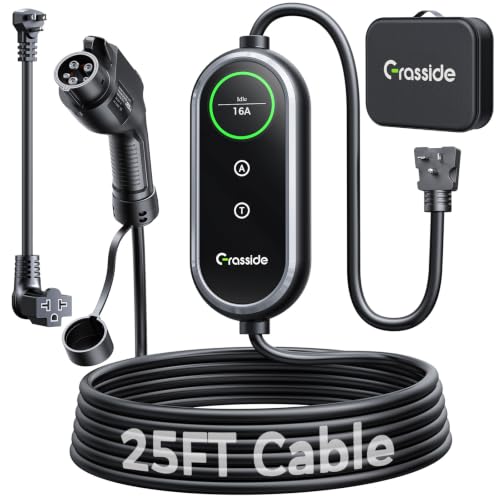
2026 New Grasside Level 1&2 EV Charger, 8-16Amp Adjustable Current & Timer, 25FT EV Charging Cord, Portable electric car charger, NEMA 5-15 & 6-20P, J1772 Charging Cable/Station for All J1772 EV/PHEVs
Universal J1772 Compatibility: Designed with a standard J1772 connector, this J1772 charger works with most J1772 electric vehicles…
As an affiliate, we earn on qualifying purchases.
As an affiliate, we earn on qualifying purchases.

EZRED BMK1914 5-Piece Battery Maintenance Kit
BATTERY MAINTENANCE KIT: This kit includes every tool that you'll need to service or change a battery in…
As an affiliate, we earn on qualifying purchases.
As an affiliate, we earn on qualifying purchases.