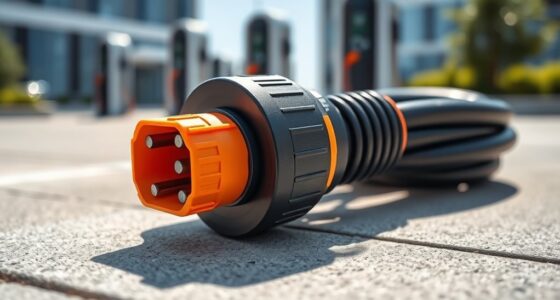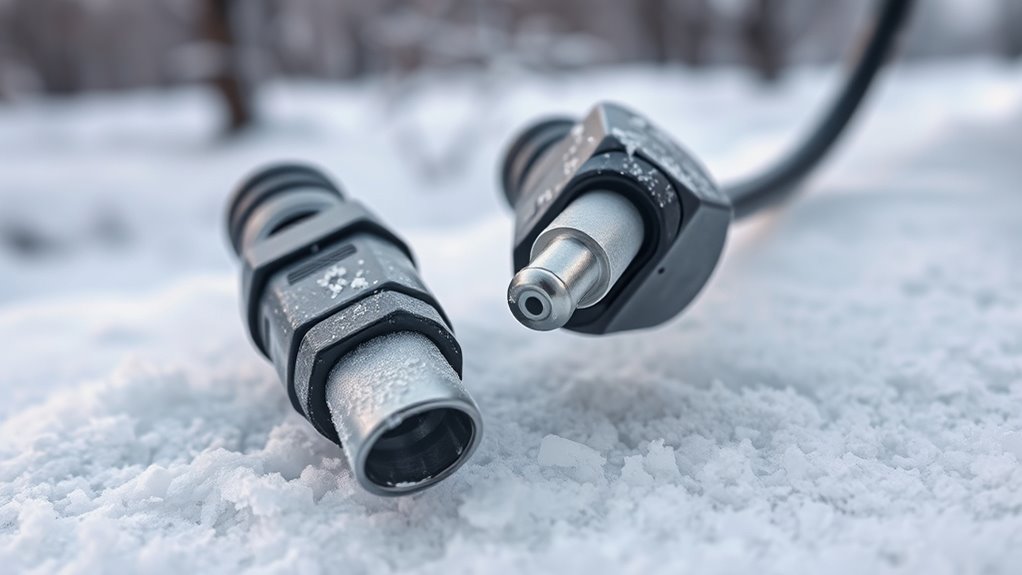

Extreme cold can damage your EV charging cables by making the insulation brittle, which can lead to cracks or breaks, and increasing the risk of moisture exposure and corrosion. Cold temperatures also reduce flexibility, making handling and coiling more likely to cause damage. To keep your cables safe during winter, store them indoors or in waterproof covers and inspect them regularly. Keep going to discover more essential tips for winter cable care.
Key Takeaways
- Cold temperatures can make insulation brittle, increasing the risk of cracking and exposing internal wiring.
- Moisture from snow and ice can cause connector corrosion, impairing electrical connections.
- Freezing conditions reduce cable flexibility, making them more susceptible to damage during handling or coiling.
- Proper storage indoors or under waterproof covers prevents cold-related damage and prolongs cable lifespan.
- Regular inspection and gentle cleaning of connectors help prevent corrosion and ensure safe operation in winter.
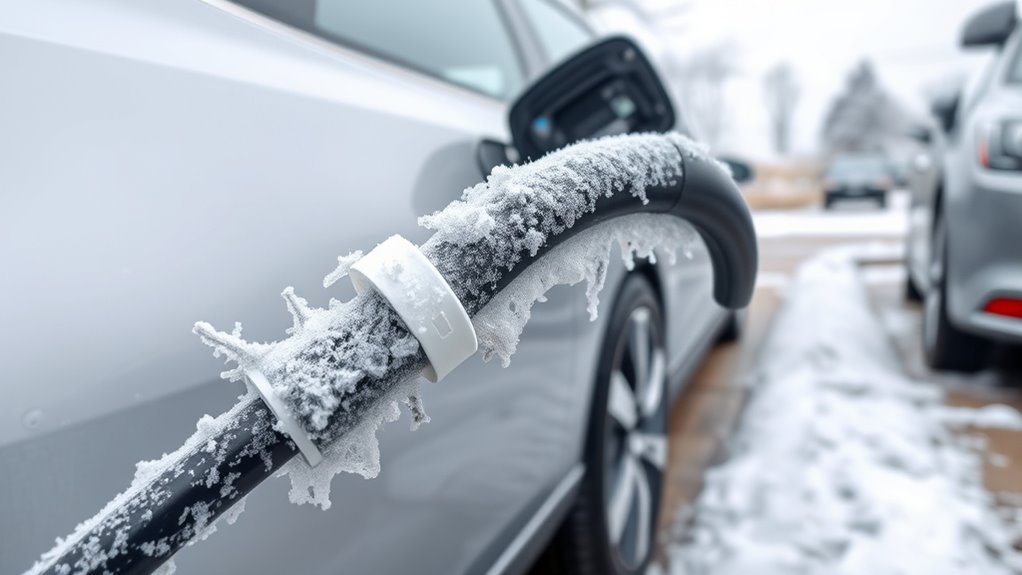
Winter’s cold temperatures can substantially affect your charging cables, making them less reliable when you need them most. Cold weather exposes your cables to the risk of damage that can compromise their performance. One of the primary concerns is the integrity of the cable insulation. When temperatures plummet, the insulation material can become brittle, crack, or even crack open, exposing the internal wiring to the elements. This deterioration increases the risk of short circuits or electrical failures, which can leave you stranded or force you to replace your cables prematurely. Confirming your cables have high-quality, winter-rated insulation can help mitigate these risks. Look for cables specifically designed to withstand low temperatures, as they typically use robust materials that maintain flexibility and durability even in the cold.
Another crucial aspect of winter care for your charging cables involves preventing connector corrosion. When exposed to moisture, snow, or ice, the metal connectors on your EV charging cables can develop corrosion over time. This corrosion hampers the electrical connection, leading to charging delays or complete failure. To avoid this, always inspect your connectors before use. If you notice any rust, dirt, or moisture, clean the connectors gently with a soft cloth and ensure they are dry before plugging in. Using protective covers or caps when the cables are not in use can also reduce exposure to moisture, prolonging the life of your connectors. Keep in mind that corrosion isn’t always visible, so regular maintenance and proper storage are essential during winter months.
Storing your charging cables properly is equally important. Avoid leaving them outside or in exposed areas where snow, ice, and moisture can accumulate. Instead, store them indoors or in a dry, sheltered location when not in use. If you must leave them outside, make sure they are covered with waterproof protection and disconnected from the vehicle to prevent water ingress. Additionally, avoid wrapping the cables tightly in a coil, as this can cause stress on the insulation, especially in cold weather when the material is less flexible. Instead, loosely coil the cables, ensuring they aren’t bent or pinched, which can cause damage over time.
Frequently Asked Questions
Can Cold Weather Cause Charging Cables to Become Brittle?
Yes, cold weather can cause your charging cables to become brittle, affecting their flexibility. When exposed to low temperatures, the materials in the cables can harden, making them more prone to cracking or breaking. To prevent this, make sure you store your cables properly during winter, keeping them in a warmer, sheltered place. This helps maintain their flexibility and prolongs their lifespan, making sure you’re always ready to charge your EV safely.
Are There Specific Charging Cables Designed for Extreme Winter Conditions?
Yes, some charging cables are designed for extreme winter conditions, featuring specialized winter insulation that enhances cable durability. These cables are built to withstand freezing temperatures, preventing brittleness and cracking. If you live in a cold climate, investing in these winter-ready cables could be the difference between reliable charging and unexpected failures. Don’t risk your EV charging needs—choose cables that are explicitly engineered to handle the harshest winter weather.
How Can I Tell if My Charging Cable Is Damaged by Cold?
You can tell if your charging cable is damaged by cold by inspecting the cable insulation for cracks or brittleness and checking the connector for corrosion or rust. If the insulation feels hard or shows visible damage, or if the connector has corrosion, it’s a sign that cold weather has affected it. These issues can compromise safety and performance, so consider replacing or repairing your cable to guarantee reliable charging in winter.
Does Temperature Affect the Charging Speed of EVS?
Yes, temperature affects your EV’s charging speed. Cold weather reduces battery efficiency because low temperatures slow down chemical reactions inside the battery, leading to longer charging times. Additionally, colder temperatures decrease thermal conductivity, making heat transfer less efficient and impacting overall charging performance. To minimize this, precondition your vehicle or park in a warmer spot, helping maintain ideal battery temperature and ensuring faster, more efficient charging.
Should I Store Charging Cables Indoors During Winter?
Yes, you should store your charging cables indoors during winter. Indoor storage helps protect the cables from extreme cold, which can weaken their durability over time. By keeping your cables inside, you prevent exposure to harsh elements, ensuring they stay flexible and functional. Proper indoor storage extends the lifespan of your EV cords and maintains their reliability, making sure you’re always ready for a safe and efficient charging experience.
Conclusion
As winter temperatures drop, remember that extreme cold can make your EV charging cables brittle and more prone to damage. Protect your cords by storing them indoors when not in use and avoiding exposure to harsh conditions. Did you know that a study found cables exposed to freezing temperatures can lose up to 30% of their flexibility? By taking simple precautions, you guarantee your cables stay reliable and safe, helping your EV stay powered all winter long.