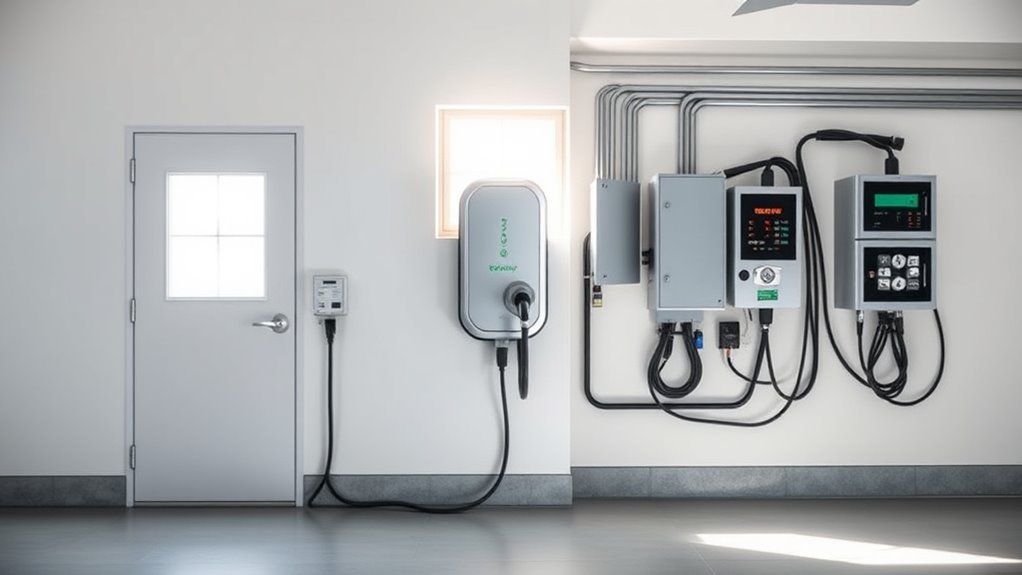

To choose the perfect home EV charger, start by evaluating your vehicle’s charging needs and your daily driving habits. Check your home’s electrical capacity and circuit breaker ratings to guarantee compatibility and avoid overloads. Pick a charger speed that fits your schedule and consider smart features for convenience. Factor in your budget and get professional advice to ensure safe installation. Keep these steps in mind, and you’ll be well-equipped to find the ideal charger for your home.
Key Takeaways
- Assess your vehicle’s charging needs and select a charger speed that matches your driving habits and daily schedule.
- Evaluate your home’s electrical capacity, circuit breaker ratings, and wiring to ensure safe, reliable installation.
- Consider future electrical demands and space requirements for optimal placement and potential upgrades.
- Choose a charger with appropriate speed, durability, and compatibility, factoring in installation type and environmental conditions.
- Prioritize smart features, certification, professional guidance, and budget to ensure safety, efficiency, and long-term value.
Assess Your Vehicle’s Charging Requirements
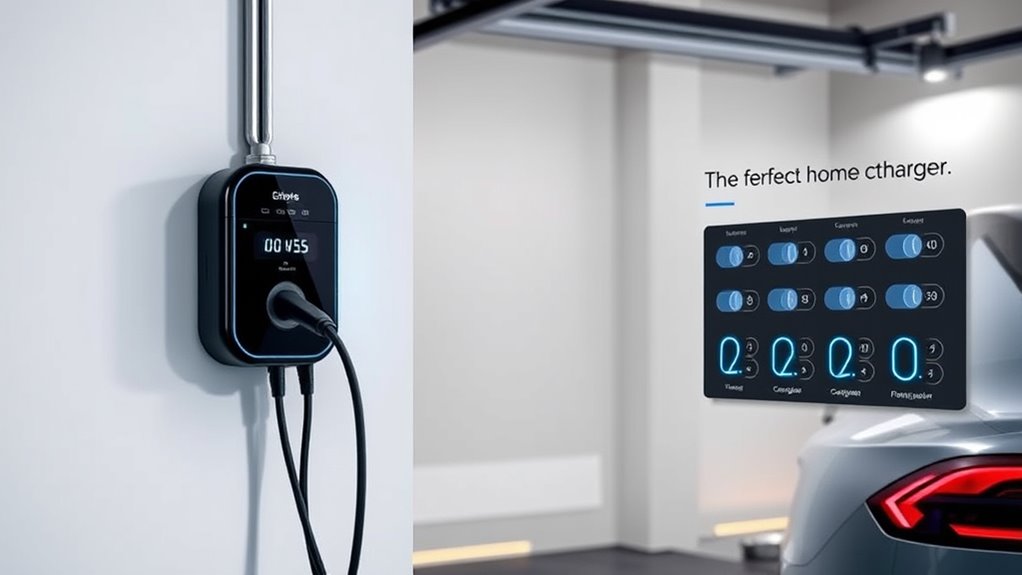
To determine the right home EV charger, you first need to understand your vehicle’s charging requirements. Consider where you’ll place the charging station; accessibility and convenience are key. Think about charging station placement—whether near your driveway, garage, or carport—and how it fits into your daily routine. Aesthetic design considerations also matter; select a charger that complements your home’s exterior and interior, blending seamlessly with your surroundings. Check your vehicle’s charging rate and compatibility, ensuring the charger can meet your daily driving needs without overpaying for unnecessary power. Additionally, reviewing home charging basics can help you better understand how to match your vehicle’s needs with the appropriate setup, making your charging experience safer and more efficient. Understanding charger compatibility can prevent potential issues and ensure seamless operation. Considering the performance capabilities of various chargers can also guide you toward the most suitable option for your electric vehicle and driving habits. Evaluating power requirements and how they align with your home’s electrical system can also help you avoid costly upgrades or issues. Exploring advanced charging features may offer added convenience and future-proof your investment. By evaluating these factors, you can choose a charger that not only fits your vehicle’s specifications but also harmonizes with your home and lifestyle.
Determine Your Home’s Electrical Capacity

Start by checking your circuit breaker to see how much capacity is already in use. Then, assess your home’s available power to determine if it can support your charging needs now and in the future. Calculating these factors helps make sure your electrical system can handle a new EV charger without issues. For added safety, consult reliable backup power guides to ensure your system can accommodate future energy demands. Additionally, consider electrical system capacity and any potential upgrades to support your EV charging plans safely. Understanding your home’s power distribution can also help identify potential bottlenecks that might require professional evaluation, especially considering heat distribution and load balancing within your electrical system. Being aware of load management strategies can further optimize your system’s performance and safety.
Check Circuit Breaker
Checking your circuit breaker is the first step in determining your home’s electrical capacity for an EV charger. You’ll want to locate your electrical panel, usually in the basement, garage, or utility area. Open the panel and examine the circuit breaker capacity, which is marked on the breakers themselves, typically in amps (e.g., 15A, 20A, 50A). Confirm the panel can handle additional load without overloading. If you’re unsure about the capacity or how to interpret the labels, consult a professional electrician. The electrical panel’s overall capacity impacts what level of EV charger you can install safely. Understanding your circuit breaker capacity helps you avoid overloading circuits and ensures that your home’s electrical system can support your new EV charger reliably. Simplifying Modern Car Tech makes understanding your electrical system easier for everyday drivers. Additionally, considering home electrical upgrades may be necessary for higher-capacity chargers. It’s also important to note that electrical codes can influence the installation process and safety standards. Conducting a comprehensive electrical assessment can further ensure your home’s readiness for EV charging.
Assess Power Availability
Before choosing an EV charger, you need to determine your home’s electrical capacity. Start by checking your existing power outlet to see if it can support the charger’s requirements. Many standard outlets won’t handle the high power levels needed for fast charging, so you might need wiring upgrades. Consult your electrical panel to identify the circuit breaker’s amperage and overall capacity. If your current wiring isn’t rated for higher loads, upgrading it ensures safety and compatibility. This process helps prevent overloads and ensures your home can support the charger you select. Remember, evaluating your power availability isn’t just about plugging in; it’s about confirming your home’s electrical system can handle the added demand safely and efficiently. Incorporating smart home technology can also help monitor and manage your charging load effectively. Additionally, consulting a licensed electrician can provide a comprehensive assessment of your home’s electrical system and ensure all upgrades meet safety standards. Considering power management systems can further optimize your energy usage and prevent overloads during peak times. Understanding electric vehicle charging standards can also help you choose the most compatible and future-proof charger for your home. Conducting a comprehensive electrical assessment can identify potential upgrades needed for optimal and safe EV charging.
Calculate Future Needs
To guarantee your home can support a new EV charger, you need to accurately calculate your future electrical needs. This involves considering your battery capacity and future vehicle plans to avoid upgrading again soon. Here are key points help you determine your electrical capacity:
- Assess your current electrical system’s capacity and any existing load.
- Estimate your future vehicle’s charging power and frequency.
- Factor in additional electrical demands from home upgrades or appliances.
- Consult an electrician to verify if your panel can handle increased load or needs upgrades.
- Understanding your home’s electrical capacity is essential for choosing the right EV charger and preventing overloads. Additionally, staying informed about industry trends can help you select the most efficient and future-proof charging solution. Being aware of technological advancements can also guide you in making smarter choices for your charging setup. Incorporating smart home integration options can further optimize your energy use and compatibility with emerging technologies.
Choose the Right Charger Speed for Your Needs
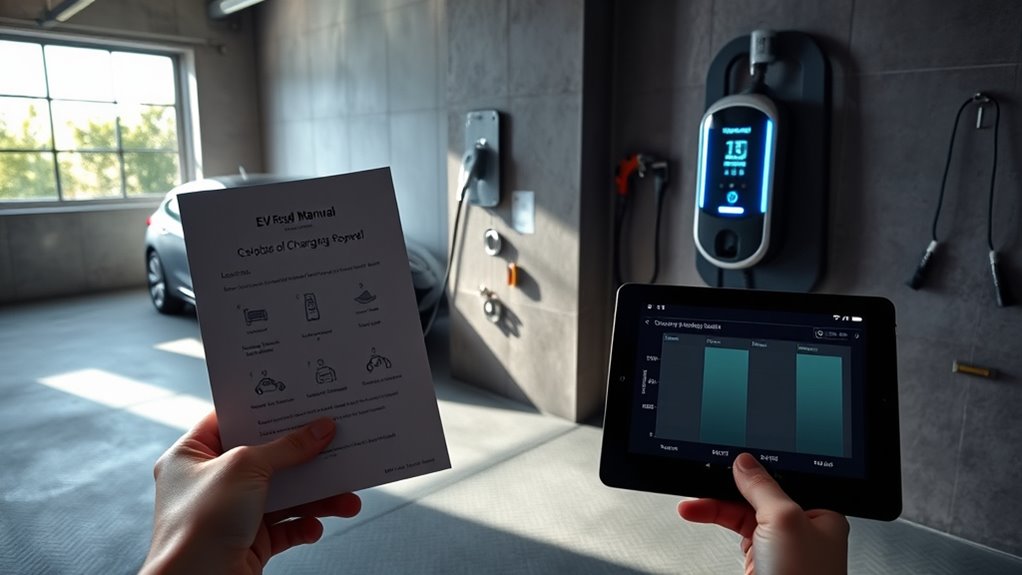
Selecting the right charger speed depends on how quickly you want to recharge your vehicle and your daily driving habits. If you often need a quick turnaround, a faster charging speed may be ideal, allowing you to top off your battery overnight or during short stops. On the other hand, if your driving is minimal and you prefer convenience, a slower charger might suit you better, offering reliable charging without extra complexity. Consider how often you’ll need to charge and how much time you can dedicate to it. A faster charger provides greater user convenience by reducing charging time, but it might come at a higher cost. Balancing your daily needs with your budget helps you choose the most suitable charger speed for a seamless EV experience. Additionally, understanding digital distractions can help you allocate time more effectively for charging and other essential tasks.
Consider Installation and Compatibility Factors
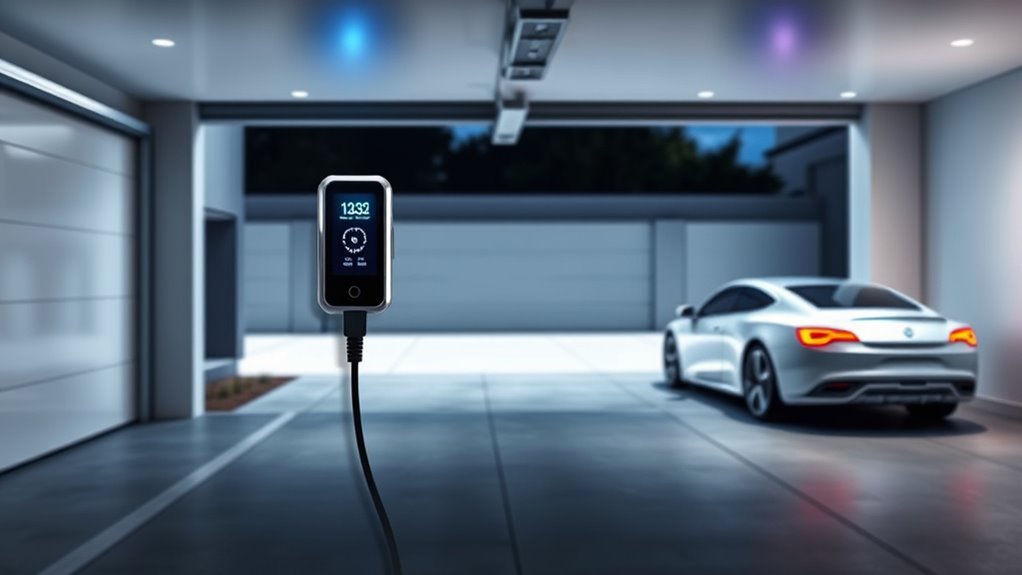
Before installing your charger, make sure your electrical system can handle the new load. You’ll also want to contemplate the space available and whether you prefer a professional installation or a DIY approach. Addressing these factors now will ensure a smooth setup and reliable charging experience.
Electrical System Compatibility
Ensuring your electrical system can support a home EV charger is essential for a safe and efficient installation. You need to verify your circuit capacity, breaker size, wiring quality, and grounding. These factors influence compatibility and safety. When selecting a charger, also consider outdoor durability to withstand weather conditions and maintain aesthetic design.
Key points to check include:
- Circuit breaker capacity matches the charger’s power requirements.
- Wiring is rated for outdoor use if installation is outside.
- Your electrical panel has enough space for an additional breaker.
- Proper grounding guarantees safety and system stability.
Installation Requirements and Space
When planning your home EV charger installation, paying attention to space and placement is vital to guarantee a safe and functional setup. Make certain there’s enough room for the charger and easy access for maintenance. If you prefer outdoor installation, choose models rated for weather resistance. Portable chargers offer flexibility but need proper storage when not in use. Consider where you’ll plug in and whether the location supports your vehicle’s daily charging needs. Use the table below to understand key factors:
| Factor | Consideration | Example |
|---|---|---|
| Space | Sufficient clearance | 3 ft around the charger |
| Weather Suitability | Outdoor rated or indoor use | Weatherproof charger |
| Accessibility | Easy access for daily use | Near garage or driveway |
Proper planning guarantees safe, efficient charging without inconvenience.
Professional vs. DIY Setup
Deciding between a professional installation and a DIY setup depends on your comfort level with electrical work and the compatibility of your home’s electrical system. If you choose DIY, verify your charging cable and circuit can handle the charger’s requirements. Consider these factors:
- Your experience with electrical work and safety precautions.
- Compatibility of your electrical panel and wiring.
- The user interface of the charger—some require professional setup for maximum use.
- Ensuring proper grounding and code compliance for safe operation.
A professional installer can verify compatibility, handle complex wiring, and enhance the user interface for ease of use. While DIY might save money, a professional setup reduces risks and guarantees your charger functions reliably and safely.
Evaluate Smart Features and Connectivity Options
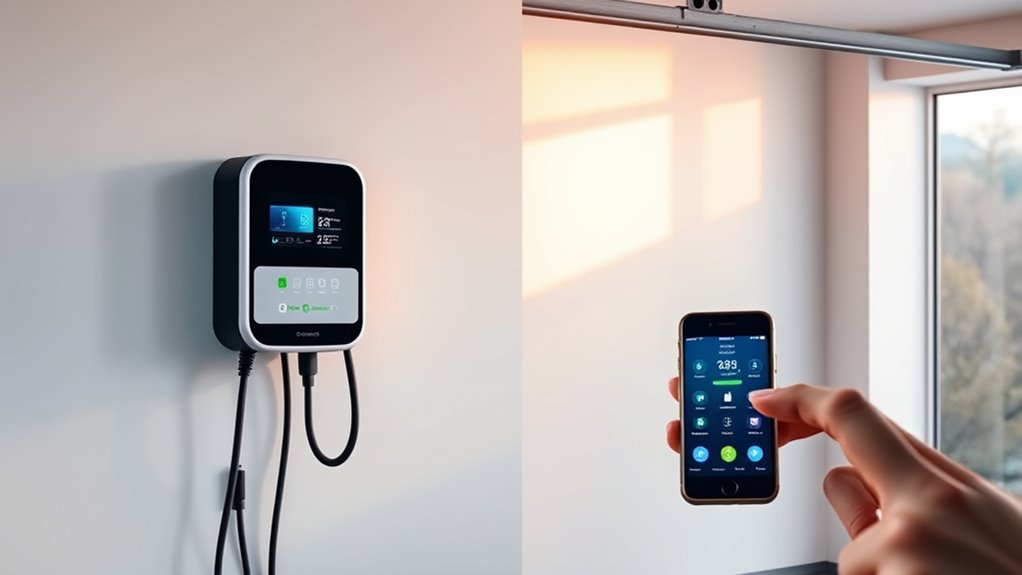
Smart features and connectivity options can considerably enhance your charging experience by offering convenience, control, and integration with your home ecosystem. With remote monitoring, you can track charging status, energy consumption, and schedules from anywhere, giving you peace of mind and better energy management. A user-friendly mobile app allows you to start or stop charging, set timers, and receive alerts directly on your smartphone, making daily use simple. Look for chargers that support Wi-Fi or Bluetooth connectivity, ensuring seamless integration with your home network. Some models also offer voice control compatibility with smart assistants like Alexa or Google Home. These features let you personalize your charging routine, optimize energy use, and stay informed—all from your device of choice.
Factor in Budget and Long-Term Costs
Budget considerations play a crucial role in choosing the right home EV charger, as initial costs can vary widely depending on features and installation requirements. To make an informed decision, conduct a thorough cost comparison between models, factoring in both purchase price and installation expenses. Keep in mind that a reputable brand with strong reputation often offers durability and better support, potentially saving you money long-term.
Consider these points:
- Compare upfront costs across different brands and features
- Evaluate installation costs and potential upgrades needed
- Assess long-term savings from energy efficiency
- Factor in maintenance expenses over time
Balancing initial investment with long-term costs ensures you select a charger that fits your budget and provides reliable performance.
Seek Professional Advice and Proper Certification

Consulting a licensed electrician or EV charging professional is essential to guarantee your home charger meets safety standards and is properly installed. They are familiar with inspection protocols that ensure the system complies with local regulations and safety requirements. Proper certification standards are critical because they validate that the charger has undergone testing and meets industry safety and performance benchmarks. Professionals can assess your electrical system’s capacity, prevent potential hazards, and recommend the best installation approach. Relying on expert advice helps you avoid costly mistakes and ensures your charger functions reliably. Additionally, certified installation provides peace of mind, knowing your setup adheres to all legal and safety guidelines. Ultimately, investing in professional guidance safeguards your home and optimizes your EV charging experience.
Frequently Asked Questions
Can I Install a Home EV Charger Myself?
You can’t DIY install a home EV charger safely or legally. Think of it as trying to tame a wild river without proper gear—dangerous and unwise. Electrical work requires professional licensing, so it’s best to leave the task to licensed electricians. They’ll navigate the currents of code and safety, ensuring your charger’s installation is smooth, secure, and up to code, giving you peace of mind and a reliable charging setup.
What Safety Features Should My Charger Have?
Your home EV charger should have essential safety features like ground fault protection and surge protection. Ground fault detection quickly shuts off power if it senses a leak, preventing shocks. Surge protection guards your charger and vehicle from voltage spikes caused by power surges. These features guarantee safe, reliable charging, giving you peace of mind while protecting your investment and your home’s electrical system.
How Often Should I Maintain My EV Charger?
Consistent care keeps your charger in prime condition. You should check your EV charger monthly to guarantee optimal operation and prevent potential problems. Follow a regular maintenance schedule that includes inspecting connectors, cleaning ports, and testing safety features. This diligent diligence enhances charger durability, reduces downtime, and ensures safe, reliable charging. By maintaining your charger properly, you protect your investment and keep your electric vehicle ready when you need it most.
Will My Existing Wiring Support a Fast Charger?
Your existing wiring might support a fast charger if it has enough wiring capacity, but you should have an electrician assess it first. They’ll check your circuit’s amperage and determine if upgrades are necessary. If your wiring can’t handle the increased load, circuit upgrades will ensure safety and peak performance. Don’t skip this step, as proper wiring and potential upgrades prevent electrical issues and maximize your fast charging efficiency.
Are There Government Incentives for Installing an EV Charger?
They say, “Knowledge is power,” so it’s smart to explore government incentives. Yes, you may qualify for government rebates and tax credits when installing an EV charger. These incentives can markedly reduce your costs and make charging your electric vehicle more affordable. Be sure to check federal, state, and local programs, as eligibility varies. Taking advantage of these resources helps you save money while supporting eco-friendly transportation.
Conclusion
Choosing the perfect home EV charger is like finding the right key to open seamless energy flow. By carefully weighing your vehicle’s needs, your home’s electrical landscape, and future features, you craft a bridge connecting your daily life to a sustainable horizon. Trust your instincts, seek expert guidance, and remember—this decision shapes not just your driveway, but your journey toward a greener, brighter tomorrow. Your ideal charger awaits, ready to empower every mile ahead.