
Charging during the day or night can impact your costs and battery life, depending on your energy sources and plan. Daytime charging with solar panels reduces reliance on grid power and is environmentally friendly, while nighttime charging with off-peak rates cuts costs if you use grid electricity. Both methods generally don’t harm battery health, but your choices affect your wallet and eco-footprint. To learn more about how timing really influences your devices and savings, keep exploring these factors closely.
Key Takeaways
- Charging during the day with solar energy reduces reliance on grid power and supports environmental sustainability.
- Nighttime charging often benefits from lower electricity rates, lowering overall costs with time-of-use plans.
- Modern batteries are designed to handle charging at any time without significant impact on lifespan.
- Avoiding extreme charge levels and overcharging is more important for battery health than charging time.
- Charging habits and source of electricity influence both cost savings and ecological impact more than the specific time of day.
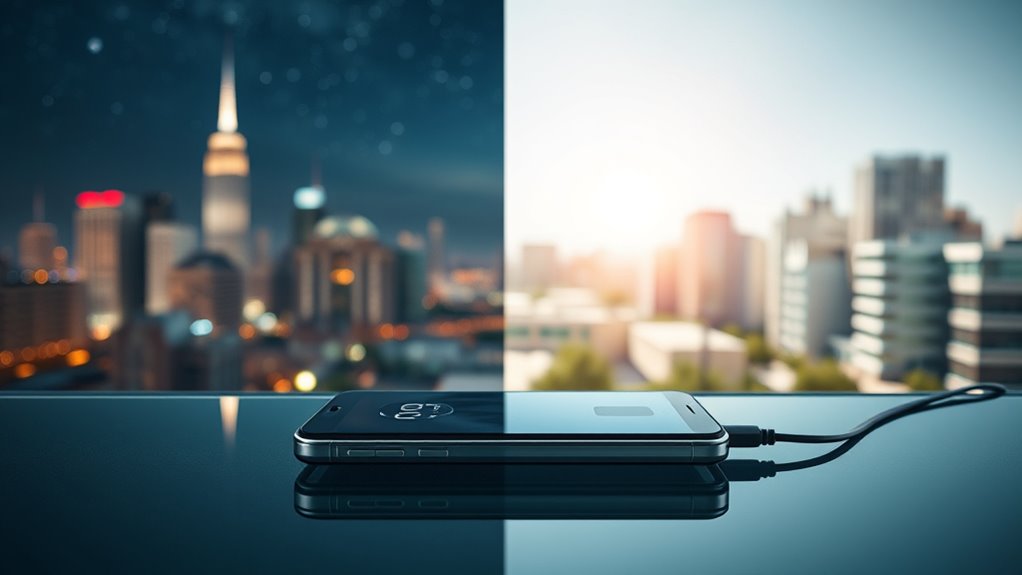
Have you ever wondered whether charging your devices at night or during the day makes a difference? It’s a common question, especially as many people try to optimize their energy use and save money. The answer depends on a few factors, including how you source your electricity and what kind of power system you have. If you use solar panels, for example, charging during the day aligns perfectly with your energy generation. Solar panels produce electricity when the sun is shining, making daytime charging not only more efficient but also more environmentally friendly. When you charge during sunlight hours, you’re utilizing free, renewable energy, which can considerably reduce your electricity bills. On the other hand, if you rely on grid electricity, the time you charge might influence your costs because of varying electricity rates throughout the day.
Many utility companies have different rates depending on the time of day, often called time-of-use rates. Typically, electricity rates are lower during off-peak hours—usually overnight—when demand is lower. If you charge your devices at night, you’re likely paying less for electricity, which can add up over time. This is especially true if you’re charging large batteries or multiple devices regularly. Conversely, during peak hours in the daytime, electricity rates tend to be higher due to increased demand. Charging during these periods might cost you more unless your utility offers flat rates or special plans. If you have solar panels, charging during the day can be more advantageous because your panels generate free electricity, reducing reliance on grid power and cutting costs. This means you can maximize your solar investment and lessen your environmental footprint by charging during daylight hours.
However, the impact on your device’s battery life is generally minimal whether you charge at night or during the day. Modern batteries are designed to handle charging cycles efficiently, regardless of the time. The key is avoiding extreme states of charge or leaving devices plugged in for too long after reaching 100%, which can wear down the battery over time. So, whether you charge at night or during the day, what matters more is maintaining good charging habits and using appropriate chargers.
Frequently Asked Questions
Does Charging at Night Affect Battery Temperature Significantly?
Charging at night can cause your device’s battery temperature to rise slightly, especially if it’s in a warm environment, but it usually doesn’t substantially affect it. Elevated battery temperature can reduce charging efficiency and speed up battery wear over time. To minimize this, keep your device in a cool place while charging overnight, and avoid covering it, ensuring ideal charging efficiency and keeping your battery healthier longer.
How Do Electricity Rates Vary Between Daytime and Night?
Electricity rates often vary between daytime and night due to time of use rates and peak hour pricing. Typically, you pay less at night when demand is lower, making it cost-effective to charge your devices then. During peak hours, rates increase to manage demand, so avoiding charging during those times can save you money. Checking your utility’s rate schedule helps you time your charging for savings.
Are There Any Health Concerns With Nighttime Charging?
You can breathe easy—nighttime charging generally poses no health concerns if you follow proper charging safety. Modern devices and chargers are designed with safety features, so there’s little risk of overheating or hazards. Concerns about battery health are minimal if you avoid overcharging. Just make certain your charging setup is safe, well-ventilated, and use reputable chargers. Rest assured, charging at night won’t compromise your health or your device’s battery longevity.
Can Charging Speed Differ Between Day and Night?
Charging speed can differ between day and night due to factors like power stability and charging efficiency. At night, power grids often have less demand, providing more stable electricity, which can lead to faster, more efficient charging. During the day, fluctuations and higher demand might slightly reduce charging efficiency. While these differences are usually minor, they can impact how quickly your device charges, especially with fast-charging technologies.
Does Battery Aging Accelerate With Nighttime Charging?
Like a clock ticking away, your battery endures. Nighttime charging doesn’t necessarily speed up battery aging, but frequent charging cycles do contribute to battery degradation over time. If you regularly charge overnight, you might accelerate aging, but it depends on how often you plug in. To maximize battery life, avoid unnecessary cycles and keep your charging habits balanced, ensuring your device stays healthy longer.
Conclusion
Whether you charge your device by night or day, the impact on your battery’s lifespan and your wallet is like choosing between a gentle breeze or a gusty wind—subtle, yet significant. While nighttime charging might feel like catching a secret, the truth is, both options are just different paths to the same destination. So, pick what suits you best, and let your battery’s journey be smooth sailing, no matter when you plug in.