TL;DR

Get backup power and energy gear delivered free — and shop member deals
- Fast, free delivery on millions of items
- Access to Prime Big Deal Days deals on October 6–7
- Prime Video, Amazon Music and more included
Consumer interest in what it costs to humidify a home — from evaporative room units to whole-house systems — is rising sharply in current search and coverage activity. The exact trigger is unconfirmed. Established facts include typical equipment price ranges and long-standing guidance on indoor humidity levels.
Interest in the question “what does it really cost to humidify a house?” is spiking across search and home-improvement coverage, according to current trend signals, as homeowners weigh the expense of everything from small room humidifiers to professionally installed whole-house systems. No specific announcement, product launch, or event has been confirmed as the trigger for the surge. What is well established is the cost structure itself: equipment prices, installation requirements, and operating costs that vary widely depending on the type of system a household chooses.
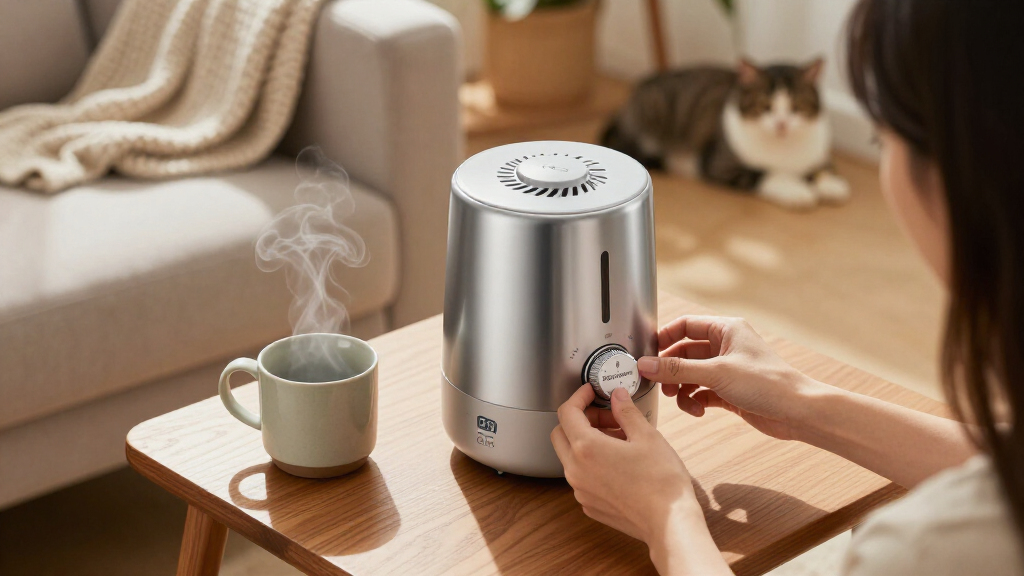
The economics of home humidification break into three long-established categories. Portable humidifiers — console and evaporative units that serve one room or one floor — typically cost tens of dollars for small tabletop models up to a few hundred dollars for large consoles, with no professional installation required. Whole-house humidifiers, which attach to a forced-air furnace or HVAC system and are standard recommendations in dry winter climates, generally cost several hundred dollars for the equipment plus professional installation that can bring total project costs into the hundreds to roughly a thousand dollars or more, depending on the system type and the home.
Operating costs are the piece homeowners most often underestimate. All humidifiers consume water and electricity, and warm-mist or steam units draw more power than evaporative models. Whole-house systems also require annual maintenance: replacement evaporator pads or panels, periodic cleaning to prevent mineral scale, and in steam-based systems, replacement cylinders that add recurring expense. Hard-water regions increase maintenance frequency and cost.
The established health and comfort rationale is also settled guidance: agencies such as the U.S. Environmental Protection Agency have long recommended keeping indoor relative humidity between roughly 30 and 50 percent. Below that range, dry air can aggravate respiratory irritation, static, and cracking in wood floors and furniture. Above it, excess moisture risks condensation and mold growth — the reason humidistats and automatic controls are standard on most modern systems, and why many homeowners pair humidity control with whole-house air purifiers for overall air quality.
Why Humidifier Costs Hit Budgets Now
Humidification sits in an awkward middle ground of household spending: it is a recurring-cost purchase, not a one-time buy. A homeowner comparing a $60 portable unit against a $1,000 installed whole-house system is really comparing different long-run cost curves — cheap equipment with high per-room operating and maintenance effort, versus higher upfront cost with lower cost per square foot over time. That comparison gets sharper when energy prices rise, because operating costs, not sticker prices, dominate multi-year totals.
The question also matters because winter heating season is when humidification demand peaks. Forced-air heating dries indoor air, and decisions about adding humidity are usually made under time pressure, when contractors are busy and comparison shopping is hardest. Understanding the cost structure before the season arrives gives households leverage on both equipment choice and installation quotes.
How Home Humidification Pricing Evolved
Whole-house humidification has been a standard add-on to forced-air furnaces for decades, with bypass, fan-powered, and steam systems forming the long-established product tiers — bypass being the cheapest to buy and run, steam the most expensive but most effective in larger or tightly sealed homes. Portable humidifiers have similarly been mass-market consumer goods for years, with evaporative designs generally recommended over ultrasonic models in hard-water areas because ultrasonic units disperse minerals into the air as white dust.
Interest in indoor air quality broadly — ventilation, filtration, and humidity control — has grown since the early 2020s, and humidifier cost queries tend to rise each heating season. The current spike in interest in total cost of ownership, rather than just purchase price, appears to reflect a shift toward scrutinizing lifetime operating costs of household appliances, though the specific driver of this surge is not confirmed.
What’s Driving the Search Spike
The trigger for the current surge in interest is unconfirmed. Trend metadata shows only that the topic of humidification costs is drawing elevated attention; it does not identify whether the cause is a seasonal spike, energy-price coverage, a viral cost-comparison article, weather-driven dryness in a particular region, or something else entirely. No manufacturer announcement, government report, or pricing change has been verified as of this writing.
Specific figures homeowners may encounter online — exact installation quotes, regional labor rates, or claimed savings on heating bills from higher humidity — should be treated as unverified claims unless attributed to a named, checkable source. The commonly circulated idea that humidified air “feels warmer” at lower thermostat settings is long-standing homeowner folklore with limited rigorous evidence behind specific dollar-savings figures.
How Homeowners Should Compare Bids
Readers weighing a purchase can act on established ground: get multiple installation quotes for whole-house systems, ask whether the quote includes a humidistat and new water line, and confirm annual maintenance costs (pads, cylinders, cleaning) in writing before committing. Whole-house units involve water lines and electrical connections tied to the HVAC system, so installation should be done by a licensed HVAC professional, and any electrical work by a qualified electrician.
If the current interest surge is tied to a specific event — a pricing change, product launch, or weather pattern — that may surface in coming coverage. Monitoring established sources such as EPA indoor-air guidance and local licensed contractors remains the most reliable path for homeowners making a near-term decision.
Key Questions
How much does a whole-house humidifier cost installed?
Long-published cost ranges put typical installed costs between roughly $300 and $1,200, depending on system type (bypass, fan-powered, or steam), home size, and local labor rates. Steam systems sit at the high end; bypass systems at the low end. Exact quotes vary by region and contractor.
Are portable humidifiers cheaper overall than whole-house systems?
Portable units are much cheaper upfront — roughly $30 to a few hundred dollars — but they humidify only one space, require frequent refilling and cleaning, and buying several to cover a whole house can narrow the gap with an installed system over time.
What ongoing costs should I expect?
Expect electricity, water, and annual maintenance: replacement evaporator pads or steam cylinders, plus descaling. Hard water increases maintenance frequency and cost. Maintenance totals typically run from tens of dollars to a few hundred dollars per year depending on system type.
What humidity level should a house target?
The EPA has long recommended keeping indoor relative humidity between about 30 and 50 percent. Below that range causes dry-air problems; above it risks condensation and mold.
Why is interest in this topic rising right now?
The specific trigger is unconfirmed. Plausible drivers include heating season, energy-cost scrutiny, and general indoor-air-quality interest, but no verified event has been identified.
Source: rss
Evergreen bestsellers Picks
bestsellers
As an affiliate, we earn on qualifying purchases.