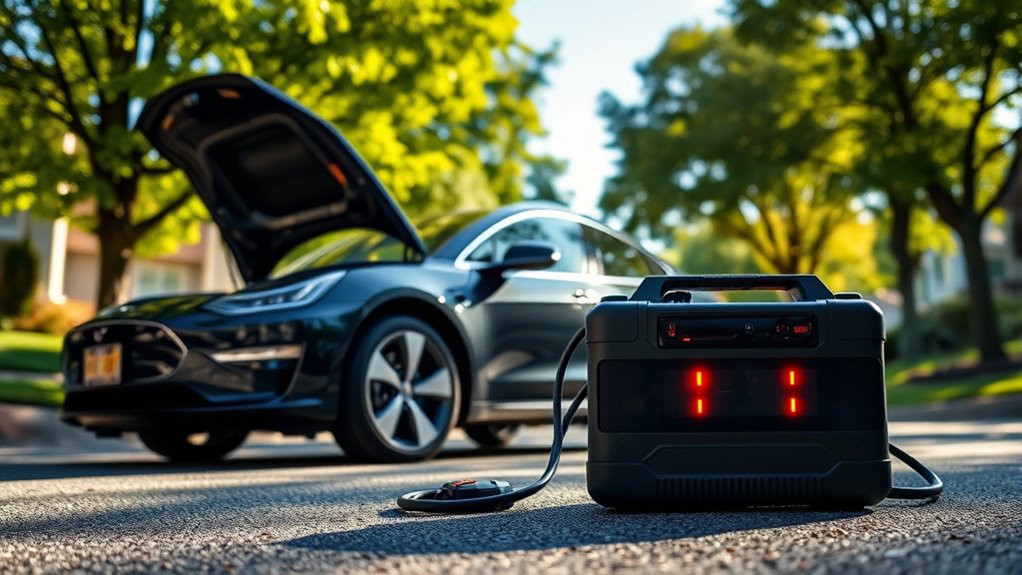

Even though electric vehicles don’t rely on traditional starter batteries, your EV can still encounter issues like battery drain or extreme cold that reduce power and prevent startup. In such cases, a portable jump starter can safely restore energy and help you get back on the road quickly. Proper use and safety precautions are essential, and understanding how these devices work with EV systems can make all the difference—more details await if you keep going.
Key Takeaways
- EV batteries can deplete unexpectedly due to factors like cold weather, accessories, or aging, requiring jump starters for emergency starts.
- Portable jump starters provide quick assistance when EVs are unable to start due to battery or system faults.
- They enable remote charging or boost, especially in areas lacking charging infrastructure or during roadside emergencies.
- Proper safety and compatibility with EV systems are essential to prevent damage when using jump starters.
- Regularly maintaining and inspecting jump starters ensures reliability when urgent power assistance is needed.
Understanding EV Battery Systems and Their Limitations

While electric vehicle (EV) batteries are powerful and long-lasting, they have limitations that can catch owners off guard. The battery chemistry, typically lithium-ion, affects how quickly it degrades and how efficiently it holds a charge. This means that over time, your battery’s capacity may decrease, leading to reduced driving range and performance issues. Additionally, charging infrastructure plays a vital role; if charging stations are sparse or malfunctioning, you might find yourself stranded with a drained battery. Understanding these factors helps you manage expectations and plan better. Even with advanced technology, EV batteries aren’t immune to wear and tear. Regular battery maintenance can help prolong their lifespan and improve reliability. Knowing their limitations guarantees you’re prepared for unexpected situations, like needing a jump start or alternative charging options. Battery degradation is an important factor that influences overall vehicle reliability and long-term performance. Being aware of charging station availability can help you avoid inconvenient situations where your vehicle cannot be recharged promptly. Furthermore, understanding the battery chemistry can aid in selecting appropriate charging and storage practices to minimize degradation. Additionally, understanding proper charging habits can further reduce the rate of battery wear and extend its effective lifespan.
Situations Where EVs Might Still Require a Jump Start

Even though EV batteries are designed to last and perform reliably, there are situations where they can leave you stranded and in need of a jump start. For example, if you forget to connect to charging stations regularly, your battery might become too depleted to restart. Extreme cold can also reduce battery performance, making it harder to power up. Additionally, a faulty battery management system or damaged wiring can cause unexpected shutdowns. Occasionally, batteries reach the end of their lifecycle and require proper battery recycling, which can cause operational issues if not managed correctly. Other scenarios include accidental discharges from accessories or electronic systems drawing power when the car is off. Staying prepared with a portable jump starter can help you navigate these unexpected setbacks. Furthermore, understanding security zone info and having the right tools can improve your ability to handle such emergencies effectively. It’s also important to recognize that battery maintenance and regular diagnostics can help prevent some of these issues before they occur. Moreover, battery health monitoring can alert you to potential problems early, reducing the likelihood of sudden failures. Being aware of vehicle electrical systems can also help you identify underlying causes of battery issues more quickly. Recognizing how extreme weather conditions impact battery performance can aid in planning for temperature-related challenges.
How Portable Jump Starters Work With Electric Vehicles

Portable jump starters transfer power through specialized connectors designed for EVs, ensuring a safe and efficient charge. Many models now include compatibility features that work with electric vehicle batteries and systems. It’s also essential to follow safety guidelines to prevent damage or injury during the process. Additionally, modern portable jump starters incorporate smart technology to optimize charging and monitor battery health during use. Incorporating preventive maintenance can also help avoid unexpected battery issues. Regular battery diagnostics can identify potential problems early and improve overall vehicle longevity. Implementing advanced safety features in jump starters further enhances user protection during operation. Integrating smart home systems can further enhance safety by providing real-time alerts and remote monitoring of your EV battery status.
Power Transfer Process
To transfer power from a portable jump starter to an electric vehicle, you need to connect the device’s clamps to the car’s battery terminals carefully. This process allows the jump starter to deliver a controlled burst of energy, helping to restore power to your EV’s battery. Since EV batteries are sensitive, proper connection prevents damage and guarantees safe operation. Proper technique and understanding of the power transfer process are crucial to ensure safe and effective use. Additionally, using high-quality network cables can improve the safety and efficiency of the power transfer, especially in emergency situations. Using a quality jump starter with the correct specifications can also help prevent potential safety hazards. Keep in mind that using a portable jump starter can supplement the limited charging infrastructure in remote areas. It also supports battery longevity by avoiding deep discharges that could harm your vehicle’s system. Regularly inspecting and maintaining your jump starter ensures it functions reliably when needed.
Compatibility With EVS
While traditional jump starters are designed primarily for combustion engine vehicles, many portable jump starters now incorporate features that make them compatible with electric vehicles. Some models can connect to charging stations or EV-specific ports, allowing for auxiliary power or emergency boosts when needed. These jump starters often include advanced circuitry to safely handle high-voltage systems and prevent damage. Additionally, they support digital asset management by safely discharging and recharging, which helps maintain device longevity. Some models also feature high-voltage safety measures to ensure compatibility with electric vehicle systems. Although EVs typically don’t require jump-starting like combustion engines, having a compatible portable power source can be useful during emergencies, especially if your EV’s battery becomes critically low. This compatibility ensures you’re prepared and can leverage portable jump starters across various vehicle types, including electric ones.
Safety Considerations
Because electric vehicles operate with high-voltage battery systems, safety is paramount when using jump starters. You must understand the risks involved to avoid injury or damage. Always use a jump starter designed for EVs, and follow manufacturer instructions carefully. Ensure your vehicle is turned off before connecting the device. Avoid contact with charging stations and high-voltage components during the process. Properly dispose of or recycle dead batteries at authorized battery recycling centers to prevent environmental harm. Additionally, inspect your jump starter regularly for damage and ensure it’s compatible with your EV. Remember, safety precautions help prevent electric shocks, fires, and expensive repairs, making the process safer for you and your vehicle. Understanding high-voltage safety protocols is essential for preventing accidents during these procedures. – Use certified jump starters for EVs – Keep a safe distance from charging stations – Regularly check battery recycling options – Never bypass safety features – Prioritize professional assistance when unsure
Safety Considerations When Using Jump Starters on EVs

Using jump starters on EVs requires careful attention to safety to prevent damage or injury. Always follow proper procedures, including adhering to recommended charging protocols. Before use, check the battery’s condition and ensure the vehicle’s systems are compatible with jump-starting. Improper connections can cause electrical surges or damage the battery. Keep a clear workspace and avoid contact with metal tools. Here’s a visual to help you imagine the process:
| Safe Practices | Potential Risks |
|---|---|
| Use insulated tools and gloves | Electric shock or short circuit |
| Verify correct polarity before connecting | Battery damage or fire |
| Follow manufacturer’s instructions | System malfunction |
| Maintain proper battery care and charging protocols | Safety hazards during jump-starting |
Choosing the Right Portable Jump Starter for Your EV

When selecting a portable jump starter for your EV, you need to take into account compatibility with your battery type and size to guarantee it works safely. Power capacity is also important—choose a unit that can handle your vehicle’s specific demands without being overly bulky. Additionally, look for models that prioritize safety features and are easy to operate, so you can use them confidently in any situation.
Compatibility With EV Batteries
Choosing a portable jump starter for your EV requires careful attention to compatibility with your battery. Not all jump starters are designed for electric vehicle batteries, which are different from traditional car batteries. You need to guarantee the device can handle your EV’s voltage and current specifications. Compatibility also involves considering how the jump starter interacts with charging stations and whether it supports battery recycling protocols to reduce environmental impact.
- Match the device’s voltage and current ratings to your EV’s battery
- Check if it’s compatible with fast-charging stations
- Confirm the jump starter’s safety features for EVs
- Verify if it can assist with battery recycling efforts
- Ensure it’s suitable for your vehicle’s make and model
Power Capacity and Size
Selecting a portable jump starter with the appropriate power capacity is essential to guarantee it can reliably handle your EV’s needs. Modern battery technology has improved, but EVs still require substantial power to jump-start, especially in emergencies. You should consider the size and weight of the device—larger units often have higher capacity but can be less portable. When evaluating options, think about your typical charging infrastructure access; if you often travel to remote areas, a higher capacity unit can be a better investment. Confirm the jump starter can supply enough current to handle your EV’s battery size. A model with appropriate power capacity ensures quick, effective starts without adding unnecessary bulk, making it a reliable addition to your roadside safety kit.
Safety and Ease of Use
Ensuring safety and ease of use is essential when picking a portable jump starter for your EV. You want a device that’s straightforward, reliable, and safe to operate, especially in emergencies. Look for features like clear instructions, automatic shut-off, and safety certifications. A jump starter that’s compatible with charging stations can simplify recharging, making it more convenient. Consider models that fit easily into your emergency kit, so you’re prepared without added bulk. Also, choose one with built-in safety features like reverse polarity protection to prevent accidents. Ease of use includes intuitive controls and clear indicators, so you don’t have to second-guess your actions. Ultimately, selecting a user-friendly, secure device boosts confidence when dealing with dead batteries.
- Simple operation with safety features
- Compatibility with charging stations
- Compact design for emergency kits
- Clear indicator lights and instructions
- Automatic safety shut-off
Steps to Safely Use a Portable Jump Starter on an EV

Before attempting to jump-start your EV with a portable starter, it’s crucial to prioritize safety. First, make certain you’re in a safe location, ideally near a charging station or a well-lit area. Turn off your vehicle and disconnect any accessories. Connect the positive clamp of the jump starter to the positive terminal of your EV’s battery, then attach the negative clamp to a grounded metal surface away from the battery. Follow the device’s instructions carefully. Once connected, power on the jump starter and wait a few moments before starting your EV. After successfully starting the vehicle, disconnect the clamps in reverse order. Remember to dispose of or recycle your dead battery responsibly, taking it to proper battery recycling facilities, and avoid attempting to jump-start if your battery’s health is severely compromised.
Preventive Measures to Avoid Battery Dead-ends

To prevent your EV battery from dying unexpectedly, staying proactive with regular maintenance and mindful driving habits is essential. Proper battery maintenance ensures your system stays healthy, reducing the risk of dead batteries. Familiarize yourself with the charging infrastructure in your area so you can plan your trips accordingly. Keep an eye on your battery’s health through regular diagnostics, and avoid aggressive acceleration or excessive idling. Also, consider installing home charging stations for convenience and reliability. Staying aware of your vehicle’s energy consumption helps prevent surprises on the road.
Regular maintenance and mindful driving help prevent EV battery failures.
- Schedule routine battery health checks
- Keep additional charging options accessible
- Use regenerative braking to conserve energy
- Stay updated with charging infrastructure developments
- Avoid deep discharges whenever possible
Frequently Asked Questions
Can a Portable Jump Starter Fully Recharge My EV Battery?
A portable jump starter can’t fully recharge your EV battery. It’s designed for quick boosts, so its effectiveness depends on battery compatibility and charging speed. While it can help you start your EV in emergencies, it won’t provide the sustained power needed for a full recharge. For thorough charging, use a dedicated EV charger that matches your vehicle’s specifications and provides the appropriate charging speed.
Are There Specific Brands Recommended for EV Jump Starters?
You should look for trusted ev jump starter brands like NOCO, DBPOWER, and Clore Automotive, which are highly recommended portable jump starters for EVs. These brands offer reliable, powerful devices designed specifically for electric vehicles, ensuring safety and efficiency. When selecting a jump starter, prioritize those with high peak current, portability, and safety features. These recommended portable jump starters help you confidently handle unexpected battery issues on the road.
How Often Should I Test My Portable Jump Starter?
You should test your portable jump starter monthly to guarantee optimal battery maintenance and device longevity. Regular testing helps you identify any issues early, so you’re prepared when needed. Follow the manufacturer’s instructions for testing procedures, and keep the device charged and stored properly. Consistent checks not only extend the life of your jump starter but also guarantee it will work reliably during emergencies.
Will Using a Jump Starter Affect My Ev’s Warranty?
Using a portable jump starter generally won’t affect your EV’s warranty if you follow manufacturer requirements. Always guarantee you use a compatible device and adhere to instructions, as improper use could raise warranty concerns. Check your vehicle’s warranty documentation for specific guidelines. As long as you follow these rules, using a jump starter is a safe way to handle dead batteries without risking warranty implications.
Is Professional Help Necessary After a Jump Start on an EV?
You don’t always need professional help after a jump start on your EV, but following emergency procedures is vital. If the vehicle doesn’t start or shows warning signs, it’s best to seek professional assistance to avoid damage. While a jump start can be a quick fix, consulting a technician ensures your EV’s systems are properly checked. Always prioritize safety and proper diagnostics to keep your vehicle running smoothly.
Conclusion
Even with advanced EV battery systems, a dead battery can still leave you stranded. Having a portable jump starter on hand offers a quick fix, but safety and proper use are crucial. Are you prepared for that unexpected moment when your EV needs a boost? Staying informed and cautious ensures you’re ready for any surprise. Because when it comes to your EV’s battery, being prepared might just save your day.