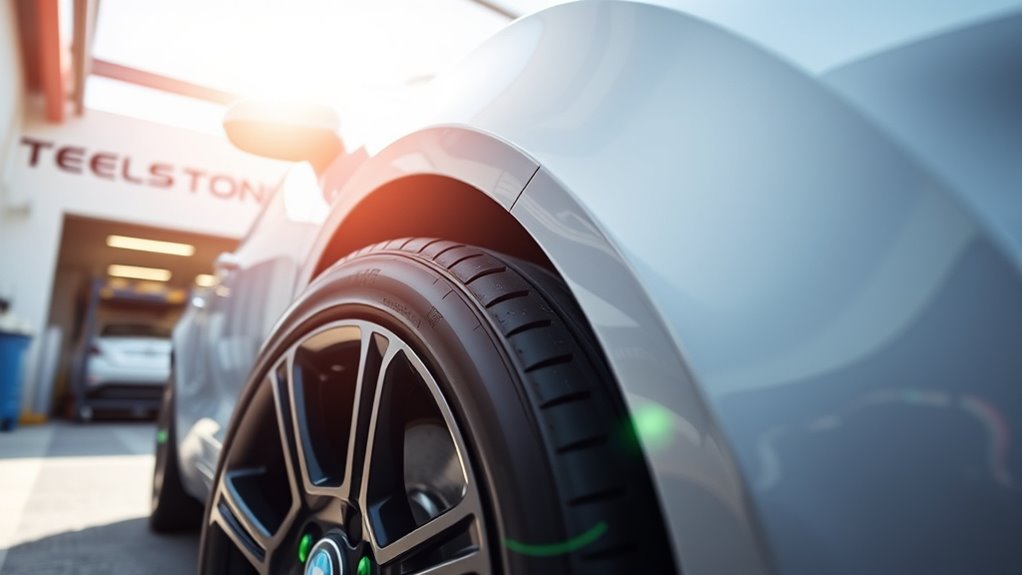

Inflating your EV tires with nitrogen can help keep your tire pressure stable longer, improve energy efficiency, and promote even tire wear. However, it may cost more and is less easy to find than regular air, which already contains nitrogen. While nitrogen helps reduce pressure fluctuations caused by heat, the benefits might be small for some drivers. To understand whether nitrogen inflation suits your needs and conditions, explore the details behind its pros and cons.

Get backup power and energy gear delivered free with Prime
- Fast, free delivery on millions of items
- Prime Video, Amazon Music and more included
- Member-only deals all year
Key Takeaways
- Nitrogen inflates EV tires more stably over time, reducing pressure loss and maintaining optimal performance.
- It can improve energy efficiency and tire lifespan but offers only incremental benefits compared to regular air.
- Nitrogen filling stations may be less accessible and more expensive than standard air, impacting convenience and cost.
- Regular pressure checks are still necessary regardless of inflation method, as nitrogen doesn’t prevent leaks entirely.
- The overall advantage of nitrogen for EVs depends on driving habits, maintenance routines, and whether stability benefits justify the cost.

Inflating electric vehicle (EV) tires with nitrogen instead of air offers several benefits that can enhance your driving experience. One of the main advantages is the potential for more stable tire pressure over time. Unlike regular air, which contains moisture and a mix of gases, nitrogen benefits include its larger molecules, which escape the tire’s rubber more slowly. This means your tire pressure stays consistent longer, reducing the need for frequent top-offs. Maintaining ideal tire pressure is essential for EVs because it directly impacts range, braking, and overall safety. When your tires are properly inflated, your vehicle becomes more energy-efficient, allowing you to get the most out of your battery. This is especially important for electric cars, where every bit of efficiency counts.
Furthermore, nitrogen benefits extend to reducing the rate of pressure loss. When you use nitrogen, you’re less likely to experience pressure fluctuations caused by temperature changes or small leaks. As your tire heats up during driving, air expands and pressure can increase, but nitrogen’s inert properties help keep this expansion within a narrower range. This stability means you might not need to check and adjust your tire pressure as often, saving you time and effort. Consistent tire pressure also promotes even tire wear, extending the lifespan of your tires and improving overall safety. The more stable your tire pressure remains, the better your EV handles, and the less strain your suspension and steering components endure.
However, it’s worth considering some downsides. Nitrogen filling isn’t always readily available, and the cost can be higher than simply topping off with air. Also, the benefits, while real, may not be dramatic enough to justify the extra expense for everyone. Regular air is mostly nitrogen anyway, with about 78% nitrogen content, so the difference might be minimal if you’re diligent about checking your tire pressure regularly. Additionally, since nitrogen doesn’t prevent leaks entirely, you’ll still need to monitor your tires periodically. For many EV owners, the convenience of maintaining tire pressure with air might outweigh the marginal benefits of nitrogen.
Products Worth Considering

Chemical Guys 14-Piece Arsenal Builder Car Wash Kit with Foam Blaster

Chemical Guys 16-Piece Arsenal Builder Car Wash Kit with Foam Cannon & Bucket

DEWALT 20V MAX Drill and Impact Driver Combo Kit (DCK240C2)
As an affiliate, we earn on qualifying purchases.
Frequently Asked Questions
Does Nitrogen Inflation Improve EV Battery Efficiency?
Nitrogen inflation doesn’t directly improve your EV battery efficiency, but maintaining proper tire pressure can. Nitrogen’s lower gas permeability helps keep tire pressure stable longer, reducing the chances of under-inflation, which can affect range. When your tires stay properly inflated, your EV runs more efficiently, conserving battery power. So, while nitrogen doesn’t boost battery performance directly, it supports ideal tire pressure, indirectly helping your EV operate at its best.
Are Nitrogen-Filled Tires More Environmentally Friendly?
Nitrogen-filled tires are more environmentally friendly because they help improve tire longevity and maintain consistent pressure longer, reducing the need for frequent replacements. This also leads to fuel savings, as properly inflated tires decrease rolling resistance and boost efficiency. By choosing nitrogen, you contribute to less tire waste and lower emissions, making it a smarter, eco-friendlier option for your electric vehicle and the planet.
How Often Should Nitrogen Tires Be Rechecked?
You should recheck nitrogen tires every 30 days to guarantee ideal tire pressure and inflation maintenance. While nitrogen maintains more stable tire pressure than air, it still gradually escapes. Regular checks prevent underinflation, which can decrease efficiency and tire lifespan. Keep an eye on your tire pressure, and if you notice a drop, top off with nitrogen. Consistent maintenance keeps your electric vehicle running smoothly and safely.
Can Nitrogen Inflation Prevent Tire Blowouts?
Nitrogen inflation can help prevent tire blowouts by maintaining tire pressure consistency over time. Since nitrogen escapes more slowly than air, your tires stay properly inflated longer, reducing the risk of blowouts caused by underinflation. This also contributes to tire lifespan extension, as consistent pressure minimizes uneven wear. While it doesn’t eliminate all risks, using nitrogen can be a smart choice for safer, longer-lasting tires on your electric vehicle.
Is Nitrogen More Cost-Effective Than Regular Air Long-Term?
They say, “A penny saved is a penny earned,” and when it comes to nitrogen inflation, you might find it more cost-effective long-term. Although the initial cost is higher, nitrogen offers better air quality and stability, reducing frequent top-offs. Over time, these benefits can lead to cost savings, especially if you value maintaining ideal tire pressure. So, investing a bit more now could pay off later.
Conclusion
Ultimately, whether you choose nitrogen or regular air, remember that maintaining proper tire pressure is your best bet. Think of it as keeping your car on an even keel; it’s the key to safety, efficiency, and longevity. While nitrogen might seem appealing, it’s not a magic bullet. Sometimes, the grass isn’t always greener. Focus on regular checks and proper inflation—after all, a well-maintained tire keeps your EV running smoothly down the road ahead.