
Repetition is the enemy of attention. Anyone who installs six systems in a row in the same way stops really looking at the seventh. How a PV installer from Upper Swabia guards against exactly this effect — and what happens when a hailstorm rolls through in August.

Get backup power and energy gear delivered free — and shop member deals
- Fast, free delivery on millions of items
- Access to Prime Big Deal Days deals on October 6–7
- Prime Video, Amazon Music and more included
A PV installer from Upper Swabia runs nine acceptance inspections in five days — without a single sheet of paper. The dangerous moment is not the first system. It is the seventh.
Scenario story: Sonnenzeile Energietechnik is a fictional example company. The story shows the target build-out of Gewerkton; individual features are in beta or under development.
The Rhythm
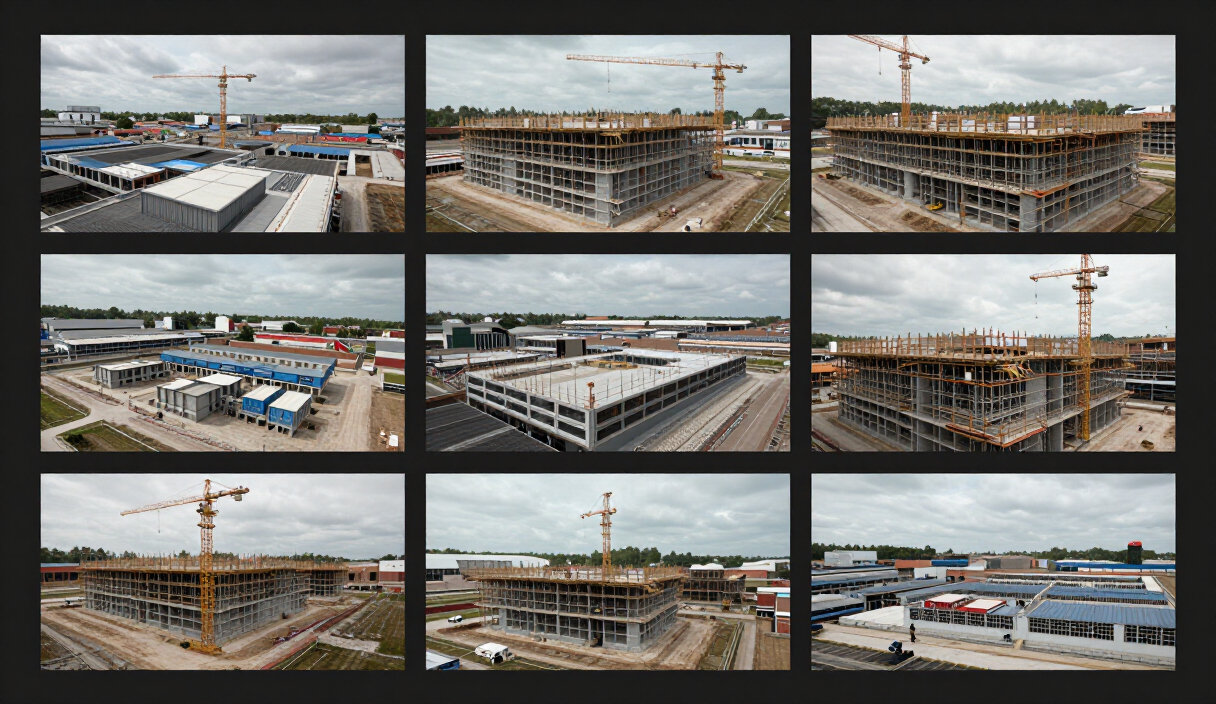
Monday Wangen, Tuesday Leutkirch, Wednesday two industrial-hall roofs in Kißlegg, Thursday Isny, Friday three terraced houses in Wolfegg. Nine rooftop systems in five days, three installation crews, one back office. Sonnenzeile Energietechnik is not building the region’s largest solar project, but its three hundredth.
Fabian Roth leads one of the crews. He says something about his trade that sets him apart from a building-site foreman: “With us, it’s not the building that’s complicated. With us, the density of acceptance inspections is the problem. Every system is its own structure with its own handover, its own protocol, its own briefing. Nine of them in one week — that’s when you lose paper.”
Sonnenzeile has not lost any paper for two years, because there isn’t any left. What the company has instead are voice macros.
As an affiliate, we earn on qualifying purchases.
“Standard String Measurement, Field B”
A voice macro is a sentence that triggers a routine. Roth says “Standard string measurement, field B,” and the app creates the five points that belong to that routine, pre-filled with the system, field, and date: open-circuit voltage, short-circuit current, insulation resistance, polarity, visual inspection of the connectors.
What the template asks for is remarkably unspectacular, and that is exactly why it is reliable: raw value, unit, measurement method, device used, weather conditions, photo. What it does not do: evaluate. There is no green checkmark declaring a measured value acceptable. Sonnenzeile’s master electrician maintains the target ranges on a project-by-project basis, and the decision as to whether a system can go into operation is made by a person with the appropriate qualification.
Roth needs between 40 and 60 seconds per string, including the photo. He speaks with gloves on, on a roof, against the wind. The feedback comes as a short spoken receipt, so he doesn’t have to look at the display. If a photo is blurry or too dark, the app says so immediately — while he is still standing in front of it, not in the evening at the office, when the ladder has long been stowed in the van.
As an affiliate, we earn on qualifying purchases.
The Penetration No One Ever Sees Again
On Wednesday, at Hall 2 in Kißlegg, comes the moment this industry is really all about.
On a flat roof, penetrations are installed before the roofer restores the sealing. After that, what lies beneath is invisible for twenty years. If water is standing in the hall roof in five years, the roofer, the structural engineer, and the PV installer will argue over a spot no one can see anymore.
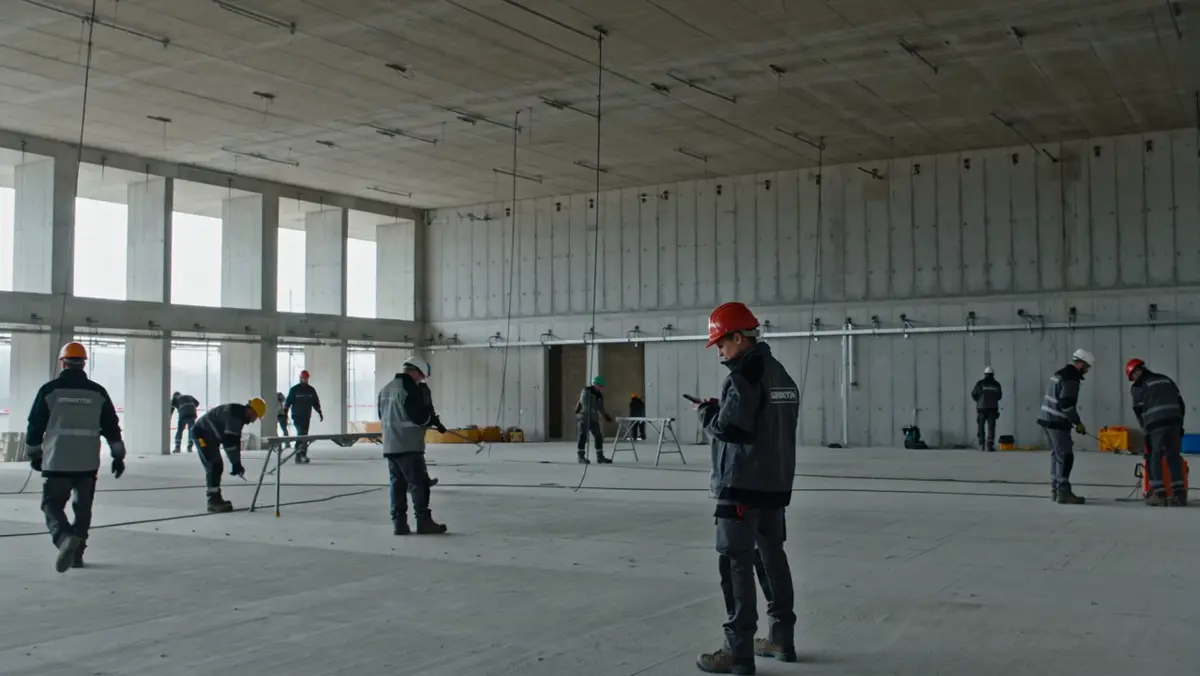
The platform knows this moment as the closure window. The roofer announces when he will close; the affected trades are notified and must document their last look before the area is considered closed. For this, Roth works through 14 points, speaks them in one go, photographs every penetration with reference to axis and field. Four minutes of work. In a dispute, those are the only four minutes that count.
As an affiliate, we earn on qualifying purchases.
The Seventh System
Thursday, Isny, system seven of the week. Everything is just like Monday, and that is exactly the danger.
On string 4, the open-circuit voltage is off by an amount that would get lost in the routine. Roth doesn’t notice it, because he is tired. What notices it is the comparison with the rest: the platform compares the measurement series within the field and flags the deviation — as a question, not a verdict, without asserting a cause and without correcting the value.
Roth goes back, finds a connector that hasn’t fully clicked into place, and documents both: the finding and the fix, with before and after. The process remains fully visible. That is a detail companies often underestimate: a system in which errors can be quietly corrected is useless after two years, because no one believes it anymore.
In the evening, the app sums up the day: 63 points documented, 2 open questions, 1 supplement. Roth likes this moment. It is the only one of the day when what you have accomplished becomes visible.
As an affiliate, we earn on qualifying purchases.
The Back Office That Got Its Friday Afternoon Back
Before the switch, Nadja Fischer wrote reports every Friday until 7 p.m. Today she generates the documentation from what was captured anyway: a string protocol per system, a system data record with identifier, location, product data, and document references, plus an index with checksums across all records.
For the roof layout she works in the browser. For most properties there is no model, often not even a usable plan — in that case she captures the roof surface, rooftop structures, and module layout grid herself and derives from it the layout plan the customer receives. Not a replacement for an engineering firm’s planning; a frame of reference on which strings, photos, and findings hang.
What commercial customers additionally demand is the question of where the data resides. Sonnenzeile can answer it — the platform’s operations tier lets you choose where the data is stored and which AI provider is used, with a visible display of how many calls were made per project and in which region. For a mid-sized company, that is not an ideological issue, but a line item in an industrial customer’s specifications.
Sonnenzeile obtained the solar trade templates — documenting the module field, string documentation, commissioning records — as a package and added its own terminology instead of rewriting them. New installers practice for two days on a training system in a protected environment before climbing onto a real roof; two clients now ask for the crew’s training certificate in the tendering process. And once a quarter, Fischer reads her own numbers across all systems: where findings pile up, which installation crew needs which rework, how long it takes on average from installation to documented commissioning. Teams, not individuals — the evaluation is built so that individual performance cannot be tallied up in the first place.
August 14
In the afternoon, a hailstorm moves across the district. Twelve of Sonnenzeile’s systems are affected, six of them from the current year.
The insurer’s question is always the same: what was there before, what is there after? For every system there is the frozen state from the day of handover — a named snapshot, citable, stored immutably. Next to it are the images taken after the event, from the same positions. The insurer’s assessor gets time-limited read access to exactly this context, with an access log, instead of a 400-page PDF appendix.

For the system in Kißlegg, the one concerned with the penetrations, this saved a week of discussion. Sonnenzeile now additionally maintains an annual report on its own documentation quality, which the company uses in conversations with its insurer — evidenced processes as an argument. Whether that results in better terms is decided by the insurer, not the software.
What Comes After Commissioning
For Sonnenzeile, handover does not end the relationship, only the construction phase. The system data record moves into the property’s operations file: maintenance cycles, recurring inspections, maintenance records, a reporting channel for the operator. If, in four years, someone asks why string 4 in Isny delivers less than string 3, the answer lies in the same chain as the initial measurement.
And eventually the project moves on into the archive, because documentation obligations outlast retention requirements and an active project is too expensive to keep open out of fear.
Roth draws a conclusion that sounds like routine but isn’t: “On the first system, everyone pays attention. On the three hundredth, the tool pays attention. That is the whole difference.”
Transparency: Gewerkton is a product from the house of this publication’s publisher.
[Powered by Thorsten Meyer AI](https://thorstenmeyerai.com/)Learn more about Gewerkton and its lines: Field, Studio and Cloud.
Fall Picks
fall essentials
As an affiliate, we earn on qualifying purchases.