When your EV’s tire goes flat, start by safely pulling over and activating hazard lights. Check the tire pressure with a portable gauge, then follow your tire repair kit’s instructions. Usually, you’ll attach the sealant nozzle to the valve stem, inject the sealant, and use the compressor to restore pressure. Remember, this is a temporary fix—proper inspection and repair are needed later. Keep your kit ready; more tips follow if you keep going.
Key Takeaways
- Safely pull over, activate hazard lights, and verify tire pressure with a portable gauge.
- Gather your EV-specific tire repair kit, including sealant and an air compressor.
- Attach the sealant nozzle securely to the valve stem before activating the compressor.
- Use the compressor to fill the tire after applying sealant, following manufacturer instructions carefully.
- Drive cautiously to a repair station for a proper inspection and permanent repair.
Have you ever been stranded by a flat tire? It’s frustrating, especially if you’re in a hurry or out in the middle of nowhere. When that happens, knowing how to handle the situation quickly can save you a lot of stress. One effective way to do this is by using a tire repair kit designed for electric vehicles (EVs). These kits are compact, convenient, and can get you back on the road without waiting for roadside assistance. But before you jump into repairing, it’s vital to understand a few key points about tire pressure and emergency preparedness.
Your first priority should be confirming your tire pressure is at the correct level. Many EVs have sensors that alert you when your tire pressure drops below the recommended range. Proper tire pressure isn’t just about comfort; it’s essential for safety, efficiency, and tire longevity. When you notice a flat, check your tire pressure if you have a portable gauge. It will help verify whether the tire is truly flat or just underinflated. If it’s flat, don’t panic. Instead, pull over safely, turn on your hazard lights, and gather your repair kit. Most kits include sealant and an air compressor. Follow the instructions carefully, as improper use can cause further damage. Typically, you’ll attach the sealant nozzle to the valve stem, then activate the compressor to fill the tire. As you do this, ensure your vehicle is on a flat surface and the parking brake is engaged to keep everything stable.
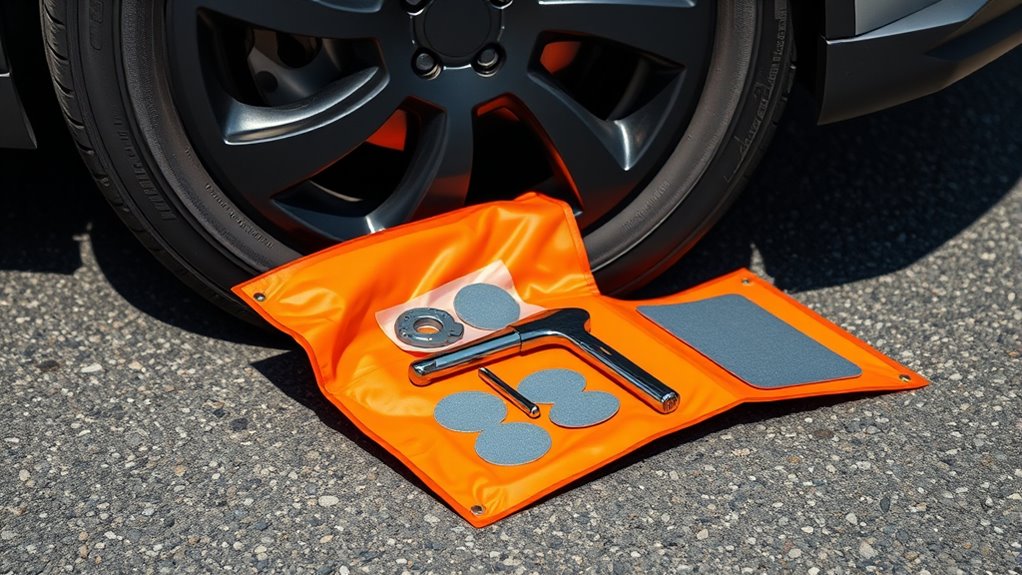
Having an EV-specific tire repair kit is an intelligent component of your emergency preparedness plan. It’s designed to be lightweight and easy to use, meaning you don’t have to be a mechanic to fix a flat. Once the sealant is pumped into the tire, it temporarily seals small punctures, allowing you to drive to the nearest service station. Keep in mind, this is a temporary fix, and you’ll need to have the tire inspected and properly repaired or replaced later. Additionally, understanding power tools and heavy-duty equipment can help you handle other emergency repairs more confidently.
Frequently Asked Questions
Can I Use a Tire Repair Kit on All EV Models?
You can generally use a tire repair kit on most EV models, but keep in mind tire compatibility and repair kit limitations. Some EVs have unique tire sizes or run-flat tires that may not be appropriate for standard repair kits. Always check your vehicle’s manual and the repair kit instructions before attempting a fix. If unsure, it’s best to consult a professional to ensure safe and effective repair.
How Long Can I Drive After Using a Repair Kit?
Driving after using a repair kit is like walking on a tightrope—you should do it carefully. Usually, you can drive 50 to 100 miles, but check your tire pressure and avoid high speeds. Keep in mind, the repair’s durability varies; it’s a temporary fix. Always get your tire inspected and properly repaired as soon as possible to guarantee safety and ideal tire performance.
Is a Repair Kit Suitable for Sidewall Punctures?
A repair kit isn’t suitable for sidewall damage because of repair limitations. Sidewall punctures or cuts weaken the tire’s structure, and plugging them doesn’t restore safety or durability. Using a kit on sidewall damage risks further failure or blowouts. It’s best to replace the tire if the sidewall is compromised, rather than attempting a temporary repair, to guarantee your safety on the road.
Will Using a Repair Kit Affect My Vehicle’s Warranty?
Using a repair kit won’t instantly void your EV’s warranty, but it can impact warranty implications if not used properly or if it causes further damage. Always check repair kit compatibility with your vehicle and follow the manufacturer’s instructions carefully. If you’re unsure, consult your EV’s warranty policy or a professional. Just remember, even the smallest mistake could be a tiny crack in your warranty armor!
How Often Should I Replace or Refill My Tire Repair Kit?
You should replace or refill your tire repair kit according to your vehicle’s maintenance schedule, typically every 1 to 2 years or after each use. Check the kit’s lifespan regularly, as sealants and tools can degrade over time. Keeping your repair kit up to date guarantees it’s effective when you need it, helping you stay prepared for unexpected flat tires and maintaining your EV’s safety and performance.
Conclusion
Fixing a flat tire with a repair kit is quick and simple, giving you back control and peace of mind. Yet, beneath that convenience lies a temporary fix—an illusion of preparedness. While you regain mobility, remember this patch is not a permanent solution, and professional repair awaits. Sometimes, the ease of a quick fix contrasts sharply with the longer, more complex process of true maintenance, reminding you that true safety often requires more than just a quick fix.