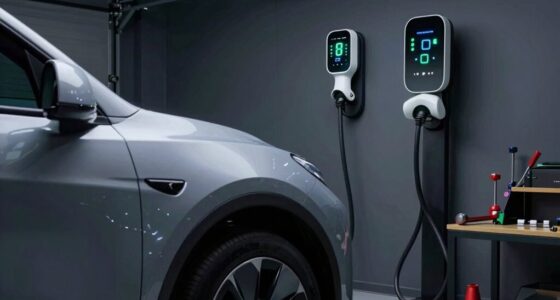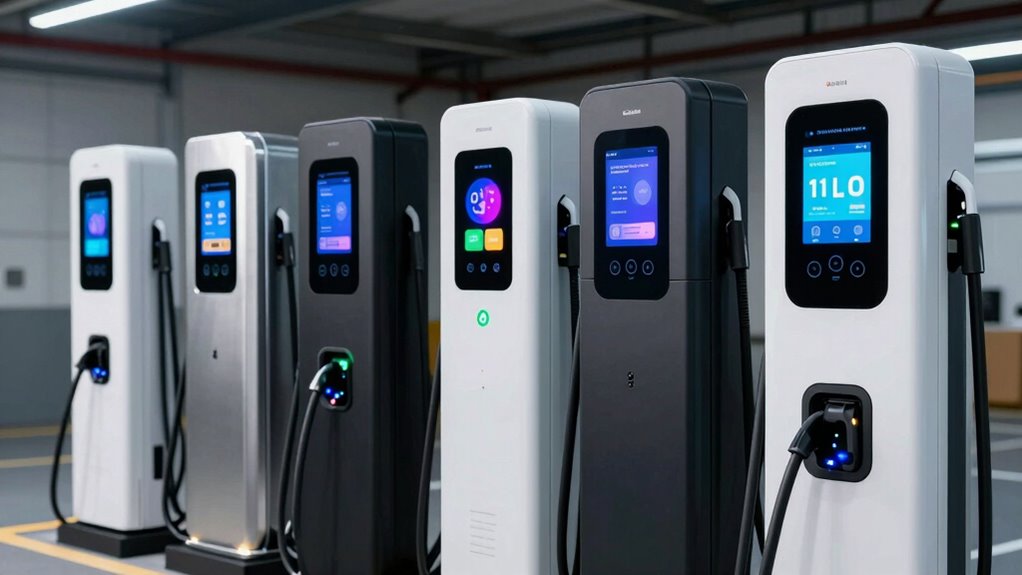
To compare smart EV chargers without getting overwhelmed, focus on core features like reliable wireless connectivity, fast and compatible charging speeds, and security measures. Prioritize options with user-friendly interfaces and essential safety features, avoiding unnecessary extras. Keep an eye on standards and market trends to guarantee compatibility with your vehicle and future devices. By concentrating on these key areas, you’ll make a confident choice—stay tuned to discover more tips to simplify your decision.
Key Takeaways
- Focus on core features like wireless connectivity, charging speed, and security to evaluate reliability and compatibility effectively.
- Prioritize user-friendly interfaces and proven standards to avoid confusion from unnecessary or complex features.
- Compare market trends and model support to ensure future-proof compatibility and value.
- Assess safety features and ease of installation to maintain safety and hassle-free setup.
- Keep in mind your vehicle’s charging capabilities to match charger power and avoid over-specification.

Are you overwhelmed by the variety of smart EV chargers available on the market? It’s easy to get lost in the sea of features, specifications, and brand promises. But if you focus on a few key factors, you can compare smart EV chargers without getting distracted. First, consider the wireless connectivity options. A charger with reliable wireless connectivity, such as Wi-Fi or Bluetooth, makes it easier to monitor and control your charging sessions remotely. You want a charger that seamlessly integrates with your smartphone or smart home system, giving you real-time updates, scheduling capabilities, and usage data. If the connectivity is unstable or complicated to set up, it can quickly become a frustrating experience, so prioritize chargers with proven, user-friendly wireless features.
Next, look at the charging speed. This is a critical factor because it directly impacts how quickly your vehicle gets ready to go. Charging speed is usually measured in kilowatts (kW), and higher numbers mean faster charging—generally, a 7.2 kW charger charges a standard EV faster than a 3.6 kW one. However, remember that your vehicle’s onboard charger also has limits, so you won’t always benefit from the maximum charging speed a charger offers. To compare effectively, check your car’s maximum charging rate and match it with the charger’s speed to avoid overspending on features you won’t use. A charger with adjustable power settings can be advantageous if you want flexibility, especially if you’re concerned about electrical load or want to optimize charging times during off-peak hours. Additionally, understanding the wireless connectivity options available helps ensure you select a charger that integrates smoothly with your existing smart home ecosystem. Being aware of market trends can also guide you toward models that are increasingly popular and supported. Recognizing the importance of reliable connectivity can prevent potential frustrations and ensure consistent operation. Moreover, considering security features is essential because connected chargers may be vulnerable to cyber threats if not properly protected.
Furthermore, understanding the technological standards involved in smart chargers can help you choose models that are compatible with current and future devices, reducing the need for upgrades down the line. Beyond wireless connectivity and charging speed, pay attention to additional features that can enhance your experience, like safety protections, user interface, and compatibility with your vehicle. But don’t let these details distract you from the core factors. Keep your focus on how well the charger’s connectivity works in your home, and whether its charging speed aligns with your driving habits. Comparing models side-by-side with these priorities in mind simplifies your decision. You’ll be able to identify the best smart EV charger that fits your needs without falling into the trap of shiny, unnecessary features. Remember, the goal is to find a charger that’s reliable, efficient, and easy to manage—so stick to what truly matters, and your decision will be much clearer.
smart EV charger with Wi-Fi connectivity
As an affiliate, we earn on qualifying purchases.
As an affiliate, we earn on qualifying purchases.
Frequently Asked Questions
Are Smart EV Chargers Compatible With All Vehicle Brands?
Smart EV chargers aren’t compatible with all vehicle brands, so you need to check brand compatibility first. Some chargers work better with specific brands or models, affecting charging speed and efficiency. To avoid distractions, focus on chargers that specify compatibility with your vehicle’s brand and offer ideal charging speed. This way, you guarantee seamless operation, faster charging, and a better overall experience without wasting time on incompatible options.
How Secure Are Data and Privacy Features on Smart Chargers?
Smart chargers keep your data safe through robust data encryption, preventing unauthorized access, while clear privacy policies outline how your information is used. Think of it as a vault protecting your personal details versus a friendly guide explaining what’s shared and what’s kept private. You can confidently enjoy smart charging, knowing your data’s security and privacy are prioritized, just like a secure lock combined with transparent rules.
Can Smart Chargers Be Integrated With Home Automation Systems?
Yes, smart chargers can be integrated with your home automation systems. They often feature wireless connectivity, allowing seamless communication with smart hubs or apps. You can also control them via voice commands, making it convenient to start or stop charging. When comparing options, check if they support your existing system and offer features like voice control and wireless connectivity for a smooth, integrated experience.
What Is the Average Lifespan of a Smart EV Charger?
On average, a smart EV charger lasts about 10 to 15 years. During this time, you’ll enjoy consistent charging speed and improved energy efficiency, making your investment worthwhile. As technology advances, newer models may extend lifespan further. Keep in mind that proper maintenance can help maximize your charger’s longevity, so regular updates and gentle handling are key. With proper care, your smart charger can serve you reliably for many years.
Do Smart Chargers Require Professional Installation?
Smart chargers often require professional installation due to specific installation requirements and technical specifications. You should consider hiring a licensed electrician to guarantee proper setup, safety, and compatibility with your electrical system. They can handle wiring, circuit breaker requirements, and any adjustments needed for maximum performance. Skipping professional installation might lead to technical issues or safety hazards, so it’s best to rely on experts to meet all installation requirements properly.
As an affiliate, we earn on qualifying purchases.
Conclusion
Now that you’ve navigated the nuances of smart EV chargers, you’re ready to make a mindful choice. Remember, focusing on features that fit your needs will keep you from feeling distracted or disoriented. By comparing capabilities clearly and confidently, you can select a charger that seamlessly suits your lifestyle. Stay sharp, sift through specifications, and settle on a smart charger that’s perfectly paired with your driving habits. Your ideal EV experience is just a well-informed decision away!
secure smart EV charger with app control
As an affiliate, we earn on qualifying purchases.
As an affiliate, we earn on qualifying purchases.
user-friendly electric vehicle charger
As an affiliate, we earn on qualifying purchases.
As an affiliate, we earn on qualifying purchases.