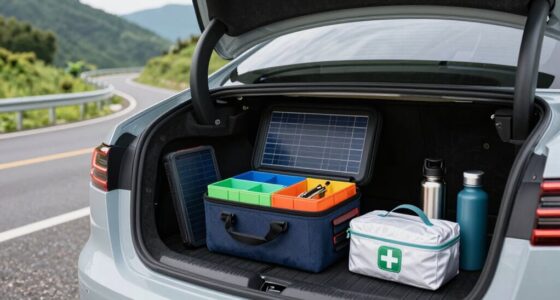
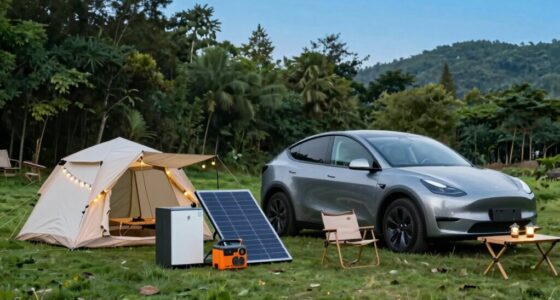
When traveling by EV in rural areas, you need to plan carefully due to limited charging stations and long distances between them. Map out your route with locations of nearby chargers, especially fast chargers, and use apps for real-time updates. Carry a compatible portable charger and avoid pushing your battery to the limit. Staying near charging points overnight and being prepared for delays will make your trip smoother. Keep exploring to learn more tips for stress-free rural EV adventures.

Get backup power and energy gear delivered free — and shop member deals
- Fast, free delivery on millions of items
- Access to Prime Big Deal Days deals on October 6–7
- Prime Video, Amazon Music and more included
Key Takeaways
- Plan your route carefully, identifying charging stations and considering the availability of fast chargers in rural areas.
- Use navigation apps with real-time station updates to avoid running out of charge unexpectedly.
- Carry compatible portable charging cables and understand local charging standards before departure.
- Start each day with a full battery and build in extra buffer for longer or unpredictable charging times.
- Be prepared for longer wait times at chargers and potential lack of charging options in remote locations.
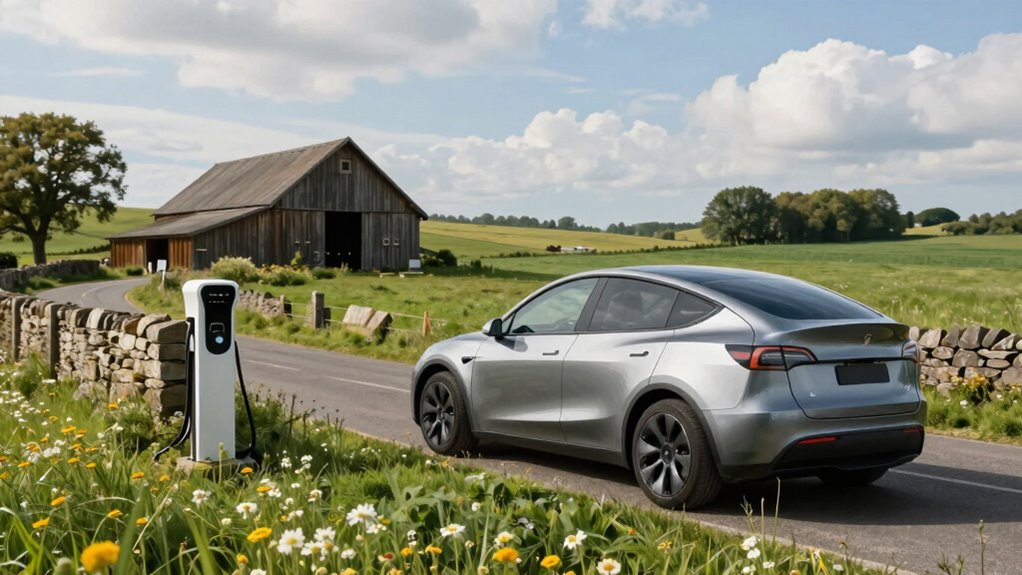
Have you ever wondered how electric vehicle (EV) travel fits into the unique landscape of rural areas? The truth is, it’s a mix of exciting possibilities and practical challenges. Unlike urban settings with dense charging infrastructure, rural regions often lack widespread charging stations, making it essential to plan your trips carefully. When you’re heading into less populated areas, you need to think about your charging options well in advance. This means researching available charging stations along your route and guaranteeing your EV has enough range to reach those points comfortably. It’s a different experience from driving in a city where charging stations are usually plentiful and easily accessible.
Planning ahead ensures smooth rural EV trips without running out of charge or surprises.
Road trip planning becomes your best friend when traveling through rural regions. You’ll want to map out your trip meticulously, pinpointing charging stations at convenient intervals. Many EV owners use specialized apps or navigation tools that show real-time station availability and help plan your route efficiently. This prep work reduces the stress of running out of charge unexpectedly. You might also consider the type of chargers available—fast chargers are a game-changer, allowing you to recharge quickly and get back on the road without long delays. However, not all rural areas have fast chargers, so understanding the charging infrastructure beforehand helps you avoid surprises and ensures a smooth journey.
If you’re planning a longer trip, it’s smart to carry a portable charging cable compatible with different stations, just in case you encounter a charger with different standards. It’s also wise to keep an eye on your EV’s battery level and establish a buffer zone—never push your range to the limit. This approach helps you stay flexible, especially if you encounter unforeseen delays or longer wait times at charging stations. You might also want to plan your overnight stays near charging points or accommodations that offer EV charging facilities. This way, you can start each day with a full battery and reduce the need for multiple stops during your drive.
Traveling through rural areas with an EV demands a little extra foresight, but it’s far from impossible. With some strategic road trip planning and knowledge of the local charging infrastructure, you can enjoy the scenic, peaceful landscapes without worry. Being prepared guarantees you won’t be stranded, and it allows you to focus on the adventure ahead—exploring hidden gems and enjoying your journey at a relaxed pace. By understanding these key aspects of rural EV travel, you’re setting yourself up for a successful, enjoyable trip every time.
As an affiliate, we earn on qualifying purchases.
Frequently Asked Questions
How Do I Find the Nearest EV Charging Station in Rural Areas?
To find the nearest EV charging station in rural areas, use apps like PlugShare or ChargePoint, which map out stations nearby. Always follow charging etiquette by being patient and disconnecting promptly. It’s smart to plan ahead and carry a backup charger or power bank for emergencies. Stay prepared for unexpected situations, and keep your phone charged to navigate unfamiliar rural routes confidently.
Are There Any Specific EV Models Best Suited for Rural Travel?
Think of choosing an EV like selecting the right tool for a rugged adventure. For rural travel, models with larger EV batteries, like the Tesla Model S or Ford Mustang Mach-E, are best because they offer extended range. While charging infrastructure might be sparse, these vehicles’ impressive battery capacity helps you cover more ground between charges. Their reliability makes them your best companions for exploring remote areas confidently.
What Safety Precautions Should I Take When Charging in Remote Locations?
When charging in remote locations, prioritize charging safety by inspecting charging stations for damage and guaranteeing they’re well-lit. Always use your vehicle’s recommended chargers for remote charging and avoid unattended setups. Keep your phone charged in case you need help and carry a portable power bank. Inform someone about your charging plan, and stay aware of your surroundings. These precautions help ensure safe and reliable remote charging experiences.
How Reliable Is Mobile Network Coverage for EV Navigation in Rural Regions?
Mobile coverage in rural regions can be spotty, so you shouldn’t rely solely on your phone for EV navigation. Signal reliability varies widely, and some areas might have no coverage at all. Before your trip, download offline maps and plan your route carefully. Keep a backup navigation method and a charger, just in case. Being prepared guarantees you won’t get stranded if your mobile network drops out unexpectedly.
Are There Government Incentives for Rural EV Travelers?
Many believe government incentives only target urban areas, but that’s not true. You can access government grants and tax incentives specifically designed for rural EV travelers. These programs aim to encourage clean transportation in less populated regions, making your journey more affordable. Check with local and federal sources, as eligibility varies, and new incentives often emerge. Taking advantage of these offers can substantially reduce your overall EV travel costs in rural areas.
fast charging station locator app
As an affiliate, we earn on qualifying purchases.
As an affiliate, we earn on qualifying purchases.
Conclusion
Think of your EV journey through rural areas as a voyage across a vast, open sea. With a reliable map (planning your route) and a sturdy boat (your vehicle), you can navigate these waters confidently. Though the journey might seem intimidating at first, each charging stop is like reaching a welcoming lighthouse—guiding you safely to your destination. Embrace the adventure, and soon you’ll find that rural EV travel becomes a smooth, rewarding voyage.
As an affiliate, we earn on qualifying purchases.
As an affiliate, we earn on qualifying purchases.
Fall Picks
fall essentials
As an affiliate, we earn on qualifying purchases.