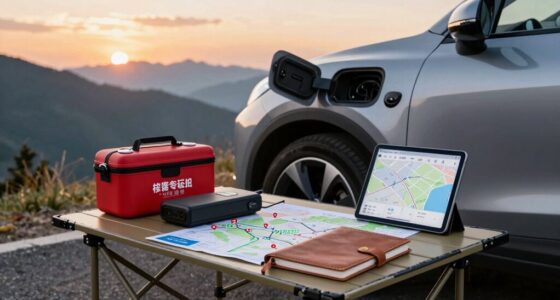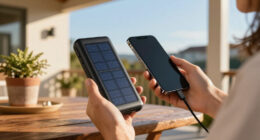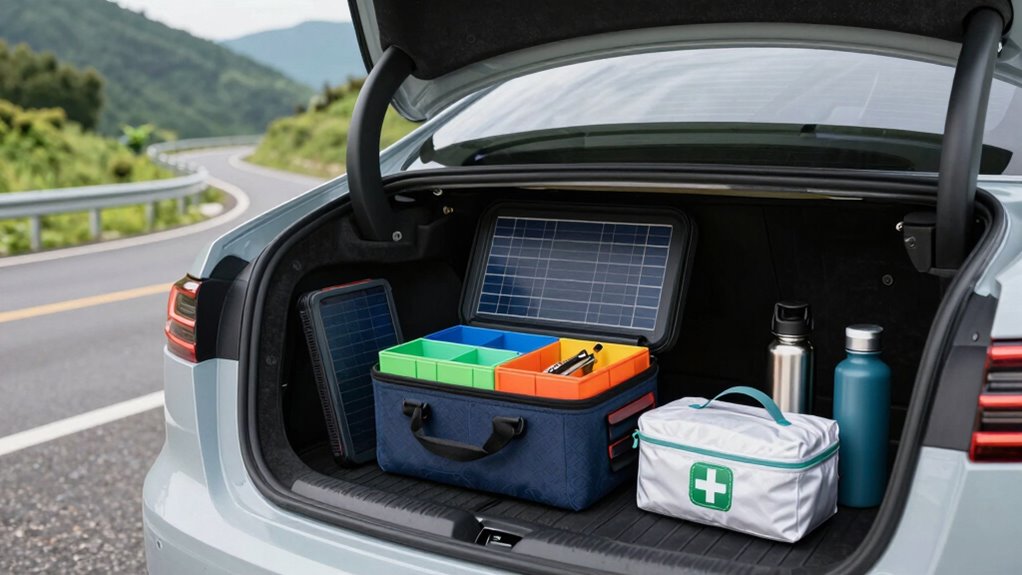
To build a better emergency kit for electric road trips, start by packing essential tools like a tire inflator, jumper cables, and a basic first aid kit. Include charging cables compatible with different stations and a portable power bank to stay connected. Add spare batteries or a portable charger for backup power. Stay updated on charging station networks and outages to avoid surprises. Keep your kit organized and ready; more tips await to help you stay safe and prepared on every trip.
Key Takeaways
- Include portable chargers and power banks compatible with your EV for backup power during outages.
- Pack essential tools like jumper cables, tire inflator, and basic repair kits for quick fixes.
- Carry multiple charging cables suited for different station types to ensure versatile charging options.
- Incorporate a comprehensive first aid kit to handle minor injuries effectively.
- Maintain a list of nearby charging stations and their real-time status for quick access during emergencies.
Electric road trips offer a clean and efficient way to travel, but they also require careful planning, especially when it comes to emergency preparedness. One of the most important aspects is making sure you can keep your vehicle charged and ready to go, which makes understanding charging stations essential. Before hitting the road, research the locations of charging stations along your route. Use apps and maps to identify fast chargers and plan your stops accordingly. This way, you won’t get caught in a pinch without a way to replenish your battery. Remember, not all charging stations are created equal; some may offer faster charging, which can save you time during long trips. Incorporate an understanding of charging station networks into your planning to avoid unnecessary delays. Being familiar with charging station networks can help you optimize your stops and ensure a smoother journey.
Plan ahead with charging station maps to ensure smooth, timely electric road trips.
Battery maintenance is equally essential. Keep your EV’s battery in top condition by adhering to manufacturer guidelines. Regularly check your battery’s health and make sure it’s properly calibrated. Proper maintenance involves monitoring the state of charge, avoiding frequent deep discharges, and not overcharging—these practices prolong battery lifespan and ensure reliable performance. Carrying a portable charger or power bank compatible with your vehicle can serve as a backup if you’re stuck between charging stations or if your battery health begins to decline unexpectedly. Maintaining your battery isn’t just about longevity; it’s about making sure you have enough range for unexpected detours or delays, especially in remote areas where charging stations might be sparse. Battery health monitoring plays a crucial role in preventing unexpected breakdowns during your trip. Additionally, staying informed about charging station availability along your route can help you better plan your stops and avoid running low unexpectedly. Regularly reviewing charging station updates can also help you stay aware of any outages or new station openings, further enhancing your trip planning. Being aware of charge speed variations can help you choose the best stations to minimize charging time.
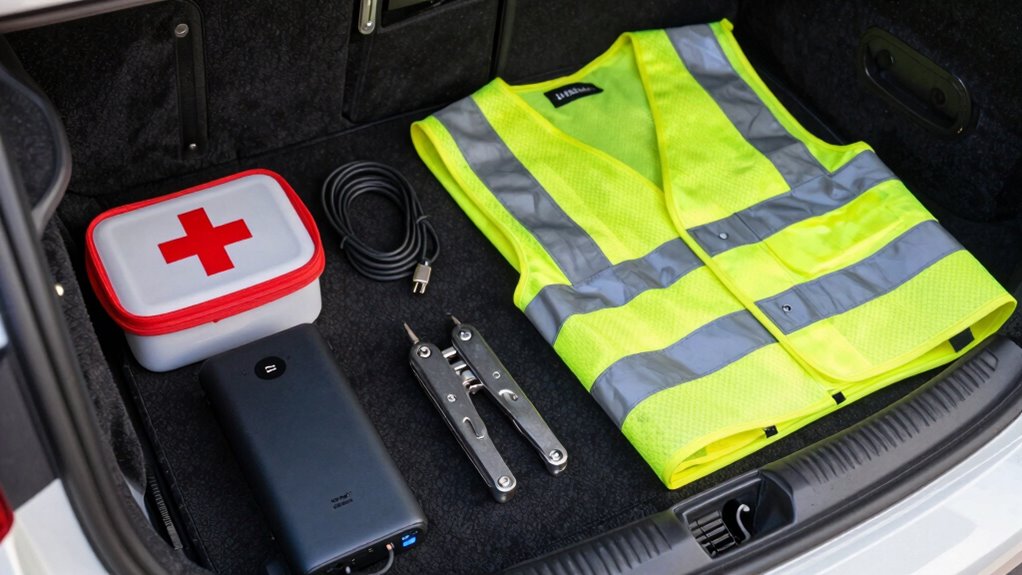
In your emergency kit, include essential tools like a tire inflator, jumper cables, and a basic first aid kit. Even though EVs don’t have traditional engines, issues like flat tires or mechanical breakdowns can still happen. A portable tire inflator can quickly restore proper pressure, which is critical for safety and efficiency. Additionally, having a set of charging cables compatible with different stations can save you time and frustration. Don’t forget to pack extra phone chargers and a portable power bank, as staying connected is essential during emergencies. These items ensure you can call for help or navigate to the nearest charging station without hassle.
Finally, stay informed about your vehicle’s battery status and charging options before and during your trip. Regularly check your battery level, and if it dips too low, head toward the nearest charging station promptly. Being prepared with knowledge about charging stations and performing good battery maintenance means you reduce the risk of being stranded or facing inconvenient delays. By integrating these practices into your planning, you’ll build a resilient emergency kit that keeps you safe and confident on your electric road trip adventures.

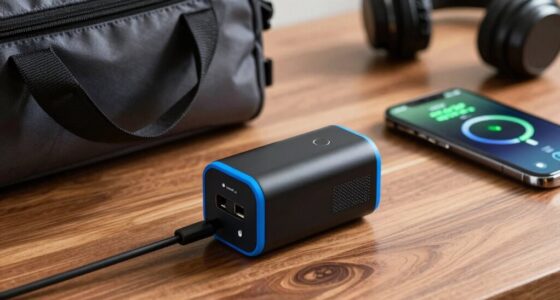
DARAN Portable Power Station 89.6Wh LiFePO4 Battery 100W(200W Peak) Solar Power Bank, Portable Charger Small Generator with AC Outlets & PD Fast Charging for Home/Laptop/Camping(Solar Panel Optional)
【SLIM & POCKETABLE】This portable power bank is about the size of a smartphone (6.5×3.3×4 inches) and weighs only…
As an affiliate, we earn on qualifying purchases.
As an affiliate, we earn on qualifying purchases.
Frequently Asked Questions
How Often Should I Update My Emergency Kit?
You should update your emergency kit at least every six months to guarantee everything remains functional. Regular emergency kit maintenance helps you check for expired items and replace them as needed. Pay close attention to kit expiration dates on items like batteries, food, and medical supplies. Seasonal changes or recent trips also warrant a quick review, ensuring your kit is ready whenever you need it, providing peace of mind on electric road trips.
What Are the Best Portable Charging Options?
When it comes to keeping your devices alive on the road, you’ll want the best portable power banks and car jump starters. These compact heroes offer reliable charging, ensuring your devices stay powered during unexpected stops. Look for high-capacity power banks with fast-charging features, and a sturdy car jump starter that doubles as a portable charger. Together, they provide peace of mind, keeping your electric road trip smooth and stress-free.
How Do I Store Fragile Emergency Supplies?
You should store fragile supplies in sturdy, padded storage solutions like hard-shell cases or containers with foam inserts. These protect items from impact and prevent breakage during transit. Keep your fragile supplies organized and easily accessible by labeling compartments clearly. Avoid overpacking, which can cause pressure and damage. Regularly check your storage solutions for wear and tear, ensuring your emergency supplies stay intact and ready when you need them most.
Can Solar Panels Power My Emergency Devices?
Yes, solar panels can power your emergency devices, especially with modern solar technology. They convert sunlight into electrical energy, which you can store using reliable power storage solutions like portable batteries or power banks. Make certain your solar panels are efficient and compatible with your devices, so you’re always prepared. With the right setup, you can harness the sun’s power to keep essentials running during electric road trips and emergencies.
What Should I Include for Extreme Weather Conditions?
In extreme weather, you should pack climate-specific supplies like thermal blankets, insulated clothing, and waterproof gear. Include sturdy, weather-appropriate extreme weather gear such as heavy-duty gloves and hats for cold, or sun protection and lightweight clothing for heat. Don’t forget emergency food and water supplies, a portable charger, and a first aid kit. These items help you stay safe and comfortable, no matter the weather conditions during your electric road trip.

General Medi 127-Pieces Roadside Car Emergency Kit Include Mini First Aid Kit, Jumper Cables,Tow Rope, Bandage, Safety Vest, Emergency Triangle, All in One Pack
【MULTI-PURPOSE】 : Perfect for the home, workplace, cars, it also includes preparedness survival tools for outdoor activities like…
As an affiliate, we earn on qualifying purchases.
As an affiliate, we earn on qualifying purchases.
Conclusion
Now, as you pack your upgraded emergency kit, you might find yourself unexpectedly grateful when a sudden storm rolls in or your battery dips low on a remote road. That feeling of preparedness becomes your quiet reassurance, turning worries into confidence. Just like that unexpected rainbow after the rain, your thoughtfully assembled kit becomes a small stroke of luck, ensuring you’re ready for whatever the road throws your way. Safe travels—you’ve got this.

J1772 to Nema 5-15/5-20 Discharger, EV Station Charging Adapter with 0.35M Cable,EV Adapter Plug,J1772 to Nema 5-20 for E-Bike/Scooter/One Wheel
ATTENTION:As long as your charger is 240-volt compatible,the portable j1772 to 5-15/20 will work.Make sure your charger meets…
As an affiliate, we earn on qualifying purchases.
As an affiliate, we earn on qualifying purchases.

AUTOWN Flat Tire Repair Kit with Air Compressor, Professional Tire Plug Kit
Professional Quality: The AUTOWN tire repair kits are made of refined high-quality steel and upgraded to comply with…
As an affiliate, we earn on qualifying purchases.
As an affiliate, we earn on qualifying purchases.