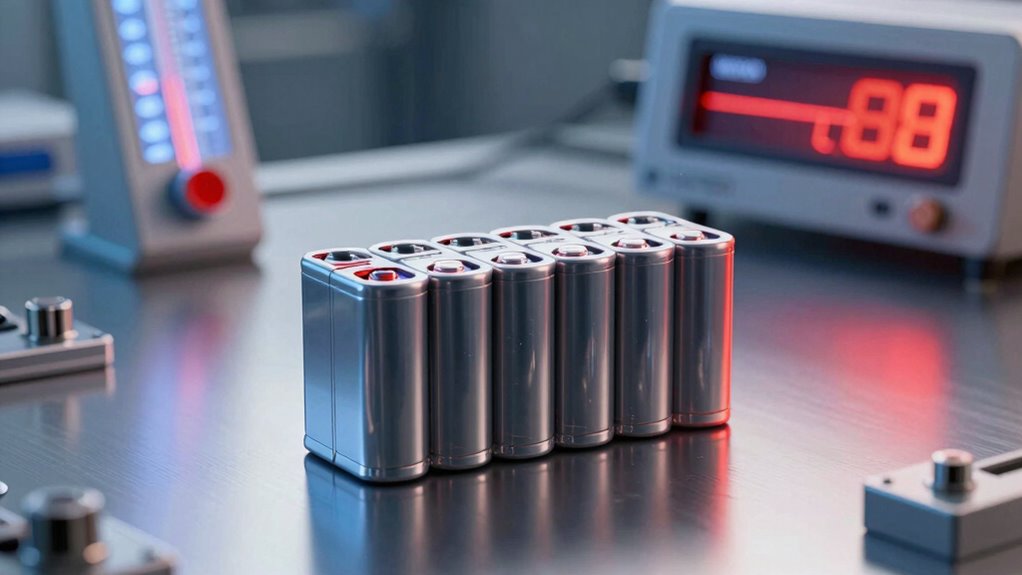

Temperature swings can seriously affect your battery’s performance because they cause internal damage, like cracks in electrodes and separators, which reduce capacity and lifespan. Rapid changes also disrupt the balance of chemical reactions, slowing them down at low temperatures and speeding them up at high temperatures, leading to side reactions and safety risks. Managing these temperature shifts is complex, but if you want to understand how to protect your battery better, keep exploring the details.

Get backup power and energy gear delivered free with Prime
- Fast, free delivery on millions of items
- Prime Video, Amazon Music and more included
- Member-only deals all year
Key Takeaways
- Temperature swings cause mechanical stress, leading to microscopic cracks in electrodes and separators, degrading battery capacity.
- Rapid temperature changes disrupt electrochemical stability, affecting ion flow and reaction efficiency.
- Extreme heat can trigger thermal runaway, while cold temperatures slow reactions, both impairing performance.
- Repeated thermal cycling weakens internal components, increasing capacity loss and safety risks.
- Material sensitivity to temperature fluctuations accelerates degradation, reducing overall battery lifespan.

Temperature swings can profoundly impact your battery’s performance, often causing it to degrade faster than expected. When temperatures fluctuate dramatically, the materials inside your battery expand and contract—a phenomenon known as thermal expansion. This constant movement affects the internal structure, leading to mechanical stress that can cause microscopic cracks or fractures in the electrodes and separators. Over time, these tiny damages accumulate, reducing the battery’s ability to hold a charge and diminishing its overall lifespan.
Temperature swings cause internal damage, reducing battery life and performance over time.
Moreover, thermal expansion disrupts the delicate balance of electrochemical stability within the battery. Your battery relies on a stable environment where ions flow smoothly between electrodes during charge and discharge cycles. When temperatures rise or fall sharply, this stability is compromised. High temperatures accelerate chemical reactions inside the cell, which can lead to unwanted side reactions and even the formation of solid electrolyte interphase (SEI) layers that hinder ion movement. Conversely, low temperatures slow down these reactions, reducing performance and making it harder for your battery to deliver power when you need it most. The electrochemical processes within a battery are highly sensitive to temperature variations, further emphasizing the importance of thermal stability.
Fast temperature swings also strain the battery’s ability to manage heat effectively. As the temperature increases rapidly, the heat generated can overwhelm cooling systems, causing further thermal imbalance. When temperatures drop suddenly, the electrolyte’s viscosity increases, impeding ion flow and reducing efficiency. These rapid changes challenge the battery’s thermal management system, pushing it beyond its designed capacity and increasing wear and tear. Additionally, improper thermal management can lead to thermal runaway, which is a significant safety concern. The materials’ thermal sensitivity plays a crucial role in how well a battery can withstand these fluctuations without damage.
Repeated temperature fluctuations can weaken the internal components, leading to a loss of electrochemical stability. This instability means that the battery becomes more prone to capacity loss, increased self-discharge, and even safety hazards like overheating or swelling. The materials used in the electrodes and electrolytes are especially sensitive to temperature changes; their properties can shift with thermal expansion, leading to misalignment or degradation that hampers performance. Understanding material sensitivity is crucial for designing batteries that withstand temperature fluctuations better.
Products Worth Considering

Milwaukee M18 FUEL 18V Lithium-Ion Brushless Cordless 1 in. Impact Wrench Extended Reach D-Handle Kit with Two 12.0 Ah Batteries

NOCO Boost GB70 2000A UltraSafe Jump Starter, 12V Lithium Battery Booster

NOCO Boost GB50 1500A UltraSafe Jump Starter, 12V Lithium Battery Booster
As an affiliate, we earn on qualifying purchases.
Frequently Asked Questions
How Do Extreme Cold Temperatures Specifically Impact Battery Lifespan?
Extreme cold temperatures shorten your battery’s lifespan because they cause thermal expansion and contraction, stressing internal components. This temperature fluctuation affects chemical stability, making it harder for the battery to hold a charge. When your battery experiences cold, the electrolyte becomes less conductive, reducing efficiency. Over time, these stresses degrade the internal structure, leading to diminished capacity and ultimately, a shorter lifespan. Keep your battery warm to preserve its longevity.
Can Frequent Temperature Fluctuations Cause Permanent Battery Damage?
Frequent temperature fluctuations can cause severe damage, like a rollercoaster tearing through your battery’s core. This process, known as thermal cycling, accelerates battery degradation and can lead to permanent damage over time. Each cycle weakens internal components, making your battery less efficient and shortening its lifespan. So, yes, constant temperature swings can cause irreversible harm, pushing your battery toward failure faster than you’d expect.
What Are the Best Practices for Storing Batteries in Varying Climates?
You should store batteries in climate-controlled environments to minimize temperature swings. Using battery insulation helps protect against extreme temperatures, preventing performance loss. Keep batteries in a cool, dry place, ideally between 50-77°F (10-25°C), and avoid exposing them to direct sunlight or freezing conditions. Regularly check and recharge them if stored for long periods. These practices help maintain battery health, ensuring best performance and longevity in varying climates.
How Quickly Do Batteries Recover After Exposure to Temperature Swings?
Like a vintage radio tuning back to station, your battery recovers quickly after temperature swings, usually within hours. Proper thermal management and calibration help restore peak performance by balancing internal chemistry. However, extreme fluctuations may cause lingering effects, so monitor your battery’s health. Regular calibration ensures accurate readings, while good thermal management minimizes irreversible damage, speeding up recovery and maintaining longevity in diverse climates.
Are Certain Battery Chemistries More Resistant to Temperature Effects?
Certain battery chemistries, like lithium iron phosphate (LiFePO4), are more resistant to temperature effects because they have better chemical stability, reducing degradation during temperature swings. These chemistries maintain consistent performance and safety, even in extreme conditions. While their energy density might be lower compared to others, their stability makes them ideal for applications exposed to fluctuating temperatures, ensuring reliability and longevity in your devices or vehicles.
Conclusion
As you journey through the world of batteries, remember that temperature swings are like unpredictable weather storms, stirring chaos in their wake. They can cause your battery’s performance to wobble like a boat on rough seas, draining its strength and lifespan. Staying mindful of these temperature shifts is your lighthouse, guiding you to keep your battery steady and reliable. Embrace the calm after the storm, and let your battery shine bright, unfazed by the changing skies.