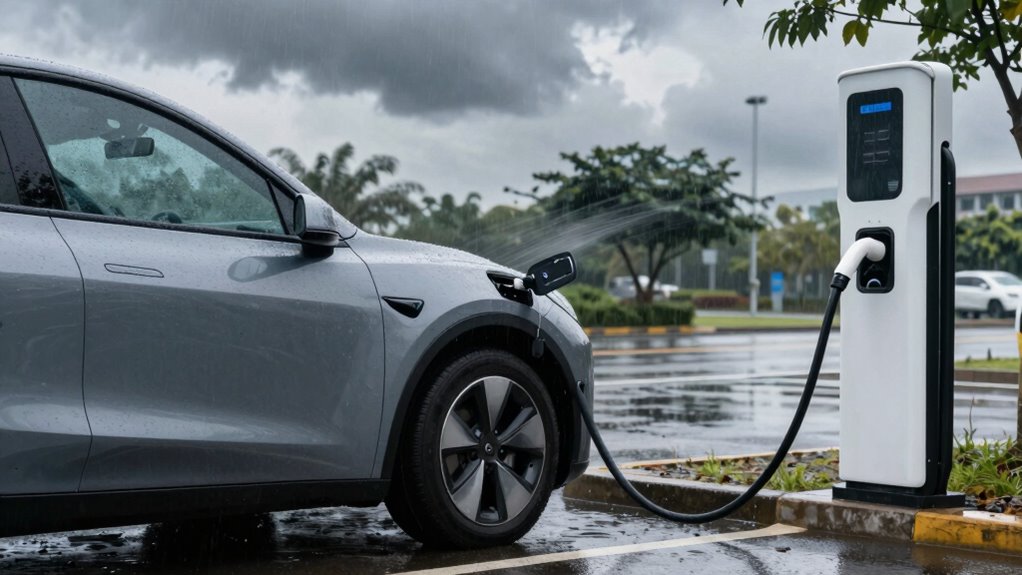
Weather conditions can considerably impact your public charging experience. Clouds and rain reduce solar efficiency, leading to slower charging times or interruptions, especially if grid support isn’t enough. Cold weather slows battery performance, while snow blocks panels and creates hazards. Heatwaves can cause overheating, and wind may damage equipment or cause debris interference. These environmental factors emphasize the importance of resilient infrastructure to keep your charging reliable across all weather types—stay tuned to learn more about how these challenges are managed.
Key Takeaways
- Cloud cover and rain reduce solar panel efficiency, decreasing power generation and potentially delaying charging sessions.
- Cold temperatures lower battery efficiency, slowing charging rates and impacting overall station performance.
- Snow accumulation on solar panels blocks sunlight, further decreasing solar energy input.
- High temperatures can cause equipment overheating, leading to performance degradation and increased cooling needs.
- Windy conditions may damage infrastructure or disrupt connections, causing delays and safety concerns.
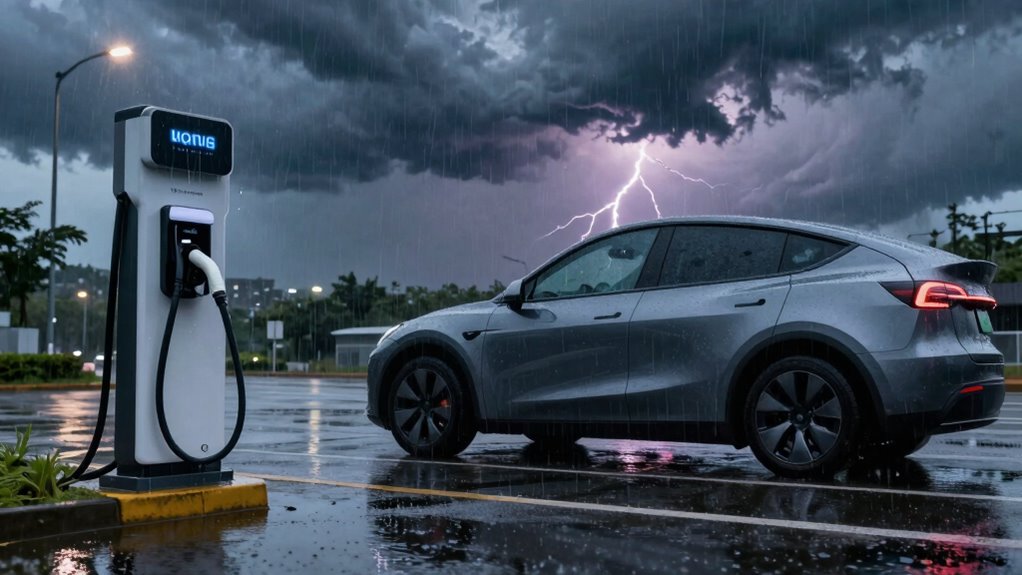
Weather conditions can considerably impact the performance of public EV charging stations, affecting how quickly and reliably your vehicle charges. When the sky is overcast or rainy, the efficiency of solar-powered charging stations drops because cloud cover reduces solar efficiency. This means less sunlight hits the solar panels, decreasing their ability to generate power. As a result, charging stations relying on solar energy may operate at lower capacity during poor weather, leading to longer charging times or even interruptions if the grid isn’t prepared to compensate. This fluctuation highlights the importance of grid resilience, which is the ability of the electrical system to adapt to changes in power supply and demand. When solar efficiency dips due to weather, a resilient grid can draw on other energy sources or storage solutions to keep charging stations operational, ensuring you still have a reliable charging experience.
Weather impacts EV charging speed and reliability; resilient grids help maintain service during solar efficiency dips.
Extreme cold or snow can also hamper public charging performance. Cold temperatures reduce battery efficiency and slow down the charging process. Plus, snow accumulation on solar panels can block sunlight, further diminishing solar efficiency. In these conditions, the reliance on grid resilience becomes critical. A well-designed grid can balance the load, drawing power from diverse sources to ensure that charging stations remain available despite weather challenges. Additionally, climate conditions can influence the overall system performance, emphasizing the need for adaptable infrastructure. Cold weather can also cause freezing of connectors, leading to potential safety hazards and delays. Conversely, heatwaves can cause equipment overheating, potentially degrading the performance of chargers and increasing downtime. High temperatures can also affect the grid’s capacity, especially if cooling demands surge across the power network. Furthermore, weather-related maintenance becomes essential to keep the infrastructure operational during extreme conditions.
Windy weather can physically impact outdoor charging stations, especially if they’re exposed or not well-secured. Strong gusts may damage equipment or cause debris to interfere with connectors and cables, leading to delays or unsafe charging conditions. Weather-related disruptions not only affect solar efficiency but also strain the grid’s resilience. When multiple stations face issues simultaneously, the grid must quickly adapt by rerouting power or activating backup systems to prevent widespread outages. Additionally, full audit trails and security measures are vital in managing and restoring service during such environmental challenges, ensuring safety and accountability. As you can see, weather impacts all facets of public charging, from solar efficiency to grid resilience, emphasizing the importance of resilient infrastructure that can withstand environmental challenges and deliver consistent service.
In essence, weather impacts all facets of public charging, from solar efficiency to grid resilience, emphasizing the importance of resilient infrastructure that can withstand environmental challenges and deliver consistent service. A thorough understanding of weather-related factors can help users better plan their charging sessions and mitigate potential delays.

Feltectors Portable RV Solar Panel Carrying Case for Jackery SolarSaga 100W & 50W Bag Fits 2 Foldable Solar Panels 29 x 50 Inch
- Custom-fit for Jackery SolarSaga: Fits 100W & 50W panels 29×50 inches
- Protects during transport: Durable, padded case for RV and camping
- Stores two panels securely: Prevents scratches, edge damage, and tangling
As an affiliate, we earn on qualifying purchases.
As an affiliate, we earn on qualifying purchases.
Frequently Asked Questions
How Does Extreme Heat Affect Charging Station Hardware Longevity?
Extreme heat can shorten your charging station’s hardware longevity by causing thermal expansion, which stresses components and leads to potential failures. It also accelerates insulation degradation, risking electrical shorts or malfunctions. You might notice more frequent maintenance needs or reduced reliability over time. To protect your investment, guarantee proper cooling systems and durable insulation materials are in place, helping your stations withstand high temperatures and maintain maximum performance longer.
Are There Specific Weather Conditions That Completely Disable Charging Stations?
Certain weather conditions, like intense storms with strong winds, can completely disable charging stations through wind damage. Solar interference from heavy cloud cover or storms may reduce solar-powered station efficiency, but usually doesn’t cause total failure. However, extreme weather, such as hurricanes or tornadoes, can cause physical damage, leading to station outages. You should always check local weather alerts before relying on public charging stations during severe conditions.
Does Rain Impact the Safety of Public Electric Vehicle Charging?
Rain doesn’t necessarily threaten rain safety at charging stations, but it does require storm preparedness. Wet conditions can increase the risk of electrical shock if equipment isn’t properly insulated or maintained. Always confirm charging stations are designed to handle rain, with protective covers and safety features. By staying vigilant and prepared, you can safely charge your EV in rain, turning a potential hazard into a moment of cautious confidence.
How Quickly Does Cold Weather Reduce Charging Speed?
Cold weather can considerably reduce your charging speed, often within minutes. As temperature drops, your vehicle’s battery efficiency decreases because of limited temperature regulation, causing slower charging. Low temperatures hinder the chemical reactions inside the battery, making it less responsive to charging currents. To minimize this effect, try preconditioning your vehicle while it’s still plugged in or park in a warmer spot, so your battery stays warmer and charges more efficiently.
Are There Weather-Related Maintenance Issues for Charging Infrastructure?
You might face weather-related maintenance issues at charging stations, especially with solar efficiency dropping during cloudy or snowy days, which reduces energy input. Wind interference can also cause physical wear and tear on equipment, leading to more frequent repairs. Additionally, extreme temperatures can affect the circuitry and connectors, making regular upkeep vital. Staying aware of these factors helps ensure your charging station remains dependable regardless of weather conditions.
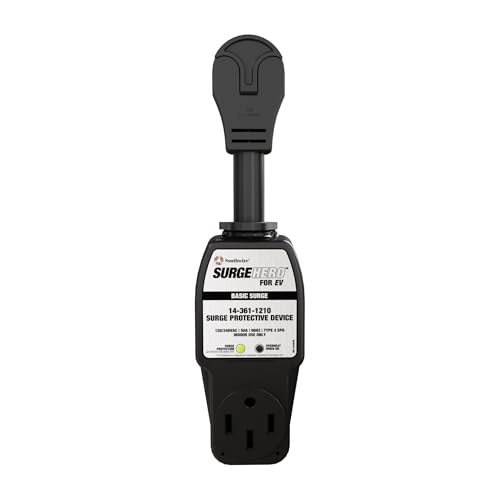
Southwire SurgeHero™ EV Surge Protector NEMA 14-50 50A Indoor
- Surge Protection Capacity: 4200 Joules for EV chargers
- Protects Against Power Surges: Defends against lightning and grid fluctuations
- Easy Installation: Plug-and-play NEMA 14-50 design
As an affiliate, we earn on qualifying purchases.
As an affiliate, we earn on qualifying purchases.
Conclusion
So, next time you’re charging your EV outdoors, consider how the weather might unexpectedly impact your experience. A sudden drop in temperature or unexpected rain could slow down your charging or even cause inconvenience. It’s funny how nature’s tiny surprises can influence our routines, isn’t it? Just like the weather changes without warning, so should your awareness of how it affects public charging. Stay prepared and adaptable—you never know when a weather twist might catch you off guard.

Zerostart 2800063 Electric Battery Blanket Battery Heater Wrap, 36-Inch | CSA Approved | 120 Volts | 80 Watts, Black
- Thermal Insulation: Maintains battery temperature in all weather
- Dimensions and Cord Length: 36-inch length with 30-inch ground cord
- CSA Approved: Warms battery to 60-70°F above ambient
As an affiliate, we earn on qualifying purchases.
As an affiliate, we earn on qualifying purchases.

EV Charger Lock Box Outdoor, Wall-Mount Enclosure for Tesla Model Y/3/S/X & Most EV Chargers ≤17”×10”×7” – Weatherproof Anti-Theft with Multiple Cable Entry
- Compatibility & Size: Fits chargers up to 17”×10”×7”
- Wall-Mount Installation: Secure mounting with hardware included
- Multiple Cable Entry: Knockout ports on top, sides, bottom
As an affiliate, we earn on qualifying purchases.
As an affiliate, we earn on qualifying purchases.