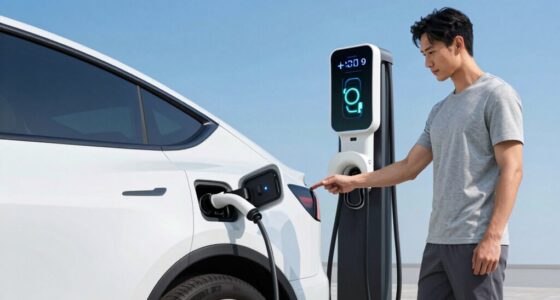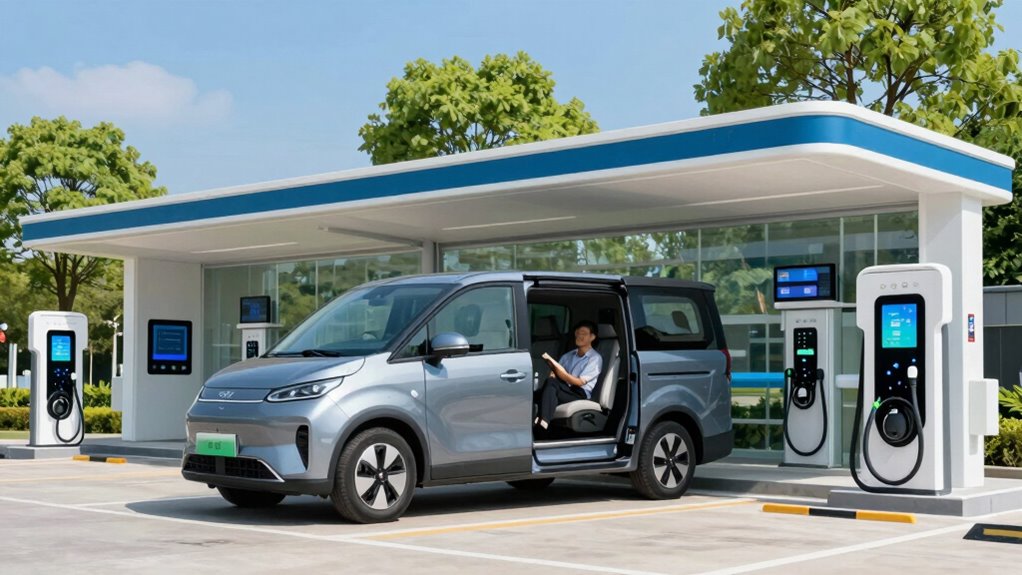

To use charging stops to reduce driver fatigue, plan your stops strategically along your route, especially during lighter traffic times. Take breaks at charging stations to rest, stretch, and hydrate, which helps you stay alert. Keep an eye on your vehicle’s battery level and project range, and head for chargers before you get too low. By timing stops well and choosing convenient locations, you’ll stay refreshed and safe throughout your trip. Learn more about optimizing your stops for maximum safety.

Get backup power and energy gear delivered free — and shop member deals
- Fast, free delivery on millions of items
- Access to Prime Big Deal Days deals on October 6–7
- Prime Video, Amazon Music and more included
Key Takeaways
- Schedule frequent, shorter charging stops to provide regular breaks and prevent prolonged driver fatigue.
- Plan stops during lighter traffic periods to reduce stress and maintain steady driving conditions.
- Monitor vehicle data to identify when battery levels are low and time stops accordingly.
- Choose charging locations near rest areas or major routes for convenient, relaxing breaks.
- Incorporate stretching, hydration, and rest during charging to refresh and stay alert.

Long hours behind the wheel can substantially increase driver fatigue, which not only compromises safety but also hampers alertness and decision-making. One effective way to combat this is by strategically planning charging stops, which serve as natural breaks during long journeys. When you incorporate charging stops into your route, you give yourself the chance to recharge both your vehicle and your mental energy. To do this effectively, you need to consider battery efficiency—how far your vehicle can travel on a full charge—and how traffic patterns influence your journey. By aligning charging stops with periods of lighter traffic, you minimize delays and reduce the stress that often comes with congested roads. This way, you can take shorter, more frequent breaks without considerably extending your travel time, helping you stay alert and focused.
Strategic charging stops reduce fatigue, improve safety, and keep you alert during long drives.
Understanding traffic patterns is vital for optimizing your charging stops. Traffic tends to fluctuate throughout the day, and by avoiding peak rush hours, you decrease the risk of being stuck in stop-and-go conditions. These conditions can drain your battery faster and increase your fatigue, as you’re fighting against congestion rather than cruising smoothly. Planning your charging stops during times of lighter traffic allows you to maintain a steady pace, which not only improves your vehicle’s battery efficiency but also keeps you more relaxed. Additionally, choosing charging locations along major routes or near rest areas can enhance convenience, making your breaks more effective and less disruptive to your overall schedule. Incorporating traffic pattern analysis can further improve your trip planning by providing insights into optimal times for travel and charging. Being aware of traffic flow patterns also helps you anticipate and avoid unexpected delays that could impact your rest and alertness. Recognizing these traffic fluctuations can help you better adapt your schedule and avoid unnecessary stress.
As you plan your trip, keep an eye on your vehicle’s battery level and projected range. When you notice your battery approaching a lower threshold—say, 20-30% remaining—it’s time to look for a charging station nearby. Modern navigation systems often provide real-time updates on charger availability and traffic conditions, helping you pick the best stop. During these breaks, step out of the vehicle, stretch, hydrate, and rest briefly. These actions can dramatically reduce fatigue, sharpen your focus, and improve your overall safety on the road. Remember, the goal isn’t just to recharge your car but to give yourself a mental breather that enhances your alertness for the remaining drive.
Incorporating well-timed charging stops based on battery efficiency and traffic patterns doesn’t just extend your vehicle’s range; it actively reduces driver fatigue. By planning ahead and choosing the right moments to pause, you preserve your energy, stay safer, and arrive at your destination more alert and ready. This smart approach makes long trips more manageable, ensuring you remain attentive and in control from start to finish. Recognizing the importance of traffic patterns can significantly improve your overall trip experience and safety.
electric vehicle charging station organizer
As an affiliate, we earn on qualifying purchases.
As an affiliate, we earn on qualifying purchases.
Frequently Asked Questions
How Long Should Each Charging Stop Last?
You should aim for charging stops lasting about 20 to 30 minutes, allowing your battery efficiency to improve without wasting time. This duration strikes a balance, especially when using reliable charging infrastructure. Faster chargers can cut this time down, but always consider how your vehicle’s battery responds to charging. Short, frequent stops help maintain your energy levels and reduce fatigue, making your trip smoother and safer.
What Is the Ideal Frequency for Charging Stops?
Think of your journey as a marathon, not a sprint. You should plan charging stops every 2-3 hours, depending on your battery efficiency and the availability of charging infrastructure. Regular stops keep your energy levels steady and prevent fatigue. By aligning your charging schedule with infrastructure access, you guarantee a smooth ride, avoiding unnecessary delays and maintaining focus, so you arrive refreshed and ready for the next leg of your trip.
Are There Specific Charging Stations Better for Fatigue Management?
Yes, some charging stations are better for fatigue management. Look for stations with amenities like comfortable seating, rest area facilities, and clean restrooms, which help you relax during charging. Stations located in well-maintained rest areas offer better comfort and reduce fatigue. Prioritize these stations, so your breaks are more restorative, keeping you alert and safe on the road. Choosing the right station can make a significant difference in your overall driving experience.
How Do Charging Stops Impact Overall Travel Time?
Charging stops can slightly increase your overall travel time, depending on battery capacity and the charging infrastructure available. With larger battery capacity, you’ll need fewer stops, reducing delays. Efficient charging stations, especially fast chargers, help minimize downtime. Planning your route around reliable charging infrastructure guarantees smoother stops, so you spend less time waiting and more time on the road. Proper planning makes charging stops a manageable part of your trip.
Can Charging Stops Be Combined With Other Rest Activities?
Yes, you can combine charging stops with other rest activities, like a snack break at a rest area. Planning your charging and rest activities together helps maximize your time on the road. During your charging stop, you can stretch, grab a snack, or take a short walk, which reduces fatigue and keeps you alert. This efficient approach guarantees you stay refreshed while making the most of each stop.
As an affiliate, we earn on qualifying purchases.
Conclusion
By strategically scheduling charging stops, you can considerably reduce driver fatigue and stay alert on long journeys. Imagine you’re driving an electric delivery van; taking a break at a charging station every two hours not only recharges your vehicle but also gives you a moment to rest and recharge yourself. This simple adjustment helps maintain focus, decreases the risk of accidents, and guarantees you arrive safely and refreshed, proving that smart planning makes all the difference.
hydration water bottle for driving
As an affiliate, we earn on qualifying purchases.
As an affiliate, we earn on qualifying purchases.
As an affiliate, we earn on qualifying purchases.
Fall Picks
fall essentials
As an affiliate, we earn on qualifying purchases.