
Before buying home charging gear, consider the cable reach to guarantee safe and convenient use. Measure the distance from your outlet to your parking spot, accounting for obstacles and future needs. A cable that’s too short can cause strain or disconnects, while one that’s too long may create clutter and hazards. Prioritize quality and compatibility for durability. If you continue, you’ll discover key tips to optimize your setup and assure a smooth charging experience.
Key Takeaways
- Measure the distance from your outlet to the parking spot, including obstacles, to ensure an appropriate cable length.
- Consider future expansion plans and additional outlets to avoid needing longer cables later.
- Choose a cable length that provides sufficient reach without excessive slack or strain.
- Proper cable management prevents tripping hazards and maintains cable longevity.
- Verify compatibility between your vehicle, charging unit, and cable length for safe, efficient charging.
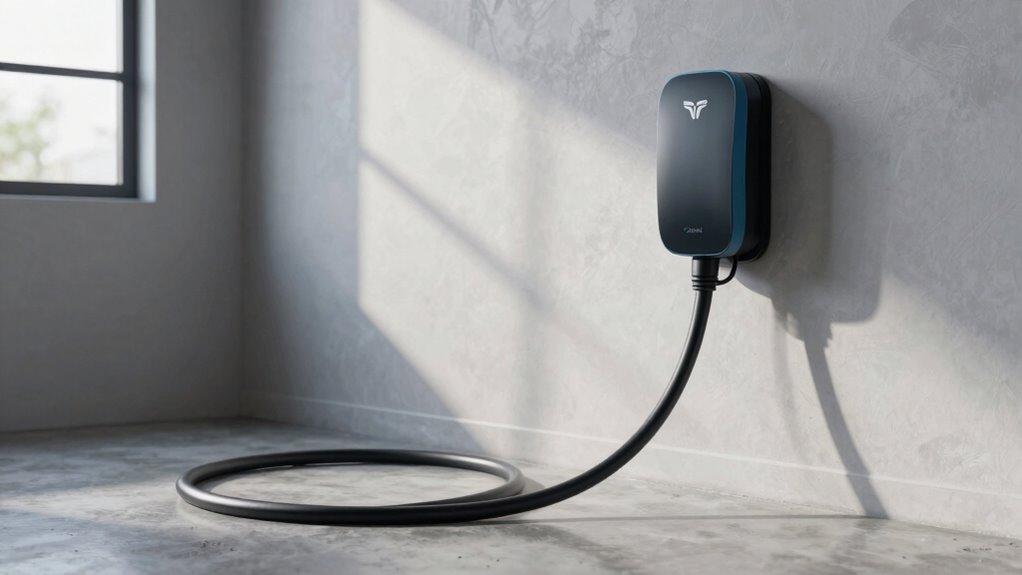
When choosing home charging gear for your electric vehicle, cable reach often gets overlooked but plays an essential role in convenience and safety. The length of the charging cable determines how easily you can connect your vehicle to the power source without stretching or maneuvering awkwardly. A cable that’s too short forces you to park in specific spots or move your vehicle closer to the outlet, which might not always be practical or safe. Conversely, a cable that’s too long can create clutter or pose tripping hazards. To find the right fit, you need to consider your home’s electric vehicle infrastructure, especially how your power outlets are positioned relative to your parking spot.
Understanding your power outlet placement is key. If your outlets are located far from where you typically park, you’ll need a longer cable. Conversely, if the outlets are nearby, a shorter cable will suffice and reduce unnecessary slack. Measure the distance from the outlet to your usual parking spot, including any potential obstacles like walls or furniture, to determine the ideal cable length. Keep in mind that the cable should comfortably reach without strain or forcing the connector into an awkward angle, which can damage both the cable and your vehicle’s charging port. Additionally, considering your home electrical system** can help ensure your setup remains safe and efficient as you expand your electric vehicle infrastructure. Being aware of the cable quality can also impact longevity and safety, ensuring your investment lasts and performs well. It’s also wise to check for compatibility between your vehicle and charging equipment to avoid any unforeseen issues. Proper cable management can help keep your space organized and prevent wear and tear on the cable over time. An understanding of electric system capacity** can also influence the size and type of charging equipment best suited for your needs.
It’s also important to think about the overall layout of your home’s electrical system. Some homes have outlets installed in convenient locations, making charging simple and efficient. Others might require you to extend the reach or install new outlets for the best setup. When planning for future electric vehicle infrastructure, consider installing additional outlets in strategic locations, so you won’t be limited by cable length or placement issues later on. This proactive approach can save you money and hassle down the line.
Choosing a home charging setup with the right cable reach ensures safety by preventing accidental disconnections or damage. It also enhances convenience, allowing you to park comfortably without bending, stretching, or repositioning your vehicle. Remember, the goal is to select a cable length that matches your typical parking habits and the placement of your power outlets. Taking these factors into account helps you avoid frustration and makes daily charging routines much smoother. Ultimately, proper planning around cable reach and outlet placement creates a safer, more efficient home charging experience for your electric vehicle.

MUSTART Level 2 Portable EV Charger (240 Volt, 25ft Cable, 25 Amp), Electric Vehicle Charger Plug-in EV Charging Station with NEMA 10-30P
FAST CHARGING SPEEDS WITH UPGRADE VERSION: The MUSTART upgraded 25A level 2 EV charger which is more sturdy,…
As an affiliate, we earn on qualifying purchases.
As an affiliate, we earn on qualifying purchases.
Frequently Asked Questions
Can Cable Reach Issues Affect Charging Speed?
Cable reach issues can definitely affect your charging efficiency. If your cable isn’t long enough, you might have to position your device awkwardly, which can lead to slower charging or disconnections. Ensuring cable compatibility with your charger and device helps prevent these issues, allowing for a smooth, efficient charging experience. Always check cable length and compatibility before purchasing to avoid any inconvenience or reduced charging speeds.
Are Longer Cables More Prone to Damage?
Longer cables are like delicate vines—more prone to damage if not handled carefully. They tend to have lower cable durability, making them more susceptible to wear and tear. Flexibility concerns also come into play, as extended cables can become stiff or tangled, increasing the risk of internal damage. To avoid issues, choose a cable that balances length with quality, ensuring it’s durable and flexible enough for everyday use.
How Do I Measure the Required Cable Length?
To measure the required cable length, start by identifying where you’ll park your vehicle and where your charging station will be installed. Consider cable storage options to keep excess cable neat and safe. Account for connector types, ensuring the cable reaches comfortably without stretching or strain. Measure the distance between the power source and the vehicle’s charging port, adding a few extra feet for flexibility and proper cable management.
What Safety Concerns Exist With Extended Cables?
Are extended cables safe for your home charging setup? They can pose risks like tripping hazards or electrical shorts if not managed properly. To stay safe, use proper cord management and storage solutions to prevent tangling and damage. Keep cables off walkways and avoid stretching them across tight spaces. Regularly inspect your cables for wear and tear, and don’t overload outlets. Proper safety practices make certain your charging setup remains both functional and secure.
Do Cable Reach Needs Differ for Indoor Versus Outdoor Charging?
Yes, your cable reach needs differ for indoor versus outdoor charging. For indoor flexibility, you’ll want a shorter, easily manageable cable that can reach your charging station without clutter. Outdoors, outdoor durability is key, so opt for longer cables that withstand weather conditions and rough handling while maintaining safety. Make certain your outdoor cables are rated for weather exposure to prevent damage, while indoor cables prioritize convenience and flexibility.
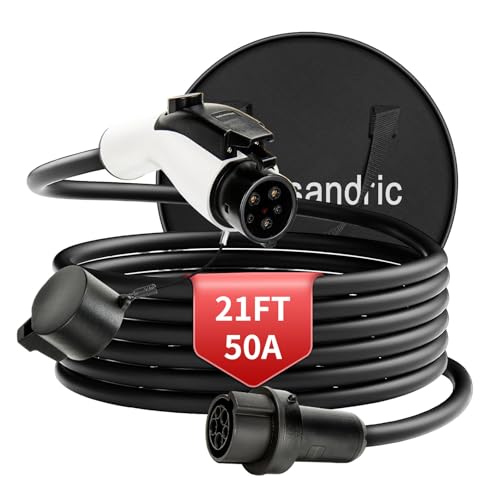
Wissandric EV Charger Extension Cable 21FT 50A Level 2 – Heavy Duty J1772 Extension Cord, 240V Waterproof 8 Gauge UL Certified EV Charging Extension Cord (21FT,50A)
50A Heavy-Duty Power — Fast & Reliable EV Charging: Charge confidently with a UL Certified 50 Amp 240V…
As an affiliate, we earn on qualifying purchases.
As an affiliate, we earn on qualifying purchases.
Conclusion
In sum, securing a suitable cable reach is essential for a convenient, clutter-free charging experience. By balancing length, location, and lifestyle, you prevent potential pitfalls and promote a perfect parking spot for your plug-in. Prioritize practicality while pondering power, placement, and preferences. Prepare for the future with a flexible, fuss-free setup. Remember, a well-wielded wire will work wonders and wield your worries away, ensuring a seamless, satisfying, and stress-free charging saga.
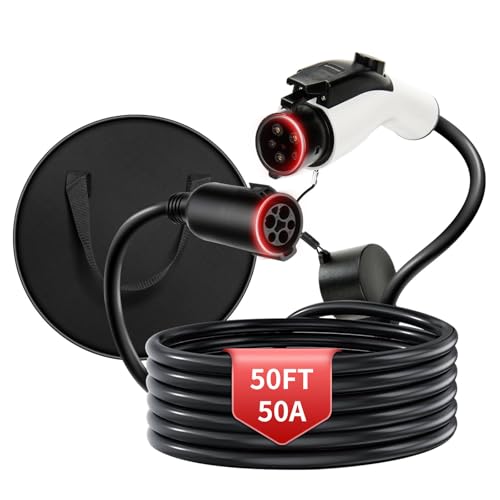
WenStorm 50A 50FT J1772 EV Extension Cable, Level 2 EV Charger Extension Cord, Heavy-Duty 240V EV Extension Cable for Fast Charging (50FT)
Extended Charging Reach: Add 50FT of range to your charger with this durable J1772 extension cable, perfect for…
As an affiliate, we earn on qualifying purchases.
As an affiliate, we earn on qualifying purchases.
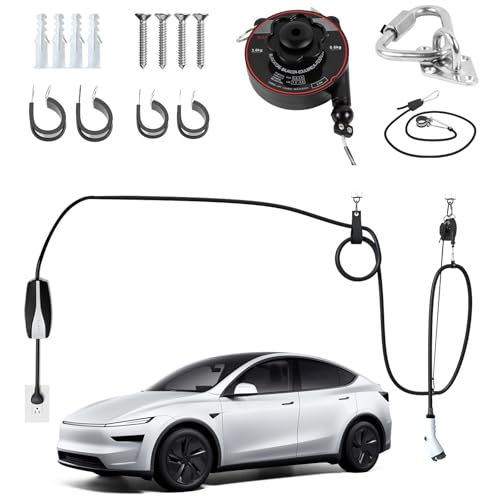
Flexible charging Universal EV Overhead Retractable Cable Management System for Tesla & Other Electric Vehicles,Garage Charging Cable Organizer for All Level 2 Chargers-Mounts to Ceiling and Wall
[Universal Compatibility] Works with Tesla Wall Connector (Gen 3), Tesla Mobile Connector, and other common EV chargers. It…
As an affiliate, we earn on qualifying purchases.
As an affiliate, we earn on qualifying purchases.