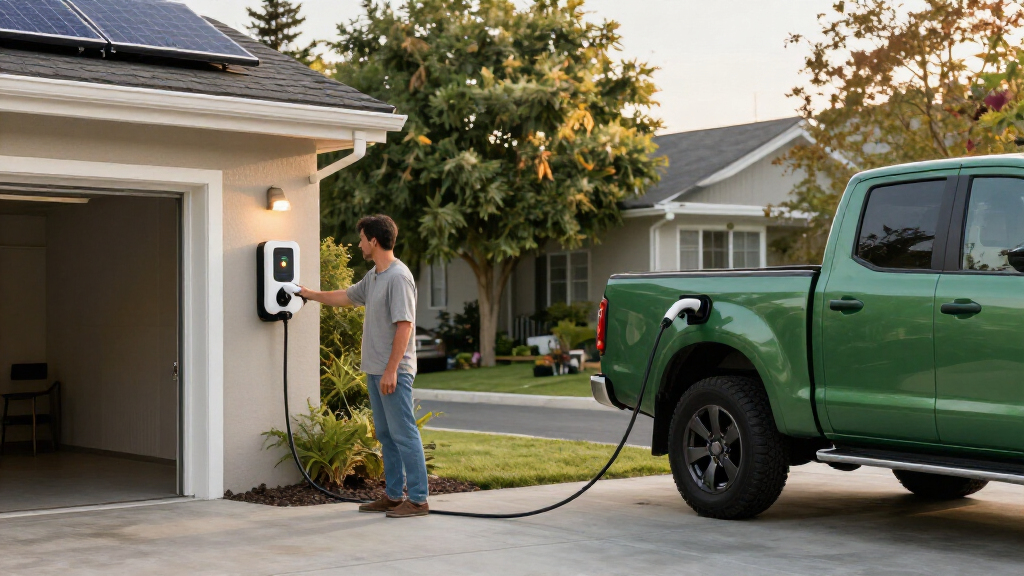

Choosing the best electric truck charging station requires balancing raw amperage with smart features, especially for vehicles with large battery packs like the F-150 Lightning or Rivian R1T. My top recommendation for most buyers is the Autel MaxiCharger Level 2 50A due to its robust build and reliable smart connectivity. For those needing maximum throughput for dual-truck households, the Autel MaxiCharger 80A stands out as a premium choice that future-proofs your garage. The main tradeoff in this category is between hardwired permanence and portable flexibility, with smart Wi-Fi features adding cost but offering valuable scheduling control. Continue reading to see how these models stack up against budget-friendly and compact alternatives.

Get backup power and energy gear delivered free with Prime
- Fast, free delivery on millions of items
- Prime Video, Amazon Music and more included
- Member-only deals all year
Key Takeaways
- 50A hardwired units provide the necessary overhead for 150-amp residential panels to handle high-power electric trucks without tripping breakers.
- NACS compatibility is becoming a decisive factor for Tesla owners, while J1772 remains the universal standard for non-Tesla trucks.
- Smart features like Wi-Fi scheduling and load balancing add value by preventing panel overload during peak hours, a common issue with Level 2 charging.
- Cable length differences of 5 to 10 feet significantly impact installation flexibility and cost, often requiring additional conduit runs.
- Portable Level 1/2 hybrids serve as reliable backups but lack the sustained amperage required for daily high-mileage truck commuting.




| electric truck charging station | Connector | Cable length | Maximum current | Installation |
|---|---|---|---|---|
| EVDANCE Level 1 & 2 Portable E | J1772 | 25 ft | — | — |
| Autel MaxiCharger Level 2 50A | J1772 | 25 ft | 50A | Hardwired |
| IYILO Level 2 EV Charger for T | NACS (J3400) / Tesla-style | 25 ft | — | Hardwired; 60A breaker required |
| ChargePoint HomeFlex Level 2 S | J1772 | 23 ft | — | Hardwired |
| ChargePoint HomeFlex Level 2 H | NACS | — | — | Hardwired; electrician required |
| AIXINE Level 2 EV Charger | J1772 | 25 ft | 50A, adjustable from 16A | Hardwired |
| Autel MaxiCharger 80A Level 2 | SAE J1772 | 25 ft | 80A | Hardwired |
| Grasside Level 2 EV Charger | J1772 | 25 ft | 48A | Hardwired |
| EV Range Commercial Level 2 EV | J1772 | 25 ft | 32A | — |
| BETUMODA Level 2 J1772 EV Char | J1772 | 25 ft | 40A | — |
| Grasside Level 2 EV Charger | J1772 | 25 ft | 40A, adjustable from 10A to 40A | — |
| EVWALLBOX Level 2 EV Charger f | NACS | 25 ft | — | — |
| IYILO Level 2 J1772 EV Charger | SAE J1772 | 25 ft | 48A; adjustable from 6A to 48A | Hardwired; 60A breaker and licensed electrician required for 48A operation |
| EVIQO Level 2 Hardwired EV Cha | J1772 | 25 ft | 48A; up to 50A with DIP switch settings | Hardwired; professional installation required |
| ELEGRP 40A Level 2 Portable EV | J1772 | 25 ft | 40A | — |
More Details on Our Top Picks
EVDANCE Level 1 & 2 Portable EV Charger (J1772, 16A Max, NEMA 5-15/6-20)
For truck owners who need charging flexibility more than speed, the EVDANCE portable charger is the most adaptable option here. It can use a standard 120V outlet for slow top-ups or a 240V NEMA 6-20 outlet for up to 3.84 kW, and its 25-foot cable helps reach a vehicle parked away from the outlet. Compared with the hardwired Autel MaxiCharger 50A, it is far slower, but it avoids a dedicated installation and is easier to keep as a travel or backup charger. The tradeoff is limited outlet reach: it does not directly support common NEMA 14-50 or 14-30 outlets, and its J1772 plug needs an adapter for Tesla vehicles. I would choose it for flexibility, not as a fast daily charging solution for a large-battery truck.
Pros:- Supports both 120V Level 1 and 240V Level 2 charging
- 25-foot cable offers useful reach in garages and driveways
- IP66 protection and ETL certification suit portable use
- LED display shows charging status and error information
Cons:- Maximum output of 3.84 kW is much lower than hardwired 48A–50A chargers
- No direct NEMA 14-50 or 14-30 support
- Tesla vehicles require a separate J1772 adapter, and some vehicle models are excluded
Best for: J1772 truck and plug-in hybrid owners who want a portable backup charger for garages, driveways, or occasional travel and can use 5-15 or 6-20 outlets.
Not ideal for: Drivers seeking fast overnight charging for a large-battery truck, owners relying on NEMA 14-50 outlets, or Tesla drivers without a separate J1772 adapter.
- Connector:J1772
- Voltage:120V / 240V
- Current:12A / 16A
- Maximum power:3.84 kW
- Plug types:NEMA 5-15 and NEMA 6-20
- Cable length:25 ft
- Weight:7 lb
- Certifications:ETL, FCC, CE
- Warranty:1 year
Our verdict“Choose the EVDANCE if outlet flexibility and portability matter more than charging speed.”
Autel MaxiCharger Level 2 50A Home EV Charger with J1772 Connector and 25 ft Cable
The Autel MaxiCharger 50A is a strong fit for truck owners who want high output and more connection options than a basic wall unit. Its 12 kW maximum output can replenish a compatible vehicle faster than the 16A EVDANCE, while adjustable current lets an installer match the charger to the home circuit. Wi-Fi, Bluetooth, and Ethernet give it a broader connectivity mix than the Wi-Fi-only IYILO NACS charger, which may help where wireless coverage is unreliable. Its outdoor-rated enclosure and cable described as flexible in very cold conditions also suit exposed garages and driveways. The main cost in convenience is installation: this is hardwired, so an electrician is needed, and the J1772 connector is not a direct fit for vehicles with NACS ports. I would rank it for power and connectivity, not for owners who need a plug-in unit.
Pros:- Up to 50A and 12 kW output for faster home charging than lower-amperage options
- Adjustable current from 16A to 50A can match the installed circuit
- Wi-Fi, Bluetooth, and Ethernet support app controls and scheduling
- NEMA Type 4 enclosure and cold-flexible 25-foot cable support outdoor placement
Cons:- Hardwired installation requires an electrician
- J1772 connector may require an adapter for NACS-equipped trucks
- A 50A charger needs a compatible electrical setup to reach its maximum output
Best for: J1772 electric-truck owners with a suitable 240V circuit who want high charging output, app scheduling, and indoor or outdoor installation.
Not ideal for: Renters or anyone who needs a portable plug-in charger, and NACS-vehicle owners who do not want to use an adapter.
- Charger level:Level 2
- Maximum output:12 kW
- Maximum current:50A
- Adjustable current:16–50A
- Input voltage:240V
- Connector:J1772
- Installation:Hardwired
- Cable length:25 ft
- Connectivity:Wi-Fi, Bluetooth, Ethernet
Our verdict“Pick the Autel for a permanent J1772 installation when high output and flexible connectivity outweigh plug-in convenience.”
IYILO Level 2 EV Charger for Tesla (NACS), 48A/11.5kW, UL 2594/ETL/Energy Star Certified
For a truck with a native NACS inlet, the IYILO 48A charger combines fast home charging with features aimed at managing household electrical demand. It delivers up to 11.5 kW, and adjustable current from 6A to 48A gives an installer room to set a lower draw when the home circuit calls for it. Its power-sharing and dynamic load-balancing support distinguish it from the ChargePoint HomeFlex NACS, whose listed strengths center more on app controls and cold-resistant cable. The IYILO also includes overheating protection and a three-year warranty. The tradeoffs are a required hardwired installation and a 2.4GHz-only Wi-Fi connection; non-NACS vehicles need an adapter that is not included. I would favor it where load management is a priority, but not for buyers who need broad connector compatibility out of the box.
Pros:- Up to 48A and 11.5 kW charging output
- Adjustable current supports installation-specific power limits
- Power sharing and dynamic load balancing can help manage home electrical demand
- Overheating protection and a three-year warranty
Cons:- Requires hardwired installation and a 60A breaker
- Wi-Fi connectivity is limited to 2.4GHz
- J1772 adapter for non-NACS vehicles is not included
Best for: NACS-equipped truck owners adding a hardwired home charger who want adjustable current, power sharing, and dynamic load balancing.
Not ideal for: Households with non-NACS vehicles that need a ready-to-use connector, or buyers whose home network relies on 5GHz Wi-Fi.
- Connector:NACS (J3400) / Tesla-style
- Current:6–48A adjustable
- Power output:11.5 kW
- Cable length:25 ft
- Installation:Hardwired; 60A breaker required
- Connectivity:2.4GHz Wi-Fi
- Certifications:UL 2594, ETL, Energy Star, CSA
- Weight:13.45 lb
- Warranty:3 years
Our verdict“Choose the IYILO if your truck uses NACS and home load management matters more than multi-connector flexibility.”
ChargePoint HomeFlex Level 2 Smart EV Charger, J1772, Hardwired, 50A
The ChargePoint HomeFlex J1772 makes sense for truck owners who want app-based charging controls from an established home-charger setup, while keeping the choice of a familiar J1772 connector. Its 50A hardwired design and 23-foot cold-resistant cable suit permanent indoor or outdoor installation, though the cable is slightly shorter than the 25-foot Autel MaxiCharger’s. The app adds charging information, reminders, and smart-home connections; by comparison, the EVDANCE portable charger is easier to move but lacks this level of connected control and charging output. HomeFlex’s listed charging-rate claims vary, so I would not choose it based on a precise miles-per-hour figure. Installation also calls for an electrician, and some app features depend on Wi-Fi. Tesla owners need an adapter, making the NACS ChargePoint model a simpler fit for those vehicles.
Pros:- 50A hardwired Level 2 design for home charging
- App provides charging controls, reminders, and charging information
- 23-foot cable is described as cold-resistant
- UL certification and indoor/outdoor installation suitability
Cons:- Hardwired installation requires an electrician
- Some app features and troubleshooting depend on Wi-Fi
- Tesla vehicles require an adapter, and listed charging-speed claims are inconsistent
Best for: J1772 truck owners who want a hardwired charger with app controls, reminders, and indoor or outdoor placement.
Not ideal for: Renters, buyers without reliable Wi-Fi for connected features, or Tesla owners who want a native NACS connector.
- Connector:J1772
- Installation:Hardwired
- Current:50A
- Output voltage:240V AC
- Cable length:23 ft
- Indoor/outdoor use:Yes
- Certification:UL-certified; Energy Star
- Dimensions:7.06 × 11.19 × 7.07 in
- Warranty:3 years
Our verdict“Choose this HomeFlex for connected J1772 home charging, but favor its NACS counterpart if your truck has a NACS inlet.”
ChargePoint HomeFlex Level 2 Hardwired EV Charger with NACS Connector
This NACS ChargePoint HomeFlex is the more direct choice for Tesla and other compatible NACS-equipped trucks than the J1772 HomeFlex, since it removes the need for a connector adapter. It retains the same core home-charging approach: 50A hardwired power, app controls, and a cold-resistant cable intended for indoor or outdoor use. Compared with the IYILO NACS charger, the ChargePoint listing emphasizes app tools and weather-ready installation, while the IYILO adds explicit power-sharing and dynamic load-balancing features. The ChargePoint’s listing describes charging up to 45 miles per hour, but actual results depend on the vehicle and electrical setup. Its hardwired format means installation is not a DIY plug-in swap, and the listed circuit requirement is unusual enough that buyers should confirm compatibility with an electrician before purchase.
Pros:- Native NACS connector fits compatible Tesla and NACS vehicles
- 50A, 240V hardwired design for home Level 2 charging
- App supports charging controls, reminders, and charging information
- Cold-resistant cable and indoor/outdoor installation suitability
Cons:- Hardwired installation requires an electrician
- Listed circuit requirement should be confirmed with an electrician before purchase
- J1772 vehicles need an adapter
Best for: Tesla and other NACS-equipped truck owners who want a hardwired home charger with app controls and indoor/outdoor installation.
Not ideal for: J1772-only vehicle owners who do not have an adapter, or buyers who need a plug-in charger and want to avoid electrician installation.
- Connector:NACS
- Input voltage:240V
- Output voltage:240V
- Current:50A
- Installation:Hardwired; electrician required
- Indoor/outdoor use:Yes
- Dimensions:7.06 × 11.19 × 5.2 in
- Certification:UL-certified
- Warranty:3 years
Our verdict“Choose this HomeFlex over the J1772 version when your truck has a NACS inlet and you want ChargePoint’s app-based controls.”
AIXINE Level 2 EV Charger, 50Amp 240V, Hardwired, J1772 Charging Station
The AIXINE’s distinguishing feature is its included 200A dynamic load-balancing sensor kit. It can adjust charging around other electrical demand, which may help a home with a shared or limited service avoid breaker trips without immediately upgrading its panel. That makes it a more targeted choice than the Autel MaxiCharger 80A, whose higher output calls for a recommended 100A circuit. AIXINE supplies up to 12kW at 50A, a 25-foot cable, and app controls for schedules and energy monitoring. Its IP66/NEMA 4 protection and broad operating-temperature range also suit exposed installations. The tradeoff is that it remains a hardwired unit requiring professional installation and a 70A-or-higher breaker; load management does not remove that requirement. Tesla owners need a separate adapter, too.
Pros:- Includes a 200A sensor kit for dynamic load balancing.
- Delivers up to 12kW with adjustable current from 16A to 50A.
- IP66/NEMA 4 protection and a wide stated operating-temperature range suit outdoor placement.
- App supports scheduling, current adjustment, and energy monitoring.
Cons:- Hardwired installation requires a licensed electrician and a 70A-or-higher breaker.
- Tesla vehicles need a separately purchased NACS adapter.
- Its load-management advantage may matter less in homes with ample electrical capacity.
Best for: Truck owners with a shared or capacity-limited home electrical service who want hardwired charging and load management.
Not ideal for: Buyers seeking a plug-in installation, or Tesla owners who want a ready-to-use NACS connection without a separate adapter.
- Maximum output:12kW
- Maximum current:50A, adjustable from 16A
- Input voltage:240V
- Connector:J1772
- Installation:Hardwired
- Cable length:25 ft
- Connectivity:Wi-Fi, Bluetooth
- Warranty:3 years
Our verdict“Choose the AIXINE if electrical-service capacity is your main concern and you can accommodate a professional hardwired installation.”
Autel MaxiCharger 80A Level 2 EV Charger, Hardwired, J1772
For buyers whose electrical setup and truck can make use of high amperage, the Autel MaxiCharger offers the strongest stated output in this group: up to 80A and 19.2kW. That gives it a clear performance advantage over the AIXINE’s 50A, 12kW ceiling, though the extra capacity comes with a substantial installation requirement: Autel recommends a 100A circuit for full output. Its 25-foot J1772 cable serves North American EVs and plug-in hybrids, while app controls, Wi-Fi, Wi-SUN, and station-management features add flexibility for scheduled charging and monitoring. The five-year warranty is longer than the three-year terms listed for AIXINE and Grasside. This is a poor fit for limited panels or buyers who do not need its headroom; Tesla drivers must also supply their own NACS adapter.
Pros:- Provides up to 80A and 19.2kW output.
- 25-foot J1772 cable reaches across many garage or driveway layouts.
- App offers schedules, remote controls, energy monitoring, and station management.
- Five-year warranty and CSA/UL certifications.
Cons:- Full 80A output calls for a recommended 100A circuit.
- Hardwired installation is best handled by a professional electrician.
- Tesla vehicles require a NACS adapter that is not included.
Best for: Owners of compatible electric trucks with a suitable high-capacity electrical service who want the highest charging output in this batch.
Not ideal for: Households with limited electrical capacity, buyers seeking a plug-in charger, or Tesla owners unwilling to obtain a separate adapter.
- Maximum output:Up to 19.2kW
- Maximum current:80A
- Input voltage:240V
- Recommended circuit:100A for full 80A output
- Connector:SAE J1772
- Installation:Hardwired
- Cable length:25 ft
- Connectivity:Wi-Fi, Wi-SUN
- Warranty:5 years
Our verdict“Pick the Autel MaxiCharger when your electrical service can support 80A charging and you want more output headroom than the 50A AIXINE provides.”
Grasside Level 2 EV Charger, 48A Hardwired, 25FT Cable, J1772 Wall Charger, 11.5kW
Grasside’s draw is not the highest charging rate here; it is the choice of app, RFID, or button control. RFID access can suit a household that wants to limit who can start a session, while plug-and-charge operation keeps everyday use simple. Its 48A, 11.5kW output is close to AIXINE’s 50A rating, though AIXINE adds a load-balancing kit that Grasside does not list. The metal case, IP65 rating, and 25-foot cable make Grasside a practical candidate for an indoor or outdoor hardwired installation. However, its Wi-Fi is limited to 2.4GHz, and the product data does not specify a load-management feature for homes with constrained service. Like the other J1772 hardwired picks, it needs professional installation and a separate adapter for Tesla vehicles.
Pros:- Offers app, RFID, and button control, with plug-and-charge operation.
- 48A output provides up to 11.5kW charging.
- IP65 rating and metal case support indoor or outdoor installation.
- Includes a 25-foot J1772 cable and ETL/UL-related certifications.
Cons:- Wi-Fi connectivity is limited to 2.4GHz networks.
- Hardwired installation requires a licensed electrician.
- Tesla vehicles need a separate adapter, and no load-balancing kit is listed.
Best for: Households that want a hardwired J1772 charger with RFID access control as well as app-based charging.
Not ideal for: Owners with a constrained electrical panel who need built-in load balancing, or buyers whose Wi-Fi network only uses 5GHz.
- Maximum output:11.5kW
- Maximum current:48A
- Voltage:240V
- Connector:J1772
- Installation:Hardwired
- Cable length:25 ft
- Connectivity:2.4GHz Wi-Fi
- Control methods:App, RFID, button
- Warranty:3 years
Our verdict“Choose Grasside over the AIXINE if RFID access matters more to you than the AIXINE’s included load-management kit.”
EV Range Commercial Level 2 EV Charging Station, 32A, J1772, 25 ft Cable
Unlike the home-focused AIXINE and Grasside, the EV Range is built around networked access and payment tools. Its OCPP 1.6J support, app or RFID access, driver payments, usage reports, and monthly revenue deposits make it a better match for a workplace, shared parking area, or small fleet than for a homeowner seeking maximum charging speed. The IK10 impact-resistant, NEMA 4 enclosure adds protection in public-facing settings, and the station can mount on a wall or optional pedestal. The tradeoff is output: this 32A unit is less powerful than the 48A Grasside and 80A Autel, and the product data does not state a kW rating. The pedestal is sold separately, and its two-year warranty is shorter than the terms on those home-oriented alternatives.
Pros:- Supports app or RFID access, driver payments, and usage reports.
- OCPP 1.6J network protocol supports networked station operation.
- NEMA 4 enclosure with IK10 impact resistance suits shared locations.
- Offers wall or pedestal mounting and includes a 25-foot cable.
Cons:- 32A output is lower than the 48A Grasside and 80A Autel in this batch.
- Pedestal is sold separately.
- Two-year warranty is shorter than the listed warranties for AIXINE, Grasside, and Autel.
Best for: Small businesses, workplaces, and shared-parking operators who need access control, driver payments, and usage reporting.
Not ideal for: Truck owners prioritizing the fastest home charging, or sites that require a pedestal but have not budgeted for a separate one.
- Maximum current:32A
- Voltage:240V AC
- Connector:J1772
- Cable length:25 ft
- Network protocol:OCPP 1.6J
- Access options:RFID or app
- Enclosure:Polycarbonate, NEMA 4, IK10 impact resistance
- Mounting:Wall or pedestal; pedestal sold separately
- Warranty:2 years
Our verdict“Choose the EV Range for a shared or revenue-generating charging site, not when household charging speed is the main goal.”
BETUMODA Level 2 J1772 EV Charger, 40 A, 240 V, 9.6 kW, 25 ft Cable
The BETUMODA is the only portable, plug-in pick in this batch, so it avoids the permanent hardwired installation required by the AIXINE, Autel, and Grasside. Its NEMA 14-50 plug and five current settings, from 8A to 40A, offer a practical way to match charging to the available circuit; a delay timer of up to 12 hours can also shift a session to a preferred time. At 9.6kW maximum, it sits below the 11.5kW Grasside and 19.2kW Autel, making it a less speed-focused choice. The 25-foot cable helps with parking flexibility, while built-in electrical protections add safeguards. Its stated recommendation for dry environments and properly grounded outlets limits placement options compared with IP-rated hardwired stations.
Pros:- NEMA 14-50 plug offers a portable alternative to hardwired installation.
- Five current settings let users select up to 40A.
- Delay timer supports charging starts up to 12 hours later.
- 25-foot cable and over-voltage, over-current, overheating, and short-circuit protections.
Cons:- Recommended for dry environments and properly grounded outlets.
- Maximum 9.6kW output is below the Grasside and Autel listed here.
- Tesla vehicles require a separately sold adapter.
Best for: Truck owners with a compatible, properly grounded NEMA 14-50 outlet who want portable Level 2 charging without hardwiring a station.
Not ideal for: Buyers needing a weather-rated permanent outdoor charger, the highest charging output, or a ready-made Tesla connection.
- Maximum output:9.6kW
- Maximum current:40A
- Current settings:8A, 16A, 24A, 32A, 40A
- Voltage:240V AC
- Connector:J1772
- Plug:NEMA 14-50
- Cable length:25 ft
- Delay timer:Up to 12 hours
- Safety protections:Over-voltage, over-current, overheating, short circuit
Our verdict“Pick the BETUMODA if you already have a suitable NEMA 14-50 outlet and value portability over the higher output of hardwired stations.”
Grasside Level 2 EV Charger, 40A NEMA 14-50P, 25FT Cable, J1772 Wall Charger, 9.6kW
For electric truck owners with a suitable 240V outlet already in place, the Grasside 40A pairs a plug-in setup with app scheduling, RFID access, and adjustable current. Its 25-foot cable can help reach a truck parked farther along a garage or driveway, while the IP65 metal enclosure suits indoor or outdoor mounting. Compared with the hardwired IYILO 48A, Grasside trades charging output for simpler installation and avoids a 60A-circuit hardwire requirement. It still needs a dedicated 50A circuit and compatible EV-rated NEMA 14-50 outlet, so it is not a workaround for limited home wiring. The J1772 connector fits many non-Tesla EVs, but Tesla owners need a separate adapter; app control also depends on 2.4GHz Wi-Fi.
Pros:- NEMA 14-50 plug avoids hardwired installation when a suitable outlet and circuit are already available.
- Adjustable 10–40A current and app scheduling allow charging to fit household electrical capacity and timing.
- 25-foot cable offers useful reach for trucks in garages or driveways.
- IP65 enclosure and metal case support indoor and outdoor placement.
Cons:- Requires a dedicated 50A circuit and compatible EV-rated NEMA 14-50 outlet.
- Tesla vehicles need a separately purchased adapter.
- Wi-Fi app connectivity is limited to 2.4GHz networks.
Best for: Truck owners with a dedicated NEMA 14-50 outlet who want app scheduling and RFID access without hardwiring.
Not ideal for: Drivers seeking the higher output of a 48A hardwired charger, or Tesla owners who do not want to buy a separate adapter.
- Connector:J1772
- Plug:NEMA 14-50P
- Maximum current:40A, adjustable from 10A to 40A
- Power output:9.6kW
- Cable length:25 ft
- Connectivity:2.4GHz Wi-Fi, RFID, and button control
- Weather protection:IP65
- Certification:ETL listed to UL-2594 / CSA-C22.2 No. 280
Our verdict“Choose Grasside if you have the right outlet and want a smart, plug-in J1772 charger rather than the greater output and installation demands of a hardwired 48A unit.”
EVWALLBOX Level 2 EV Charger for Tesla & NACS Vehicles
The EVWALLBOX is the clearest fit here for an electric truck with a NACS inlet: it connects directly, unlike the J1772 Grasside and ELEGRP, which require an adapter for Tesla vehicles. Its 40A, 9.6kW output and 25-foot cable make it a practical home option for routine overnight charging, while the display gives charging information at the unit and the app adds scheduling. Energy Star certification and RFID access round out its smart-home focus. The tradeoff is compatibility: this is not the flexible choice for households with J1772 vehicles, whereas the IYILO and EVIQO serve that connector type. Installation also depends on a suitable NEMA 14-50 outlet, and Wi-Fi features require a connection. Choose it for a NACS truck, not as a mixed-fleet universal station.
Pros:- NACS connector provides a direct fit for compatible trucks without a separate connector adapter.
- 40A, 9.6kW output supports Level 2 home charging.
- 25-foot cable helps reach vehicles parked away from the outlet.
- Display, Wi-Fi app scheduling, RFID cards, and Energy Star certification provide useful control options.
Cons:- Requires a suitable 240V NEMA 14-50 outlet and electrical installation.
- NACS connector is less suitable for J1772-only vehicles than the other chargers in this batch.
- Smart app functions depend on Wi-Fi connectivity.
Best for: Owners of NACS-equipped electric trucks who have a NEMA 14-50 outlet and want a display, scheduling, and RFID access.
Not ideal for: Households with J1772-only trucks or mixed connector types, since the NACS connector limits direct compatibility.
- Connector:NACS
- Voltage:240V AC
- Current:40A
- Power:9.6kW
- Plug:NEMA 14-50
- Cable length:25 ft
- Connectivity:Wi-Fi
- Certifications:ETL, FCC, CE, Energy Star
Our verdict“Pick the EVWALLBOX for a NACS-equipped truck and an existing NEMA 14-50 setup; choose a J1772 model if your household needs broader connector compatibility.”
IYILO Level 2 J1772 EV Charger, 48A, 11.5 kW, 240V
Among these five, the IYILO makes the strongest case for buyers prioritizing higher home-charging output: it reaches 48A and 11.5kW, above the 40A Grasside and ELEGRP. For an electric truck that spends limited time parked at home, that added capacity can shorten charging sessions, provided the truck accepts the power and the home circuit supports it. Its 6–48A adjustment, energy tracking, scheduling, connector temperature monitoring, and power sharing offer control beyond simple charging. The cost of that capability is a hardwired installation with a 60A breaker and licensed electrician; Grasside is easier to set up when a compatible outlet already exists. The J1772 connector also means Tesla owners need a separate NACS adapter, and the app uses 2.4GHz Wi-Fi.
Pros:- Up to 48A and 11.5kW output exceeds the 40A chargers in this batch.
- Adjustable current from 6A to 48A in 1A increments offers fine control over charging load.
- Connector temperature monitoring can shut charging off if the connector overheats.
- Power sharing can support two chargers on one circuit.
Cons:- 48A operation requires hardwiring, a 60A breaker, and a licensed electrician.
- Tesla vehicles require a separately purchased NACS adapter.
- Wi-Fi connectivity is limited to 2.4GHz.
Best for: Electric truck owners who want up to 48A charging, have capacity for a 60A circuit, and are prepared for professional hardwiring.
Not ideal for: Renters, outlet-only installations, or Tesla owners who want a direct NACS connection without buying an adapter.
- Connector:SAE J1772
- Maximum current:48A; adjustable from 6A to 48A
- Power:11.5kW
- Voltage:240V
- Installation:Hardwired; 60A breaker and licensed electrician required for 48A operation
- Cable length:25 ft
- Connectivity:2.4GHz Wi-Fi
- Safety features:Built-in GFCI breaker and connector temperature sensor with automatic shutoff above 221°F
- Certifications:ETL, Energy Star, UL 2594 test report, CSA
Our verdict“Choose IYILO if higher output and power sharing justify a professional 60A-circuit installation; choose Grasside for a simpler plug-in setup.”
EVIQO Level 2 Hardwired EV Charger, J1772, 48A
The EVIQO stands out when the charging point must live outside: its IP66 / NEMA 4 housing is rated for tougher exposure than the IP65 enclosures on the Grasside and EVWALLBOX. It also provides 48A output and a 25-foot J1772 cable, making it a capable hardwired station for a driveway or garage. The tradeoff is installation: a licensed electrician and dedicated 60A, 240V circuit are required, unlike the plug-in Grasside or ELEGRP. A 50A setting is available only with a 70A circuit, so that higher setting may call for an even more demanding electrical setup. App controls cover charging settings and energy tracking, but rely on 2.4GHz Wi-Fi. Tesla use is possible with the vehicle’s J1772 adapter.
Pros:- IP66 / NEMA 4 housing is well suited to an exposed indoor or outdoor installation.
- 48A maximum current supports higher-output Level 2 charging.
- 25-foot J1772 cable provides reach across a garage or driveway.
- App offers charging controls, reminders, current settings, and energy tracking.
Cons:- Requires hardwiring by a licensed electrician and a dedicated 60A, 240V circuit for 48A operation.
- The 50A setting requires a dedicated 70A circuit.
- App features require 2.4GHz home Wi-Fi.
Best for: Truck owners installing a permanent outdoor charging point who can arrange a dedicated circuit and professional hardwiring.
Not ideal for: Renters or owners seeking an outlet-based installation, and buyers who would need a new 70A circuit to use the 50A setting.
- Connector:J1772
- Installation:Hardwired; professional installation required
- Maximum current:48A; up to 50A with DIP switch settings
- Circuit requirement:Dedicated 60A, 240V circuit; 70A circuit for 50A setting
- Cable length:25 ft
- Weather protection:IP66 / NEMA 4
- Connectivity:2.4GHz Wi-Fi
- Certifications:UL, ETL, FCC, Energy Star
Our verdict“Choose EVIQO for a permanent, weather-exposed J1772 installation; choose the plug-in Grasside or ELEGRP if avoiding hardwiring matters more.”
ELEGRP 40A Level 2 Portable EV Charger with 25 ft Cable
ELEGRP is the straightforward choice for truck owners who want a portable 40A J1772 charger rather than a permanently mounted smart station. Five current settings let buyers match charging to the circuit available, and the 1–12 hour delay timer provides basic control over when a session starts. Its IP67 weather resistance is a stronger stated rating than the IP65 Grasside and EVWALLBOX, while the 25-foot cable adds flexibility around a garage or driveway. Compared with Grasside, ELEGRP gives up Wi-Fi scheduling, RFID, and app monitoring in favor of a simpler portable design. It still depends on a 240V NEMA 14-50 outlet, so portability does not remove the need for suitable home wiring. Tesla owners also need a separate adapter.
Pros:- Five current settings from 16A to 40A can suit different available circuit capacities.
- Portable format and 25-foot cable allow flexible placement.
- IP67 weather resistance supports outdoor use in varied conditions.
- ETL certification and a 2-year warranty are specified.
Cons:- Requires a 240V NEMA 14-50 outlet, limiting use where that outlet is unavailable.
- Tesla vehicles need a separately sold NACS adapter.
- Lacks the Wi-Fi app and RFID controls offered by the Grasside.
Best for: J1772 truck owners who want a portable charger with adjustable current, a delay timer, and a suitable NEMA 14-50 outlet.
Not ideal for: Buyers who want app monitoring, RFID access, or a hardwired 48A charger such as the IYILO.
- Connector:J1772
- Plug:240V NEMA 14-50
- Maximum current:40A
- Current settings:16A, 20A, 24A, 32A, 40A
- Maximum power:9.6kW
- Cable length:25 ft
- Delay timer:1–12 hours
- Weather protection:IP67
- Certification and warranty:ETL; 2 years
Our verdict“Choose ELEGRP for a portable, weather-resistant J1772 charger with basic timer controls, but pick Grasside if app features matter more.”
How We Picked
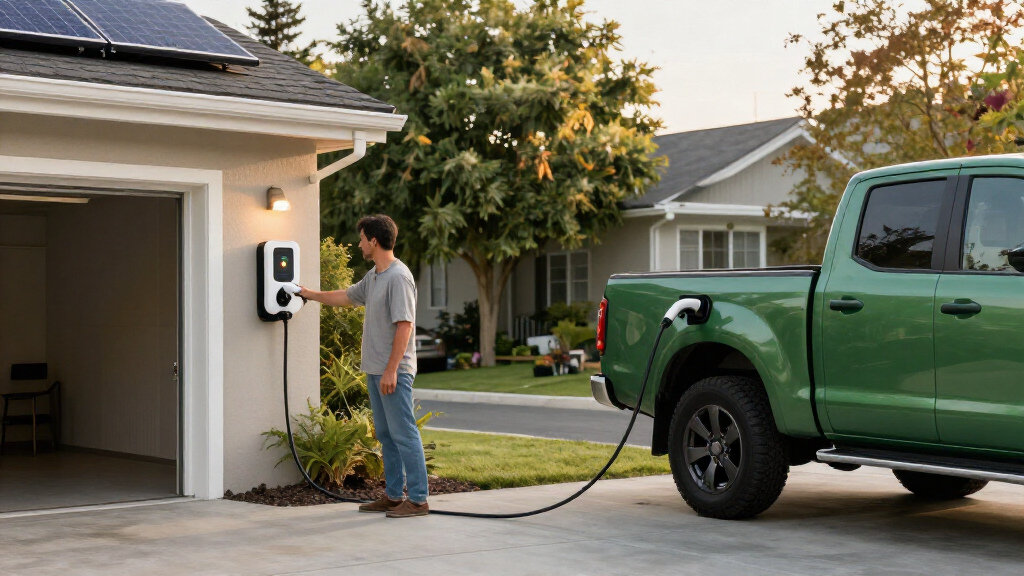
I evaluated these charging stations based on their ability to deliver consistent power to high-capacity electric truck batteries, which often range from 100 to 135 kWh. The primary criteria included maximum amperage output, connector type compatibility (J1772 vs. NACS), and the robustness of the housing for outdoor installation. I also prioritized units with verified safety certifications like UL or ETL, as electrical safety is non-negotiable when drawing 40-50 amps continuously.
Connectivity and smart features were the second tier of evaluation. I favored models that offered app-based scheduling and load balancing capabilities, which help manage residential grid demand. Finally, I considered the ease of installation and warranty support, distinguishing between units that require professional hardwiring and those that offer plug-and-play convenience. This ranking reflects a balance between performance, reliability, and long-term utility for truck owners.
| electric truck charging station | Connector | Installation |
|---|---|---|
| EVDANCE Level 1 & 2 Portable E | J1772 | — |
| Autel MaxiCharger Level 2 50A | J1772 | Hardwired |
| IYILO Level 2 EV Charger for T | NACS (J3400) / Tesla-style | Hardwired; 60A breaker required |
| ChargePoint HomeFlex Level 2 S | J1772 | Hardwired |
| ChargePoint HomeFlex Level 2 H | NACS | Hardwired; electrician required |
| AIXINE Level 2 EV Charger | J1772 | Hardwired |
| Autel MaxiCharger 80A Level 2 | SAE J1772 | Hardwired |
| Grasside Level 2 EV Charger | J1772 | Hardwired |
| EV Range Commercial Level 2 EV | J1772 | — |
| BETUMODA Level 2 J1772 EV Char | J1772 | — |
| Grasside Level 2 EV Charger | J1772 | — |
| EVWALLBOX Level 2 EV Charger f | NACS | — |
| IYILO Level 2 J1772 EV Charger | SAE J1772 | Hardwired; 60A breaker and licensed electrician required for 48A operation |
| EVIQO Level 2 Hardwired EV Cha | J1772 | Hardwired; professional installation required |
| ELEGRP 40A Level 2 Portable EV | J1772 | — |
Factors to Consider When Choosing Best Electric Truck Charging Stations
Selecting the right charger involves more than just picking the highest amperage. You must match the hardware to your specific truck, your electrical panel’s capacity, and your daily driving habits.Amperage and Panel Capacity
Electric trucks demand more power than sedans due to larger batteries and heavier curb weights. While a 32A charger might suffice for a commuter car, it will take 20+ hours to fill a Rivian R1T from 10%. I recommend 48A to 50A units for most truck owners to ensure overnight charging is feasible. However, your home’s electrical panel is the limiting factor. A 50A charger draws 40A continuous load. If your panel is 100A or 150A, you must account for other appliances. Load balancing features are critical here, as they dynamically reduce charging current when the house draws heavy power, preventing breaker trips. Skipping this feature on an older panel is a common and costly mistake.
J1772 vs. NACS Connector Standards
The industry is in a transitional phase regarding connector types. Most current electric trucks (Ford, GM, Rivian) use the J1772 standard for AC Level 2 charging. However, Tesla’s NACS (North American Charging Standard) is gaining traction, and many new chargers now offer native NACS support. If you own a Tesla Cybertruck, a native NACS charger eliminates the need for an adapter, reducing points of failure. For non-Tesla owners, J1772 remains the safe bet, but buying a NACS-capable unit might offer better resale value or compatibility as adapters become standard. I advise checking your truck’s onboard charger compatibility before purchasing a NACS-only station.
Hardwired vs. Plug-In Installation
Hardwired units generally offer higher amperage capabilities (up to 80A) and a cleaner look, but they require a dedicated circuit and professional installation. Plug-in models, often using NEMA 14-50 or 6-20 outlets, offer flexibility. You can move them or take them on trips. The tradeoff is that plug-in connectors can degrade over time due to heat and wear, especially at high amperages. For a permanent garage installation where the truck parks in the same spot daily, hardwired is superior for longevity. For renters or those with multiple parking spots, a high-quality plug-in unit provides the necessary versatility without permanent electrical modifications.
Smart Features and App Connectivity
Not all chargers are created equal when it comes to software. Basic units simply deliver power; smart units communicate with your phone. App-based scheduling allows you to charge during off-peak hours, which can cut electricity costs by half in some regions. More advanced features include remote monitoring, firmware updates, and integration with home energy management systems. If you have a solar setup, smart chargers can prioritize charging from your solar array rather than the grid. I found that the cost difference between basic and smart models is often less than the savings from optimized charging schedules, making smart features a worthwhile investment for tech-savvy owners.
Cable Length and Installation Logistics
One of the most overlooked aspects of buying a charger is the cable length. Most units come with 18 to 25 feet of cable. If your breaker panel is far from your parking spot, you may need to extend the conduit run, which adds labor costs. Longer cables reduce the need for complex wiring but can create tripping hazards if not managed well. Conversely, a shorter cable might require mounting the charger directly above the truck’s charging port, which limits parking flexibility. Measure your parking area carefully. A 25-foot cable is usually the sweet spot for most standard two-car garages, providing enough slack to reach the port regardless of parking orientation.
Frequently Asked Questions
Can I use a standard dryer outlet to charge my electric truck?
Yes, a NEMA 14-50 outlet, commonly used for electric dryers, can support Level 2 charging for most electric trucks. These outlets provide up to 50 amps at 240 volts, which is sufficient for most residential chargers. However, you must ensure the outlet is properly grounded and rated for the continuous load of the charger. It is advisable to have an electrician verify the circuit’s capacity and condition before plugging in a high-draw device, as older wiring may not handle sustained amperage safely.Do I need a 200-amp panel for a 50-amp EV charger?
You do not necessarily need a 200-amp panel, but you need sufficient capacity on your existing panel. A 50-amp charger requires a 60-amp breaker (125% rule). If you have a 150-amp panel, a 60-amp slot might be available, but you must account for other heavy loads like HVAC or electric ovens. Many modern chargers offer dynamic load balancing, which automatically reduces charging current when other appliances are running, making 150-amp panels viable for most households without a costly upgrade.Is it worth buying a charger with Wi-Fi connectivity?
For most truck owners, yes. Wi-Fi connectivity enables remote start/stop, scheduling, and usage tracking. This is particularly valuable if your utility offers time-of-use rates, as you can schedule charging for the cheapest hours. Additionally, smart chargers allow for over-the-air firmware updates, which can improve performance or security over time. If you lack reliable Wi-Fi in your garage, consider a unit with Bluetooth or cellular backup, or weigh the cost of a Wi-Fi extender against the benefits of smart features.Can I leave my electric truck plugged in for days?
Yes, modern EVs and chargers are designed for this. The vehicle’s battery management system stops drawing power once the battery is full. There is no risk of overcharging. However, leaving it plugged in for extended periods without charging can result in a small parasitic draw for climate control or battery conditioning. For long-term storage, it is better to unplug the vehicle to eliminate any potential electrical faults or phantom loads, but for daily use, leaving it connected is perfectly safe and convenient.What is the difference between J1772 and NACS for charging?
J1772 is the current industry standard for AC Level 2 charging in North America, used by Ford, GM, Rivian, and others. NACS (North American Charging Standard), developed by Tesla, is becoming the new unified standard. While physically different, adapters allow cross-compatibility. If you buy a NACS charger, you will likely need an adapter for non-Tesla trucks. If you buy a J1772 charger, you will need an adapter for Tesla vehicles. Given the industry shift, NACS hardware may offer better long-term compatibility, but J1772 remains widely supported and often less expensive.Conclusion
Choosing the right charger depends on your specific truck and electrical setup. For the best overall balance of power and smart features, I recommend the Autel MaxiCharger Level 2 50A. It handles large truck batteries efficiently and integrates well with smart home systems. If you are on a budget but still need reliable Level 2 speed, the EVDANCE Portable EV Charger offers excellent value and flexibility. For Tesla owners seeking native compatibility without adapters, the IYILO NACS Charger is the standout choice. Finally, if you need to charge two trucks simultaneously or have a high-power setup, the Autel MaxiCharger 80A provides the premium throughput required for heavy use. Assess your panel capacity and connector type first, then select the unit that matches your daily driving demands.