
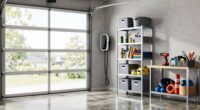
Home energy is no longer just about paying a utility bill. Households can now generate electricity, store it, manage when it is used and keep essential equipment running during an outage. Portable solar chargers extend that flexibility beyond the house, while backup power systems can support anything from a phone to major home circuits.

Get backup power and energy gear delivered free — and shop member deals
- Fast, free delivery on millions of items
- Access to Prime Big Deal Days deals on October 6–7
- Prime Video, Amazon Music and more included
The number of choices can make the subject feel more complicated than it needs to be. Solar panels are rated in watts, batteries in watt-hours, appliances in running and starting watts, and home systems may involve permits, electrical work and utility rules. The best place to begin is not with a particular product. It is with a clear picture of what you need to power, for how long and under what conditions.
This guide explains the major parts of a modern home-energy setup, the decisions that matter most and how portable charging fits into the larger picture. Use it as an orientation page, then follow the linked guides when you are ready to compare options for a specific use.
Start with the outcome you need
“Going solar” can describe several very different goals. One household may want to reduce its dependence on grid electricity. Another may mainly need refrigeration, communications and medical equipment during outages. A renter might want portable energy without altering the building, while a traveler may only need reliable charging away from an outlet.
Define your primary use case before comparing equipment:
- Lowering routine grid consumption through rooftop or ground-mounted solar
- Keeping selected home essentials available during power cuts
- Providing broader whole-home backup through a battery or generator system
- Powering devices at a campsite, worksite, dorm or temporary accommodation
- Charging phones and laptops while commuting or traveling
- Building a portable emergency kit that can be moved where it is needed
These goals can overlap, but they rarely require the same system. A compact power bank is convenient for phones but unsuitable for household appliances. A large battery station may run several devices yet be unnecessarily heavy for daily travel. A grid-connected rooftop array can reduce electricity purchases, but it may not keep the home powered during an outage unless the installation includes compatible backup equipment.
portable solar charger for camping
As an affiliate, we earn on qualifying purchases.
As an affiliate, we earn on qualifying purchases.
Understand the basic home-energy system
Solar generation
Photovoltaic panels convert sunlight into direct-current electricity. An inverter converts that electricity into the alternating current used by most household circuits and appliances. Depending on the system, the energy may be consumed immediately, stored in a battery or exported to the grid.
Panel output varies with sunlight, temperature, shading, orientation and system losses. The wattage printed on a panel is therefore a laboratory rating rather than a promise of constant real-world production. Trees, chimneys and neighboring structures can matter as much as the total roof area, so a site assessment is an important part of planning a permanent installation.
Battery storage
A battery stores energy for use after sunset, during expensive billing periods or when the grid is unavailable. Capacity is usually expressed in watt-hours or kilowatt-hours. Capacity indicates how much energy is stored; it does not by itself tell you how much power the battery can deliver at one time.
That distinction matters. A battery may contain enough energy to operate an appliance for several hours but still be unable to meet a high startup surge. When comparing systems, consider usable capacity, continuous output, surge capability, supported charging methods, expansion options and the type of loads the inverter can serve.
Backup switching and electrical integration
A permanent backup system needs a safe way to separate backed-up circuits from the utility grid during an outage. This prevents electricity from feeding back onto utility lines and determines which parts of the home receive power. Depending on the design, that function may be handled by transfer equipment, a backup gateway or another approved control system.
Permanent solar, battery and transfer equipment should be designed around local electrical requirements, utility interconnection rules and the home’s existing service. Qualified professionals can also identify complications such as an outdated panel, limited service capacity or circuits that should not be placed on backup.
As an affiliate, we earn on qualifying purchases.
Size backup power from your loads
Good sizing begins with an appliance inventory. List what must remain available during an outage and separate true necessities from conveniences. For each load, note its running wattage, expected daily operating time and any startup demand. Manufacturer labels or documentation are preferable to generic estimates because devices in the same category can consume very different amounts of power.
Energy use can be estimated by multiplying watts by hours. A 100-watt load operating for five hours uses about 500 watt-hours before accounting for conversion losses and other system overhead. Appliances that cycle on and off require a more careful estimate, while heating, cooling and cooking loads can consume energy quickly.
A practical priority list might begin with:
- Medical and accessibility equipment
- Refrigeration and food preservation
- Phones, radios and internet equipment
- Essential lighting
- Sump, well or circulation pumps
- Limited heating or cooling where conditions require it
- Computers needed for work or communication
Once the essential-load list is complete, add a reasonable buffer rather than sizing to a perfect theoretical minimum. Outages may last longer than expected, solar production may be poor and batteries lose some energy during conversion. If you are exploring an all-in-one portable solution, the guide to solar-powered backup generators provides a focused starting point for comparing that category.
As an affiliate, we earn on qualifying purchases.
Choose between portable and permanent backup
Portable power stations
Portable battery stations combine storage, charging electronics, an inverter and output ports in one enclosure. Many can recharge from wall power, a vehicle outlet or compatible solar panels. They are useful when portability, simple setup and the ability to serve different locations matter.
Their limits depend on capacity, output and connection method. Plugging appliances directly into a station is different from powering fixed household circuits. Never connect a portable source to home wiring through an improvised cable or any arrangement that bypasses proper transfer equipment.
Installed home batteries
An installed battery can be integrated with selected circuits or a broader home-energy system. This approach can make outage operation more automatic and may support energy-management strategies during ordinary grid service. It also requires more planning, professional installation and coordination among the battery, inverter, solar array and electrical panel.
Fuel-powered generators
Conventional generators remain another backup option, especially where long-duration energy storage would otherwise require a very large battery. They introduce fuel storage, exhaust, noise and maintenance considerations. Generators must never operate in a home, garage or other enclosed or partially enclosed space, and safe connection to household circuits still requires appropriate transfer equipment.
A hybrid strategy can sometimes be more practical than expecting one source to do everything. Batteries are well suited to quiet operation and immediate power, solar can replenish stored energy when conditions allow, and a properly managed fuel generator can provide another charging source during an extended disruption.
portable power station for emergencies
As an affiliate, we earn on qualifying purchases.
As an affiliate, we earn on qualifying purchases.
Make portable solar charging fit the device
Portable solar products range from small emergency chargers to folding panels paired with substantial battery banks. Their labels may sound similar, but the intended uses differ. Focus on the full energy path: sunlight reaches the panel, the panel charges a battery, and the battery supplies the device. Direct solar charging can fluctuate as clouds, shadows and panel angle change, so stored energy often makes the experience more dependable.
Phone charging and emergency communication
For a phone kit, consider battery capacity, output ports, cable compatibility, size and how the unit will be recharged. A solar surface attached to a compact bank may be most useful as supplemental charging rather than as a substitute for a larger panel. Two relevant comparisons are the guides to portable solar phone chargers and portable solar power banks.
If you want a broader view of phone-focused formats, see the roundup of solar-powered phone chargers. Whatever format you choose, keep emergency contact information available offline and include the necessary cables in the same kit.
Laptops and higher-demand electronics
Laptops need more attention to power standards than phones. Check the computer’s required input, connector and charging protocol, then confirm that every part of the system supports them. A battery having a USB port does not automatically mean it can charge every laptop. The solar-powered laptop charger guide can help narrow this category.
Portable professionals and students may also care about how the panel, battery and cables travel together. A backpack can make the equipment easier to carry, but panel exposure and storage layout still matter. Explore the guide to solar-powered laptop backpacks for options built around that use case.
Mixed-device kits
A household emergency bag often needs to serve several phones, lights, radios and small electronics rather than one specific device. Count the outputs, identify which items may need charging simultaneously and avoid depending on a single cable. The comparison of solar-powered device chargers is a useful next step for a mixed-device setup.
Space-constrained users have slightly different priorities. Compactness, cable organization and placement near a usable window or outdoor area may matter more than maximum capacity. Students can begin with the guide to solar-powered dorm room gadgets, while still following building and campus rules for batteries and electrical devices.
Plan for real-world solar conditions
Solar charging works best when the panel faces unobstructed sunlight at a useful angle. Glass, partial shade and poor orientation can reduce production. A panel left flat, placed behind a window or attached to a moving backpack may not receive the same solar exposure as one deliberately positioned outdoors.
Weather resilience also deserves attention. A product described as suitable for outdoor use is not necessarily safe to leave in heavy rain, and connectors may have different protection than the panel itself. Follow the manufacturer’s storage, temperature and moisture instructions. Keep batteries out of excessive heat, inspect cables for damage and provide ventilation where required.
Seasonal planning matters for home backup. Short winter days, storms and snow cover can reduce the opportunity to recharge from solar precisely when an outage occurs. Treat published capacity as one input to a resilience plan, not as a guarantee that energy will always be replenished on schedule.
Use efficiency before adding capacity
The cheapest watt-hour is often the one you do not need to generate or store. Weather sealing, insulation, efficient lighting and thoughtful appliance use can reduce both routine consumption and the size of a backup system. During an outage, switching off standby loads and operating devices in a planned sequence can extend available battery time.
Energy monitoring can reveal which appliances dominate consumption and when demand peaks. That information helps distinguish between a system intended to cover a few essential circuits and one expected to support normal household behavior. It can also expose loads that are easy to shift to daylight hours, when solar production may be available directly.
Build a layered energy plan
A resilient setup does not have to arrive all at once. Begin with efficiency and a written list of essential loads. Add small portable batteries for communication and lighting, then consider a larger power station or installed backup if your outage needs justify it. If permanent solar is part of the plan, evaluate the roof, electrical service, storage goals and utility arrangement together rather than as isolated purchases.
Test the routine before an emergency. Charge batteries, label cables, confirm that essential devices connect properly and record safe operating instructions. Review the kit periodically because batteries age, household needs change and new medical or communications equipment may alter priorities.
The right home-energy system is not necessarily the largest one. It is the system whose generation, storage, output and connections match the loads you genuinely need. Start from those loads, account for imperfect conditions and use the focused guides above to compare products only after the job they must perform is clear.
Halloween Picks
halloween
As an affiliate, we earn on qualifying purchases.