
This checklist is for homeowners preparing for power outages who want to compare the main pieces of a home backup setup. It covers a standby generator, transfer equipment, a power connection point, a propane-related pick, generator upkeep, and a carbon monoxide alarm.

Get backup power and energy gear delivered free with Prime
- Fast, free delivery on millions of items
- Prime Video, Amazon Music and more included
- Member-only deals all year
The sections follow the equipment categories in the requested order. Each one explains why the slot matters, what to check before choosing, and where the named pick may fit. Product names alone do not confirm specifications, included components, or compatibility.
Use the checklist to verify the details that matter for your home: electrical service, generator output, connection type, fuel arrangement, installation requirements, and safety features. Confirm those details in current product documentation and with a qualified professional before purchasing or installing equipment.
Standby Generator
A standby generator is the central piece of a home backup plan, so first identify which circuits or appliances you want to keep running. A generator’s stated capacity, fuel type, voltage, and connection details need to match that plan. The pick is named as a Generac Guardian 22 kW home standby generator with transfer switch, but the listing title ends with “and”; check the complete listing to establish what is included and confirm the exact model.
A common buying mistake is treating a capacity figure or the phrase “with transfer switch” as proof that the unit will suit a particular home. Compare the generator’s documented output with the expected loads, including equipment that may start at the same time. Verify the transfer switch’s specifications and whether it is compatible with the home’s electrical service. Have an electrician or generator professional assess installation, permitted placement, wiring, and any applicable local requirements.
Check the product documentation for fuel requirements, installation instructions, maintenance needs, and what components are supplied. Do not assume the generator can connect directly to a separately selected inlet or switch based on category names alone. Confirm the complete system configuration before ordering.
What to look for:
- Documented output and exact model number
- Fuel type and required connections
- Transfer switch specifications and included components
- Compatibility with home electrical service and intended loads
- Installation, placement, and maintenance requirements
Generac Guardian 22 kW Home Standby Generator with Transfer Switch and Wi-Fi Mon

This 22 kW standby generator provides automatic backup power for residential use and runs on natural gas or LP gas. It includes a 200 A outdoor transfer switch and Wi-Fi monitoring for generator status and maintenance alerts.
Pros:
- Automatically starts when utility power is lost
- Wi-Fi monitoring provides status and maintenance alerts
- Supports natural gas or LP gas
- Designed for residential backup power
Cons:
- Installation is recommended by a certified, licensed electrician
- Heavy at 466 pounds
Best for: Homeowners comparing a named standby generator for a planned backup system
Not ideal for: Shoppers who have not confirmed loads, fuel, and electrical compatibility
Bottom line: Confirm the complete model, included transfer equipment, and home requirements before treating this as a matched system.
Generator Transfer Switch
A transfer switch is a key part of connecting backup power to a home’s electrical system. The named GenerLink 30-Amp pick also lists surge protection, but those words do not establish compatibility with a specific generator, meter arrangement, or home service. Confirm the exact model’s documentation and installation requirements before choosing it.
A common mistake is comparing transfer equipment by amperage alone. Check the generator’s connection and output specifications, the home’s service configuration, and the switch’s rated limits. Ask a qualified electrician or the manufacturer whether the proposed setup is approved for the home and whether any additional equipment or work is required. Do not assume that a transfer switch can be paired with every standby generator or inlet box.
Review how the device is installed, how it operates, and what the surge-protection description covers. Verify the 30-amp rating against the intended system rather than assuming it is suitable based on the label. Confirm what is included in the package, any required accessories, and whether installation must be performed by a professional. Those checks help avoid selecting a component that cannot serve the planned configuration.
What to look for:
- Exact model and manufacturer documentation
- Rated amperage and electrical specifications
- Compatibility with generator, meter, and home service
- Installation method and professional requirements
- Details and limits of the listed surge protection
GenerLink 30-Amp Automatic Transfer Switch with Surge Protection

This outdoor, meter-mounted transfer switch connects a compatible portable generator to a home’s electrical panel and supports up to 200-amp service. It is rated for 30 amps and 240 volts, works with generators under 8,500 watts, and includes a 20-foot power cable, 75 kA surge protection, and an audible surge alarm.
Pros:
- Connects a generator to the home’s breaker panel without extension cords or manual rewiring.
- Includes 75 kA surge protection and an audible surge alarm.
- Weather-resistant design for outdoor use.
- Supports the entire breaker panel with no circuit limit.
Cons:
- Installation requires coordination with the local utility or a licensed electrician.
- Limited to 30-amp service and compatible generators under 8,500 watts.
Best for: Shoppers evaluating a named 30-amp transfer switch with listed surge protection
Not ideal for: Homes whose service or generator connection has not been checked
Bottom line: Match the exact switch specifications to the home and generator with qualified guidance.
Generator Inlet Box
An inlet box provides a connection point in a backup-power setup, so its electrical ratings and connection type need to match the equipment on both sides. This pick is named as a Champion Power Equipment 50-amp power distribution box with GFCI outlets; confirm the complete product listing to determine its actual design, intended use, and included components.
A frequent buying mistake is assuming that a 50-amp label makes an item compatible with any generator or transfer switch. Check the manufacturer’s specifications for voltage, outlet and plug types, wiring requirements, enclosure use, and any stated limits. Confirm that the generator, transfer equipment, and home connection are designed to work together. Have an electrician review the plan, since product names by themselves do not establish safe or code-compliant installation.
Also clarify whether the item is an inlet box, a distribution box, or another kind of equipment; the supplied name uses “power distribution box.” Verify the role it can actually serve and whether GFCI outlets are present in the configuration you need. Check what is included and how the product is intended to be installed or used before treating it as a direct substitute for a home inlet.
What to look for:
- Exact product type and intended use
- 50-amp rating, voltage, and connection details
- Compatibility with generator and transfer equipment
- GFCI outlet configuration and documented limits
- Installation requirements and included components
Champion Power Equipment 50-Amp Power Distribution Box with GFCI Outlets and RV
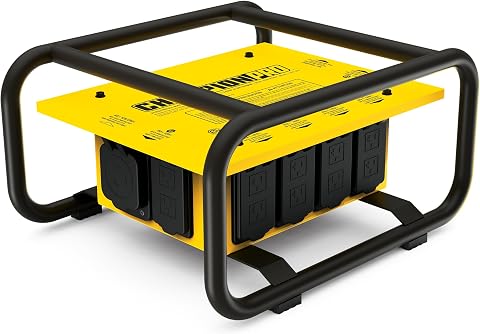
This OSHA-compliant power distribution box has six GFCI-protected 120V duplex outlets and one 120/240V 30A locking outlet, with individual overload protection. Its steel frame, corrosion-resistant enclosure, weather-resistant covers, built-in surge protection, and included RV adapters make it suitable for job sites and outdoor events.
Pros:
- Six individually protected GFCI duplex outlets
- Includes 30A and 50A RV adapters
- Weather-resistant covers and corrosion-resistant enclosure
- Built-in surge protection and locking safety door
Cons:
- 50A power cord is not included
- Weighs 22.1 pounds
Best for: Shoppers comparing a 50-amp Champion power distribution box
Not ideal for: Anyone assuming the named box is a home generator inlet without checking
Bottom line: Confirm the product’s actual function and connection specifications before integrating it into a backup system.
Propane Generator Tank
The listed pick is named Propane Heater and describes a 30–36,000 BTU, three-setting, two-burner tank-top unit with a USB light. That title does not identify a generator tank, so its intended purpose needs to be verified before it is considered for this checklist slot. Do not infer from the section heading that the product stores fuel for a generator.
A common buying mistake is relying on a category label when the product name points to different equipment. Read the complete manufacturer listing and manual to establish what the item is, its fuel and connection requirements, and whether it is suitable for the intended use. If selecting a propane container or generator fuel arrangement, verify the generator manufacturer’s requirements and the container’s documented compatibility with the appliance and regulator.
For any propane equipment, check the stated connection type, permitted operating conditions, placement instructions, and required safety precautions. Confirm whether a tank is included; the product name’s reference to a tank-top heater does not establish that it includes a propane tank. Ask a qualified professional or the manufacturer to resolve any ambiguity before buying or using it as part of a backup power plan.
What to look for:
- Complete product identity and intended use
- Generator manufacturer’s fuel requirements
- Fuel container, regulator, and connection compatibility
- Manufacturer placement and operating instructions
- Whether a tank or other components are included
Propane Heater 30-36,000 BTU 3 Settings 2-Burner Tank Top with USB Lighter, Shut

This dual‑burner propane heater delivers up to 36,000 BTU of radiant heat with three adjustable settings, making it ideal for patios, garages, campsites and other outdoor spaces. Built with a tip‑over shut‑off switch, automatic valve, and protective mesh guard, it offers strong safety features while the rugged metal housing ensures durability in harsh weather.
Pros:
- High‑output dual‑burner provides up to 36,000 BTU for fast heating.
- Three adjustable settings allow precise temperature control.
- Multiple safety features including tip‑over shut‑off switch and auto valve.
- Durable metal construction with aluminum reflector withstands outdoor conditions.
Cons:
- Propane tank not included; must purchase separately.
- Designed for outdoor use only – cannot be used indoors.
Best for: Readers checking whether this named heater belongs in a generator fuel checklist
Not ideal for: Anyone seeking a confirmed generator propane tank based on this title alone
Bottom line: Verify the product is a fuel tank or compatible generator component before considering it for this slot.
Generator Maintenance Kit
Routine upkeep belongs in a backup-power checklist, but the named pick is a Hudson Generator Box, described as an SD aluminum enclosure with ventilation and noise. That name does not establish that the product is a maintenance kit. Review the complete listing and manufacturer documentation to confirm its actual purpose, compatibility, and what comes with it.
A common mistake is buying an enclosure when the intended need is service supplies, or assuming an enclosure fits a particular generator. If the product is an enclosure, check the exact dimensions, the generator model it is designed for, ventilation requirements, access for maintenance, and installation instructions. Confirm that the manufacturer approves the proposed arrangement and that the enclosure does not conflict with generator placement instructions.
If the goal is maintenance, consult the generator’s manual for its service schedule and required parts or supplies. Do not assume that an aluminum enclosure includes filters, oil, or other maintenance items. Verify the product’s stated function and included contents, then compare them with the generator’s documented needs. This keeps an enclosure decision separate from planning the supplies required to maintain the equipment.
What to look for:
- Exact product function and included contents
- Compatibility with the generator model and dimensions
- Ventilation and access requirements
- Manufacturer installation and placement instructions
- Generator manual’s maintenance schedule and specified supplies
Hudson Generator Box, SD Aluminum Enclosure with Ventilation and Noise Reduction

This generator enclosure is made of durable SD aluminum, featuring ventilation, noise reduction, and weather protection. It is designed to keep generators cool, secure, and protected from harsh weather conditions, suitable for outdoor use.
Pros:
- Excellent ventilation and heat dissipation to prevent overheating
- Reduces operating noise with phenolic foam lining
- Weather-resistant and durable for harsh outdoor conditions
- Lightweight and easy to install or move
Cons:
- Limited color options (white only)
- May require additional security measures for theft prevention
- Size may not fit larger generators
Best for: Shoppers verifying a named aluminum generator enclosure
Not ideal for: Anyone expecting a confirmed set of maintenance supplies from the title
Bottom line: Establish whether the pick is an enclosure or a service kit, then match it to the generator’s documented needs.
Carbon Monoxide Alarm
A carbon monoxide alarm is an important safety item to consider alongside backup power equipment. The named pick is a First Alert hardwired combination smoke and carbon monoxide alarm, with the title ending in “with B”; check the full listing to identify the exact model and what that final detail means. Confirm the alarm’s power and installation requirements before deciding whether it fits the home.
A common mistake is assuming that one alarm or one mounting location covers every area where protection is needed. Review the alarm manufacturer’s instructions and applicable local guidance for placement, wiring, interconnection, and the number of devices needed. Because this model is described as hardwired, verify that the home’s wiring and existing alarm setup are compatible, and have an electrician handle installation when required.
Check the product documentation for its listed features, backup power arrangements, testing and maintenance instructions, and expected replacement guidance. Confirm that the combination smoke and carbon monoxide functions meet the household’s needs. Keep alarms in service according to the manufacturer’s directions, and follow generator placement and operating instructions to reduce exposure risk. A hardwired alarm should be selected as part of a home safety plan, not by title alone.
What to look for:
- Exact model and complete product listing
- Hardwired connection and home wiring compatibility
- Manufacturer placement and interconnection instructions
- Backup power and testing guidance
- Maintenance and replacement instructions
First Alert Hardwired Combination Smoke & Carbon Monoxide Alarm with Battery Bac

This combination smoke and carbon monoxide alarm features advanced sensing technology to reduce false alarms and provide early warning. It is hardwired with a 9V battery backup, interconnects with other alarms, and includes a secure mounting bracket for easy installation.
Pros:
- Reduces false alarms with advanced sensing technology
- Provides early warning for smoke and carbon monoxide
- Interconnects with multiple alarms for comprehensive safety
- Battery backup ensures protection during power outages
Cons:
- Installation may require electrical wiring knowledge
- Potential false alarms if not properly maintained
Best for: Households evaluating a hardwired combination smoke and CO alarm
Not ideal for: Homes that have not checked wiring and alarm placement needs
Bottom line: Confirm the exact model and installation requirements, and follow manufacturer guidance for placement and upkeep.
Build the checklist in a practical order: first define the loads to support and confirm generator and electrical requirements; next verify compatible transfer and connection equipment; then check fuel arrangements and maintenance needs. Add the carbon monoxide alarm review alongside the installation plan, and resolve product-title mismatches before buying. Product names alone cannot confirm a complete, compatible system.
Take the details to the generator manufacturer, product documentation, and a qualified installer so each choice fits the home and the intended setup. With careful compatibility checks and a clear plan, you can make steady progress toward backup power that is appropriate for your household.
Halloween Picks
halloween
As an affiliate, we earn on qualifying purchases.