
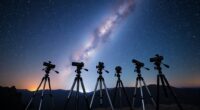
If you want to capture stunning Milky Way shots, I recommend trying the VILTROX 75mm f/1.2 EF for its large aperture and sharp detail, the compact Sony E 16mm F2.8 for wide-angle landscapes, and the AstrHori 6mm fisheye for immersive night sky scenes. Each lens excels in low-light conditions and offers different creative options. Keep exploring how these choices can help you shoot like a pro as you continue discovering more.
Key Takeaways
- Look for lenses with wide focal lengths (14mm–24mm) to capture expansive night sky scenes effectively.
- Prioritize large apertures (f/1.4–f/2.8) for maximum light intake and sharper star images.
- Manual focus is essential for precise star and Milky Way details in low-light conditions.
- Compact, lightweight designs improve portability for outdoor astrophotography adventures.
- Ensure compatibility with your camera system and consider optical quality for minimal distortion and sharpness.
VILTROX 75mm f/1.2 EF Lens for Sony E-Mount Cameras
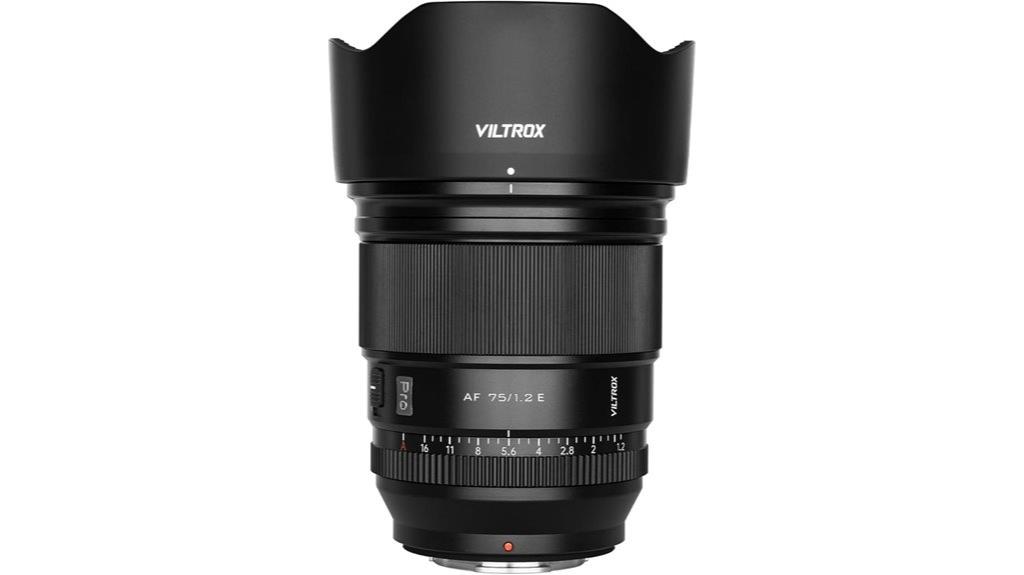
If you’re shooting the Milky Way and need a lens that performs exceptionally well in low-light conditions, the VILTROX 75mm f/1.2 EF is a top pick for Sony E-mount users. Its ultra-wide f/1.2 aperture lets in maximum light, making it easier to capture detailed night skies with minimal noise. The lens offers both automatic and manual focus options, with fast, accurate autofocus thanks to the STM motor. Its optical design includes 16 elements in 11 groups, ensuring sharpness and clarity across the frame. Perfect for astrophotography, it delivers stunning, high-quality images even in the darkest conditions.
Best For: astrophotographers and videographers seeking excellent low-light performance and sharp imagery with Sony E-mount mirrorless cameras.
Pros:
- Large f/1.2 aperture for superior light intake and low-light shooting
- Fast, accurate autofocus with STM motor and versatile focus options
- Optical design with 16 elements in 11 groups ensures high resolution and sharpness
Cons:
- Heavier and larger than standard lenses, which may affect portability
- Higher price point compared to smaller apertures or kit lenses
- Manual focus can be challenging for beginners due to the large aperture and precise control needed
Sony E 16mm F2.8 Wide-Angle Prime Lens (SEL16F28)
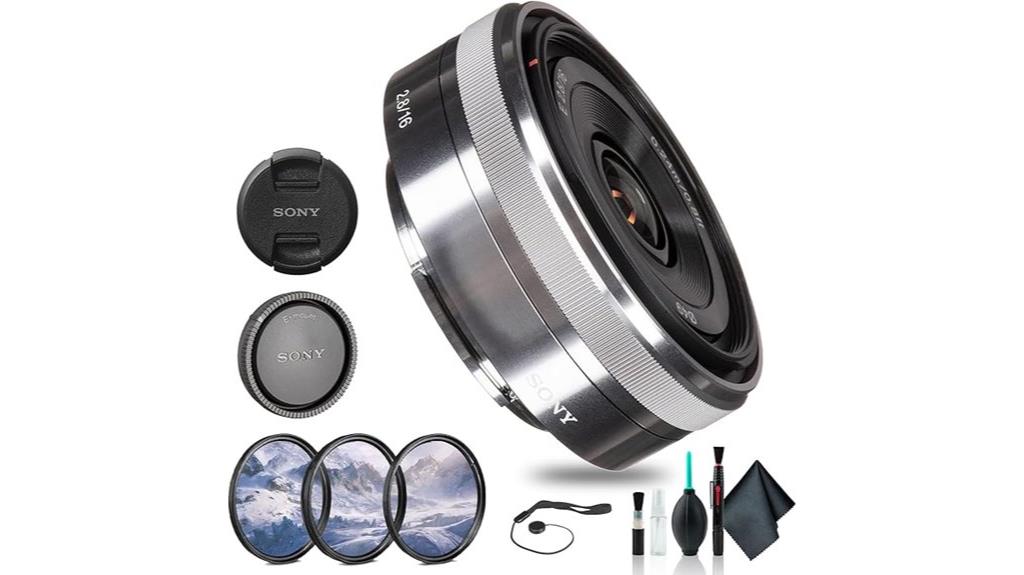
The Sony E 16mm F2.8 Wide-Angle Prime Lens (SEL16F28) stands out as an excellent choice for astrophotographers seeking a compact, lightweight lens for Milky Way photography. Its pancake design measures just 22.5 mm and weighs only 67 grams, making it ideal for travel and on-the-go shooting. The lens offers a 24mm equivalent focal length, perfect for capturing expansive night skies. Despite its small size, it features aspherical elements that minimize distortion and deliver sharp, high-contrast images with natural colors. The responsive autofocus and short 0.24-meter focusing distance add versatility for creative wide-angle shots, making it a powerful yet portable astrophotography tool.
Best For: astrophotographers and travel enthusiasts seeking a compact, lightweight wide-angle lens for capturing expansive night skies and everyday scenes.
Pros:
- Ultra-compact and lightweight design, ideal for travel and on-the-go photography
- Sharp, high-contrast images with natural color rendering despite small size
- Versatile focusing capabilities with a short 0.24-meter minimum focus distance
Cons:
- Fixed focal length limits zoom flexibility
- No image stabilization, which may be a concern in low-light conditions
- Slightly narrower aperture compared to larger lenses, potentially affecting low-light performance
AstrHori 6mm F2.8 Circular Fisheye Lens for Nikon Z Mount

For astrophotographers seeking a truly immersive view of the night sky, the AstrHori 6mm F2.8 Circular Fisheye Lens for Nikon Z Mount offers an exceptional option. Its 220° ultra-wide perspective captures the entire sky in a single, stunning circular image, creating bold, spherical effects with dramatic edge distortion. The large F2.8 aperture ensures excellent low-light performance and sharp, detailed images, perfect for Milky Way and night sky photography. Its compact, all-metal design makes it durable and travel-friendly. While manual focus requires some adjustment, it grants precise creative control. This lens transforms scenes into extraordinary, immersive visuals, ideal for artistic, VR, or creative astrophotography projects.
Best For: astrophotographers and creative enthusiasts seeking immersive, spherical night sky images with bold distortion effects using a compact, durable fisheye lens.
Pros:
- Ultra-wide 220° field of view for comprehensive sky and landscape capture
- Large F2.8 aperture ensures excellent low-light performance and sharp images
- Compact all-metal design makes it durable and travel-friendly
Cons:
- Manual focus may require some adjustment and practice for precise results
- Compatibility limited to Nikon Z mount full-frame mirrorless cameras, requiring setup guidance
- Fixed focal length limits versatility compared to zoom lenses
Factors to Consider When Choosing Wide-Field Lenses for Milky Way Photography

When selecting a wide-field lens for Milky Way photography, I consider factors like focal length and aperture size to capture enough sky with good light. I also look at optical distortion and whether autofocus or manual focus suits my shooting style best. finally, size and portability matter, especially if I’m planning to shoot in remote locations.
Focal Length Range
Choosing the right focal length range is essential because it directly impacts how much of the night sky and landscape you can capture in a single shot. Wide-field lenses for Milky Way photography typically range from 14mm to 24mm. Shorter focal lengths, around 14mm to 16mm, provide a broader field of view, letting you include more of the sky and foreground, perfect for emphasizing the vastness of the Milky Way. Longer focal lengths above 20mm focus on specific celestial features, offering more detail but limiting the overall sky captured. Your choice affects composition—wider lenses highlight the expansive sky, while narrower ones create more detailed shots of particular sections. Striking a balance between coverage and sharpness is key when selecting your ideal focal length.
Aperture Size Importance
The size of the lens aperture plays a vital role in capturing stunning Milky Way images. A larger aperture, like f/1.4 or wider, lets in more light, which is essential for faint stars and the Milky Way in low-light conditions. With a wider aperture, I can use shorter exposure times, reducing star trails caused by Earth’s rotation and resulting in sharper images. I recommend at least f/2.8 to balance light gathering and depth of field, especially for capturing detailed night skies. A wide aperture also helps compensate for less-than-ideal weather or light pollution, boosting visibility of celestial features. Overall, larger apertures improve image brightness and contrast, making it easier to capture the rich colors and details of the night sky effectively.
Optical Distortion Control
Optical distortion can considerably impact the quality of Milky Way photos, so it’s essential to select a wide-field lens that minimizes these effects. Minimal distortion ensures accurate star shapes and preserves the natural look of the Milky Way. Lenses with aspherical elements help reduce spherical aberrations that cause distortion and blurring. A low distortion coefficient means straighter lines and more true-to-life star patterns across the frame. Correcting distortion in post-processing can be difficult if the lens introduces significant barrel or pincushion effects, which can warp edges and compromise sharpness. Choosing a lens with an advanced optical design minimizes edge warping and guarantees consistent sharpness from center to corners. This helps achieve crisp, natural astrophotography results that truly capture the cosmos.
Autofocus Vs Manual
While autofocus lenses might seem convenient, they often fall short in astrophotography because they lack the precision needed to lock onto faint stars in low-light conditions. Manual focus gives me tactile control, allowing for precise adjustments on distant stars and the Milky Way. Autofocus systems struggle to lock onto faint celestial objects, especially in near-dark environments, making manual focus more reliable. Using live view and focus peaking helps me achieve sharpness across the entire frame, which is essential for detailed Milky Way shots. Autofocus lenses can also suffer from focus breathing, causing focus shifts during video recording. Overall, while autofocus offers convenience, manual focus provides the accuracy and consistency needed to capture crisp, stunning night sky images.
Size and Portability
When selecting a wide-field lens for Milky Way photography, size and portability often top the list of practical considerations. Smaller, lightweight lenses are easier to carry and handle during outdoor night shoots, helping to reduce fatigue and equipment burden. Compact lenses are especially convenient for travel, allowing discreet setups in remote or crowded locations. Their smaller form factor makes them suitable for handheld astrophotography without extra stabilization gear, which is essential in spontaneous shooting scenarios. Lightweight designs also enable quick adjustments and better maneuverability when composing shots of the Milky Way across various environments. Overall, easy-to-transport lenses ensure you’re always ready for unpredictable night sky conditions, making them a crucial choice for capturing stunning astrophotos efficiently and comfortably.
Compatibility With Gear
Choosing a wide-field lens that’s compatible with your gear is essential for successful Milky Way photography. First, check that the lens fits your camera’s mount type and sensor size—full-frame or APS-C—since this impacts the field of view and image quality. The focal length should typically be between 14mm and 24mm to capture expansive night sky scenes. A maximum aperture of f/2.8 or wider is ideal, as it allows more light to reach the sensor during low-light conditions. Also, confirm the lens has reliable autofocus and manual focus options for precise focusing on distant stars. Finally, consider the lens’s size and weight, so you can handle it comfortably during long exposures without sacrificing stability or mobility.
Price and Value
The price range for wide-field lenses suitable for Milky Way photography varies widely, offering options for different budgets and needs. You can find budget-friendly lenses under $300, but they may lack features like large apertures or advanced optics. Lenses with wider apertures (f/1.4 or faster) tend to be more expensive, yet they considerably improve low-light performance and star visibility. Investing in a lens with good optical quality and minimal distortion can save you time in post-processing and produce sharper images. Keep in mind, some affordable options might lack autofocus or stabilization, which could impact shooting ease. Durability and compatibility with your camera system also influence long-term value. Balancing cost with features ensures you get the best bang for your buck in capturing stunning Milky Way shots.
Frequently Asked Questions
How Do Wide-Field Lenses Affect Star Trails in Astrophotography?
Wide-field lenses can make star trails appear more dramatic and expansive because their wider angle captures more of the sky. They also tend to stretch the trails, creating beautiful, elongated arcs. However, if the lens has optical distortions or is very wide, it might cause some streaking or blurring. Overall, a good wide-angle lens enhances the sense of motion and vastness in your astrophotography.
What Is the Best Aperture Setting for Milky Way Shots?
I usually shoot the Milky Way at an aperture of f/2.8 or wider. During my last trip, I found that opening up to f/2 gave me the brightest, clearest stars without significant star trailing. Think of it like opening a window wider—more light floods in, revealing the galaxy’s details. For sharp, vibrant shots, I recommend starting at f/2.8 and adjusting based on your camera’s sensor and conditions.
Can I Use Crop Sensor Lenses for Wide-Angle Milky Way Photography?
Yes, you can definitely use crop sensor lenses for wide-angle Milky Way photography. They’re great options because they often have longer focal lengths, which can give you a more zoomed-in view of the stars. Just keep in mind that crop sensors have a crop factor, so your effective focal length increases, making it easier to capture more of the night sky. Make sure to choose a lens with a wide aperture for the best results.
How Important Is Lens Chromatic Aberration Correction for Night Sky Photos?
Lens chromatic aberration correction is vital for night sky photos because it prevents color fringing around stars, ensuring sharp, clean images. Without correction, stars can look blurry or fringed, ruining the shot’s clarity. I always prioritize lenses with good aberration control, especially for astrophotography. It’s like sharpening your focus; the clearer the stars, the more breathtaking your Milky Way captures will be.
Are There Budget-Friendly Wide-Angle Lenses Suitable for Beginners?
Yes, there are budget-friendly wide-angle lenses perfect for beginners that still deliver great night sky shots. I recommend checking out the Rokinon 14mm f/2.8 if you’re into manual focus, or the Canon RF 15-35mm f/2.8 if you want versatility. These lenses are affordable, lightweight, and help you capture stunning Milky Way images without breaking the bank. Start with one of these, and you’ll be amazed at what you can achieve!
Conclusion
So, there you have it—your ticket to pretending you’re an astrophotographer without selling a kidney. Whether you choose the dreamy VILTROX, the trusty Sony, or the wild AstrHori fisheye, just remember, capturing the Milky Way is less about gear and more about patience (and a dash of luck). So go ahead, pick your weapon, and see if you can outshine the stars—literally. Happy stargazing, or at least, trying to look cool!