

If you’re looking for the top MacBook Pros in 2025 for data science and AI, I recommend models featuring the latest M5 chip with a 10-core CPU and GPU, along with options like the M4 Pro and M4 Max. These offer powerful processing, ample memory, and fast SSD storage needed for demanding AI tasks. High-resolution Liquid Retina XDR displays improve visualization, while multiple ports support external devices. Keep exploring to discover which one suits your workflow best.
Key Takeaways
- The latest MacBook Pros with M5, M4 Pro, and M4 Max chips offer high-core CPUs and GPUs for demanding AI and data science workloads.
- High RAM (16GB to 36GB) and fast SSD storage facilitate handling large datasets and complex model training efficiently.
- Liquid Retina XDR displays with high resolution and color accuracy enhance data visualization and analysis.
- Extensive connectivity options like Thunderbolt 4/5, HDMI, and SDXC ports support external devices and large data transfers.
- Premium build, ecosystem integration, and future-proof hardware ensure top performance and longevity for AI and data science projects.

Apple 2025 MacBook Pro Laptop with Apple M5 chip with 10‑core CPU and 10‑core GPU: Built for AI, 14.2-inch Liquid Retina XDR Display, 24GB Unified Memory, 1TB SSD Storage; Space Black
SUPERCHARGED BY M5 — The 14-inch MacBook Pro with M5 brings next-generation speed and powerful on-device AI to...
As an affiliate, we earn on qualifying purchases.
Apple 2025 MacBook Pro Laptop with M5 Chip
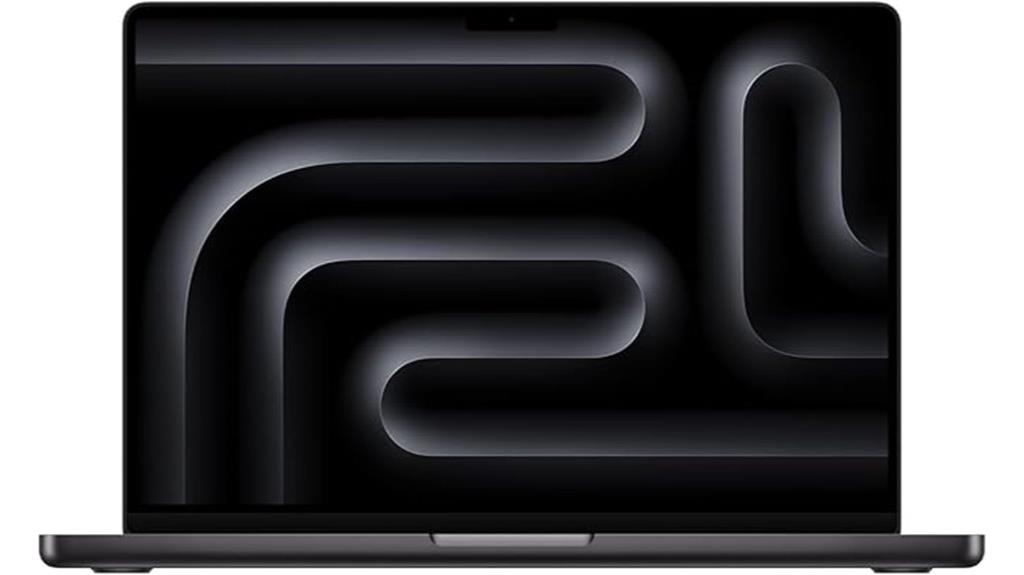
If you’re working in data science or AI, the Apple 2025 MacBook Pro with the M5 chip is designed to handle demanding tasks with ease. It features a 10-core CPU and GPU, along with a 16-core Neural Engine, making complex computations faster and more efficient. With 24GB of unified memory and a 1TB SSD, multitasking and large datasets pose no problem. The Liquid Retina XDR display offers stunning visuals, while connectivity options like Thunderbolt 4, HDMI, and SDXC ensure seamless workflow integration. Fast-charging and impressive battery life mean you stay productive longer, whether on-site or on the go.
Best For: professionals in data science, AI development, and creative workflows requiring high performance and seamless integration.
Pros:
- Powerful 10-core CPU and GPU with Neural Engine for accelerated AI and data processing
- Large 24GB unified memory and 1TB SSD facilitate multitasking and handling large datasets
- Stunning Liquid Retina XDR display with high brightness and color accuracy for detailed visuals
Cons:
- Premium price point may not be accessible for all users
- Slightly heavy at 3.41 pounds, which could impact portability for some
- Limited to a maximum of two external displays, which may restrict extensive multi-monitor setups

Apple 2024 MacBook Pro Laptop with M4 Pro, 14‑core CPU, 20‑core GPU: Built for Apple Intelligence, 16.2-inch Liquid Retina XDR Display, 24GB Unified Memory, 512GB SSD Storage; Space Black
SUPERCHARGED BY M4 PRO OR M4 MAX — The 16-inch MacBook Pro with the M4 Pro or M4...
As an affiliate, we earn on qualifying purchases.
Apple MacBook Pro 14-inch Laptop with M4 Pro (512GB)
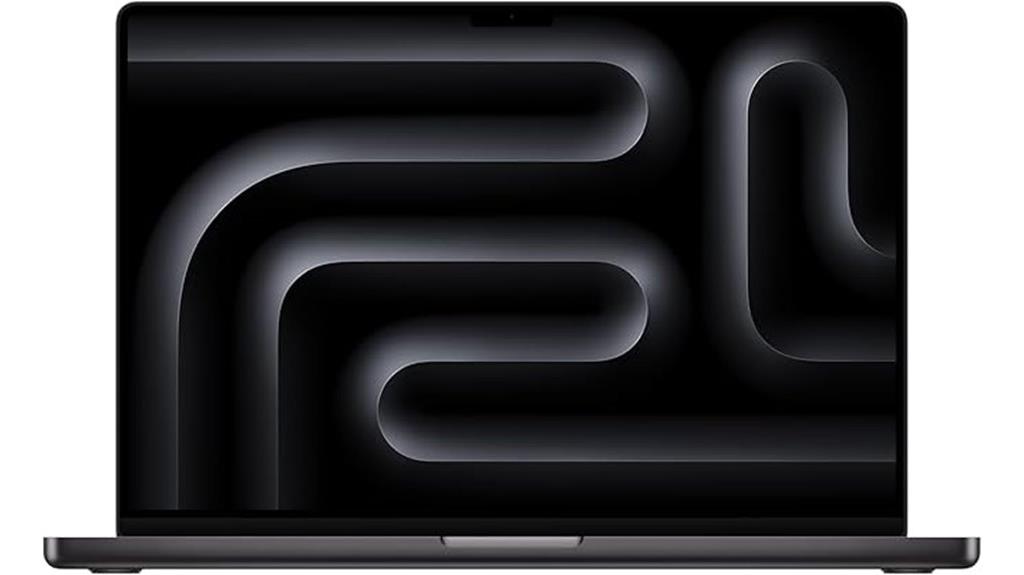
The Apple MacBook Pro 14-inch with M4 Pro is an excellent choice for data scientists and AI professionals who need powerful performance on the go. Its M4 Pro chip handles demanding tasks like code compilation and data processing with ease, while supporting up to two external displays. The 16.2-inch Liquid Retina XDR display delivers stunning visuals, perfect for analyzing complex data and visualizations. With 24GB of unified memory and a fast 512GB SSD, multitasking is smooth and efficient. Its versatile ports—including Thunderbolt 5, HDMI, and SDXC—make connecting peripherals effortless. Overall, this laptop combines top-tier performance, vibrant visuals, and seamless connectivity for professional data work.
Best For: professionals and creatives who require powerful performance, vibrant visuals, and seamless connectivity for demanding tasks like data analysis, coding, and content creation.
Pros:
- Exceptional performance with M4 Pro chip ideal for intensive tasks
- Stunning 16.2-inch Liquid Retina XDR display with high brightness and contrast
- Versatile connectivity options including Thunderbolt 5, HDMI, and SDXC slots
Cons:
- Premium price point may be costly for some users
- Heavier and larger than smaller laptops, affecting portability
- Limited to 512GB SSD storage, which might be insufficient for very large data sets or extensive media libraries
Apple 2024 MacBook Pro Laptop with M4 Pro, 14‑core CPU, 20‑core GPU: Built for Apple Intelligence, 16.2-inch Liquid Retina XDR Display, 48GB Unified Memory, 512GB SSD Storage; Space Black
SUPERCHARGED BY M4 PRO OR M4 MAX — The 16-inch MacBook Pro with the M4 Pro or M4...
As an affiliate, we earn on qualifying purchases.
Apple 2024 MacBook Pro Laptop with M4 Pro
The 2024 MacBook Pro with M4 Pro is an excellent choice for data scientists and AI professionals who need powerful, reliable performance on demanding tasks. Its M4 Pro chip handles intensive workloads like code compilation effortlessly, while the M4 Max variant manages complex workflows such as 3D rendering with ease. The 16.2-inch Liquid Retina XDR display offers stunning visuals and up to 1600 nits peak brightness, perfect for data visualization. With all-day battery life and seamless Apple ecosystem integration, including features like iPhone Mirroring, this MacBook Pro combines performance, portability, and connectivity — making it ideal for professional data science and AI projects.
Best For: data scientists, AI professionals, and creative workflows requiring high-performance computing and stunning visuals.
Pros:
- Equipped with the powerful M4 Pro chip capable of handling intensive workloads effortlessly
- Stunning 16.2-inch Liquid Retina XDR display with up to 1600 nits brightness for detailed data visualization
- Seamless integration within the Apple ecosystem, including iPhone Mirroring and device control
Cons:
- High price point may be a barrier for some users
- Limited to macOS, which might not suit users needing Windows compatibility
- Heavy and large design could affect portability for some users

Apple 2024 MacBook Pro Laptop with M4 chip with 10‑core CPU and 10‑core GPU: Built for Apple Intelligence, 14.2-inch Liquid Retina XDR Display, 16GB Unified Memory, 1TB SSD Storage; Space Black
SUPERCHARGED BY M4 — The 14-inch MacBook Pro with M4 chip gives you spectacular performance in a powerhouse...
As an affiliate, we earn on qualifying purchases.
Apple 2024 MacBook Pro Laptop with M4 Max, 14‑core CPU, 32‑core GPU
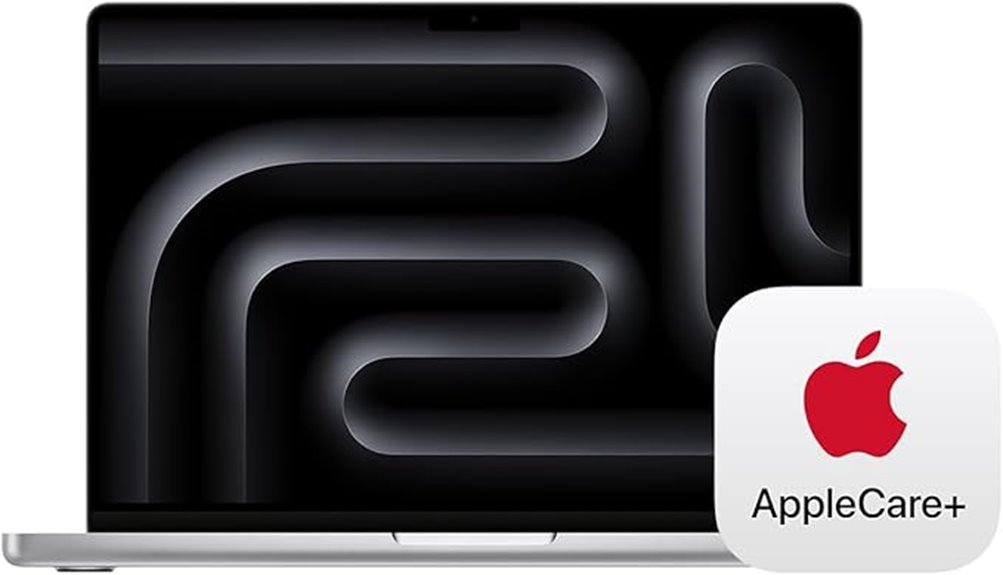
Designed for demanding data science and AI workloads, the 2024 MacBook Pro with M4 Max offers exceptional processing power thanks to its 14-core CPU and 32-core GPU. It handles intensive tasks like large-scale data analysis, complex modeling, and rendering with ease. The 14.2-inch Liquid Retina XDR display ensures vibrant visuals, while 36GB of unified memory keeps multitasking smooth. With 1TB SSD storage, you get quick access to your datasets and projects. Built for performance and reliability, it includes AppleCare+ for extended support. This MacBook Pro truly empowers data scientists and AI developers to push their projects to new heights.
Best For: data scientists, AI developers, and creative professionals who require powerful performance for demanding workflows and large-scale projects.
Pros:
- Exceptional processing power with 14-core CPU and 32-core GPU for intensive tasks
- Stunning 14.2-inch Liquid Retina XDR display with high brightness and contrast
- Ample 36GB unified memory and 1TB SSD for smooth multitasking and quick data access
Cons:
- Premium price point may be prohibitive for some users
- Heavier and less portable compared to smaller laptops
- Limited upgradeability due to integrated components and fixed storage
Apple 2025 MacBook Pro Laptop with M5 Chip

If you’re working with data science or AI projects, the Apple 2025 MacBook Pro with M5 chip stands out as an exceptional choice thanks to its powerful 10-core CPU and GPU. It delivers next-generation speed, AI capabilities, and handles demanding workloads effortlessly. With 16GB of unified memory and a 1TB SSD, multitasking remains smooth, and storage is plentiful. Its 14.2-inch Liquid Retina XDR display offers stunning visuals, while the advanced camera and immersive audio elevate your communication. Designed for seamless integration within the Apple ecosystem, it also features versatile ports, including Thunderbolt 4, HDMI, SDXC, and MagSafe, making it a top contender for data science and AI professionals.
Best For: data science, AI projects, and creative professionals seeking high performance, seamless Apple ecosystem integration, and versatile connectivity in a portable laptop.
Pros:
- Exceptional processing power with 10-core CPU and GPU for demanding workloads
- Stunning Liquid Retina XDR display with high brightness and contrast for vivid visuals
- Comprehensive port selection including Thunderbolt 4, HDMI, SDXC, and MagSafe for versatile connectivity
Cons:
- Premium price point may be a barrier for budget-conscious users
- Limited to Apple ecosystem, which may restrict compatibility with some non-Apple devices and software
- Slightly heavier than ultraportable laptops, potentially affecting portability for some users
Factors to Consider When Choosing a Macbook Pro for Data Science and AI
When choosing a MacBook Pro for data science and AI, I focus on key factors like processor power, memory, and graphics to handle demanding tasks efficiently. It’s also important to evaluate storage capacity for large datasets and a display that offers clarity for analysis. By assessing these points, you can select a model that best fits your workflow and performance needs.
Processor Power and Cores
Having multiple CPU cores, especially high-performance ones, is essential for efficiently handling large datasets and complex AI models on a MacBook Pro. More cores enable faster processing by allowing better parallel execution of tasks, which markedly reduces training and inference times. A higher core count ensures that multi-threaded workflows—like data preprocessing, model training, and hyperparameter tuning—run smoothly without bottlenecks. Combining multiple cores with high clock speeds boosts overall computational power, making your AI projects more efficient. This means you can work on demanding tasks without feeling held back by hardware limitations. When choosing a MacBook Pro, prioritize models with ample high-performance cores to keep your data science and AI projects running at top speed.
Memory Capacity Needs
Processor power and core count are essential for handling complex AI models, but memory capacity plays an equally important role in guaranteeing smooth performance. For data science and AI tasks, I recommend a MacBook Pro with at least 16GB of unified memory to manage large datasets and complex models efficiently. When working with multiple AI algorithms or extensive data workflows, higher memory options like 24GB or 36GB can markedly boost performance. Having sufficient RAM helps prevent bottlenecks during training and inference, especially with large neural networks or high-resolution data. It also improves multitasking, allowing me to analyze data, code, visualize results, and develop models simultaneously without lag. Future-proofing your device with ample memory ensures it stays capable as data and model sizes continue to grow.
Graphics and GPU Strength
A powerful GPU is vital for data science and AI tasks because it dramatically speeds up model training and data processing. High-core-count GPUs with Neural Accelerators enhance parallel processing, making complex computations more efficient. Hardware-accelerated ray tracing and advanced features enable faster rendering and simulations, which are indispensable for data visualization. GPUs with 10 or more cores improve deep learning workflows by handling large datasets and models directly in memory, reducing transfer bottlenecks. Support for neural network acceleration through dedicated Neural Engines further cuts training times and boosts real-time inference. When choosing a MacBook Pro, look for models with robust GPU capabilities to guarantee your AI and data projects run smoothly and efficiently, saving you time and increasing productivity.
Storage and Data Handling
When selecting a MacBook Pro for data science and AI, storage capacity and data handling capabilities are vital considerations. I recommend at least 1TB SSD to manage large datasets and complex models efficiently. Faster data transfer speeds, supported by Thunderbolt 4 or 5 ports, help reduce bottlenecks during data ingestion and processing. High memory capacity, like 24GB of unified RAM, guarantees smooth multitasking and real-time analysis without lag. Supporting external storage devices and high-speed data interfaces is essential for managing extensive datasets in your workflows. Reliable, fast storage solutions enable efficient saving, retrieval, and backup of large files necessary for training AI models and conducting experiments. Prioritizing these aspects will keep your projects running seamlessly and boost productivity.
Display Quality and Size
Have you considered how display quality impacts your productivity in data science and AI? A high-resolution display with at least 2560×1600 pixels is crucial for detailed visualization of complex data and code. Larger screens, like 14 or 16 inches, give you more space for multitasking and analyzing datasets efficiently. Supporting P3 wide color gamut ensures accurate color reproduction, which is essential for visual data analysis and graphics work. Additionally, higher refresh rates of up to 120Hz, with features like True Tone and ProMotion, provide smoother navigation and responsiveness during interactive tasks. Brightness levels of 1000 nits or more improve visibility in various lighting conditions, especially outdoors or in brightly lit rooms. Choosing the right display quality and size can markedly enhance your workflow and overall experience.
Port and Connectivity Options
Choosing the right port and connectivity options is indispensable for maximizing productivity in data science and AI. Multiple Thunderbolt 4 or 5 ports ensure fast data transfer and support for multiple external displays, crucial for complex workflows. HDMI and SDXC card slots offer additional connection options for monitors and transferring large datasets from cameras or storage cards. USB-C ports provide versatile connectivity for external drives, hubs, and accessories needed for data processing and AI tasks. Support for connecting two or even four external displays enhances multi-tasking and visualization, which are critical for analysis and model training. High-speed, dedicated ports enable seamless data movement and smooth integration with external hardware, guaranteeing your workflow remains efficient and uninterrupted.
Battery Life Duration
Extended battery life is crucial for data scientists and AI practitioners who often work remotely or in environments with limited charging options. With up to 24 hours of video streaming and 16 hours of web browsing, MacBook Pros offer impressive endurance, supporting long work sessions without interruption. This is especially critical when running power-intensive AI workloads that continuously utilize the GPU and Neural Engine, which can drain batteries quickly. High-capacity batteries allow me to perform data processing, run experiments, and analyze models without frequent recharging, boosting productivity. Additionally, devices with optimized energy management ensure sustained performance during extended projects. Choosing a MacBook Pro with strong battery life means I can focus on my work without constantly searching for power outlets, making it a necessary factor in my decision.
Ecosystem Compatibility
Ecosystem compatibility plays a vital role in selecting the right MacBook Pro for data science and AI, as it guarantees smooth integration with my existing workflow and tools. macOS guarantees compatibility with essential software like TensorFlow, PyTorch, and Jupyter Notebooks, making setup straightforward. Features like Handoff, AirDrop, and Universal Clipboard allow effortless data transfer and project sharing across my Apple devices, saving time. Support for iPhone and iPad mirroring, messaging, and FaceTime enhances collaboration during data analysis. Additionally, macOS optimized for Apple Silicon chips delivers efficient performance and energy management for intensive AI tasks. Compatibility with Apple’s ecosystem also streamlines access to cloud storage, productivity tools, and peripherals, creating a cohesive environment that boosts my productivity and simplifies complex workflows.
Frequently Asked Questions
How Does Battery Life Impact Long Data Science Projects on Macbook Pros?
Battery life really impacts my long data science projects because it determines how long I can work without needing a charge. When my MacBook Pro’s battery lasts longer, I stay productive on the go, especially during meetings or travel. If the battery drains quickly, I have to keep finding power outlets, which interrupts my workflow. So, a strong battery life is essential for uninterrupted, efficient project work.
Are There Specific Software Compatibility Issues With the New M5 Chip?
Sure, the new M5 chip might seem like a miracle worker, but software compatibility? That’s another story. Some legacy applications may not yet be optimized for the M5’s architecture, causing hiccups or crashes. I’d recommend checking with software vendors before switching. It’s like adopting a new language—exciting but potentially confusing until everyone gets on the same page. So, plan your upgrades carefully!
Can Macbook Pros Handle Large Datasets Efficiently During AI Training?
Yes, MacBook Pros can handle large datasets efficiently during AI training. I’ve found that with powerful specs like the M5 chip, ample RAM, and fast SSD storage, they manage heavy workloads smoothly. While they’re not specialized for all tasks, their performance is impressive for data science projects. Just verify you optimize your workflow and use compatible software to get the most out of your MacBook Pro.
What Are the Best Storage Options for Extensive Data Science Workflows?
For extensive data science workflows, I recommend opting for the highest storage capacity available, like 2TB or more, to avoid constant data juggling. I also use external SSDs for additional space because they’re fast and reliable. Cloud storage options like iCloud or Google Drive are great for backup and sharing. Combining internal SSDs with external drives offers the best balance between speed, capacity, and flexibility for heavy datasets.
How Future-Proof Are These Macbook Pros for Upcoming AI Advancements?
These MacBook Pros are quite future-proof for upcoming AI advancements. I see them as a sturdy bridge, stretching into the horizon of innovation, equipped with powerful processors and advanced GPUs that can handle evolving algorithms. While technology evolves rapidly, their robust architecture and upgradable components give me confidence they’ll remain relevant, supporting my AI projects well into the future. They’re designed to grow with me, not hold me back.
Conclusion
Choosing the right MacBook Pro is like selecting the perfect brush for a masterpiece—each one fuels your creativity differently. With the latest M5 and M4 chips powering your projects, you’ll glide through data science and AI tasks like a hot knife through butter. Trust me, these laptops aren’t just tools; they’re your trusted allies, turning complex ideas into stunning realities. Gear up, and let your innovation soar on these top-tier machines.