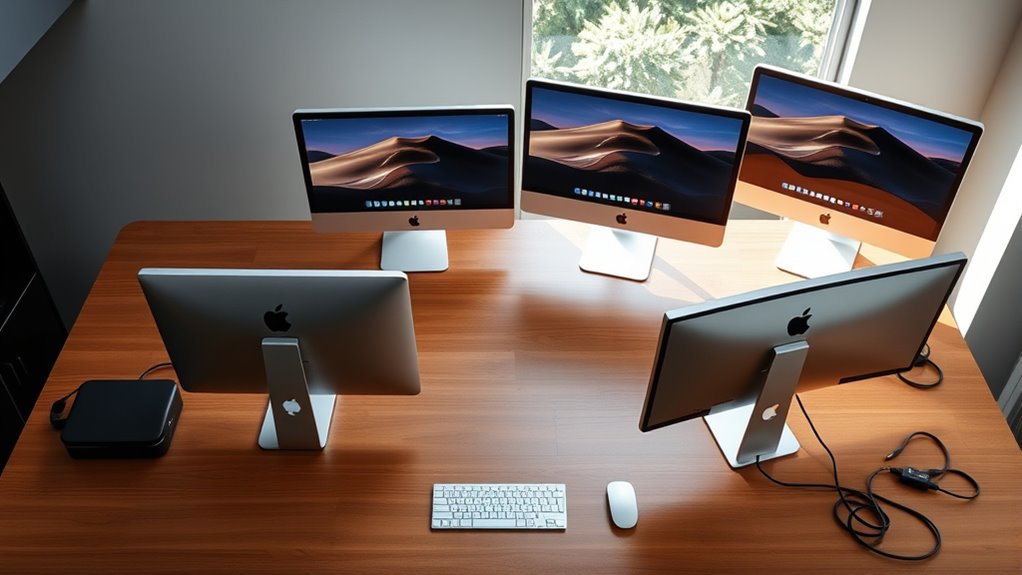

If I want to maximize performance in 2025, I recommend the top-tier Mac Studio with an M4 Pro or M4 Max chip, ample RAM of 64GB, and at least 1TB of fast SSD storage. Make certain it has enough Thunderbolt and USB ports for peripherals and supports demanding apps like video editing and 3D rendering. Opting for a future-proof setup now guarantees I stay ahead, and you’ll find more details below.
Key Takeaways
- Opt for the M4 Pro with 12-core CPU and 38-core GPU for demanding creative and professional workflows.
- Select at least 64GB RAM and 1TB SSD to future-proof performance and accommodate large projects.
- Prioritize configurations with multiple Thunderbolt and USB-C ports for extensive external device connectivity.
- Choose a compact, ecosystem-integrated setup with macOS compatibility to streamline productivity.
- Balance high-end specs with budget considerations, focusing on CPU, GPU, and storage for maximum long-term performance.
Apple 2024 Mac mini Desktop Computer with M4 Chip

If you’re looking for a compact yet powerful desktop that fits seamlessly into any workspace, the Apple 2024 Mac mini with M4 chip is an excellent choice. Its small five-by-five-inch design makes it easy to place next to your monitor or in tight spaces. Powered by the M4 chip with a 10-core CPU and GPU, it delivers exceptional speed and responsiveness. With 24GB of unified memory and a 512GB SSD, multitasking and data access are smooth. Plus, its versatile ports—Thunderbolt, HDMI, USB-C, Ethernet—ensure flexible connectivity. This Mac mini integrates effortlessly with the Apple ecosystem, offering a sleek, eco-friendly option for demanding users.
Best For: users seeking a compact, powerful, and eco-friendly desktop solution that seamlessly integrates with the Apple ecosystem for professional multitasking and creative work.
Pros:
- Compact design easily fits in tight spaces and next to monitors.
- Powered by the high-performance M4 chip with 10-core CPU and GPU for fast responsiveness.
- Ample 24GB of unified memory and 512GB SSD for smooth multitasking and quick data access.
Cons:
- Limited upgrade options due to its compact and integrated design.
- May require additional peripherals for complete workstation setup.
- Higher price point compared to traditional desktops with similar specs.
Apple Mac mini Desktop Computer with M4 Chip (512GB SSD, 16GB RAM)
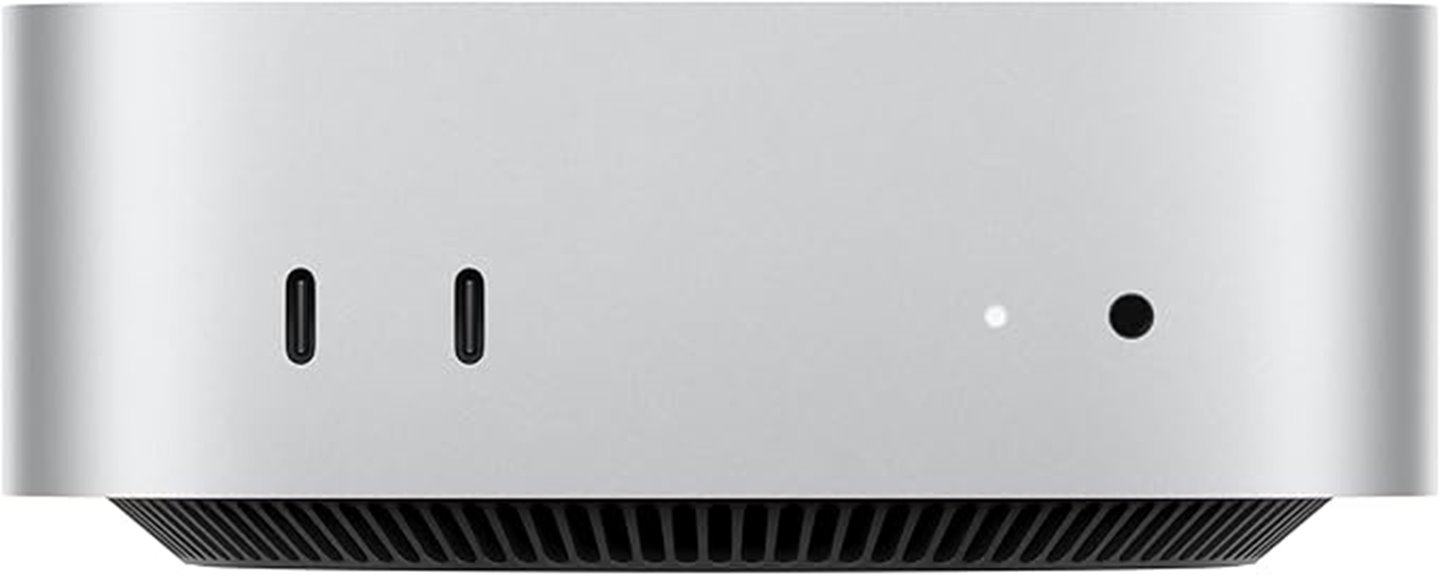
The Apple Mac mini with the M4 chip is an ideal choice for users who need a compact yet powerful desktop that can handle demanding tasks without taking up much space. Its small five-by-five-inch design fits easily next to a monitor or in tight spaces, yet it delivers impressive performance thanks to the M4’s 10-core CPU and GPU. With 16GB of unified memory and a 512GB SSD, it provides snappy, fluid operation for creative and professional work. Multiple ports, including Thunderbolt and HDMI, ensure easy connectivity. Built around Apple silicon, it offers seamless integration with the Apple ecosystem, boosting productivity and privacy in a sleek, environmentally friendly package.
Best For: users seeking a compact, powerful desktop for creative, professional, or demanding computing tasks with seamless Apple ecosystem integration.
Pros:
- Compact design fits easily in small spaces and next to monitors
- Powerful performance with M4 chip, 10-core CPU/GPU, and 16GB RAM
- Multiple connectivity options including Thunderbolt, HDMI, and Ethernet
Cons:
- Limited upgradability due to integrated hardware design
- Higher price point compared to traditional desktops with similar specs
- May require external peripherals for complete setup and expansion
Apple Mac mini Desktop Computer with M4 Chip (2024)
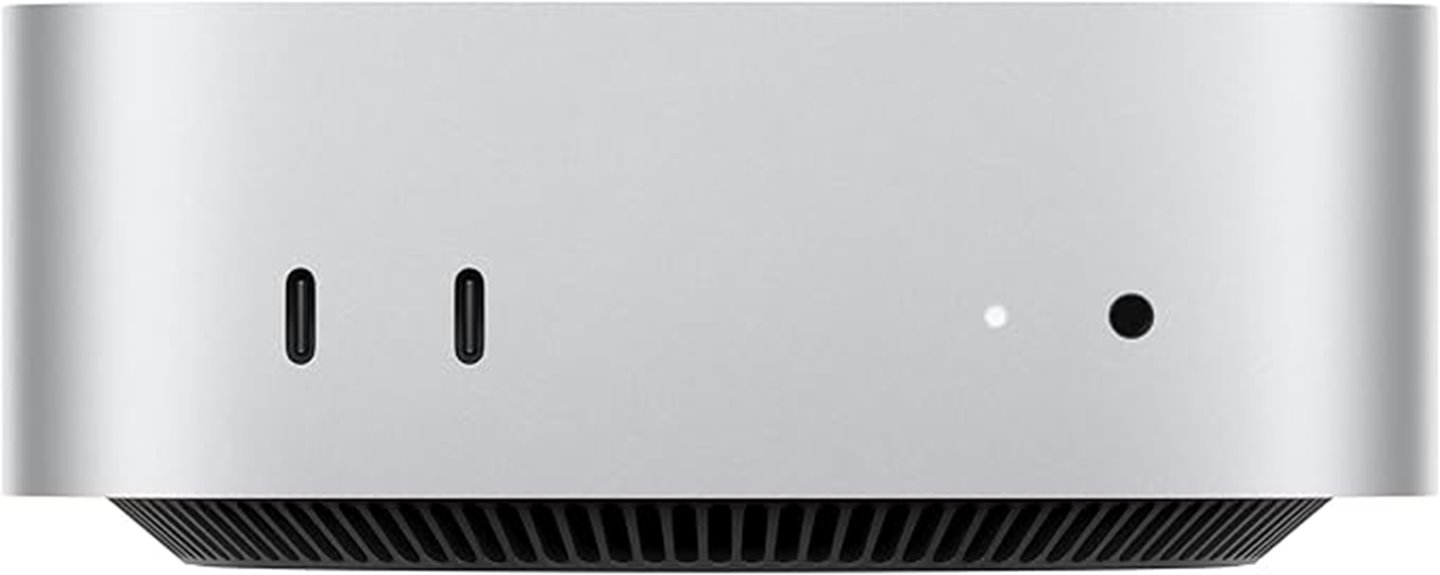
For anyone seeking a compact yet powerful desktop, the Apple Mac mini with M4 chip (2024) offers an impressive combination of size and performance. Its five-by-five-inch design fits easily next to monitors or in tight spaces, yet it packs a 10-core CPU and GPU, ensuring smooth, fast performance. With 16GB of unified memory and 256GB SSD storage, it handles demanding tasks and multitasking effortlessly. Connectivity is versatile, with Thunderbolt, HDMI, Gigabit Ethernet, USB-C, and a headphone jack. Running macOS optimized for Apple silicon, it offers seamless integration with other Apple devices and supports productivity apps like Microsoft 365 and Adobe Creative Cloud.
Best For: users seeking a compact, powerful desktop that seamlessly integrates with other Apple devices and handles demanding creative and productivity tasks.
Pros:
- Compact size fits easily in tight spaces or next to monitors
- Powerful M4 chip with 10-core CPU and GPU for fast performance
- Versatile connectivity options including Thunderbolt, HDMI, and USB-C
Cons:
- Limited storage starting at 256GB may require external solutions for large files
- No dedicated upgrade options for RAM or storage post-purchase
- Mac mini’s small form factor may lack some ports or features found in larger desktops
Apple 2024 Mac mini Desktop Computer with M4 Pro chip
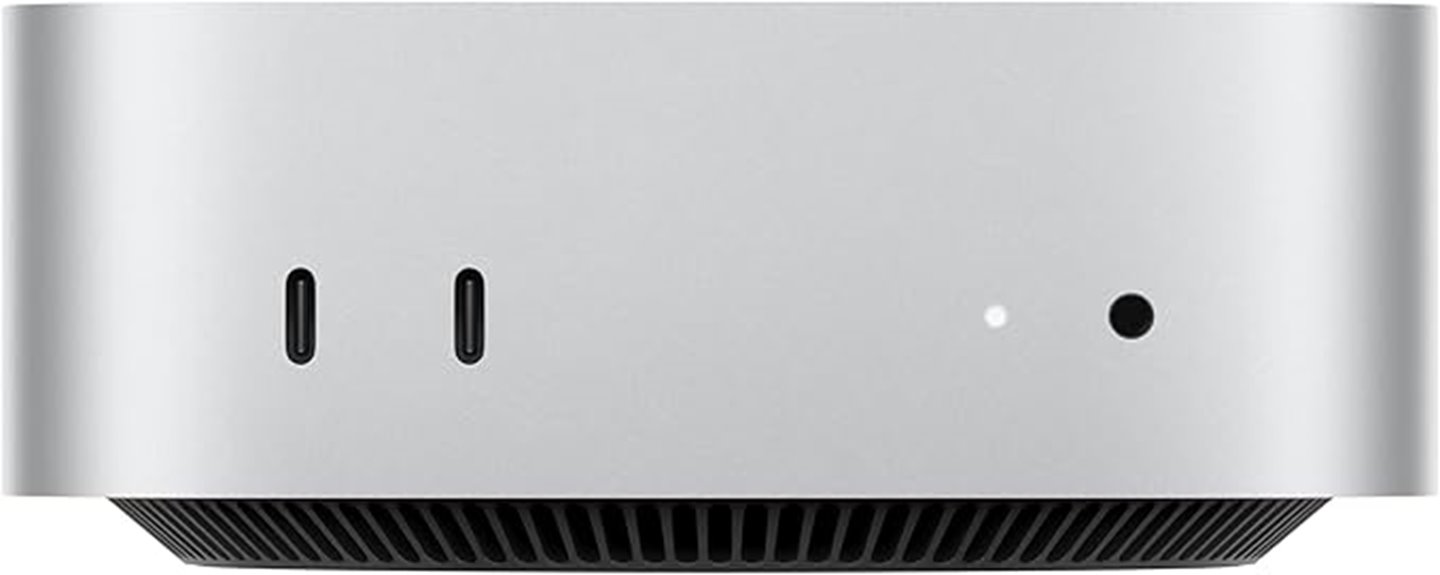
Powered by the advanced M4 Pro chip, the Apple 2024 Mac mini Desktop Computer is an excellent choice for professionals who need a compact yet powerful machine. Its five-by-five-inch design fits easily next to monitors or in tight spaces, while delivering impressive performance for demanding tasks. The M4 Pro’s 12-core CPU, 16-core GPU, and 24GB of unified memory ensure swift handling of complex projects like rendering or coding. With 512GB SSD storage and versatile connectivity options—including Thunderbolt, HDMI, USB-C, Ethernet, and headphone jack—it’s highly adaptable. Seamlessly integrated with the Apple ecosystem, it offers fast, efficient operation on macOS and supports Apple’s intelligent features.
Best For: professionals and creatives who need a compact, powerful desktop computer capable of handling demanding tasks like rendering, coding, and multimedia editing.
Pros:
- Small, space-saving design that fits easily on any desk or workspace
- Equipped with the powerful M4 Pro chip for fast, efficient performance
- Versatile connectivity options including Thunderbolt, HDMI, and USB-C
Cons:
- Limited upgradeability due to integrated Apple silicon design
- Higher price point compared to some other compact desktops with similar specs
- No dedicated graphics card beyond the integrated GPU, which may affect certain high-end gaming or GPU-intensive tasks
Factors to Consider When Choosing Mac Studio Configurations

When choosing a Mac Studio configuration, I focus on my processing power needs, memory capacity, and storage requirements to guarantee smooth performance. I also consider my connectivity preferences and whether the software I use is compatible with the setup. These factors help me select the best options tailored to my workflow.
Processing Power Needs
Choosing the right Mac Studio configuration depends heavily on evaluating your tasks’ complexity and resource demands. I consider whether I’ll be doing intensive activities like 3D rendering, video editing, or large data analysis, which require more CPU and GPU power. Multi-core processors are vital for multitasking and parallel processing, especially for demanding workflows. I also think about future scalability, since more powerful setups handle software updates and evolving applications better. Matching my processing needs with available configurations ensures I get peak performance without overspending. If my work involves heavy processing, I opt for higher-end specs; for lighter tasks, a mid-range setup suffices. Ultimately, understanding my tasks’ requirements guides me to select a Mac Studio that balances power and value effectively.
Memory Capacity Options
Since memory capacity plays a crucial role in how smoothly your Mac Studio handles demanding tasks, it’s important to contemplate how much RAM you’ll need. Higher memory allows for smoother multitasking and better performance with intensive applications like video editing, 3D rendering, and software development. Mac Studio configurations typically offer options from 16GB up to 64GB or more of unified memory. The right amount depends on your workflow’s complexity and the size of your files. Upgrading memory during purchase can be more cost-effective, especially since some configurations are non-upgradable later. Choosing the right memory capacity ensures your Mac Studio stays responsive during heavy workloads, avoiding bottlenecks and improving overall efficiency. Tailor your choice to match your current and future professional needs for maximum performance.
Storage Requirements
Your storage needs should guide your Mac Studio configuration choices to guarantee smooth performance and avoid bottlenecks. Consider both your current files and future growth when selecting SSD capacity, opting for at least 512GB or 1TB for demanding workflows. If you’re working with large media projects, high-resolution videos, extensive photo libraries, or sizable datasets, higher capacities will ensure fast access and seamless editing. Keep in mind that upgrading storage later is costly and limited, so it’s smarter to choose a configuration that fits your long-term needs from the start. Balancing your storage requirements with your budget is key—prioritize larger SSDs if your work demands it, to prevent reliance on external drives and maintain ideal performance.
Connectivity Preferences
When configuring a Mac Studio, paying close attention to connectivity options is essential for ensuring seamless workflow and efficient use of peripherals. I recommend ensuring your setup includes enough Thunderbolt and USB ports to connect all your devices without hassle. Check if the available display outputs, like HDMI or others, match your monitor’s compatibility needs. High-speed data transfer support is imperative for handling large files and demanding applications, so verify that the ports can keep up. If wired internet is important, make sure there’s a Gigabit Ethernet port accessible. Lastly, consider port placement—front-facing ports are more convenient for quick access during work. Balancing these factors will help you create a streamlined, functional workspace tailored to your specific connectivity needs.
Software Compatibility
Choosing a Mac Studio configuration that supports your crucial software applications is essential for maintaining a smooth workflow. Make sure the setup is compatible with the programs you rely on daily, like Adobe Creative Cloud or Microsoft 365, to guarantee top performance. Check that the macOS version installed aligns with your software’s requirements, as outdated or incompatible OS can cause issues. It’s also important to verify if your key applications are optimized for Apple silicon, which can boost speed and efficiency considerably. Additionally, review the graphics demands of your software—ensure the GPU in your configuration meets or exceeds the recommended specs for smooth rendering and processing. Finally, consult developer notes or compatibility lists to confirm all critical applications will run seamlessly on your chosen Mac Studio setup.
Budget Constraints
Budget constraints play a significant role in determining which Mac Studio configuration best suits your needs. I recommend evaluating your maximum budget early on to avoid overspending on unnecessary features. Focus on the essential performance needs, such as CPU power, RAM, and storage, to guarantee you get value without overinvesting. If your budget allows, consider higher specifications to future-proof your setup, extending its relevance and performance longevity. Striking a balance between cost and productivity gains is vital—more RAM or faster storage can boost efficiency but also increase costs. Weigh the trade-offs between lower-cost models and premium configurations carefully to find the best fit. Ultimately, aligning your financial limits with your core requirements helps you select a Mac Studio that offers the best value.
Future Scalability
Considering future scalability is essential to making a smart Mac Studio choice, especially if you anticipate increasing workload demands or evolving project needs. I recommend considering the maximum amount of RAM supported to stay ahead as your tasks grow more complex. Evaluate options for expanding storage, whether through larger SSDs or external drives, to accommodate larger files and projects. Opt for configurations with higher core counts and more powerful GPUs, ensuring your system can handle demanding applications over time. Check that the Mac Studio has enough expansion ports and is compatible with future peripherals. Additionally, advanced connectivity options like Thunderbolt 4 or USB-C are crucial for supporting newer devices and standards, helping your setup remain relevant and capable well into the future.
Space and Design
When selecting a Mac Studio, it’s important to think about the space available on your desk to guarantee it fits comfortably without creating clutter. Measure your workspace carefully and consider the Mac Studio’s dimensions to ensure it sits well alongside other equipment. The design and size should match your aesthetic preferences and blend seamlessly with your existing setup. Accessibility is key—make sure ports and connections are easy to reach for peripherals and accessories. Also, think about airflow and ventilation, especially if your workspace gets warm or if you’ll be running intensive tasks. Finally, check that the overall size supports ergonomic comfort and leaves room for future expansion or additional gear. Proper planning here helps you avoid cramped or inefficient setups down the road.
Frequently Asked Questions
How Does the M4 Pro Chip Differ From the Standard M4 in Performance?
The M4 Pro chip offers markedly better performance than the standard M4. I’ve found it to have more cores, higher clock speeds, and improved GPU capabilities, which makes it ideal for demanding tasks like video editing and 3D rendering. It’s more power-efficient too, so I get faster processing without sacrificing battery life. If you need top-tier performance, the M4 Pro is definitely the way to go.
What Are the Best Upgrade Options for Future-Proofing a Mac Studio?
To future-proof my Mac Studio, I’d prioritize upgrading the RAM to at least 64GB, ensuring smooth multitasking as software demands grow. I’d also opt for the highest storage I can afford, so I won’t run out of space. Additionally, choosing the latest M4 Pro chip offers better performance and efficiency, making it a smart investment. External accessories like fast Thunderbolt drives can also extend its lifespan and usability.
How Does Storage Capacity Impact Overall Mac Studio Performance?
Sure, storage capacity totally boosts your Mac Studio’s speed—said no one ever. More storage mainly affects how much data you can save, not how fast it runs. But hey, running out of space can slow you down with constant file juggling. So, I recommend getting enough SSD space to handle your projects without juggling, ensuring smooth performance and peace of mind, even if it doesn’t directly speed up your CPU.
Are There Specific Peripherals Recommended for High-Performance Mac Studio Setups?
Absolutely, I recommend high-speed external drives like SSDs for quick data access, Thunderbolt 3 or 4 docks for seamless connectivity, and a professional-grade monitor for accurate color and detail. I also suggest a reliable keyboard and mouse for comfort during long work sessions. These peripherals optimize your workflow, ensuring you get the most out of your Mac Studio’s power, especially when handling demanding tasks like video editing or 3D rendering.
What Cooling Solutions Are Optimal for Overclocked Mac Studio Configurations?
You bet, I’d say liquid cooling is your best bet for overclocked Mac Studio setups. It keeps things running smoothly and prevents overheating, especially under heavy loads. Custom liquid cooling solutions or high-quality all-in-one systems can work wonders. Just remember, a good cooling system is no silver bullet; proper airflow and placement matter too. Staying cool keeps your system happy and performing at its peak—no point in throwing good money after bad!
Conclusion
Choosing the right Mac Studio is like assembling a powerful crew for a mission—you want the best tools to succeed. By understanding your needs and weighing the options, you’ll craft a setup that’s ready to conquer any challenge in 2025. Think of your Mac as the captain of your creative ship, steering smoothly through the digital seas. With the right configuration, you’ll navigate ahead with confidence and unstoppable performance.