

If you’re looking for the best astronomy laptops with long-lasting batteries, I recommend models with efficient CPUs like Intel N150 or Alder Lake N97, combined with high-capacity batteries that last over 8 hours. Lightweight designs, high-quality FHD IPS screens, and ample RAM (16GB or more) are essential for fieldwork and detailed observations. These devices balance performance with portability, making them ideal for stargazing and research. Stick around, and you’ll discover even more options tailored to your needs.
Key Takeaways
- Look for laptops with high-capacity batteries (5000mAh or more) and efficient processors like N150 or 12th Gen Intel for longer usage.
- Prioritize models with lightweight, portable designs (around 1.6–3 pounds) suitable for outdoor stargazing.
- Opt for 15.6″ FHD IPS displays for clear star mapping and reduced eye strain during extended sessions.
- Choose laptops with 16GB RAM and SSD storage (256GB–1TB) for smooth multitasking and quick data access in the field.
- Consider devices with up to 8 hours of battery life, durable build quality, and connectivity options for reliable outdoor research.
15.6-inch Laptop with 16GB RAM, 512GB SSD, Intel N150, Windows 11 Pro

If you’re looking for a compact, powerful laptop for astronomy on the go, the 6-inch model with 16GB RAM and a 512GB SSD is an excellent choice. It features the latest 12th Gen Intel N150 processor, offering quick multitasking and smooth performance for star charting, data analysis, and research. The 16GB DDR4 RAM ensures effortless handling of multiple applications, while the fast NVMe SSD provides ample storage and rapid data access. Although small, it runs Windows 11 Pro, making it ideal for both field observations and office work. Its portability and solid performance make it a reliable companion for any astronomy enthusiast.
Best For: professionals and students seeking a portable, high-performance 15.6-inch laptop for multitasking, office work, multimedia, and light gaming.
Pros:
- Powerful 12th Gen Intel N150 processor delivers smooth multitasking and quick performance
- 16GB DDR4 RAM and 512GB NVMe SSD provide ample memory and fast data access
- Lightweight design at 1.7 kg enhances portability without sacrificing performance
Cons:
- Battery life of just over 4 hours may require frequent charging during extended use
- Integrated Intel UHD graphics are limited for heavy graphics or gaming tasks
- No dedicated GPU, which could impact performance in demanding creative applications
NIMO 15.6″ FHD Laptop with 16GB RAM and 1TB SSD
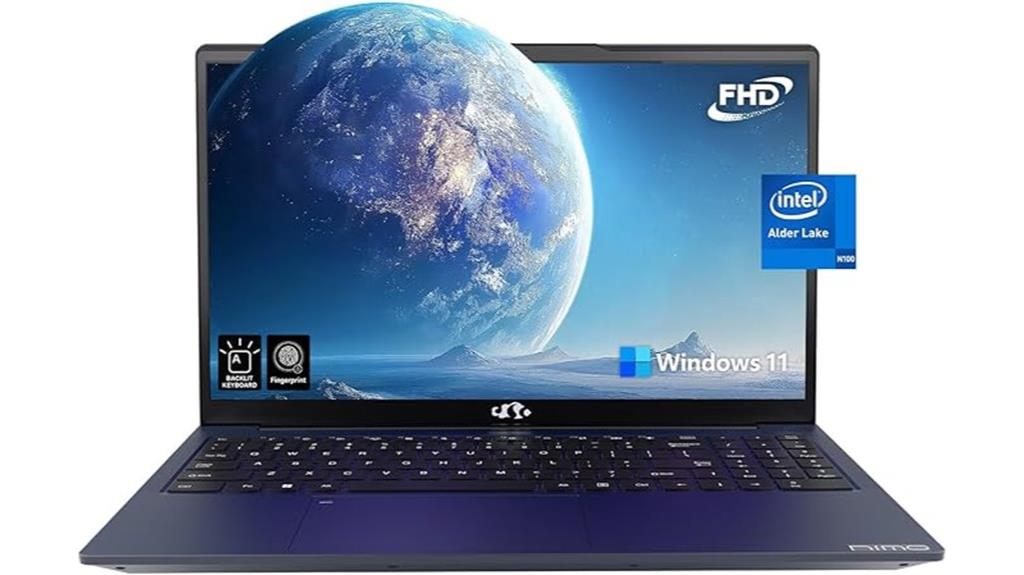
Are you looking for a reliable, high-performance laptop to support your astronomy passions? The NIMO 15.6″ FHD Laptop offers impressive specs, including a vibrant anti-glare display with 1920×1080 resolution, great for detailed star maps and research. Powered by a 12th Gen Intel Alder Lake-N100 processor, it handles multitasking and intensive tasks smoothly. With 16GB RAM and a 1TB SSD, it guarantees fast data access and storage. Plus, its durable metal shell and portability features make it perfect for stargazing sessions or field work. Backed by a solid 2-year warranty and responsive support, this laptop combines performance, durability, and convenience for any astronomy enthusiast.
Best For: astronomy enthusiasts and field researchers seeking a reliable, high-performance portable laptop for detailed star mapping and data analysis.
Pros:
- Vibrant 15.6″ FHD anti-glare display ideal for detailed visual work and research.
- Powerful 12th Gen Intel Alder Lake-N100 processor with up to 3.4GHz for smooth multitasking.
- Durable metal shell with upgradability options, ensuring long-term use and adaptability.
Cons:
- Slightly heavier than ultra-light laptops, which may impact portability for some users.
- Limited pre-installed software, requiring additional setup for specialized astronomy applications.
- Battery life specifics are not provided, potentially limiting long outdoor stargazing sessions without charging.
Laptop Computer with 15.6″ HD Display and 12GB RAM
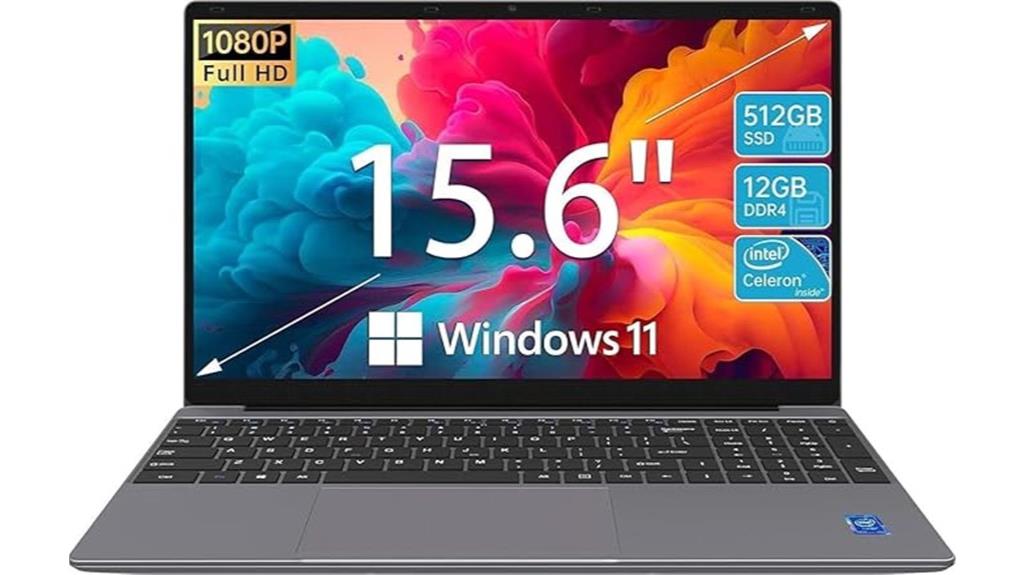
A laptop with a 15.6-inch HD display and 12GB of RAM offers the perfect balance of portability and performance for amateur astronomers and enthusiasts alike. Powered by the Jasper Lake N5095 processor, it handles multitasking, photo editing, and light gaming smoothly. The 15.6-inch FHD IPS screen provides vivid visuals with reduced eye strain, making long viewing sessions comfortable. Its 512GB SSD, expandable to 1TB, ensures quick access to files and ample storage. Weighing about 3 pounds, it’s lightweight and sleek, ideal for travel. Multiple ports, Wi-Fi, and Bluetooth support enhance connectivity, making it a practical choice for stargazing, research, and everyday use.
Best For: Amateur astronomers, students, and mobile professionals seeking a lightweight, high-performance laptop for multitasking, research, and entertainment.
Pros:
- Lightweight and portable at around 3 pounds, ideal for travel and on-the-go use
- Vivid 15.6-inch FHD IPS display reduces eye strain and enhances visual clarity
- Fast storage options with 512GB SSD expandable to 1TB ensure quick data access and ample space
Cons:
- Limited to light gaming and basic photo/video editing; not suitable for intensive gaming or professional-grade tasks
- May require additional peripherals for full desktop functionality due to limited ports
- Battery life details are not specified; may vary with usage and could impact all-day portability
ACEMAGIC 17.3″ Laptop with Quad Core-12th Alder Lake N97 Processor

The ACEMAGIC 17.3-inch laptop stands out for its powerful 12th Gen Alder Lake N97 processor, making it an excellent choice for astronomers who need reliable performance for stargazing software, data analysis, or astrophotography editing. Its quad-core setup, combined with 16GB of DDR4 RAM and a 512GB SSD, ensures smooth multitasking. The 17.3-inch FHD IPS display provides ample screen space for detailed views, while its lightweight metal design makes it portable. With around five hours of battery life, it’s well-suited for fieldwork. Built-in connectivity options and a cooling system support extended use, making it a versatile tool for astronomy enthusiasts.
Best For: astronomy enthusiasts and field researchers who require a portable, high-performance laptop for stargazing software, data analysis, and astrophotography editing.
Pros:
- Powerful 12th Gen Alder Lake N97 quad-core processor for reliable performance
- Large 17.3-inch FHD IPS display provides ample viewing space for detailed observations
- Lightweight metal design with around five hours of battery life enhances portability and fieldwork convenience
Cons:
- Customer ratings are moderate, averaging 3.8 out of 5 stars
- Limited 128GB TF card slot may require additional storage solutions for large data sets
- Battery life of approximately five hours may be insufficient for extended outdoor use without access to power
New 15.6″ Laptop with FHD Display, 8GB RAM, 256GB SSD, N5095 CPU, Dual Band WiFi, Bluetooth, Type-C PD3.0 Fast Charging
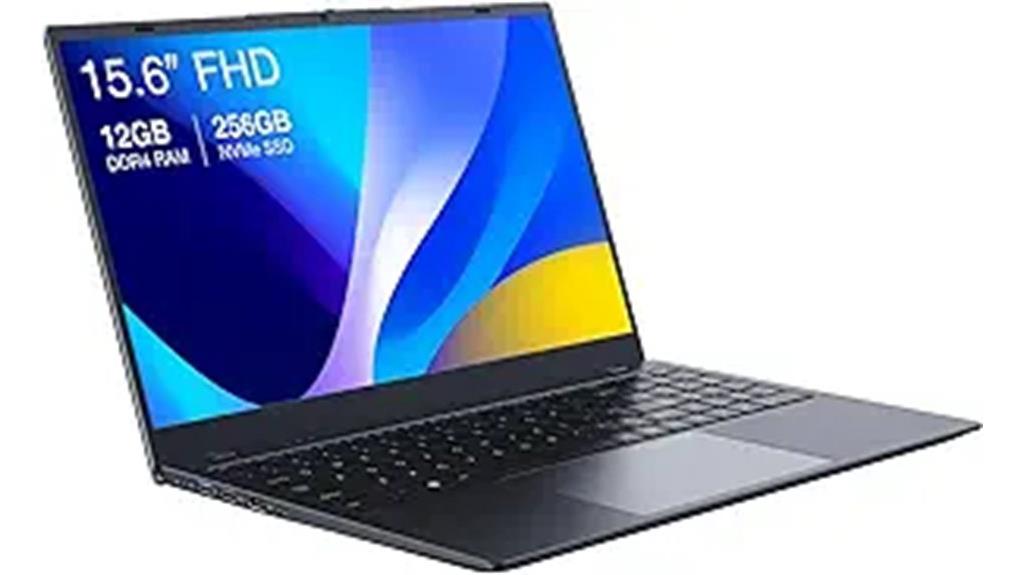
For astronomers seeking a portable yet powerful device, this 15.6″ laptop with a Full HD IPS display offers vibrant visuals essential for detailed star maps and celestial images. Its 11th Gen N5095 quad-core processor guarantees smooth multitasking, while 8GB of DDR4 RAM handles multiple applications seamlessly. The 256GB NVMe SSD provides lightning-fast read/write speeds, improving data access during research. Connectivity is robust with dual-band WiFi, Bluetooth 4.2, and full-featured Type-C with PD3.0 fast charging, making it ideal for on-the-go stargazing or fieldwork. Its compact design, combined with multimedia features, makes it a versatile choice for both amateur and professional astronomers.
Best For: amateur and professional astronomers who need a portable, high-performance device for star mapping, celestial imaging, and research on the go.
Pros:
- Vibrant 15.6″ FHD IPS display delivers detailed and colorful visuals ideal for celestial observations.
- Powerful 11th Gen N5095 quad-core processor with 8GB RAM ensures smooth multitasking and efficient data management.
- Fast 256GB NVMe SSD with read/write speeds up to 2000MB/s accelerates data access and storage tasks.
Cons:
- Limited storage capacity might require external drives for extensive data collection.
- Integrated UHD Graphics may not support high-end gaming or intensive graphic design tasks.
- Battery life details are not specified; performance during extended fieldwork remains uncertain.
2025 Laptop with N150 CPU, 16GB DDR4 RAM, 512GB SSD, 15.6″ FHD IPS Display, 5000mAh Battery, Metal Body, Portable Slim Laptop
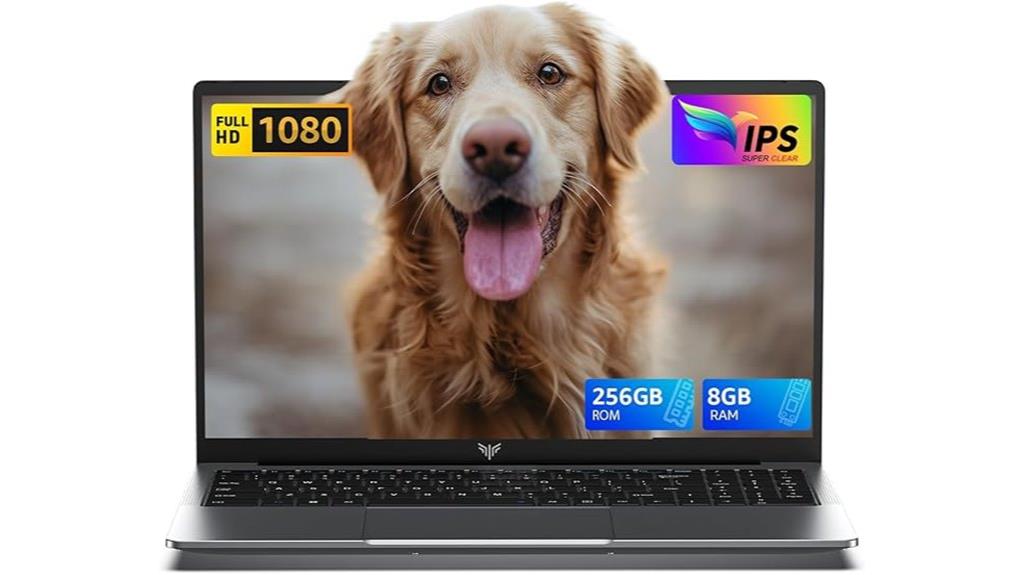
If you’re looking for a portable laptop that combines solid performance with durability, this 2025 model stands out as an excellent choice for astronomy enthusiasts on the go. It features a 15.6-inch FHD IPS display, providing sharp visuals perfect for stargazing or analyzing star charts. Powered by the efficient N150 CPU and 16GB DDR4 RAM, it handles multitasking smoothly. The 512GB SSD ensures fast data access, while the 5000mAh battery offers over four hours of reliable use. Its sleek metal body and lightweight design (1.6kg) make it easy to carry during field observations or travel, without compromising performance or durability.
Best For: astronomy enthusiasts seeking a portable, durable laptop with sharp visuals and strong multitasking capabilities for field observations and star chart analysis.
Pros:
- Lightweight and slim design (1.6kg) for easy portability during outdoor activities
- Vibrant 15.6-inch FHD IPS display delivers clear, detailed visuals ideal for astronomy work
- Fast performance with N150 CPU, 16GB RAM, and 512GB SSD for smooth multitasking and data access
Cons:
- Battery life of just over 4 hours may be limiting for extended field sessions
- Limited to WiFi 5, which may be less future-proof compared to newer standards
- Slightly higher weight compared to ultra-light laptops, which could impact prolonged carrying
ACEMAGIC 2025 AX16 16.0-inch Laptop with 16GB RAM and 512GB SSD

With its powerful Intel 12th Gen Alder Lake processor and ample 16GB RAM, the ACEMAGIC 2025 AX16 is an excellent choice for astronomers who need to run demanding software and multitask smoothly. Its integrated Intel UHD graphics handle visual tasks effectively, while the 512GB SSD guarantees fast boot times and quick access to data. The 16-inch display offers immersive visuals with vivid colors and wide viewing angles, perfect for detailed star maps. Plus, with up to 8 hours of battery life and a lightweight design, it’s portable enough for stargazing sessions outdoors or research on the go. This laptop balances performance and portability effortlessly.
Best For: astronomers and space enthusiasts who require a portable, high-performance laptop for running demanding software and viewing detailed star maps.
Pros:
- Powerful Intel 12th Gen Alder Lake processor ensures smooth multitasking and handling of demanding applications
- 16GB RAM and 512GB SSD provide fast performance and ample storage for data and media
- Long-lasting 8-hour battery life and lightweight design make it ideal for outdoor stargazing and on-the-go research
Cons:
- Limited to 1200MHz graphics clock speed, which may not support intensive graphics tasks beyond basic visual processing
- Battery life may vary depending on usage intensity and software demands
- The 16-inch display, while immersive, may be less portable than smaller screen options for some users
ACEMAGIC 2025 15.6-Inch FHD Laptop with 12th Gen Intel N95, 16GB RAM, 512GB SSD

The ACEMAGIC 2025 15.6-Inch FHD Laptop stands out for its powerful 12th Gen Intel N95 processor, making it an excellent choice for astronomers who need reliable multitasking and data processing capabilities. Its 4-core, 4-thread design with up to 3.4GHz speed guarantees smooth performance for stargazing software and data analysis. The vivid 15.6-inch FHD IPS display offers immersive visuals in a compact, lightweight chassis. With 16GB RAM and a fast 512GB SSD, you get ample memory and storage for your files. Plus, its durable metal body and extensive connectivity options make it a versatile companion for both research and outdoor observations.
Best For: astronomers and outdoor researchers who require reliable multitasking, data processing, and durable portability in a compact laptop.
Pros:
- Powerful 12th Gen Intel N95 processor with up to 3.4GHz speed for smooth multitasking and data analysis
- Immersive 15.6-inch FHD IPS display with thin bezels for vivid visuals and maximum onscreen space
- Durable metal body combined with extensive connectivity options for versatile outdoor use
Cons:
- Limited to 512GB SSD storage, which may require upgrades for extensive data collection
- No dedicated GPU, potentially affecting high-end graphics or specialized software performance
- Battery life details are not specified, which could impact portability for extended outdoor use
NIMO 15.6″ FHD Laptop with 16GB RAM and 1TB SSD
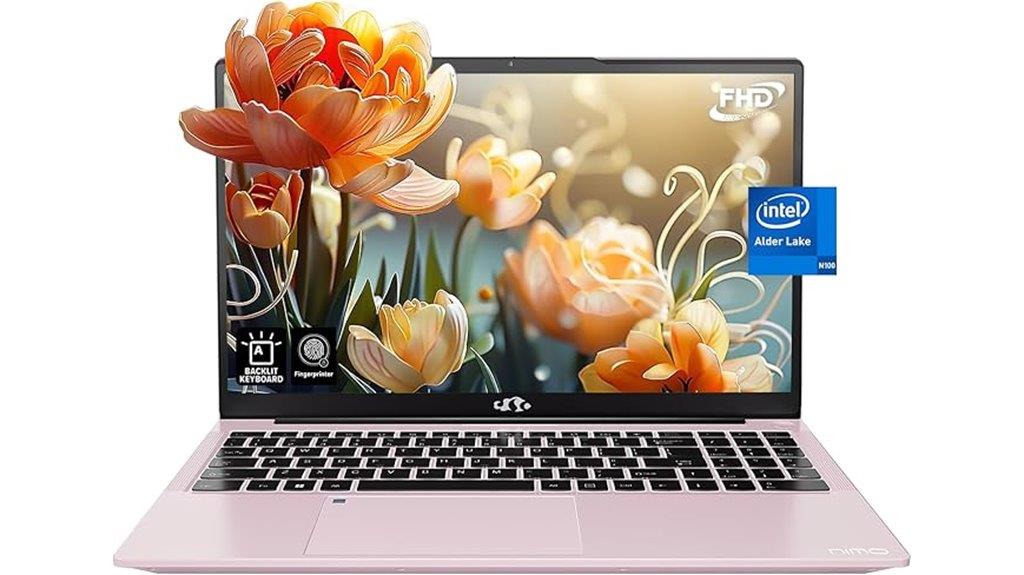
Looking for a portable, powerful laptop that can handle astronomy software and large data sets? The NIMO 15.6″ FHD Laptop is an excellent choice. It features a sleek rose gold design, a sharp 1920×1080 display, and 16GB DDR4 RAM to smoothly run multiple programs. Its 1TB SSD provides ample storage for large datasets and software. Powered by an Intel Pentium N100 quad-core processor, it’s suitable for general use and light research. Weighing just 3.8 pounds, it’s highly portable. With a backlit keyboard, fingerprint scanner, Windows 11, and a battery life of around five hours, it’s a versatile companion for stargazing and fieldwork.
Best For: students, hobbyists, and light researchers seeking a portable, powerful laptop for astronomy software, data analysis, and everyday use.
Pros:
- Equipped with 16GB DDR4 RAM and 1TB SSD for fast performance and ample storage
- Sleek rose gold design with a 15.6-inch FHD display for clear visuals
- Lightweight at 3.8 pounds, making it highly portable for fieldwork and travel
Cons:
- Battery life of approximately five hours may require frequent charging during extended use
- Powered by an Intel Pentium N100 processor, which is suitable for light tasks but not intensive computing
- No optical drive, which could be a limitation for users needing CD/DVD support
HP Flagship Laptop with Win 11 Pro & AI, 32G RAM, 128G UFS, 256G SD Card & DVD

For astronomy enthusiasts who need a reliable, high-performance laptop, the HP Flagship model stands out with its 32GB RAM and powerful Intel quad-core processor. It runs Windows 11 Pro with AI-enhanced features and Office 365 Copilot, boosting productivity during research or stargazing planning. The 128GB UFS storage plus a 256GB SD card offers ample space for data and media. Its lightweight 14-inch design makes it portable enough for fieldwork or remote sessions. With long battery life, a DVD drive, and included accessories, this laptop is an excellent choice for both serious astronomy research and everyday use.
Best For: astronomy enthusiasts and researchers seeking a high-performance, portable laptop with AI-powered productivity tools for fieldwork or remote observations.
Pros:
- 32GB RAM and Intel quad-core processor ensure smooth multitasking and data processing.
- AI-enhanced Windows 11 Pro and Office 365 Copilot boost productivity and organization.
- Lightweight 14-inch design with long battery life makes it ideal for on-the-go use in various environments.
Cons:
- Limited 128GB UFS storage may require external storage solutions for large datasets.
- The presence of a DVD drive, while useful, adds bulk and might be less relevant in fully digital workflows.
- May be overkill for casual users who do not need such high specs or AI features.
Factors to Consider When Choosing Astronomy Laptops With High Battery Life
When selecting an astronomy laptop with long-lasting battery life, I focus on key factors like battery capacity, power efficiency, and processor performance to guarantee reliable use in the field. I also consider display brightness and portability, so I can observe comfortably without being weighed down. Understanding these points helps me find a device that balances power and practicality for my astronomy adventures.
Battery Capacity and Life
A laptop’s battery capacity directly impacts how long you can observe the stars without interruption. Higher capacities, measured in milliampere-hours (mAh) or watt-hours (Wh), generally mean longer usage between charges. For extended stargazing or field research, look for laptops with battery life exceeding 8 hours. This guarantees you can explore the night sky without constantly searching for power outlets. Power-efficient processors and display technologies like IPS or OLED screens can also boost battery life during astronomy activities. Features such as fast charging and smart power management settings further maximize usage time and reduce downtime. Additionally, regularly optimizing system settings and closing background applications can help you get the most out of your laptop’s battery during those vital observation sessions.
Power Efficiency Features
Choosing a laptop with strong power efficiency features is essential for maximizing battery life during astronomy sessions. Power-efficient processors like Intel N150 or N5095 consume less energy while still handling key tasks. Integrated graphics and optimized power management settings further extend usage by reducing unnecessary power draw. Support for fast-charging technology also helps, allowing quick recharges during breaks, so you spend less time plugged in. Energy-saving display technologies, such as IPS panels with lower power consumption, contribute to longer battery life without sacrificing visual quality. Additionally, advanced battery management systems monitor and optimize power use by adjusting performance levels and screen brightness automatically. These features work together to ensure you get the most out of your laptop during long stargazing or research sessions.
Processor Performance Balance
Finding the right balance between processing power and battery life is essential for astronomy laptops, as it guarantees I can analyze data and run software efficiently without running out of juice. A balanced processor should handle complex tasks like data processing and software use without quickly draining the battery. Multi-core processors, such as quad-core or higher, offer efficient multitasking and help conserve energy during long observation sessions. Low-power processors with TDPs around 6W to 15W are ideal, providing enough performance while extending battery life. Additionally, the processor’s architecture, like Intel’s 12th Gen or AMD’s latest, impacts power efficiency and thermal management. Combining a capable processor with power-saving features ensures I get reliable performance without sacrificing battery longevity during my astronomy work.
Display and Brightness
Ever wondered how to see star charts clearly without draining your battery? A high-brightness display of at least 300 nits is vital for bright visibility outdoors, even in low-light conditions. An anti-glare screen helps reduce reflections and eye strain during long observation sessions, making it easier to focus on celestial details. IPS panels provide wide viewing angles and consistent brightness, which are indispensable for accurate color and detail perception in astronomy work. An adjustable brightness feature allows you to optimize screen visibility and conserve battery during extended outdoor use. Additionally, a high-resolution display (Full HD or higher) enhances the clarity of faint objects and intricate astronomical images. Balancing brightness and resolution ensures you get the most out of your laptop for stargazing and research, all while preserving battery life.
Portability and Weight
When selecting an astronomy laptop for fieldwork, portability and weight are crucial factors to contemplate. Lighter laptops under 2 kg are much easier to carry during extended stargazing sessions or outdoor observations. Slim profile designs enhance portability, making it convenient to slip the device into backpacks or briefcases. Compact, minimal-bulk laptops are especially useful when traveling to remote locations with limited access to power outlets. However, there’s a balance to strike—smaller, lightweight devices often have smaller batteries, which can affect battery life. Choosing a slim, portable laptop ensures ease of use in diverse environments, from observatories to outdoor campsites, without sacrificing battery performance. Prioritizing portability helps maximize your fieldwork efficiency and comfort.
Frequently Asked Questions
How Does Battery Life Impact Laptop Performance During Extended Stargazing Sessions?
Battery life directly impacts my laptop’s performance during long stargazing sessions. When the battery lasts longer, I can explore the night sky without interruptions, making my research smoother and more enjoyable. If the battery drains quickly, I have to keep searching for power outlets or carry extra batteries, which interrupts my focus. So, a long-lasting battery is essential for uninterrupted, extended stargazing and in-depth astronomical work.
Are High-Resolution Displays Essential for Astronomy Research Laptops?
High-resolution displays aren’t essential for astronomy research laptops, but they definitely enhance the experience. While a clear, detailed screen helps me see star maps and data more precisely, I also value battery life and portability more. It’s a balancing act—sometimes a lower resolution with better battery performance lets me observe longer in the field. Ultimately, the best choice depends on your specific needs and how you prioritize clarity versus endurance.
What Is the Typical Battery Life for Laptops Suitable for Outdoor Astronomy Activities?
Typically, laptops suitable for outdoor astronomy activities last around 6 to 10 hours on a single charge. I’ve found that models with energy-efficient processors and good battery management can often reach or exceed this range, making them reliable for extended stargazing sessions. Keep in mind, brightness and running multiple apps can drain the battery faster. So, I always carry a portable charger just in case.
Can Lightweight Laptops With Long Battery Life Run Astronomy Software Effectively?
Did you know that nearly 60% of astronomers prefer lightweight laptops for fieldwork? Yes, they can run astronomy software effectively, especially if equipped with a good processor and sufficient RAM. I’ve found that modern ultrabooks with long battery life handle popular programs like Stellarium or SkySafari smoothly. So, don’t worry — a lightweight, long-lasting laptop can be both portable and powerful enough for your stargazing adventures.
How Do Power-Saving Features Affect the Functionality of Astronomy Laptops?
Power-saving features can reduce the performance of astronomy laptops, but if used wisely, they won’t hinder your research. I find that enabling these features extends battery life during long stargazing sessions, yet I turn them off when running intensive software. Balancing power settings allows me to enjoy both prolonged use and high performance, ensuring I get accurate data without sacrificing mobility or functionality.
Conclusion
Choosing the right astronomy laptop is like finding the perfect telescope—both open up new worlds for exploration. With the right specs and long battery life, you can chase stars and uncover mysteries without interruption. Remember, your laptop is your celestial companion, guiding you through the night sky’s wonders. Invest wisely, and it’ll be like having a trusty star map in your hands, illuminating your journey through the cosmos.