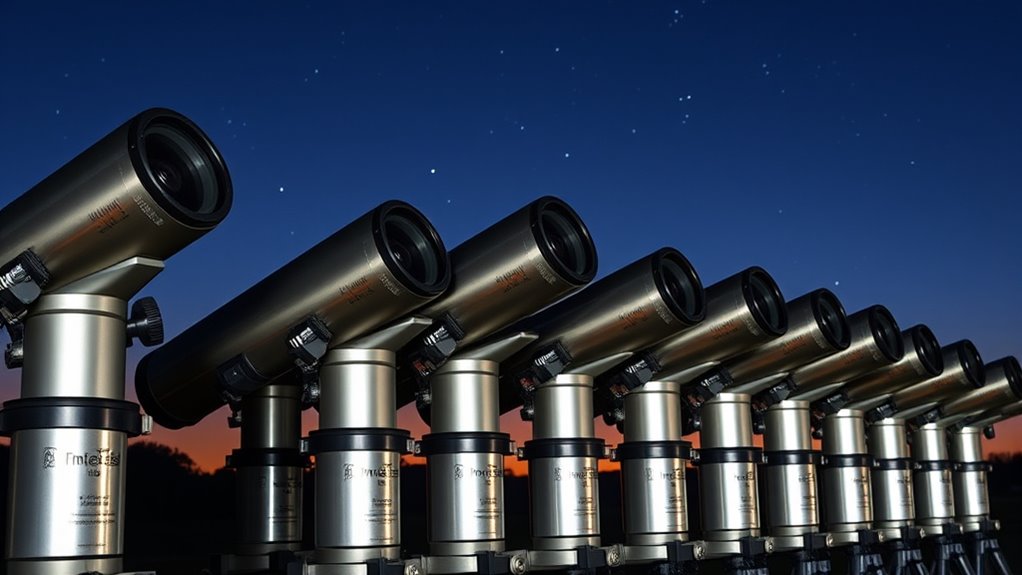
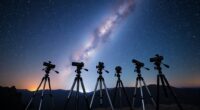
Choosing the right 130mm triplet apo refractor for astrophotography involves balancing optical quality, portability, and features. The Explore Scientific ED102 Essential Series stands out for its excellent image detail and user-friendly collimation, making it ideal for those prioritizing high-quality imaging. The SVBONY SV550 offers a compelling mix of included accessories and versatility, perfect for astrophotographers seeking a more complete package. Meanwhile, the Explore Scientific FCD100 Series ED102 emphasizes robust construction and optical precision, suited for serious amateurs and semi-professionals. Each option involves tradeoffs, mainly between weight, price, and feature set, so understanding your priorities is key.

Get backup power and energy gear delivered free — and shop member deals
- Fast, free delivery on millions of items
- Access to Prime Big Deal Days deals on October 6–7
- Prime Video, Amazon Music and more included
Key Takeaways
- High-contrast, ED glass triplets deliver sharp, detailed astrophotography images.
- Portability varies significantly, influencing setup ease and field use.
- Accessories like field flatteners and rotators enhance image quality but add complexity and cost.
- Weight and build quality impact mounting requirements and long-term stability.
- Price ranges reflect optical quality, features, and intended user experience.


| 130mm triplet apo refractors for astrophotography | Aperture | Focal Length | Focal Ratio | Optical Design |
|---|---|---|---|---|
| Explore Scientific ED102 Essen | 102mm | 714mm | f/7 | Air-spaced triplet |
| Explore Scientific ED80 Essent | 80mm | 480mm | f/6 | Air-Spaced Triplet |
| Explore Scientific FCD100 Seri | — | 714mm | — | — |
| SVBONY SV550 Telescope | 80mm | — | F6 | — |
More Details on Our Top Picks
Explore Scientific ED102 Essential Series Air-Spaced Apochromatic 102mm Triplet Refractor Telescope for Astrophotography
This model stands out for its high-contrast images and precise collimation system. Its 102mm aperture and air-spaced triplet design with FCD1 HOYA ED glass provide excellent chromatic aberration correction, making it ideal for capturing detailed lunar, planetary, and deep-sky images. Compared with smaller options, the ED102 offers more light-gathering power without significantly increasing weight, but it does come at a higher price point. Its portable design, complete with a retractable dew shield, makes it accessible for field use. However, some users may find that additional accessories are needed for a full astrophotography setup.
Pros:- High-contrast, detailed astrophotography images
- Minimizes chromatic aberrations with ED glass and triplet design
- Portable with easy setup features
- Precise collimation system
Cons:- May require additional accessories for full setup
- Higher price compared to smaller or less advanced models
Best for: Intermediate to advanced astrophotographers seeking high-quality images with manageable setup complexity.
Not ideal for: Beginners or casual observers who prefer a more straightforward, less expensive telescope.
- Aperture:102mm
- Focal Length:714mm
- Focal Ratio:f/7
- Optical Design:Air-spaced triplet
- Optical Glass:FCD1 HOYA ED glass
- Features:Retractable dew shield, built-in handle, collimation adjustments
Our verdict“An excellent choice for dedicated astrophotographers who prioritize optical excellence and image detail.”
Explore Scientific ED80 Essential Series Air-Spaced Apochromatic 80mm Triplet Refractor for Astrophotography
This 80mm model excels in portability, making it a favorite for spontaneous astrophotography sessions. Its air-spaced triplet with FCD1 HOYA ED glass ensures high-contrast images of the Moon and planets, with a focal ratio of f/6 that balances brightness and resolution. Its lightweight design, combined with a retractable dew shield, allows for easy transport and quick setup. Compared with larger models, the ED80’s smaller aperture limits deep-sky imaging potential, but it compensates with excellent optical quality and ease of use. The main drawback is that it often requires additional accessories like a field flattener for optimal astrophotography results.
Pros:- High-contrast, detailed views suitable for astrophotography
- Portable and compact for field use
- Multi-coated ED glass for sharp images
- Precise collimation system
Cons:- Requires additional accessories for optimal astrophotography
- Challenging for complete beginners without guidance
Best for: Amateurs who want a portable, high-quality astrophotography scope for quick sessions.
Not ideal for: Those needing to capture faint deep-sky objects or who prefer larger apertures for increased light-gathering.
- Aperture:80mm
- Focal Ratio:f/6
- Focal Length:480mm
- Optical Design:Air-Spaced Triplet
- Optical Glass:FCD1 HOYA ED
- Dew Shield:Retractable
Our verdict“Best suited for portable astrophotographers prioritizing quick setup and high image quality.”
Explore Scientific FCD100 Series ED102 102mm f/7 Air-Spaced Aluminum Apochromatic Triplet Refractor Telescope (OTA Only)
The FCD100 ED102 emphasizes build quality with robust construction and excellent optical performance. Its FCD100 ED glass and air-spaced triplet design produce sharp, color-free images suitable for both astrophotography and detailed visual observations. While its manual focus and heavier weight (11 pounds) mean setup requires a sturdy mount, the focal length of 714mm offers a good balance between image scale and portability. Compared to smaller or less premium models, this telescope provides more durability and optical precision, but its weight and manual operation may deter casual or mobile users.
Pros:- High-quality FCD100 ED glass for excellent chromatic correction
- Air-spaced triplet design enhances image clarity
- Suitable for astrophotography and detailed visual work
- Robust construction
Cons:- Relatively heavy at 11 pounds, requiring sturdy mount
- Limited to manual focus, no motorized options
Best for: Experienced amateurs seeking a durable, high-performance instrument for both imaging and observation.
Not ideal for: Beginners or those seeking a lightweight, fully motorized setup.
- Objective Lens Diameter:10.2 cm
- Focal Length:714mm
- Resolution:1.14 arcsec
- Weight:11 pounds
- Mount:Altazimuth
- Focus Type:Manual
Our verdict“A strong choice for advanced amateurs prioritizing optical quality and durability.”
SVBONY SV550 Telescope, 80ED F6 Triplet Apochromatic Refractor for Astrophotography
The SVBONY SV550 offers an impressive combination of optical quality and accessories, making it a versatile choice for astrophotography. Its 80mm F6 triplet with high-quality optics delivers bright, high-contrast images of the Moon, planets, and some deep-sky objects. The bundled accessories, including a field flattener and camera angle rotator, extend its capabilities and simplify the imaging process. Its dual-speed focus mount ensures precise focusing, especially important for astrophotography. The setup process can be complex, especially for newcomers, but the included gear reduces the need for immediate extra purchases. Compared to other models, its integrated accessories provide a more complete package, though it might be less customizable for advanced setups.
Pros:- High-quality triplet apochromatic optics
- Includes field flattener and rotator for better images
- Dual-speed focus allows precise control
- Compatible with full-frame cameras
Cons:- Setup can be complex for new users
- Primarily designed for astrophotography, less suitable for terrestrial viewing
Best for: Astrophotographers seeking a feature-rich, ready-to-use scope with excellent optics and accessories.
Not ideal for: Beginners who prefer a straightforward, less accessory-heavy system or those seeking a lightweight, simple scope.
- Apochromatic Refractor:Yes
- Aperture:80mm
- Focal Ratio:F6
- Optics Design:Triplet apochromatic
- Focus Mount:Dual-speed 2.5-inch
- Included Accessories:Field flattener, camera angle adjuster, 360° rotator
Our verdict“Ideal for dedicated astrophotographers who want a comprehensive, accessory-ready system for detailed imaging.”

How We Picked
Products were selected based on optical quality, optical design, and suitability for astrophotography at 130mm aperture. I prioritized models with high-quality ED glass, air-spaced triplet design, and features that facilitate precise focusing and image correction. Compatibility with astrophotography accessories, user reviews, and overall value also influenced the lineup. To ensure a balanced comparison, I included options from entry-level to premium, emphasizing those with proven optical performance and practical features for astrophotographers in 2026.
| 130mm triplet apo refractors for astrophotography | Focal Ratio | Optical Glass |
|---|---|---|
| Explore Scientific ED102 Essen | f/7 | FCD1 HOYA ED glass |
| Explore Scientific ED80 Essent | f/6 | FCD1 HOYA ED |
| Explore Scientific FCD100 Seri | — | — |
| SVBONY SV550 Telescope | F6 | — |
Factors to Consider When Choosing 130mm Triplet Apo Refractors For Astrophotography
When selecting a 130mm triplet apo refractor for astrophotography, it’s vital to consider optical quality, portability, and accessory compatibility. The ideal scope should provide sharp, chromatic aberration-free images, especially for detailed lunar, planetary, and deep-sky imaging. Balancing weight and ease of setup helps ensure you can carry your telescope to dark sky sites without hassle. Additionally, features like field flatteners, precise focuser systems, and build quality support high-quality results and long-term durability. Your choice ultimately hinges on your experience level, target objects, and whether you prefer a more complete, ready-to-shoot package or a modular system for expanding over time.Optical Quality and Design
Optical performance is the foundation of astrophotography. Triplet apochromatic designs with ED glass, like FCD1 or FCD100, excel at minimizing chromatic aberration and producing crisp, high-contrast images. Air-spaced triplets tend to outperform cemented doublets in optical correction, especially at 130mm apertures. For serious imaging, look for models with focal ratios around f/6 to f/7, balancing brightness and field of view with image quality. Heavier, more robust optical tubes often offer better stability but may require sturdier mounts. Conversely, lighter models sacrifice some stability for portability, which can impact image quality if your mount isn’t rigid enough.
Portability and Setup
Astrophotographers often need to carry their gear to dark sky sites, so weight and ease of setup matter. Smaller, lighter models like the ED80 are excellent for quick trips and spontaneous sessions. Larger 102mm models, like the Explore Scientific ED102 or FCD100, offer better light-gathering but demand more substantial mounts and may be less convenient for frequent transport. Consider features like retractable dew shields and simplified collimation systems to streamline field setup. For dedicated imaging, stability outweighs weight; for casual use, portability can improve your overall experience.
Accessories and Compatibility
Many models in this aperture range benefit from accessories such as field flatteners, focal reducers, and rotators, which optimize image quality and ease of framing. Models like the SVBONY SV550 come with these accessories included, offering a more comprehensive package. Others, like the Explore Scientific ED102, may require additional purchases. Keep in mind that some scopes have manual focus only, which can be a limitation for precise astrophotography unless you upgrade to motorized focusers. Compatibility with your camera and mount is crucial—full-frame cameras need a scope with a sufficient back focal length and sturdy mount support.
Frequently Asked Questions
What are the main benefits of a triplet apo refractor for astrophotography?
Triplet apo refractors excel at providing high-contrast, color-free images due to their superior chromatic aberration correction. This results in sharper planetary and lunar images and cleaner deep-sky captures. Their optical design minimizes distortions, enabling more precise detail. While they tend to be more expensive and heavier than doublets, their optical performance justifies the investment for serious astrophotographers seeking high-quality results.
How important is focal ratio when choosing a 130mm apo refractor?
The focal ratio influences exposure times and field of view. A focal ratio around f/6 to f/7 strikes a good balance, allowing shorter exposures while maintaining image sharpness. Faster scopes (f/5 or below) can gather more light quickly, ideal for faint deep-sky objects, but may require more precise collimation and flatter fields. Slower scopes (f/8 or above) offer greater correction and are better suited for high-magnification planetary imaging, but demand longer exposures.
Are larger aperture scopes always better for astrophotography?
Generally, larger apertures gather more light, revealing fainter objects and finer details. However, they also require stronger, more stable mounts and can be more cumbersome to transport. For many amateur astrophotographers, a 130mm scope offers a practical compromise, delivering excellent image quality without overly complicating setup. The choice depends on your target objects, mobility needs, and whether you prioritize image quality or ease of use.
What accessories are essential for maximizing astrophotography with these scopes?
Key accessories include a high-quality field flattener to correct field curvature, a precise focuser (preferably motorized for fine adjustments), and a robust mount capable of precise tracking. A dew shield helps prevent dew buildup during long sessions, and a camera-specific adapter ensures compatibility. For deep-sky imaging, filters and guiding systems further enhance image quality. Many scopes come with some accessories, but investing in additional gear tailored to your camera and target objects often yields the best results.
Is a manual or motorized focuser better for astrophotography?
A motorized focuser offers significant advantages for astrophotography, allowing for fine, repeatable adjustments without disturbing the setup. Manual focus can be challenging, especially at high magnifications, and may require multiple refocuses during imaging sessions. Although manual focusers are less expensive and simpler, upgrading to a motorized system can improve focus stability, reduce vignetting, and save time during critical imaging windows.
Conclusion
For those new to astrophotography or seeking a lightweight, versatile scope, the Explore Scientific ED80 offers exceptional portability and image quality. Intermediate users aiming for high-detail lunar and planetary images will find the Explore Scientific ED102 a strong fit, balancing optical performance with manageable weight. Advanced amateurs and semi-professionals should consider the Explore Scientific FCD100 ED102 for its durability and superior optical correction, especially if they already have a sturdy mount and guiding setup. Meanwhile, the SVBONY SV550 provides a compelling package with accessories, ideal for those who want a ready-to-shoot system with room to grow. Each choice complements different user needs, from casual imaging to serious astrophotography pursuits in 2026.
Halloween Picks
halloween
As an affiliate, we earn on qualifying purchases.