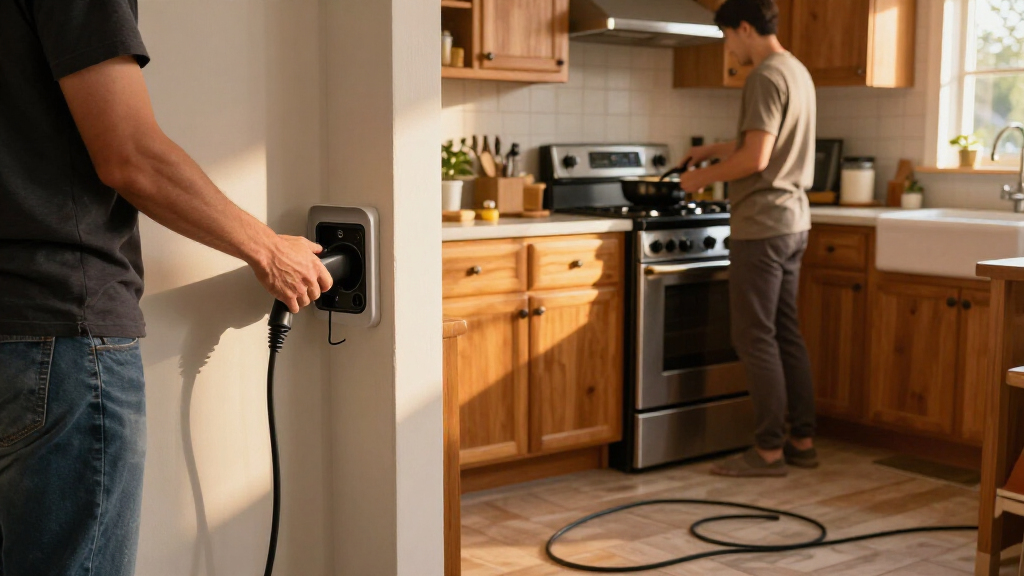

The best home electrification products depend on whether you want to automate appliances, measure energy use, or plan electrical work. I’d put the Tapo P316M Smart Wi-Fi Power Strip first for its combination of Matter support and energy monitoring; the Emporia Vue 3 is a stronger fit for whole-home visibility, while the Amazon Smart Plug keeps basic automation straightforward. The main tradeoff is between easy plug-in controls and more involved monitoring that can reveal broader household patterns. Compatibility, installation requirements, and how much detail you need all affect the right choice. Read on for how the nine picks differ and which one best matches your plans.

Get backup power and energy gear delivered free with Prime
- Fast, free delivery on millions of items
- Prime Video, Amazon Music and more included
- Member-only deals all year
Key Takeaways
- Tapo P316M stands out among plug-in picks by combining a power strip, Matter support, and energy monitoring in one device.
- Emporia Vue 3 and Refoss address whole-home monitoring, but Refoss is the more appealing route for buyers who want local control and an open API.
- Amazon Smart Plug favors simple setup, while Linkind’s Matter plug is a better fit for households choosing across several smart-home platforms.
- Multi-packs from amazon.com/dp/B08731J1L4?tag=chargeuphome-20&ascsubtag=dc-1190888″ target=”_blank” rel=”nofollow sponsored noopener”>Govee and GHome can outfit several outlets at once, but both are less suited to buyers who need a power strip or circuit-level energy data.
- The Ultimate Guide Wiring is a reference book, not a substitute for a licensed electrician or code-specific professional guidance.
| Govee Smart Plug, WiFi Outlet Compatible with Alexa & Google Assistant, 4 pcs |  | Best Multi-Plug Starter Set | Voltage: 120 volts | Amperage: 11 A | Plug type: Type B | VIEW LATEST PRICE | See Our Full Breakdown |
| Tapo Smart Wi-Fi Power Strip, Matter, P316M, Energy Monitoring |  | Best for Monitoring Several Devices | AC outlets: 6 | USB ports: 3 | Voltage: 120 volts | VIEW LATEST PRICE | See Our Full Breakdown |
| Amazon Smart Plug (2-Pack) |  | Best for Alexa Beginners | Pack size: 2 plugs | Dimensions: 3.2 x 1.5 x 2.2 inches | Weight: 3.1 oz. (87 grams) | VIEW LATEST PRICE | See Our Full Breakdown |
| Ultimate Guide Wiring, 10th Edition: Meets Current National Electrical Code Standards |  | Best Reference for Electrical DIY Planning | Edition: 10th Edition | Subject: Residential electrical installations and repairs | Code reference: Described as meeting current National Electrical Code standards | VIEW LATEST PRICE | See Our Full Breakdown |
| Linkind Matter Smart Plug, Compatible with Apple Home, Alexa, Siri, Google Home |  | Best Single Plug for Matter Homes | Voltage: 120 volts | Amperage: 15 A | Power capacity: 1800 W | VIEW LATEST PRICE | See Our Full Breakdown |
| GHome Smart Plug Mini, WiFi Smart Outlet Plug Works with Alexa and Google Home, Timer Outlet with APP Control, 2.4GHz Network Only, No Hub Required (4 Pack), White | 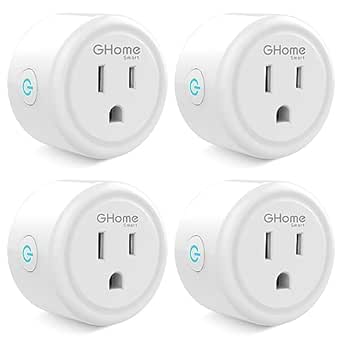 | Best for Simple Plug-Level Control | Pack size: 4 plugs | Voltage: 120 volts | Amperage: 10 A | VIEW LATEST PRICE | See Our Full Breakdown |
| Watt Meter Power Meter Plug Home Electricity Usage Monitor with 7 Modes Display |  | Best for Measuring Individual Appliance Use | Measurement modes: Power, energy, voltage, amps, hertz, power factor, cost, min/max power, cumulative time | Display size: 2.36 x 1.85 inches | Backlight settings: 10 minutes, 1 hour, 4 hours, 8 hours, or always on | VIEW LATEST PRICE | See Our Full Breakdown |
| Emporia Vue 3 Home Energy Monitor – Smart Home Automation Module and Real-Time Electricity Usage Monitor |  | Best for Whole-Home Circuit Visibility | Monitoring scope: Whole-home monitor with 16 circuit sensors | Solar compatibility: Supports solar and net metering | Connectivity: 2.4GHz Wi-Fi and internet connection | VIEW LATEST PRICE | See Our Full Breakdown |
| Refoss Smart Home Energy Monitor with Open API, Home Assistant, No Cloud |  | Best for Local-First Energy Automation | Model: EM16P | Current sensors: 2 main sensors rated 200A each; 16 branch sensors rated 1–60A each | Connectivity: Open API, MQTT, web UI | VIEW LATEST PRICE | See Our Full Breakdown |
| home electrification product | Dimensions |
|---|---|
| Govee Smart Plug | — |
| Tapo Smart Wi-Fi Power Strip | 16.2 x 4.8 x 1.9 inches |
| Amazon Smart Plug | 3.2 x 1.5 x 2.2 inches |
| Ultimate Guide Wiring | — |
| Linkind Matter Smart Plug | — |
| GHome Smart Plug Mini | 2 x 2 x 1 inches |
| Watt Meter Power Meter Plug Ho | — |
| Emporia Vue 3 Home Energy Moni | 10 x 5 x 5 inches |
| Refoss Smart Home Energy Monit | 4.5 x 3.5 x 1.1 inches |
More Details on Our Top Picks
Govee Smart Plug, WiFi Outlet Compatible with Alexa & Google Assistant, 4 pcs
The Govee set is my pick for automating several everyday appliances without committing to a full smart-home platform: four plugs can handle lamps, fans, or other compatible devices, while scheduling and group control reduce repetitive switching. Bluetooth support adds a nearby control option alongside 2.4 GHz Wi-Fi, and Alexa and Google Assistant compatibility makes it more flexible than the Alexa-only Amazon Smart Plug. Compared with the Matter-based Linkind plug, Govee is a straightforward choice if your home already uses Alexa or Google, but it does not offer the same cross-platform Matter support. The main limits are its 11 A rating and lack of 5 GHz Wi-Fi support; check appliance requirements and outlet clearance before buying. This is smart control for individual loads, not whole-home energy monitoring.
Pros:- Four plugs let buyers automate multiple appliances from one set.
- Works with Alexa and Google Assistant for voice control.
- Scheduling and group control support repeatable routines.
- Wi-Fi and Bluetooth connectivity plus ETL certification.
Cons:- Limited to 2.4 GHz Wi-Fi and does not support Matter.
- Its 11 A rating may not suit appliances with higher current demands.
- Compact dimensions may make some plugs or adjacent outlets difficult to fit.
Best for: Households with several lamps or other compatible 120 V appliances that want scheduled control through Alexa or Google Assistant.
Not ideal for: Buyers with 5 GHz-only Wi-Fi, high-current appliances, or a priority on Matter interoperability or energy-use tracking.
- Voltage:120 volts
- Amperage:11 A
- Plug type:Type B
- Connector:Plug-in
- Number of poles:2
- Number of wires:3
- Connectivity:Wi-Fi and Bluetooth; 2.4 GHz Wi-Fi only
- Certification:ETL
- Set size:4 plugs
Our verdict“Choose the Govee set to automate several suitable appliances through Alexa or Google, but skip it if you need Matter, energy monitoring, or a higher current rating.”
Tapo Smart Wi-Fi Power Strip, Matter, P316M, Energy Monitoring
The Tapo P316M is the strongest choice here when electrification means more than remote switching: energy monitoring helps you track connected equipment, while six AC outlets and three USB ports consolidate charging and appliance control. Its Matter support and local operation offer broader smart-home integration and a way to control devices locally when internet access drops—advantages the Govee and Amazon individual plugs do not provide as a strip. Compared with the Linkind Matter plug, Tapo can manage and monitor several connections from one unit, but it occupies more space and is less convenient to move. The 15 A maximum current applies to the strip as a whole, so buyers need to account for combined loads rather than treating every outlet as a separate full-capacity circuit. Remote features still depend on Wi-Fi.
Pros:- Six AC outlets and three USB ports serve multiple devices from one strip.
- Energy monitoring provides visibility into connected-device use.
- Matter support works with a range of listed smart-home platforms.
- Local operation can preserve control during internet outages.
Cons:- The 16.2-inch strip takes more space than individual smart plugs.
- The 15 A maximum current is shared across connected devices.
- Remote features require Wi-Fi, and its Type B plug limits regional use.
Best for: Home-office or media-center users who want to manage multiple devices, check energy use, and connect the strip to a Matter-compatible smart home.
Not ideal for: Buyers who need a compact plug, a portable power option, or a strip for use outside North America.
- AC outlets:6
- USB ports:3
- Voltage:120 volts
- Maximum current:15 A
- Plug type:Type B, 3-pin North American
- Dimensions:16.2 x 4.8 x 1.9 inches
- Weight:1.4 pounds
- Operating temperature:32°F–104°F
- Humidity range:10–90%
Our verdict“Pick Tapo when several devices and energy tracking matter more than a small footprint or portability.”
Amazon Smart Plug (2-Pack)
For a household already using Alexa, this two-pack keeps setup and daily control simple: no hub is needed, and routines and schedules can automate indoor lamps or other suitable devices. Its compact form is a practical advantage over the Tapo power strip when you only need to control a couple of outlets and want to keep a neighboring socket available. The tradeoff is a narrower ecosystem: unlike the Govee plugs, it does not support Google Assistant, and unlike the Linkind plug, it does not offer Matter compatibility. It also connects only to 2.4 GHz Wi-Fi and is specified for indoor use. I’d choose it for straightforward Alexa routines, not as an energy-monitoring tool or a flexible foundation for a mixed-platform home.
Pros:- Designed for Alexa control without a separate hub.
- Two plugs provide a small starter set for indoor automation.
- Compact dimensions can leave the neighboring outlet free.
- Supports schedules, routines, and automatic reconnection after outages.
Cons:- Works only with Alexa, unlike Govee and Linkind options that support other assistants.
- Supports 2.4 GHz Wi-Fi only.
- Indoor-use specification rules it out for outdoor appliances.
Best for: Alexa households that want a simple two-outlet start for automating indoor lamps and other compatible appliances.
Not ideal for: Buyers using Google Assistant or Apple Home, needing outdoor use, or wanting energy monitoring and Matter compatibility.
- Pack size:2 plugs
- Dimensions:3.2 x 1.5 x 2.2 inches
- Weight:3.1 oz. (87 grams)
- Network:2.4 GHz, 802.11 b/g/n
- Use:Indoor
- Voice assistant:Alexa
Our verdict“Choose this two-pack for uncomplicated indoor Alexa routines, but select Govee or Linkind if you need broader platform support.”
Ultimate Guide Wiring, 10th Edition: Meets Current National Electrical Code Standards
Not every useful home-electrification purchase is a connected device. This wiring guide fills a different role from the Govee and Tapo products: it is a reference for understanding residential electrical installations and repairs, with diagrams and step-by-step instruction rather than app-based control or energy data. Its stated alignment with current National Electrical Code standards makes it relevant to readers planning electrical work, but a book cannot verify that a particular project is safe or permitted in a specific location. Compared with the plug-in products in this roundup, it demands more interpretation and does not automate appliances. I’d treat it as a learning and planning aid, not a substitute for local code guidance or a licensed electrician when work requires professional judgment.
Pros:- Includes diagrams to help explain residential electrical work.
- Step-by-step format supports learning and project planning.
- Described as updated to meet current National Electrical Code standards.
Cons:- Provides no smart controls, automation, or energy monitoring.
- A reference book cannot account for every local code or job-site condition.
Best for: DIY-minded homeowners and electrical trainees who want a diagram-led reference for learning about residential wiring and code-related practices.
Not ideal for: Buyers seeking an appliance-control device, real-time energy data, or project-specific professional advice.
- Edition:10th Edition
- Subject:Residential electrical installations and repairs
- Code reference:Described as meeting current National Electrical Code standards
- Instruction format:Diagrams and step-by-step instructions
- Intended readers:DIY enthusiasts and professionals
- ASIN:1580116078
Our verdict“Choose this guide for electrical learning and planning, not as a substitute for professional help or a smart-home product.”
Linkind Matter Smart Plug, Compatible with Apple Home, Alexa, Siri, Google Home
The Linkind plug suits buyers who want one appliance outlet to work across a mixed smart-home ecosystem. Matter support and compatibility with Apple Home, Alexa, Siri, and Google Home give it a wider platform reach than the Amazon Smart Plug, which is limited to Alexa. Its 15 A, 1800 W capacity also exceeds the Govee plug’s listed 11 A rating, though buyers still need to check the appliance label and the outlet’s requirements. This is a single plug rather than a multi-outlet solution like Tapo, and the supplied details do not mention energy monitoring, so it won’t help track consumption. Some platforms may require a Matter-certified hub for full functionality, and Wi-Fi is limited to 2.4 GHz.
Pros:- Matter support and compatibility with several major voice assistants.
- 15 A and 1800 W capacity, higher than the listed Govee plug rating.
- App-based remote control and scheduling support everyday automation.
- Compact Type B plug design with safety features described by the product.
Cons:- Some platforms may need a Matter-certified hub for full functionality.
- Limited to 2.4 GHz Wi-Fi.
- No energy monitoring is listed, unlike the Tapo power strip.
Best for: Apple Home, Alexa, or Google Home users who want a single higher-capacity smart outlet with Matter support.
Not ideal for: Buyers who need energy-use tracking, a multi-outlet strip, 5 GHz Wi-Fi, or full platform features without a Matter-certified hub.
- Voltage:120 volts
- Amperage:15 A
- Power capacity:1800 W
- Plug type:Type B, North American
- Connector:3-prong
- Number of poles:1
- Number of wires:3
- Wi-Fi:2.4 GHz
- Material:Plastic
Our verdict“Choose Linkind for a single Matter-compatible outlet across supported platforms, but pick Tapo if monitoring several devices is the priority.”
GHome Smart Plug Mini, WiFi Smart Outlet Plug Works with Alexa and Google Home, Timer Outlet with APP Control, 2.4GHz Network Only, No Hub Required (4 Pack), White
The GHome Smart Plug Mini is the straightforward choice here for adding schedules and voice control to existing plug-in appliances. Its app-based timers and Alexa and Google Home compatibility can make a lamp or other suitable device easier to manage without replacing the appliance. Compared with the Watt Meter Power Meter Plug, this four-pack prioritizes switching and scheduling rather than detailed energy readings; it also offers more direct everyday control than the whole-home Emporia Vue 3, which calls for electrical-panel installation. The compact body may help preserve neighboring outlet access, though fit depends on the outlet layout. Its main limits are 2.4GHz-only Wi-Fi and the need to complete app setup before linking a voice assistant. It is a plug-level convenience product, not a way to electrify major heating or cooking systems.
Pros:- Four plugs let buyers add control to multiple outlets
- App supports remote control, schedules, and auto-off timers
- Works with Alexa and Google Home after app setup
- Compact 2 x 2 x 1-inch form factor can fit tight outlet spaces
Cons:- Connects only to 2.4GHz Wi-Fi
- Requires app setup before voice-assistant linking
- Provides no energy monitoring or whole-home electrification control
Best for: Households wanting app schedules or voice control for several compatible plug-in devices without installing panel equipment
Not ideal for: Buyers seeking circuit-level energy data, control of hardwired appliances, or a plug that works on a 5GHz-only network
- Pack size:4 plugs
- Voltage:120 volts
- Amperage:10 A
- Network:2.4GHz Wi-Fi only
- Voice assistants:Alexa and Google Home
- Plug type:Type B
- Dimensions:2 x 2 x 1 inches
- Certifications:ETL, FCC
Our verdict“Choose this four-pack for basic scheduling and voice control of compatible plug-in devices, not for measuring energy use or managing major electrical loads.”
Watt Meter Power Meter Plug Home Electricity Usage Monitor with 7 Modes Display
For buyers who want to find out what a particular appliance draws, this watt meter plug offers more useful measurement detail than the GHome Smart Plug Mini. Its display covers watts, accumulated kilowatt-hours, voltage, current, power factor, and estimated cost, giving energy-conscious households a way to compare plug-in loads before changing routines or equipment. The LCD and data memory keep readings available at the meter, while adjustable overload protection adds a configurable limit. Unlike the GHome, it does not switch appliances remotely or automate schedules; unlike the Emporia Vue 3, it does not monitor a home’s circuits as a whole. Buyers should check and set the overload threshold for their use rather than assume the default suits every appliance. This is a diagnostic tool for plug-in loads, not a home energy management system.
Pros:- Displays power, energy, voltage, current, frequency, power factor, and cost
- Memory retains the last usage data
- Adjustable LCD backlight supports different viewing preferences
- Configurable overload protection can alert users when a set limit is exceeded
Cons:- Monitors consumption but does not control the connected appliance
- Default overload threshold may need adjustment for the intended load
- Backlight and overload settings require manual setup
Best for: Energy-conscious homeowners who want to measure and compare the consumption of individual compatible plug-in appliances
Not ideal for: Buyers who need remote switching, automated load control, or monitoring across multiple circuits
- Measurement modes:Power, energy, voltage, amps, hertz, power factor, cost, min/max power, cumulative time
- Display size:2.36 x 1.85 inches
- Backlight settings:10 minutes, 1 hour, 4 hours, 8 hours, or always on
- Overload protection:Default 3680W; adjustable from 0 to 3680W
- Data memory:Records last usage data
- Overload warning:Displays “OVERLOAD” when threshold is exceeded
Our verdict“Pick this meter to understand the consumption of individual plug-in appliances; choose the Emporia Vue 3 instead for circuit-level household monitoring.”
Emporia Vue 3 Home Energy Monitor – Smart Home Automation Module and Real-Time Electricity Usage Monitor
The Emporia Vue 3 is the broadest fit for homeowners who want to see how energy use is distributed across a home, rather than inspect one appliance at a time. Its included 16 circuit sensors support detailed load monitoring, and solar and net-metering compatibility makes it more relevant to electrification planning than the plug-in GHome or Watt Meter. Real-time app data can help identify which circuits deserve attention and support energy-use automation. That coverage comes with a more involved installation: unlike the clamp-on Refoss EM16P, the Vue 3 is intended for electrical-panel installation, which may not suit a buyer who wants a simple plug-in device. It also relies on 2.4GHz Wi-Fi and internet access. Choose it for whole-home visibility and a supported app experience, not for cloud-independent local control.
Pros:- Includes 16 circuit sensors for broad load monitoring
- Supports real-time electricity monitoring and automation through a mobile app
- Designed to work with solar and net-metering systems
- UL-certified product
Cons:- Panel installation may be difficult for buyers without electrical experience
- Requires 2.4GHz Wi-Fi and an internet connection
- Three-phase systems require an additional sensor
Best for: Homeowners with solar or planned electrification upgrades who want circuit-by-circuit usage data from their electrical panel
Not ideal for: Renters, buyers who cannot access or work with a breaker panel, or users seeking local-only monitoring without internet dependence
- Monitoring scope:Whole-home monitor with 16 circuit sensors
- Solar compatibility:Supports solar and net metering
- Connectivity:2.4GHz Wi-Fi and internet connection
- Certification:CE, UL
- Model:EMV3A-2P-16
- Dimensions:10 x 5 x 5 inches
- Weight:4.99 pounds
- Included components:Energy monitor, current transformers, wire harness, Wi-Fi antenna assembly, wire nuts, splicing wires
Our verdict“Choose the Vue 3 for app-connected, whole-home circuit monitoring with solar support if panel installation and internet dependence fit your setup.”
Refoss Smart Home Energy Monitor with Open API, Home Assistant, No Cloud
The Refoss EM16P is the specialist pick for technically confident homeowners who want energy data inside a local smart-home setup. Its open API, MQTT, web interface, and Home Assistant integration separate it from the Emporia Vue 3, which centers on app-connected monitoring and requires internet access. Two 200A main sensors and 16 branch sensors can help solar households track flows and build local automations without sending data through a cloud service. That privacy-first approach also means there is no built-in cloud access for remote monitoring, so users who want simple phone access away from home may prefer the Emporia. Installation uses clamp-on sensors but still involves working in a home panel, and branch sensor capacities are specified as 1–60A. The Refoss is a better match for integration and local control than for plug-and-play simplicity.
Pros:- Local operation avoids reliance on cloud services for data control
- Open API, MQTT, and web interface support custom integrations
- Home Assistant compatibility enables local automation
- Includes two 200A main sensors and 16 branch sensors
Cons:- Installation and integration may require technical knowledge
- No built-in cloud connectivity for remote access
- Branch sensors are limited to 1–60A each
Best for: Solar homeowners and Home Assistant users comfortable with panel installation, local networking, and building energy automations
Not ideal for: Buyers who want a simple app setup, cloud-based remote access, or monitoring beyond the listed sensor capacities
- Model:EM16P
- Current sensors:2 main sensors rated 200A each; 16 branch sensors rated 1–60A each
- Connectivity:Open API, MQTT, web UI
- Accuracy:±1% at 200A; ±2% at low current
- Installation:Clamp-on; fits most home panels
- Certifications:ETL, UL 61010
- Warranty:2 years
- Dimensions:4.5 x 3.5 x 1.1 inches
Our verdict“Choose the Refoss EM16P for local, customizable energy monitoring and Home Assistant automation, but opt for the Emporia Vue 3 if you prefer an internet-connected app experience.”
How We Picked
I ranked these products by how directly they help a household electrify and manage everyday energy use: controlling plug-in devices, measuring electricity consumption, or supporting informed electrical planning. I also weighed setup complexity, ecosystem compatibility, monitoring depth, and whether a product’s role is clear for a typical homeowner. Plug-in smart controls are easier to adopt, while whole-home monitors can offer broader insight but may require electrical-panel work.
The order reflects practical fit across those needs, not a claim that one device can replace another. The Tapo strip leads as a versatile plug-in option; Emporia and Refoss serve buyers seeking household-wide data, with different approaches to integration and control. Simple smart plugs rank lower for energy insight, while the wiring guide and standalone watt meter suit narrower tasks. I gave weight to meaningful drawbacks, including platform limits, installation demands, and the gap between measuring energy and reducing it.
Factors to Consider When Choosing Best Home Electrification Products
Before choosing a device, decide what you want to change: automate one appliance, compare the consumption of individual devices, or see what is happening across your electrical panel. These are different jobs, and buying the most feature-rich option won’t help if it does not fit your home, technical comfort, or smart-home setup.
Start With the Energy Question You Want to Answer
Begin with a specific question, such as whether a frequently used appliance draws power while idle or which circuits account for the largest share of household use. A smart plug can control an outlet and may help with device-level data, while a plug-in watt meter is aimed at direct measurement. A panel monitor offers a wider view but may not make individual plug-in devices easy to identify without additional setup. Avoid buying a whole-home system when you only need to check one appliance. If you want to act on the data, pair measurement with a plan for schedules, settings, or equipment changes. Tracking alone does not cut consumption.
Check Platform Compatibility Before You Buy
Smart-home compatibility affects daily use more than a long feature list suggests. Check whether a device works with the assistant, hub, and routines already in your home, and confirm that support applies to the functions you care about. Matter can make cross-platform setup easier, but it does not mean every feature will appear in every app. Some Wi-Fi plugs also depend on a 2.4 GHz network, which can complicate setup if your router combines bands or has restrictive settings. If your household uses more than one platform, favor clear compatibility over a brand name you recognize. Make sure other household members can control the device without learning a separate workflow.
Match Monitoring Depth to Your Comfort With Electrical Work
Plug-in monitors and smart outlets generally avoid panel installation, while whole-home monitors may involve opening an electrical panel and placing sensors around circuits. That difference affects both installation effort and the kind of information you can collect. Do not treat a wiring guide or product manual as permission to perform work beyond your training or local rules. If panel work is needed, ask a qualified electrician about access, compatibility, and installation scope before ordering. Also check whether your panel has room and a layout that suits the monitor. The best data system is not a good fit if installation is unsafe or impractical.
Choose Between Cloud Convenience and Local Control
Connected devices vary in how much they rely on a manufacturer’s app or cloud service. Cloud-based tools may offer a simpler setup and remote access, but their functions can depend on account access, internet availability, and ongoing software support. Local-control options and open APIs can suit people who want to connect data to Home Assistant or build custom automations, though they may require more setup and troubleshooting. Think about how you want the system to behave if your internet connection drops. Read the product’s current documentation for data access and integration details rather than assuming every feature is available locally. A simpler app may be the better trade if custom control is not on your list.
Plan for Outlet Layout, Load, and Expansion
Before buying multi-packs or a power strip, map the outlets and devices you actually want to control. A compact smart plug can cover an outlet beside furniture, while a strip can organize several nearby devices and may add energy readings. Check device ratings and manufacturer instructions for the appliance you plan to connect; smart control does not make an outlet suitable for every load. Avoid stacking adapters or using a plug where it blocks a neighboring socket. If you expect to add devices over time, consider whether you prefer a single platform and app or are comfortable mixing brands. Buying several plugs at once is useful only when the placement and compatibility match your home.
Treat Energy Data as a Guide, Not a Savings Promise
Power readings can explain how and when devices use electricity, but they do not automatically lower a bill. Results depend on your utility rates, household habits, and whether you change how equipment runs. A meter’s display, reporting interval, and ability to distinguish device-level from circuit-level use affect how actionable its data feels. Compare readings under consistent conditions instead of drawing conclusions from a single moment. If your goal is to spot standby use, measure over a suitable period and check the device’s instructions. Pay more for advanced monitoring only when you expect to use the added detail or integrations.
Frequently Asked Questions
Can a smart plug reduce my electricity use by itself?
A smart plug mainly adds control, scheduling, and, on some models, energy readings; it does not make an appliance use less power while running. It may help reduce waste if you use schedules or switch off equipment that would otherwise stay on, but the result depends on your habits and the device. Check the plug’s load guidance before connecting an appliance, and do not assume every high-power device is suitable. If your main goal is to find out what an appliance consumes, a dedicated meter or a plug with energy monitoring may be more useful. Treat any savings as dependent on the changes you make, not a guaranteed feature.
Do I need a whole-home energy monitor if I already use smart plugs?
Not necessarily: smart plugs can help you control or measure selected devices, while a whole-home monitor aims to show activity across circuits or the panel. Plugs are simpler for targeted questions, but they cannot account for every hardwired or unmonitored load. A panel monitor may be worthwhile if you want broader patterns and are comfortable with its installation requirements. First list what your current plugs cannot answer, such as which circuits contribute most or how household demand changes through the day. If those questions do not matter to you, adding a panel monitor may bring more complexity than value.
Is Matter support enough to guarantee a smart plug will work with my setup?
Matter support can improve cross-platform compatibility, but it does not guarantee that every feature, automation, or energy reading will be available through every controller. Check the product’s supported platforms and feature notes, then confirm that your hub or smart-home controller supports the Matter setup you plan to use. Some devices still require a manufacturer app for setup or specific functions. Network requirements can also matter, especially when a product depends on 2.4 GHz Wi-Fi. If a particular feature is the reason you are buying, verify that exact feature with your intended platform before purchase.
Can I install a panel-based energy monitor myself?
Installation depends on the monitor, the electrical panel, local requirements, and your qualifications. Panel work can expose hazardous electrical components, so do not rely on a product listing or wiring book as a substitute for professional advice. Review the manufacturer’s installation instructions and ask a licensed electrician whether the monitor fits your panel and local rules. Include installation planning in your decision, since a monitor that needs professional help differs from a plug-in watt meter in effort and setup. If you are unsure, choose a plug-in option until a qualified professional can assess the panel.
Should I buy a multi-pack of smart plugs or a power strip with monitoring?
Choose a multi-pack when you want independent control at several separate outlets and do not need a single device to organize them. A monitored power strip can suit a cluster of electronics in one location and may make energy checks more convenient, but its outlets share one physical placement and its features depend on the model. Check outlet spacing, device load guidance, network compatibility, and whether the strip reports useful energy information. Do not buy extra plugs simply because they come together if you have no clear placement or automation plan. For a few devices spread around the home, individual plugs are often easier to position.
Conclusion
For most shoppers seeking one flexible plug-in upgrade, I’d choose the Tapo P316M as the best overall pick, thanks to its power-strip format, Matter support, and energy monitoring. The Govee and GHome multi-packs are the best value-style choices for adding basic control across several outlets, while the Emporia Vue 3 is my best premium pick for buyers who want a wider view of household electricity use and can accommodate panel installation. For beginners, the Amazon Smart Plug offers a simpler starting point; Linkind is worth a look if cross-platform Matter support matters more. Choose Refoss for local-control and open-API priorities, the Watt Meter for direct checks on individual devices, and the wiring guide as a reference for learning rather than a replacement for an electrician. The right choice is the one that answers your energy question without adding setup or installation demands you do not need.
Halloween Picks
halloween
As an affiliate, we earn on qualifying purchases.