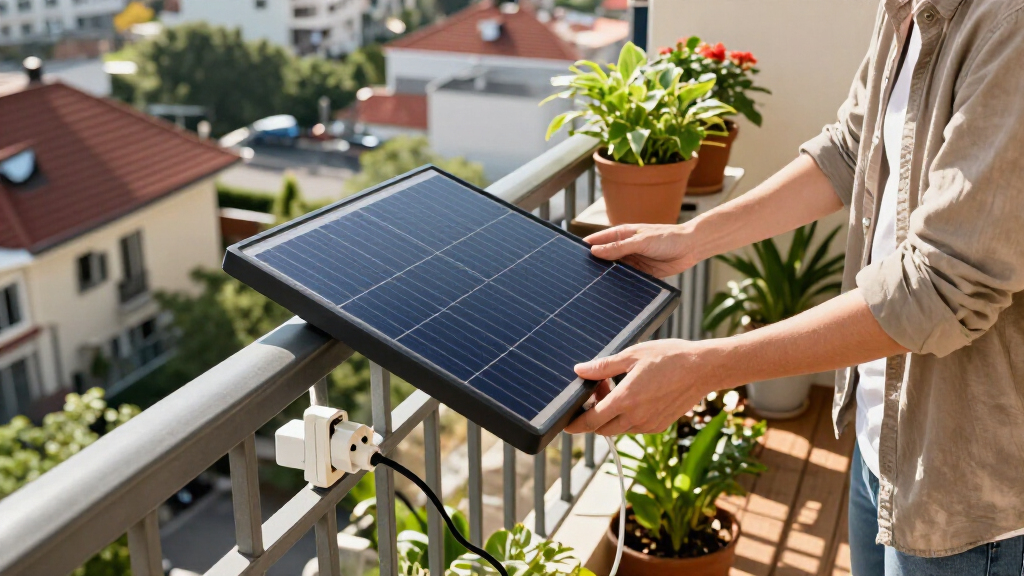
For a plug-in solar kit with a balanced panel count and familiar 120V setup, I would start with the PLUGGEDSOLAR 800W APsystems kit. Buyers who want more rated panel capacity can compare it with the 1200W balcony kit, while the 1.8 kW grid-tie kit is the higher-capacity choice for shoppers willing to plan around mounting hardware and a less straightforward setup. These are not interchangeable systems: rated panel power, listed AC output, included mounting parts, and the clarity of each product description all affect which one makes sense.

Get backup power and energy gear delivered free with Prime
- Fast, free delivery on millions of items
- Prime Video, Amazon Music and more included
- Member-only deals all year
My ranking favors kits whose supplied components and specifications are easier to understand, then weighs capacity against the practical demands of handling and installing multiple panels. A plug-in cord does not make a system universally compatible or exempt it from local electrical rules. I also treat manufacturer energy-generation estimates as estimates, not promises: sunlight, orientation, shade, and household conditions can change real output.
Key Takeaways
Best balanced choice: The PLUGGEDSOLAR 800W APsystems kit combines four 200W panels, Wi-Fi monitoring, and a 50-foot cord; its stated yearly generation is an estimate, not a guaranteed result.
More panel capacity: The 1200W kit lists six 200W panels and two microinverters, but its three separate shipments and wiring and Wi-Fi setup add coordination.
Highest stated panel capacity: The 1.8 kW kit includes five 360W panels, three microinverters, and monitoring; its mounting racks are not included.
Check specification conflicts: The 800W PluggedSolar listing gives both 800W and 320W figures, while the 1600W kit conflicts on panel and inverter counts.
Plan the installation, not just the outlet: Panel area, exposure, suitable circuit, mounting, local requirements, and whether a battery is needed all affect fit.
| PLUGGEDSOLAR 800W Plug-In Balcony Solar Kit with APsystems Microinverter and Wi-Fi Monitoring |  | Best Overall | Panels: 4 × 200W monocrystalline | Panel dimensions: 4.5 × 2.2 ft each | Inverter: APsystems microinverter | VIEW LATEST PRICE | See Our Full Breakdown |
| PLUGGEDSOLAR 1200W Plug-In Balcony Solar Kit with WiFi Monitoring |  | Best Mid-Size Upgrade | Panels: 6 × 200W monocrystalline | Panel dimensions: 4.5 × 2.2 ft each | Inverters: 2 microinverters | VIEW LATEST PRICE | See Our Full Breakdown |
| PluggedSolar 1.8 kW Solar Grid-Tie Kit with 1800 W Crystalline Panels and Microinverters |  | Best for Buyers Seeking the Most Listed Panel Capacity | Panels: 5 × 360W monocrystalline | Panel dimensions: 72.05 × 39.45 in each | Microinverters: 3 | VIEW LATEST PRICE | See Our Full Breakdown |
| PluggedSolar 800W Plug-and-Play Solar Panel Kit with Micro-Inverter |  | Best Familiar 800W Alternative | Panels: 4 × 200W monocrystalline | Listed maximum power: 320W; conflicts with the 800W kit figure | Inverter: Micro grid-tie inverter | VIEW LATEST PRICE | See Our Full Breakdown |
| PLUGGEDSOLAR 1600W Plug-In Solar Kit with APsystems Microinverter and Wi-Fi Monitoring | | Best for Buyers Who Can Confirm the Configuration Before Ordering | Stated system power: 1600W | Panel count: Conflicting listing: 6 or 8 panels | Panel wattage: 200W each, as described | VIEW LATEST PRICE | See Our Full Breakdown |
| plug-in solar panel | Panels | Panel dimensions | Output | Cord |
|---|---|---|---|---|
| PLUGGEDSOLAR 800W Plug-In Balc | 4 × 200W monocrystalline | 4.5 × 2.2 ft each | 120V AC | 50 ft |
| PLUGGEDSOLAR 1200W Plug-In Bal | 6 × 200W monocrystalline | 4.5 × 2.2 ft each | 120V AC | 50 ft |
| PluggedSolar 1.8 kW Solar Grid | 5 × 360W monocrystalline | 72.05 × 39.45 in each | 120V AC | — |
| PluggedSolar 800W Plug-and-Pla | 4 × 200W monocrystalline | 4.5 × 2.2 ft each | — | 50 ft |
| PLUGGEDSOLAR 1600W Plug-In Sol | — | — | 120V AC | 50 ft |
More Details on Our Top Picks
PLUGGEDSOLAR 800W Plug-In Balcony Solar Kit with APsystems Microinverter and Wi-Fi Monitoring
This is my lead pick for shoppers who want a moderately sized plug-in kit with a defined component list rather than the highest wattage in the group. It includes four 200W monocrystalline panels, an APsystems microinverter, Wi-Fi monitoring, and a 50-foot cord for a 110/120V outlet. That gives buyers a clearer starting point than the 1600W listing, whose panel and inverter quantities conflict, and avoids the more involved footprint of the six-panel 1200W system.
The practical appeal is the combination of panel count and monitoring. Four panels still need meaningful, unobstructed space—the listed dimensions are 4.5 by 2.2 feet each—while Wi-Fi data can help an owner see whether the system is producing. The stated 1,500 kWh annual generation is a manufacturer estimate, not a result I can promise for a specific location. Shade, direction, tilt, weather, and local solar conditions all affect output, so I would not use that figure as a standalone savings forecast.
Compared with the similarly sized PluggedSolar 800W kit, this version identifies the APsystems inverter and avoids that listing’s stated 320W-versus-800W maximum-power conflict. It still has limitations: the panels and inverter ship separately, and the 90-pound listed weight calls for thought about delivery and handling. The product description says no batteries or wiring are required, but panel connections and safe placement remain part of the installation; I would check outlet suitability and local rules before ordering. It is my most balanced recommendation, not a universal plug-in solution.
Pros:- Four 200W monocrystalline panels and an APsystems microinverter are specified.
- Built-in Wi-Fi monitoring provides a way to view system output.
- Includes a 50-foot cord for a 110/120V outlet.
- The description says the kit operates without batteries.
Cons:- Panels and inverter ship in separate packages.
- The 1,500 kWh annual generation figure is an estimate that will vary by site.
- Four panels need ample, well-exposed placement and careful handling.
Best for: A homeowner or balcony-solar buyer who wants four panels, Wi-Fi monitoring, a 50-foot cord, and a relatively clear 800W component list.
Not ideal for: Anyone with limited sunny space, a need for battery backup, or no way to verify that the outlet, circuit, mounting location, and local requirements suit a grid-tie system.
- Panels:4 × 200W monocrystalline
- Panel dimensions:4.5 × 2.2 ft each
- Inverter:APsystems microinverter
- Output:120V AC
- Cord:50 ft
- Monitoring:Built-in Wi-Fi
- Listed certifications:UL 3700; inverter complies with UL 1741
- Estimated annual generation:1,500 kWh, manufacturer estimate
Our verdict“I rank it first for its comparatively clear four-panel package, named APsystems inverter, and useful monitoring, while treating its production estimate as site-dependent.”
PLUGGEDSOLAR 1200W Plug-In Balcony Solar Kit with WiFi Monitoring
The 1200W kit is the step-up pick for a buyer who has space for more panels than the 800W options but does not want to jump to the 1.8 kW system’s larger 360W modules. Its core configuration is specific: six 200W panels, two microinverters, Wi-Fi monitoring, and a 50-foot cord. Compared with the Best Overall selection, the extra two panels increase rated panel capacity, but also increase the amount of space, wiring, and placement planning required.
The listing estimates 2,200 kWh of yearly generation. I would use that only as a manufacturer projection, not as a dependable household output figure or a guarantee of bill reduction. The kit’s strongest case is its middle position: more listed panel capacity than either 800W kit, without the 1600W product’s contradictory quantities. It is also easier to compare on paper than the 1.8 kW option, though that option includes a power monitor and mounting hardware while this listing focuses on Wi-Fi monitoring and a plug-in cord.
There is more work behind the preconfigured description than the phrase might suggest. The stated shipment arrives in three packages, and the buyer must connect panel wiring and configure Wi-Fi monitoring. At 120 pounds, handling the full kit and finding suitable locations for six panels deserve attention. I would choose this over the 800W models only when the available exposure and permitted installation can accommodate the added panels; extra rated capacity is not useful if panels sit in shade or cannot be mounted appropriately.
Pros:- Six 200W panels provide 1200W of stated panel capacity.
- Includes two microinverters and built-in Wi-Fi monitoring.
- The 50-foot cord is listed for a 120V AC plug-in setup.
- The panel and inverter quantities are specified more clearly than on the 1600W listing.
Cons:- Components ship separately across three shipments.
- Panel wiring and Wi-Fi configuration are part of setup.
- Its 2,200 kWh annual generation figure is an estimate, not a site-specific guarantee.
Best for: A buyer with room for six panels who wants more listed panel capacity than the 800W kits and is comfortable connecting panel wiring and setting up Wi-Fi.
Not ideal for: Someone short on sunny space, seeking a one-box delivery, or expecting the stated yearly generation to apply regardless of location and panel placement.
- Panels:6 × 200W monocrystalline
- Panel dimensions:4.5 × 2.2 ft each
- Inverters:2 microinverters
- Output:120V AC
- Cord:50 ft
- Monitoring:Built-in Wi-Fi power monitor
- Weight:120 lb
- Estimated annual generation:2,200 kWh, manufacturer estimate
Our verdict“I recommend it as the capacity step-up from the 800W kits for buyers who can handle six panels and their added installation work.”
PluggedSolar 1.8 kW Solar Grid-Tie Kit with 1800 W Crystalline Panels and Microinverters
For a buyer prioritizing the largest stated panel array in this roundup, this kit lists five 360W monocrystalline panels for a total of 1.8 kW of panel capacity. That is a different format from the 1200W kit’s six smaller 200W panels: the 360W panels are individually much larger at about 72 by 39 inches, so roof, ground, or other permitted mounting space matters as much as the headline total. Three microinverters, a 50-foot cord, power monitor, and mounting hardware are included.
The inverter details also make this model stand apart on paper. The listing describes 97% inverter efficiency and identifies UL 1741, CSE, and IEEE references. Its stated maximum power is 1500W, however, despite the 1800W panel capacity. A buyer should distinguish DC panel rating from the stated AC-side limit rather than assuming 1.8 kW will be delivered as usable AC output. Compared with the 1600W kit, this product supplies a more legible panel and inverter count; compared with the 800W APsystems pick, it has a much larger array and more installation planning.
The main gap is mounting: solar panel mounting hardware is listed, but mounting racks are not included. The panels are sizeable, and the listing’s 50-pound weight figure may not describe the practical weight of the full panel set, so I would clarify package contents and handling details with the seller before buying. Production depends on location and sunlight, and this higher-capacity array is not automatically a better fit for a small balcony or a circuit that cannot support the intended installation. I see it as a capacity-focused option for buyers ready to plan the mounting and electrical details.
Pros:- Five 360W panels provide the highest stated panel capacity among these products.
- Includes three microinverters, a 50-foot cord, and a power monitor.
- The listing states 97% inverter efficiency and cites UL 1741, CSE, and IEEE.
- Solar panel mounting hardware is included.
Cons:- Mounting racks are explicitly not included.
- The listed 1500W maximum power is lower than the 1800W panel rating.
- Large panels require substantial, suitable mounting space and site planning.
Best for: A buyer seeking the highest listed panel capacity in this comparison, with space and installation plans suited to five large panels.
Not ideal for: Someone who needs a compact balcony setup, expects racks to be included, or wants panel capacity and stated AC maximum power to match.
- Panels:5 × 360W monocrystalline
- Panel dimensions:72.05 × 39.45 in each
- Microinverters:3
- Listed maximum power:1500W
- Output:120V AC
- Inverter efficiency:97%, as listed
- Included accessories:50 ft cord, power monitor, panel mounting hardware
- Warranty:25 years for solar panels, as listed
Our verdict“I would choose it for its 1.8 kW panel array only if the buyer has room for the large modules and a plan for supplying the missing racks.”
PluggedSolar 800W Plug-and-Play Solar Panel Kit with Micro-Inverter
This kit appears on the surface to be a close alternative to my Best Overall choice: it has four 200W monocrystalline panels, a microinverter with Wi-Fi monitoring, and a 50-foot cord for a 110/120V outlet. It also lists stacking up to three systems on one dedicated plug. That may interest someone comparing modular expansion, but the listing does not resolve an important technical inconsistency: it gives 800W total panel wattage and also lists 320W maximum power.
That conflict is why I place it below the APsystems-branded 800W kit, whose supplied description gives a clearer system capacity and identifies the inverter. I would not assume the 320W figure is a typo or infer what it measures; buyers should request clarification from the seller and confirm inverter output and compatibility before relying on an expected contribution to household use. The claimed 1,500 kWh annual generation is likewise a listing estimate, not a matched performance comparison against the other products.
For the right buyer, its basic package remains appealing: four panels, a Wi-Fi monitor, and a long cord are specified, and the description says it does not require batteries. But “plug-and-play” should not replace checks on outlet, circuit, permitted connection, panel mounting, and local requirements. Like the other 800W option, this system needs space for four 4.5-by-2.2-foot panels. I would consider it only after clearing up the power figures; if both kits are otherwise suitable, the less ambiguous APsystems model is the easier choice to evaluate.
Pros:- Includes four 200W monocrystalline panels, a microinverter, and a 50-foot cord.
- Wi-Fi power monitoring is listed.
- The description says the setup does not require batteries.
- The listing says up to three systems can be stacked on one dedicated plug.
Cons:- The listing gives conflicting 800W total and 320W maximum-power figures.
- Panels and inverter ship separately.
- The 1,500 kWh yearly generation figure is an estimate that depends on site conditions.
Best for: A buyer comparing four-panel, 800W-class kits who values Wi-Fi monitoring and wants to ask the seller specific questions about system and inverter output.
Not ideal for: Anyone who needs an unambiguous AC output specification before purchase or does not want to verify the conflicting 320W and 800W figures.
- Panels:4 × 200W monocrystalline
- Listed maximum power:320W; conflicts with the 800W kit figure
- Inverter:Micro grid-tie inverter
- Input voltage:110/120V
- Cord:50 ft
- Monitoring:Built-in Wi-Fi power monitor
- Panel dimensions:4.5 × 2.2 ft each
- Estimated annual generation:1,500 kWh, manufacturer estimate
Our verdict“I would consider this four-panel alternative only after the seller clarifies its conflicting power figures; the APsystems 800W kit is easier to compare on the supplied information.”
PLUGGEDSOLAR 1600W Plug-In Solar Kit with APsystems Microinverter and Wi-Fi Monitoring
The advertised 1600W capacity places this kit between the 1200W balcony model and the 1.8 kW array, and the listing includes several features buyers in this group may want: a 50-foot cord, Wi-Fi monitoring, monocrystalline panels, and an APsystems microinverter or microinverters. But the description conflicts on the details that determine what actually arrives: it gives both six and eight panels, and both one and two inverters. That makes it hard to judge the system against the clearly itemized six-panel 1200W kit.
If the stated 1600W configuration is confirmed, the extra rated capacity over the 1200W product could suit someone with enough sunny placement and a suitable connection. Still, wattage alone does not answer how the panels are grouped, what AC output is available, or how the inverter arrangement works. Unlike the 1.8 kW option, whose panel and microinverter counts are provided even though its maximum power is a separate figure, this listing leaves basic component quantities unresolved. I would ask the seller to provide a written bill of materials and output specifications before making a comparison.
The 150-pound listed weight and multi-panel format also mean this is not a casual small-balcony purchase. The description calls it a DIY, battery-free, 110/120V plug-in system, but that does not establish that a particular outlet or home circuit is suitable. I cannot recommend it as the uncomplicated capacity upgrade while the core configuration remains unclear. Buyers willing to verify those details may still find its stated wattage and monitoring worth investigating; everyone else has more legible choices in the 1200W kit or 1.8 kW system.
Pros:- The listing states 1600W of system power.
- Includes Wi-Fi monitoring and a 50-foot cord.
- The description presents it as a battery-free DIY grid-tie setup.
- APsystems microinverter technology is identified in the product information.
Cons:- The description conflicts on whether the kit has six or eight panels.
- The description conflicts on whether it includes one or two inverters.
- At 150 pounds listed weight, handling and placement require planning.
Best for: A buyer with ample sun exposure who is prepared to obtain written confirmation of panel quantity, inverter quantity, and actual system output before ordering.
Not ideal for: Shoppers who need a reliable component list to compare kits, want a light or compact installation, or would rather avoid pre-purchase specification questions.
- Stated system power:1600W
- Panel count:Conflicting listing: 6 or 8 panels
- Panel wattage:200W each, as described
- Inverter quantity:Conflicting listing: 1 or 2 APsystems microinverters
- Output:120V AC
- Cord:50 ft
- Monitoring:Wi-Fi power monitoring
- Weight:150 lb
- Listed certifications:UL 3700; UL 1741 mentioned for inverter
Our verdict“I would rank it last until the seller resolves the conflicting panel and inverter counts, since those details are central to comparing a 1600W kit.”

How We Picked
I ranked these five products for the specific job in the title: adding solar generation through a plug-in grid-tie kit. That means I put more weight on the complete system and its real installation demands than on a headline wattage alone. Panel capacity matters, but a buyer also needs to know what inverter, cord, monitoring, and mounting items are included—and whether the listing describes them consistently.
Specification clarity shaped the order. The 800W APsystems kit has a relatively readable bill of materials: four 200W panels, a named microinverter, Wi-Fi monitoring, and a 50-foot cord. The 1200W kit also identifies six panels and two microinverters, but adds shipment and setup coordination. The 1.8 kW system has substantial listed panel capacity and includes a power monitor and mounting hardware, yet it explicitly excludes mounting racks and its listed system figures require careful interpretation. I placed the 1600W kit lower because the source conflicts about both panel count and inverter quantity. The other 800W listing also has an unresolved 800W-versus-320W discrepancy.
I also looked at how capacity translates into a buyer’s workload. More panels can raise the amount of rated solar capacity, but they take more space and require more careful placement, wiring, and mounting. A 50-foot cord offers reach, not proof that any outlet or circuit is suitable. Finally, I treated listed annual energy figures as manufacturer estimates rather than comparative guarantees. Without consistent test conditions, they cannot establish which kit will generate the most energy on a particular roof, balcony, or yard.
These products are grid-tie kits, not portable power stations. Their descriptions say they work without batteries, so I did not treat battery-free operation as an automatic benefit for every household: a buyer seeking backup during a utility outage needs to verify a separate, suitable backup arrangement. I also cannot infer legal approval, interconnection permission, or safe installation from a product listing alone. My order reflects the information supplied here, not independent certification checks or hands-on testing.
| plug-in solar panel | Monitoring |
|---|---|
| PLUGGEDSOLAR 800W Plug-In Balc | Built-in Wi-Fi |
| PLUGGEDSOLAR 1200W Plug-In Bal | Built-in Wi-Fi power monitor |
| PluggedSolar 1.8 kW Solar Grid | — |
| PluggedSolar 800W Plug-and-Pla | Built-in Wi-Fi power monitor |
| PLUGGEDSOLAR 1600W Plug-In Sol | Wi-Fi power monitoring |
Factors to Consider When Choosing Best Plug-in Solar Panels
I would choose a plug-in solar kit by checking the installation and output details in this order: what the wattage describes, where the panels can go, how the kit connects to the home, and which equipment is included. A familiar outlet and long cord do not answer all of those questions. Comparing those basics helps explain why an 800W kit may be a better fit than a larger array, or why a higher-capacity listing may need seller clarification before it is a sensible buy.
Separate panel rating from usable AC output
Panel wattage describes rated solar-panel capacity; it is not a promise of continuous power at the outlet. The 1.8 kW kit illustrates the distinction: its panels total 1800W, while its listed maximum power is 1500W. The B09D61CP1T 800W listing is harder to interpret because it gives both 800W total panel wattage and a 320W maximum-power figure. I would ask the manufacturer or seller what each power figure means and what output the inverter can supply before comparing expected household contribution.
Microinverters convert panel output to AC, while their configuration and limits determine how the system operates. A listing that names panel count, inverter count, AC output, and any stated maximum is easier to evaluate. Do not treat a panel’s rated capacity as an amount your appliances will draw at all times; actual generation changes with sun, orientation, temperature, and shade.
Match panel count and size to a real sunny location
Panel count is a space and mounting question, not just a capacity figure. Four 200W panels in either 800W kit measure about 4.5 by 2.2 feet each. The 1200W product adds two panels of the same listed size, while the 1.8 kW kit uses five much larger 360W panels measuring roughly 72 by 39 inches each. Before choosing, map a location with useful sun exposure and room for safe mounting, access, and wiring.
Balcony rails, roofs, walls, and ground mounts each have different structural, shading, and permission concerns. A product called a balcony kit does not mean every balcony can support its weight or panel placement. The 90-to-150-pound listed weights across several kits also deserve a handling plan. If a location is shaded for much of the day or cannot safely support the array, moving up in rated wattage may not improve the result.
Verify the connection and local requirements
A 50-foot cord can make it easier to reach a convenient connection point, but it does not prove that the nearest 110/120V outlet is appropriate. Check the product’s electrical instructions, the circuit and outlet requirements, and any restrictions that apply to your home or utility connection. Ask a qualified electrician or relevant local authority when you are uncertain. Product descriptions and certification references alone cannot establish that a particular installation meets local rules.
Grid-tie solar generally operates in coordination with utility power, and these listings describe battery-free systems. That makes them different from a battery generator intended to keep appliances running during a power outage. If backup power is a priority, verify the equipment and operating method needed for that job rather than assuming a plug-in grid-tie kit will supply power when the grid is down.
Compare included parts and delivery demands
Look beyond the panels to the inverter, cord, monitoring equipment, mounting pieces, and any necessary racks. The 1.8 kW kit lists panel mounting hardware but excludes mounting racks. The 1200W kit includes two microinverters and Wi-Fi monitoring, yet components arrive in three shipments and the buyer must connect panel wiring and configure Wi-Fi. The APsystems 800W kit lists its microinverter and cord, but its panels and inverter ship separately.
Separate packages can arrive on different days and may require room to receive and store large panels. Confirm that the described bundle includes the parts needed for your intended placement; do not assume mounting hardware is interchangeable across surfaces. For the 1600W kit and the 800W listing with a 320W figure, I would get written clarification on quantities and output before purchase. Clear contents are part of system value because a missing or uncertain component can add work, delay, or a need for additional equipment.
Treat annual generation figures as estimates
The 800W products list 1,500 kWh per year, and the 1200W kit lists 2,200 kWh. These are manufacturer estimates supplied with the product descriptions; the figures do not establish the energy any particular buyer will receive. Location, seasonal daylight, panel angle, shade, weather, and system limits can all change production. They are not a substitute for a site-specific assessment.
I would compare estimates only after checking that their assumptions are clear and consistent. If a listing does not explain the conditions behind its projection, avoid treating it as a promise of savings. A sensible selection starts with the array that can be placed and connected appropriately, then uses realistic local production assumptions to estimate how it may fit household use.
Frequently Asked Questions
What does plug-in solar mean in these product listings?
Here, it means a grid-tie solar kit whose description includes a cord for a 110/120V outlet rather than a battery as the central component. The panels still need suitable placement, mounting, wiring, and an appropriate electrical connection. I would read each manual and check local requirements rather than assume that any household outlet is compatible just because a plug is included.
Will a battery-free plug-in solar kit power my home during an outage?
These listings describe battery-free grid-tie systems, not portable battery stations. A grid-tied inverter may stop supplying power when utility service is down, depending on its design and required safety behavior. I would not buy one as outage backup unless the manufacturer confirms an approved backup configuration and explains what additional equipment is required.
Which of these five kits has the most panel capacity?
The PluggedSolar grid-tie kit lists the largest panel array at 1800W, using five 360W panels. Its listed maximum power is 1500W, so panel capacity and maximum output are not the same figure. I would compare the stated AC limits, panel space, inverter configuration, and mounting needs—not only the larger panel total.
Are the listed yearly energy figures guaranteed?
No. The 800W listings’ 1,500 kWh figures and the 1200W kit’s 2,200 kWh figure are manufacturer estimates. Real production depends on location, sun exposure, shade, panel direction and angle, weather, and system limits. I would treat those numbers as projections to verify against local conditions, not as guaranteed output or savings.
What should I verify before ordering one of these kits?
Confirm panel and inverter quantities, rated panel capacity, inverter output, included mounting components, delivery arrangements, and the electrical requirements for your intended location. This is especially important for the 1600W listing, which conflicts on panel and inverter counts, and the B09D61CP1T 800W listing, which gives both 800W and 320W power figures. Also check safe mounting, outlet and circuit suitability, and local utility or permitting requirements.
Conclusion
For most buyers who want a reasonably legible plug-in package, I would start with the PLUGGEDSOLAR 800W APsystems kit: its four panels, named inverter, Wi-Fi monitoring, and 50-foot cord make its role clear, though site conditions determine actual production. Choose the 1200W kit if you have room for six panels and are comfortable managing wiring, Wi-Fi setup, and multiple shipments. The 1.8 kW kit suits a capacity-focused buyer with space for five large modules and a plan to source mounting racks.
I would put the two remaining options behind those picks for different reasons. The B09D61CP1T 800W kit may suit a buyer willing to obtain an explanation for its conflicting 320W and 800W figures. The 1600W kit needs written confirmation of its panel and inverter counts before I would recommend ordering it. For every option, verify the electrical connection and installation requirements, and treat stated annual generation as a location-dependent estimate rather than a promise.
Halloween Picks
halloween
As an affiliate, we earn on qualifying purchases.