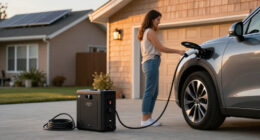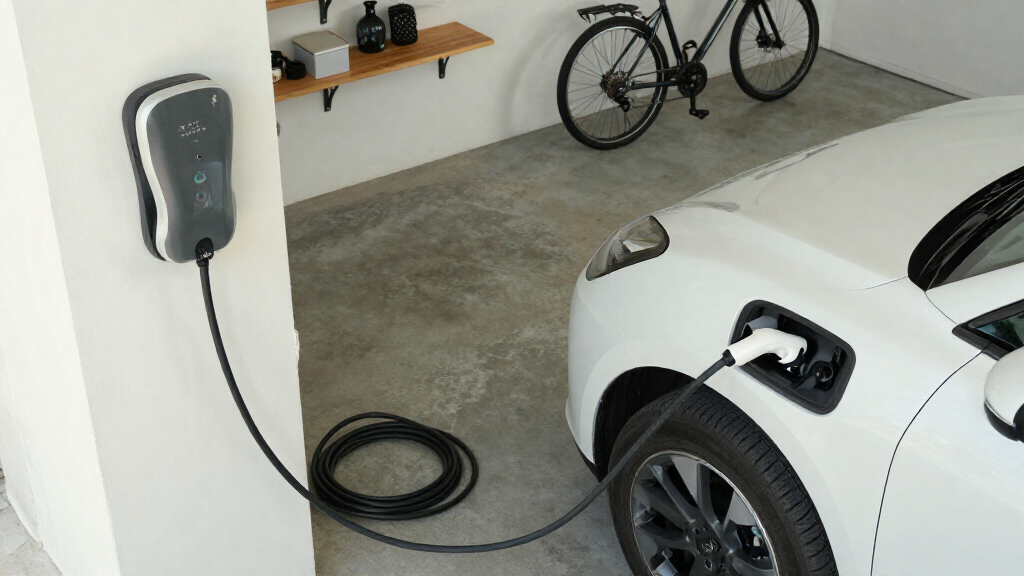

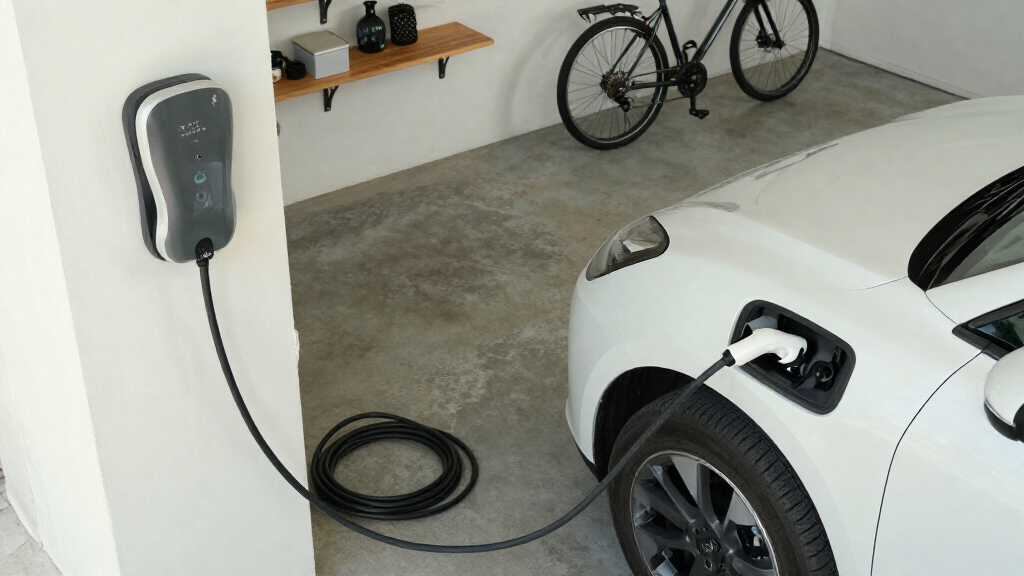
The best home EV chargers balance charging speed, installation needs, connector fit, and everyday usability. My best overall pick is the Emporia Level 2 48A WiFi EV Charger, which pairs hardwired charging with app connectivity, while the ChargePoint HomeFlex stands out for buyers who want a familiar charging platform and a choice of plug-in or hardwired versions. For homes that need broader energy-management features, the Emporia Pro with PowerSmart and Vue 3 is a more specialized option. The main tradeoffs are 40A versus 48A output, plug-in convenience versus hardwired installation, and smart features versus a simpler setup. Read on for the full comparison and guidance on matching a charger to your car, electrical service, and parking layout.

Get backup power and energy gear delivered free with Prime
- Fast, free delivery on millions of items
- Prime Video, Amazon Music and more included
- Member-only deals all year
Key Takeaways
- Installation choice separates many of the leading options: the lineup includes 40A and 48A plug-in models, plus hardwired chargers that may suit higher-output installations but call for professional electrical work.
- 48A is not automatically the better buy: it can support faster charging when the vehicle and home circuit allow it, while several 40A chargers offer a less demanding plug-in route.
- Connector type needs to match the vehicle or adapter plan: most listed models use J1772, while the IYILO 48A and hardwired ChargePoint HomeFlex use NACS.
- Smart features vary in purpose: Wi-Fi or Bluetooth supports connected control on models such as the DEWALT and Leviton, while the Emporia Pro adds energy monitoring and load-management features.
- Portable charging trades speed for flexibility: the Raylix and EVDANCE 16A Level 1/Level 2 units can serve travel or occasional-use needs, but they do not match the output of the 40A and 48A home units.


| home EV charger | Connector | Cable length | Warranty |
|---|---|---|---|
| Grasside Level 2 J1772 EV Char | J1772 | 25 ft | — |
| IYILO Level 2 EV Charger | NACS (J3400) | 25 ft | — |
| 40A Level 2 EV Charger with J1 | J1772 | 25 ft | 3 years |
| AIMILER Level 2 Hardwired EV C | J1772 | 25 ft | — |
| EVWallbox Level 2 EV Charger | SAE J1772 | 25 ft | — |
| Emporia Level 2 48A WiFi EV Ch | SAE J1772 | 25 ft | 3 years |
| DEWALT Level 2 EV Charger | SAE J1772 | 25 ft | 3-year limited warranty |
| Raylix Portable Level 1 and Le | J1772 | 25 ft | 2 years |
| IYILO Level 2 EV Charger | SAE J1772 | 25 ft | 3 years |
| Lectron Level 2 J1772 Nexus EV | J1772 | 23 ft | — |
| EVDANCE Level 1 and Level 2 Po | J1772 | 25 ft | 1 year |
| Emporia Pro Level 2 EV Charger | SAE J1772 | — | — |
| Leviton Smart Level 2 EV Charg | SAE J1772 | 25 ft | — |
| ChargePoint HomeFlex Level 2 E | J1772 | 23 ft | 3-year parts warranty |
| ChargePoint HomeFlex Level 2 H | NACS (Tesla) | — | 3 years |
More Details on Our Top Picks
Grasside Level 2 J1772 EV Charger, 40A, 9.6 kW, NEMA 14-50 Plug, 25 ft Cable
The Grasside pairs 40A, 9.6 kW charging with three ways to manage access: plug-and-charge, RFID, and app controls. That flexibility suits households where drivers want different levels of control, while its 25-foot cable can reach cars parked farther from the outlet. Compared with the EVWallbox 40A, it offers similar charging output and cable reach, but the EVWallbox adds a built-in display and an included RFID card; Grasside’s app instead includes current adjustment and charging monitoring. Its IP65 enclosure and ETL listing support indoor or outdoor use, though buyers still need a compatible NEMA 14-50 outlet on a 50A circuit. The app depends on 2.4 GHz Wi-Fi, and Tesla drivers need a separate adapter. I’d choose it for access options, not for buyers who want a hardwired installation.
Pros:- Plug-and-charge, RFID, and app controls give households flexible access options.
- The 25-foot cable offers useful reach across a garage or driveway.
- App supports scheduling, current adjustment, and charging monitoring.
- IP65 enclosure and ETL listing support indoor or outdoor installation.
Cons:- Requires a compatible NEMA 14-50 outlet on a 50A circuit.
- Tesla vehicles need a separate J1772-to-Tesla adapter.
- App connectivity requires 2.4 GHz Wi-Fi.
Best for: Households with multiple drivers who want RFID access alongside app scheduling and adjustable charging current.
Not ideal for: Drivers without a compatible NEMA 14-50 outlet and 50A circuit, or Tesla owners who do not want to buy a separate adapter.
- Connector:J1772
- Maximum current:40A
- Maximum power:9.6 kW
- Plug and circuit:NEMA 14-50 plug; requires a 50A circuit
- Cable length:25 ft
- Current settings:10–40A via app; 16A, 24A, 32A, or 40A via button
- Connectivity:2.4 GHz Wi-Fi
- Protection and enclosure:Built-in GFCI; IP65; metal case
- Certification and warranty:ETL listed to UL-2594 and CSA-C22.2 No. 280; 3-year warranty
Our verdict“Choose the Grasside if you want a plug-in 40A charger with several access methods and a long cable, and already have the required outlet.”
IYILO Level 2 EV Charger, 48A, 11.5 kW, NACS Connector
For drivers whose vehicles use a NACS (J3400) inlet, this IYILO delivers up to 48A and 11.5 kW without the connector mismatch that affects J1772 models such as the AIMILER ZB18. Current adjustment in 1A increments from 6A to 48A gives more control when matching the charger to a home’s electrical capacity. Its app adds scheduling and energy tracking, while connector temperature monitoring can reduce power or stop charging if heat rises. Power sharing also gives it an edge for homes planning two compatible chargers on one circuit, though dynamic load balancing requires an optional Energy Meter. The tradeoff is installation: this is hardwired and calls for a 60A breaker and licensed electrician, unlike the plug-in Grasside. J1772 vehicles need an adapter, and Wi-Fi is limited to 2.4 GHz.
Pros:- NACS connector serves vehicles with a J3400 inlet directly.
- Current adjusts from 6A to 48A in 1A increments.
- App supports scheduled charging, energy tracking, and multiple user accounts.
- Power sharing and connector temperature protection add useful control features.
Cons:- Hardwired installation requires a 60A breaker and a licensed electrician.
- J1772 vehicles require a separate adapter.
- Wi-Fi support is limited to 2.4 GHz; dynamic load balancing needs an optional Energy Meter.
Best for: NACS vehicle owners planning a hardwired home installation who want high output, detailed current adjustment, and a path to power sharing.
Not ideal for: Renters, drivers who need a plug-in charger, or J1772 vehicle owners who prefer not to use a separate adapter.
- Connector:NACS (J3400)
- Maximum current:48A
- Maximum power:11.5 kW
- Installation:Hardwired; requires a 60A breaker and licensed electrician
- Current adjustment:6–48A in 1A increments
- Cable length:25 ft
- Connectivity:2.4 GHz Wi-Fi
- Power management:Power sharing; dynamic load balancing with optional Energy Meter
- Certifications and warranty:ETL, Energy Star, CSA; 3-year warranty
Our verdict“Pick the IYILO if your vehicle has a NACS inlet and you want a high-output hardwired charger with fine current control and power sharing.”
40A Level 2 EV Charger with J1772 and Tesla Compatibility, NEMA 14-50 Plug
This charger combines 40A output with app-based scheduling, monitoring, and remote start or stop, making it a stronger fit for drivers who want to manage charging from a phone than a basic plug-in setup. Its 25-foot cable and IP65-rated enclosure suit garages and exposed parking areas, while Wi-Fi and Bluetooth offer two connection routes. Compared with the Grasside, it specifies Bluetooth and 1A current adjustments from 10A to 40A; Grasside, by contrast, lists RFID access and built-in GFCI protection. Both require a NEMA 14-50 outlet, so neither works as a hardwired solution. The charger is described as compatible with J1772 EVs and Tesla vehicles, but confirm the connector arrangement and adapter needs for your car before buying. Its 2.4 GHz Wi-Fi limit may also matter if your home network uses only another band.
Pros:- App supports scheduling, monitoring, and remote start or stop.
- Bluetooth supplements 2.4 GHz Wi-Fi connectivity.
- A 25-foot cable and IP65 enclosure suit varied indoor and outdoor parking setups.
- Current adjusts from 10A to 40A in 1A increments.
Cons:- Requires a NEMA 14-50 outlet.
- Wi-Fi is limited to 2.4 GHz.
- Vehicle-specific Tesla compatibility and any adapter needs should be checked before purchase.
Best for: J1772 EV owners with a NEMA 14-50 outlet who want app control, Bluetooth connectivity, and remote charging management.
Not ideal for: Drivers seeking a hardwired charger, or buyers whose Wi-Fi setup does not support 2.4 GHz and who need dependable app connectivity.
- Connector:J1772
- Maximum current and power:40A; 9.6 kW
- Voltage:240V
- Plug:NEMA 14-50P
- Cable length:25 ft
- Current adjustment:10–40A in 1A increments
- Connectivity:2.4 GHz Wi-Fi and Bluetooth
- Certifications:ETL, UL 2594, CSA
- Warranty:3 years
Our verdict“Choose this model if you want a 40A plug-in charger with remote app controls and Bluetooth, and your parking spot has a NEMA 14-50 outlet.”
AIMILER Level 2 Hardwired EV Charger, 48A, 11.5 kW, J1772 Connector, 25 ft Cable
The AIMILER is the J1772 counterpart to the NACS IYILO: both reach 48A and 11.5 kW, but this model serves J1772 vehicles directly instead of NACS cars. Its hardwired design suits a permanent installation, and the touchscreen display puts charging speed, amperage, voltage, and delay time on the unit rather than leaving those details solely to an app. The Wi-Fi app adds scheduling, history, status, and notifications. Compared with the Grasside, AIMILER trades the convenience of a NEMA 14-50 plug for higher output and a fixed installation; it also requires suitable wiring and at least a 60A breaker for 48A charging. Tesla and other NACS vehicles need an adapter. Its listed ETL and FCC status is useful product information, but buyers should not assume it offers the same stated certification set as some alternatives.
Pros:- Up to 48A and 11.5 kW provides higher output than the 40A plug-in options here.
- Touchscreen shows amperage, charging speed, voltage, and delay time.
- Wi-Fi app supports schedules, charging history, status, and notifications.
- 25-foot J1772 cable reaches a range of parking positions.
Cons:- Hardwired installation requires suitable wiring and a suitable circuit breaker.
- A breaker of at least 60A is recommended for 48A charging.
- Tesla and other NACS vehicles require a separate adapter.
Best for: J1772 EV owners planning a permanent installation who want up to 48A charging and a local display for charger status.
Not ideal for: Renters or homeowners who need a plug-in charger, and Tesla or NACS drivers who do not want to use an adapter.
- Connector:J1772
- Maximum current and power:48A; up to 11.5 kW
- Cable length:25 ft
- Installation:Hardwired; no plug
- Amperage adjustment:24–48A
- Breaker recommendation:At least 60A for 48A charging
- Display and connectivity:Touchscreen; Wi-Fi app
- Listings:ETL and FCC listed
Our verdict“Choose the AIMILER if you want a high-output, permanently wired J1772 charger with a display, and can arrange the required electrical work.”
EVWallbox Level 2 EV Charger, 40A, 9.6 kW, 240V, J1772 Connector, 25 ft Cable
The EVWallbox makes charging information easy to check without opening an app: its 4.3-inch display shows status, while app controls handle monitoring, schedules, and notifications. At 40A and 9.6 kW, it matches the Grasside’s output and shares its NEMA 14-50 plug and 25-foot cable. The distinction is the interface: EVWallbox includes an RFID card and a screen, while Grasside lists more explicit current-adjustment settings and plug-and-charge access. Its ETL and Energy Star certifications and NEMA Type 4/IP65 enclosure support a home installation indoors or outdoors. One purchasing wrinkle is that the supplied product information does not spell out installation requirements beyond accessories and instructions, so I’d verify outlet and circuit compatibility before ordering. J1772 also means vehicles with a different inlet may need an adapter.
Pros:- 4.3-inch display provides charging status directly on the unit.
- Includes an RFID card and app controls for scheduling and notifications.
- 25-foot cable provides useful reach around a garage or driveway.
- ETL and Energy Star certifications and a NEMA Type 4/IP65 enclosure are specified.
Cons:- Installation requirements are not specified beyond included accessories and instructions.
- J1772 connector may require an adapter for vehicles with a different inlet.
- The supplied information does not specify a warranty.
Best for: Drivers who want a plug-in J1772 charger with a readable on-unit display, RFID access, and app notifications.
Not ideal for: Buyers who need clearly documented circuit requirements before purchase, or drivers whose vehicle needs a different connector and who do not want an adapter.
- Connector:SAE J1772
- Voltage, current, and power:240V; 40A; 9.6 kW
- Plug:NEMA 14-50
- Cable length:25 ft
- Display:4.3-inch
- Connectivity:Wi-Fi and smartphone app
- Access:RFID card included
- Certifications and enclosure:ETL, Energy Star, FCC, CE; NEMA Type 4/IP65
Our verdict“Pick the EVWallbox if an on-unit display and included RFID card matter more to you than the Grasside’s more clearly specified current-setting options.”
Emporia Level 2 48A WiFi EV Charger with J1772 Connector, 25 ft Cable, Hardwired with Whip
The Emporia Level 2 pairs 48A output with Wi-Fi monitoring and charge scheduling, making it a strong fit for owners who want to track home charging rather than simply plug in. Its 25-foot cable gives more reach than the Lectron Nexus’s 23-foot lead, which can help when the parking position is less convenient. Both offer up to 48A, so the Emporia’s main distinction is its connected energy features, not a faster charging ceiling. The tradeoff is its hardwired installation, which calls for electrical work and offers less flexibility than a plug-in unit such as the IYILO 40A. Its J1772 connector suits many North American EVs, but vehicles with NACS ports need a compatible adapter.
Pros:- Up to 48A output supports fast Level 2 home charging.
- Wi-Fi features provide energy monitoring and charge scheduling.
- 25-foot cable offers more reach than the Lectron Nexus’s 23-foot cable.
- UL listed and ENERGY STAR certified.
Cons:- Hardwired installation reduces portability and requires electrical work.
- J1772 connection needs a compatible adapter for vehicles with NACS ports.
Best for: EV owners who want Wi-Fi energy monitoring and scheduled charging, have a compatible J1772 vehicle, and are ready for a permanent hardwired installation.
Not ideal for: Renters, drivers who need a plug-in charger they can move, or NACS-vehicle owners who do not want to use a separate adapter.
- Output voltage:240V
- Maximum current:48A
- Connector:SAE J1772
- Cable length:25 ft
- Installation:Hardwired with whip
- Connectivity:2.4 GHz Wi-Fi
- Certifications:UL listed; ENERGY STAR certified
- Warranty:3 years
Our verdict“Choose the Emporia if connected energy tracking and a long cable matter more than plug-in flexibility.”
DEWALT Level 2 EV Charger, 48A, 240V, Hardwired, Wi-Fi and Bluetooth, 25 ft Cable
The DEWALT stands out for adjustable current from 12A to 48A, giving households more room to match charging to circuit capacity or household needs. It also supports app control through Wi-Fi and Bluetooth; Bluetooth offers a direct connection option alongside network-based scheduling and energy tracking. Compared with the Emporia, it has the same 48A ceiling and 25-foot cable, but adds Bluetooth and an explicitly stated current range. Its CSA-certified NEMA 4X enclosure is rated for indoor and outdoor use, a useful fit for exposed installations. The cost of that flexibility is a hardwired setup rather than the plug-in approach of the IYILO 40A, and its 24.5-pound body is a substantial wall-mounted unit. J1772 vehicles are supported; Tesla owners need a separate adapter.
Pros:- Current can be adjusted from 12A to 48A.
- Wi-Fi and Bluetooth support app control, scheduling, and energy tracking.
- CSA-certified NEMA 4X enclosure is rated for indoor and outdoor use.
- 25-foot cable supports a range of garage parking positions.
Cons:- Hardwired installation is not plug-and-play and limits relocation.
- Tesla vehicles require a separately purchased adapter.
- At 24.5 pounds, it is a substantial unit to mount.
Best for: Households with a hardwired installation that want to adjust charging current and control sessions through Wi-Fi or Bluetooth.
Not ideal for: Drivers seeking a portable or plug-in unit, or owners of NACS vehicles who want a charger that connects without a separate adapter.
- Maximum current:48A; adjustable from 12A to 48A
- Maximum power:11.5 kW
- Input voltage:240V
- Connector:SAE J1772
- Cable length:25 ft
- Connectivity:Wi-Fi and Bluetooth
- Certification:CSA certified
- Warranty:3-year limited warranty
Our verdict“Pick the DEWALT if adjustable output and dual wireless controls are more useful to you than a plug-in installation.”
Raylix Portable Level 1 and Level 2 J1772 EV Charger, 16A, 25 ft Cable
Unlike the hardwired Emporia and DEWALT chargers, the Raylix is designed to move between outlets: it includes connections for 120V Level 1 and 240V Level 2 charging. That makes it a practical choice for drivers who cannot commit to a fixed installation or want a charger to take on trips. Its current settings and 1–12 hour delay timer provide basic control without relying on the app-based features found on the IYILO 40A. The tradeoff is output: Level 2 charging tops out at 16A and 3.68 kW, well below the 40A and 48A wall units in this lineup. On a standard 120V outlet, it is limited to 12A, so it works best as a flexible charging option rather than a fast daily home setup.
Pros:- Supports Level 1 and Level 2 charging with included plug options.
- Four current settings and a delay timer offer straightforward charging control.
- Color display shows charging data including voltage, current, and power.
- 25-foot cable and 7.06-pound weight suit a portable setup.
Cons:- Maximum Level 2 output is 16A and 3.68 kW, far below the IYILO 40A.
- NEMA 5-15 Level 1 use is limited to 12A.
- J1772 may require an adapter for vehicles with a different inlet.
Best for: Drivers who need one portable J1772 charger for standard 120V outlets, compatible 240V outlets, and occasional travel.
Not ideal for: Drivers who rely on fast daily home charging or want a permanently mounted charger with output above 16A.
- Charging levels:Level 1 and Level 2
- Connector:J1772
- Current settings:8A, 10A, 12A, and 16A
- Level 1 connection:NEMA 5-15; 120V, up to 12A
- Level 2 connection:NEMA 6-20; 240V, 16A, 3.68 kW
- Cable length:25 ft
- Delay timer:1–12 hours
- Protection:Overheating, overvoltage, and overcurrent
- Warranty:2 years
Our verdict“Choose the Raylix when outlet flexibility and portability matter more than the faster charging capacity of a fixed Level 2 unit.”
IYILO Level 2 EV Charger, 40A, 9.6 kW, 240V with NEMA 14-50 Plug and 2.4 GHz Wi-Fi
The IYILO combines a NEMA 14-50 plug with smart controls, a useful middle ground between the portable Raylix and the hardwired 48A chargers. Its output reaches 40A and 9.6 kW, enough for a capable home Level 2 setup while avoiding a fixed hardwired connection when used with its plug. In contrast with the Emporia, the IYILO adds RFID access, remote updates, and power sharing; those features can help manage access or coordinate two chargers on one circuit. Its 25-foot cable also matches the longer leads in this group. The compromises are 2.4 GHz-only Wi-Fi and a lower maximum output than the DEWALT or Lectron. Hardwiring at 40A requires a 50A breaker and a licensed electrician, and Tesla vehicles need a separate NACS adapter.
Pros:- NEMA 14-50 plug offers an alternative to the hardwired Emporia and DEWALT.
- Current adjusts from 6A to 40A in 1A increments.
- App features include scheduling, energy tracking, RFID access, and remote updates.
- Power sharing can support two chargers on one circuit.
Cons:- Maximum 40A output is below the 48A DEWALT and Lectron.
- Wi-Fi supports 2.4 GHz only.
- Tesla vehicles need a separate NACS adapter; 40A hardwired operation needs a 50A breaker and licensed electrician.
Best for: J1772 EV owners who want app scheduling and access controls in a 40A charger with a NEMA 14-50 plug.
Not ideal for: Drivers who need 48A output, have no 2.4 GHz Wi-Fi available, or want native NACS compatibility without an adapter.
- Maximum current:40A; adjustable from 6A to 40A
- Power:9.6 kW
- Voltage:240V
- Plug type:NEMA 14-50P
- Connector:SAE J1772
- Cable length:25 ft
- Wi-Fi:2.4 GHz
- Protection:Connector temperature monitoring; charging stops above 221°F
- Warranty:3 years
Our verdict“Choose the IYILO if you want connected controls and a plug-in setup without needing the higher output of a 48A charger.”
Lectron Level 2 J1772 Nexus EV Home Charger, 48A Hardwired
The Lectron Nexus is the straightforward pick for a hardwired 48A installation that needs robust weather protection. Its IP66-rated enclosure and listed electrical safety standards make it a better fit for exposed locations than a charger selected only for indoor garage use. It delivers up to 11.5 kW, matching the DEWALT’s maximum output, but has a 23-foot cable—shorter than the 25-foot leads on the Emporia and DEWALT. The J1772 connection supports many North American EVs, with an adapter needed for NACS vehicles. Compared with those Wi-Fi-enabled options, the supplied details do not list app connectivity or scheduling, so buyers seeking energy tracking should favor the Emporia or DEWALT. Professional hardwired installation also makes this a permanent setup, not a portable alternative.
Pros:- 48A and 11.5 kW output match the maximum charging capacity of the DEWALT.
- IP66 enclosure is suited to indoor and outdoor installation.
- Built-in protections cover overheating, overcurrent, voltage faults, and ground faults.
- Includes a cable holster for storing the 23-foot cable.
Cons:- Hardwired installation requires a professional and limits portability.
- 23-foot cable is shorter than the 25-foot Emporia and DEWALT cables.
- J1772 connector requires a compatible adapter for NACS vehicles.
Best for: J1772 EV owners planning a professional hardwired installation in a garage or exposed location where weather protection is a priority.
Not ideal for: Drivers who want app-based monitoring, a plug-in charger, or a cable longer than 23 feet.
- Maximum output:48A
- Power:11.5 kW
- Voltage:240V
- Connector:J1772
- Cable length:23 ft
- Installation:Hardwired; professional installation required
- Weather protection:IP66
- Safety certifications:UL 2594, UL 2231, UL 2251; ETL listed
- Additional certifications:ENERGY STAR; FCC
Our verdict“Pick the Lectron Nexus for a weather-protected hardwired installation, but choose the Emporia or DEWALT if app controls are a priority.”
EVDANCE Level 1 and Level 2 Portable J1772 EV Charger, 16A, 25 ft Cable
Portable flexibility is the EVDANCE’s main advantage: it can charge from a compatible 120 V outlet or a 240 V NEMA 6-20 outlet, so it suits drivers who need a travel charger or lack a permanently installed unit. Its 25 ft cable, carry bag, and LED status and error display make it easier to place and monitor than a basic emergency cord. The tradeoff is speed: at up to 3.68 kW, it is much less powerful than the 40 A Leviton Smart Level 2 charger or the 48 A Emporia Pro. Outlet compatibility is also narrower than its portable design may suggest; it does not directly support a NEMA 14-50 receptacle. I’d choose it for flexibility, not as the fastest primary charger.
Pros:- Supports Level 1 charging at 12 A and Level 2 charging at 16 A.
- 25 ft cable and included carry bag make it easier to use in different locations.
- LED display shows charging status and errors.
- IP66 housing and built-in charging monitoring.
Cons:- Maximum output of 3.68 kW is modest beside the 40 A Leviton and 48 A Emporia Pro.
- Does not directly support NEMA 14-50 or 10-30 outlets.
- Tesla vehicles need a separately sold J1772 adapter, and compatibility varies by vehicle.
Best for: J1772 drivers who want a portable charger for home and travel, and have access to compatible NEMA 5-15/5-20 or 6-20 outlets.
Not ideal for: Drivers who need fast daily charging, own a Tesla without a separate J1772 adapter, or rely on a NEMA 14-50 outlet.
- Connector:J1772
- Charging levels:Level 1 and Level 2
- Current:12 A at 120 V; 16 A at 240 V
- Maximum power:Up to 3.68 kW at 240 V
- Cable length:25 ft
- Compatible outlets:NEMA 5-15/5-20 and NEMA 6-20
- Housing protection:IP66
- Warranty:1 year
Our verdict“Choose the EVDANCE if portability and Level 1/Level 2 flexibility matter more than the faster charging of a fixed 240 V unit.”
Emporia Pro Level 2 EV Charger with PowerSmart, 48 A, J1772 Connector and Vue 3 Energy Monitor
The Emporia Pro is the strongest fit here for owners who want charging to work around the rest of their home’s electrical use. PowerSmart adjusts charging current to available panel capacity, while the included Vue 3 energy monitor and app provide whole-home usage data, schedules, and tools for managing peak rates or excess solar. That makes it more than a high-output charger: it can help coordinate charging with a busy household electrical panel. Compared with the simpler Leviton Smart Level 2, the Emporia adds energy monitoring and load adjustment, but it also brings more setup decisions and may require an electrician. Its 48 A maximum is higher than Leviton’s 40 A, although actual output depends on installation and vehicle limits. Tesla owners need a separate adapter.
Pros:- PowerSmart adjusts charging to available home electrical capacity.
- Vue 3 monitor adds whole-home energy usage insights.
- App supports schedules, usage tracking, peak-rate management, and excess-solar charging.
- Offers NEMA 14-50 plug-in or hardwired installation for indoor or outdoor use.
Cons:- Installation may require an electrician, particularly for a hardwired setup or electrical-panel work.
- Tesla vehicles require a separate adapter.
- The added monitor and energy controls may be unnecessary for buyers who only need basic charging.
Best for: Homeowners with a busy electrical panel, solar generation, or time-of-use electricity plans who want charging and household energy data in one system.
Not ideal for: Drivers seeking a simple plug-in charger with minimal setup, or Tesla owners who expect a NACS connector or included adapter.
- Output voltage:240 V AC
- Maximum current:48 A
- Connector:SAE J1772
- Installation:NEMA 14-50 plug or hardwired
- Included monitor:Emporia Vue 3 Energy Monitor
- Connectivity:Wi-Fi and Bluetooth
- Use:Indoor or outdoor
- Certification:UL
Our verdict“Pick the Emporia Pro if you want a high-output charger that can respond to household electrical capacity and provide broader energy insights.”
Leviton Smart Level 2 EV Charger, 40A, Wi-Fi, NEMA 14-50 Plug, White
The Leviton offers a practical middle ground for drivers who want app controls without the broader energy-management setup of the Emporia Pro. Its 40 A output reaches up to 9.6 kW, and the My Leviton app handles charging status, schedules, and remote start or stop. The included NEMA 14-50 plug can simplify installation when a compatible receptacle is already in place; the water-resistant enclosure also supports indoor or outdoor mounting. Compared with the higher-output Emporia Pro, the Leviton has a lower current ceiling and no included whole-home monitor or PowerSmart load adjustment. Its 25 ft cable offers more reach than ChargePoint HomeFlex’s 23 ft cable, but buyers still need the right outlet, and Tesla drivers need a separate Leviton NACS adapter.
Pros:- 40 A output provides up to 9.6 kW of Level 2 charging.
- My Leviton app supports status checks, scheduling, and remote start or stop.
- 25 ft cable offers useful reach from the mounting point.
- NEMA 3R enclosure supports indoor or outdoor installation.
Cons:- Plug-in installation requires a compatible NEMA 14-50 receptacle.
- Its 40 A output is below the 48 A Emporia Pro’s maximum.
- Tesla vehicles require a separate Leviton NACS adapter.
Best for: J1772 drivers who have a NEMA 14-50 receptacle and want app-based scheduling and remote controls without a separate energy-monitoring system.
Not ideal for: Homes without a compatible NEMA 14-50 receptacle, drivers seeking 48 A output or load management, and Tesla owners who do not want to buy an adapter.
- Model:EV40P
- Input voltage:240 V
- Current:40 A
- Power:Up to 9.6 kW
- Connector:SAE J1772
- Cable length:25 ft
- Plug:NEMA 14-50P
- Certification:UL and Energy Star
Our verdict“Choose the Leviton for app-controlled 40 A charging when you already have a compatible NEMA 14-50 outlet.”
ChargePoint HomeFlex Level 2 EV Charger with J1772 Connector and NEMA 14-50 Plug
For J1772 drivers who already have a 240 V NEMA 14-50 outlet, this ChargePoint HomeFlex keeps the installation path clear while adding app-based controls and charging information. Its 23 ft cold-resistant cable suits many garage layouts and is built for colder conditions, while UL certification supports indoor or outdoor installation by an electrician. The stated rate of up to 45 miles per hour depends on the vehicle, so it is not a guaranteed result for every car. Compared with the Leviton Smart Level 2, the cable is 2 ft shorter; compared with the hardwired ChargePoint HomeFlex with NACS, this model has a plug-in connection and J1772 connector rather than a Tesla-oriented NACS connector. You’ll need a suitable circuit and a separate adapter for Tesla vehicles.
Pros:- Works with a 240 V NEMA 14-50 outlet.
- 23 ft cable is designed to resist cold temperatures.
- ChargePoint app provides charging controls and information.
- UL-certified for indoor or outdoor installation.
Cons:- Requires a NEMA 14-50 outlet and a 40 A or 50 A circuit.
- Electrician installation is required.
- Tesla vehicles need a separate adapter, and the cable is shorter than Leviton’s 25 ft cable.
Best for: J1772 drivers with a NEMA 14-50 outlet who want a branded app-connected charger and a cable suited to cold-weather use.
Not ideal for: Drivers without a suitable 14-50 outlet and circuit, Tesla owners seeking a native NACS connection, or buyers who need a longer cable than 23 ft.
- Model:CPH50-NEMA14-50-L23
- Connector:J1772
- Plug:NEMA 14-50
- Output voltage:240 V
- Charging rate:Up to 45 miles per hour, vehicle dependent
- Cable length:23 ft
- Installation:Indoor or outdoor; electrician installation
- Warranty:3-year parts warranty
Our verdict“Choose this HomeFlex if you have a suitable 14-50 circuit and want a cold-resistant, app-connected J1772 charger.”
ChargePoint HomeFlex Level 2 Hardwired EV Charger with NACS Connector
This hardwired HomeFlex is the clearest fit for Tesla drivers who want a charger with a native NACS connector rather than a J1772 unit plus an adapter. ChargePoint lists charging at up to 45 miles of range per hour, though the vehicle and installation determine the actual rate. The app adds charging controls, reminders, and charging information, and the cold-resistant cable and indoor-or-outdoor rating suit varied garage or exterior setups. The main compromise is installation: unlike the plug-in ChargePoint HomeFlex with J1772, this version needs a hardwired connection and an electrician. It is also listed as compatible with Tesla vehicles, so drivers with other EVs should check connector compatibility before buying rather than assume the NACS port will suit their car.
Pros:- Native NACS connector is suited to Tesla vehicles.
- Delivers up to 45 miles of range per hour, depending on the vehicle.
- Indoor or outdoor installation supports flexible placement.
- Cold-resistant cable and ChargePoint app features support everyday use.
Cons:- Requires hardwired installation by an electrician.
- The stated circuit requirement is unusual—listed as 20 A or 80 A—so buyers should confirm requirements with the installer before purchase.
- Tesla-focused compatibility makes it a poor default choice for other EVs without confirmation.
Best for: Tesla owners who want a dedicated NACS home charger and are prepared for professional hardwired installation.
Not ideal for: Drivers who want plug-in installation, own a non-Tesla EV without confirmed NACS compatibility, or need a charger that can be moved between outlets.
- Model:CPH50-HARDWIRE-L23-NACS
- Connector:NACS (Tesla)
- Output voltage:240 V
- Amperage:50 A
- Charging rate:Up to 45 miles of range per hour, vehicle dependent
- Installation:Hardwired; electrician installation; indoor or outdoor
- Dimensions:7.06 × 11.19 × 5.2 in (D × W × H)
- Warranty:3 years
Our verdict“Choose this hardwired HomeFlex if you own a Tesla, want a native NACS connector, and have an electrician confirm the circuit requirements.”
How We Picked
I compared these 15 chargers by the factors that shape daily ownership: charging output, connector compatibility, installation format, cable reach, and control features. A higher amp rating matters only when the vehicle’s onboard charger and the home’s wiring can use it, so I treated power as one part of fit rather than a standalone win. I also separated plug-in units from hardwired models because they call for different electrical setups and offer different levels of installation flexibility.
The ranking favors chargers with a useful mix of capability and practical fit, then gives each option a distinct role. Smart controls and energy monitoring count when they solve a real household need, but do not outweigh connector mismatch or an unsuitable installation plan. Portable units rank for flexibility rather than speed, and similar products are differentiated by their listed power, connector, and included features. Product specifications alone do not establish compatibility with every vehicle or electrical panel, so buyers should confirm those details before purchase.
| home EV charger | Connector |
|---|---|
| Grasside Level 2 J1772 EV Char | J1772 |
| IYILO Level 2 EV Charger | NACS (J3400) |
| 40A Level 2 EV Charger with J1 | J1772 |
| AIMILER Level 2 Hardwired EV C | J1772 |
| EVWallbox Level 2 EV Charger | SAE J1772 |
| Emporia Level 2 48A WiFi EV Ch | SAE J1772 |
| DEWALT Level 2 EV Charger | SAE J1772 |
| Raylix Portable Level 1 and Le | J1772 |
| IYILO Level 2 EV Charger | SAE J1772 |
| Lectron Level 2 J1772 Nexus EV | J1772 |
| EVDANCE Level 1 and Level 2 Po | J1772 |
| Emporia Pro Level 2 EV Charger | SAE J1772 |
| Leviton Smart Level 2 EV Charg | SAE J1772 |
| ChargePoint HomeFlex Level 2 E | J1772 |
| ChargePoint HomeFlex Level 2 H | NACS (Tesla) |
Factors to Consider When Choosing Best Home EV Chargers
Choosing a home charger starts with the electrical setup and the way you park, not the longest feature list. These broader checks can help prevent a charger that is fast on paper but awkward or incompatible at home.
Match Charger Output to Your Vehicle and Electrical Service
A charger’s amp rating describes the power it can supply, but the car’s onboard charger sets how much it can accept. A 48A unit will not charge every vehicle faster than a 40A one, and it may call for a suitable hardwired circuit and panel capacity. Ask a qualified electrician to check the available service, breaker requirements, wire sizing, and whether other large loads run at the same time. Do this before buying so you can compare a realistic installation plan rather than relying on the charger’s maximum figure. If a 40A plug-in unit already meets your overnight charging needs, paying for a higher-output model may bring little practical benefit. Leave room for future vehicle needs only if your electrical service can support that plan.
Treat Plug-In and Hardwired as Different Installation Plans
A NEMA 14-50 charger can be a convenient fit when a correctly installed, appropriately rated outlet is already available. The plug does not make the setup suitable for any existing outlet: EV charging is a sustained load, so the circuit and receptacle need to be rated for the job. Hardwired models avoid a plug connection and may support higher output, but installation is less portable and generally requires an electrician. Avoid choosing a plug-in unit solely to save installation effort if the outlet, wiring, or panel has not been checked. Also confirm local rules and permit requirements before work begins. The right format is the one your home can safely support, not simply the one that looks easier to install.
Check the Connector Against Your Car and Charging Plans
Most products in this roundup use J1772, while two listed options use NACS, so connector choice can narrow the field quickly. Verify the charging port on your vehicle and check the automaker’s guidance before relying on an adapter. An adapter may address a connector mismatch, but it does not raise the vehicle’s charging limit or remove the need to confirm safe, compatible use. If more than one EV shares the charger, think about both cars’ ports and who will use the unit most often. Connector standards and vehicle support can change over time, so confirm current compatibility at the time of purchase. This check can prevent buying a powerful charger that still requires extra hardware or does not suit your household’s cars.
Measure Cable Reach From the Actual Parking Position
A 25-foot cable appears across many models here, but the listed length alone does not show whether it will reach your vehicle’s charge port. Measure from the proposed mounting point to the port with the car parked as it normally would be, allowing for the cable’s path around doors, corners, and obstacles. Consider whether two vehicles park in the space and whether the charger may need to serve either side of the driveway. A longer reach can add flexibility, but cable storage and trip hazards matter too. Mounting the charger near a convenient path can be better than buying on length alone. Check the manufacturer’s cable guidance for use in the temperatures and conditions where you plan to charge.
Pay for Smart Features Only When They Fit Your Routine
Wi-Fi, Bluetooth, scheduling, and energy monitoring can help manage charging, but they solve different problems. Scheduling can shift charging to a preferred time, while energy monitoring may help households track consumption or coordinate charging with other electrical loads. Connectivity depends on a reliable signal where the charger is installed, so check the location before treating app control as a major benefit. A smart feature is less useful if the charger cannot connect reliably or if you do not plan to use its controls. For a simple overnight routine, a straightforward unit may be easier to live with than a system that adds setup steps. Buyers with solar, time-based utility plans, or tight electrical capacity should examine the exact supported features and system requirements before paying extra.
Choose Portability for a Real Use Case, Not Just a Backup Idea
Portable Level 1 and Level 2 chargers can be useful for occasional travel, a temporary parking setup, or homes where a permanent installation is not yet practical. Their 16A rating makes them a different proposition from the fixed 40A and 48A units in this lineup, so do not expect similar charging speed. Check which adapters or outlet connections are included and which are sold separately before planning to use one away from home. Repeatedly moving a charger also means more handling and a greater need to store the cable and equipment safely. If the unit will stay in one garage, a dedicated charger may offer a better match for regular charging. If portability matters, confirm the available outlet, vehicle connector, and charging rate at every place you expect to use it.
Frequently Asked Questions
Should I choose a 48A charger over a 40A model?
Choose 48A only if your vehicle can accept the added output and your home electrical setup can support the required circuit. If either limit is lower, the car or installation will cap the charging rate, reducing the practical difference. The 40A plug-in models in this roundup may be a better fit when an electrician confirms a suitable 240V circuit and your daily charging needs are already met. Compare installation requirements alongside the amp rating, since a hardwired 48A charger can call for more work than a plug-in option. For many buyers, the right answer comes from the vehicle specification and panel assessment rather than the highest number on the product page.
Can I use a J1772 charger with a vehicle that has a NACS port?
Possibly, but compatibility depends on the vehicle, adapter, and manufacturer guidance. Check the car maker’s approved adapter information and confirm that the charger and vehicle support the intended charging use. An adapter changes the physical connection; it does not make the vehicle charge faster than its onboard system allows. This roundup includes mostly J1772 models as well as NACS options, so you can compare native connector choices before adding adapter considerations. If you expect multiple vehicles to use one charger, check every vehicle rather than basing the decision on just one port.
Is a NEMA 14-50 charger safe to plug into an outlet I already have?
Not without confirming that the outlet and its circuit are suitable for sustained EV charging. An existing 14-50 receptacle may have been installed for a different use or may not meet the charger’s electrical requirements. Have a qualified electrician check the breaker, wiring, receptacle condition, and panel capacity before regular charging. The plug-in models in this roundup offer a convenient format when the electrical setup is appropriate, but the plug alone is not proof of suitability. If changes are needed, compare the cost and practicality of upgrading the outlet with installing a hardwired charger.
Will a portable 16A charger work as my only home charger?
It can, if its charging rate meets your driving routine and you have a compatible outlet and connection available. The Raylix and EVDANCE portable models support Level 1 and Level 2 use, but their 16A rating places them below the 40A and 48A units for charging output. A lower rate may be workable for modest daily mileage or long parking periods, yet it can leave less room to recover charge after a longer drive. Check the actual outlet requirements and included accessories before treating the charger as a flexible Level 2 option. If you need faster regular charging, a dedicated higher-output unit is likely a better fit.
When does a smart or energy-monitoring charger justify the added setup?
Connected controls are most useful when you plan to schedule charging, monitor energy use, or coordinate charging with household electrical demand. The Emporia Pro adds an energy-monitoring component, while models such as the DEWALT, Leviton, and Wi-Fi-equipped IYILO offer connectivity features with different setups. Check whether the functions you want require extra equipment, an account, a strong home network, or compatibility with other energy systems. If you charge on a simple overnight routine and do not need usage data, a less complex charger may be easier to manage. Decide based on the job the feature will do for your household, rather than the presence of an app alone.
Conclusion
For most buyers seeking a capable connected hardwired option, my best overall pick is the Emporia Level 2 48A WiFi EV Charger. The best value direction is a 40A plug-in model such as the Grasside or EVWallbox when a suitable NEMA 14-50 circuit is already in place and the vehicle can use that output. For a more advanced energy setup, the best premium choice is the Emporia Pro with PowerSmart and Vue 3, especially for households that want energy monitoring and load-management features. The best option for beginners is a plug-in charger with a connector that matches the car, provided an electrician confirms the outlet and circuit; its installation format is easier to understand than a hardwired system, but still needs a safety check. For portable charging, compare the Raylix and EVDANCE by their included connections and your expected charging pace, while NACS vehicle owners should focus on the IYILO 48A or NACS ChargePoint HomeFlex after confirming vehicle and electrical compatibility.