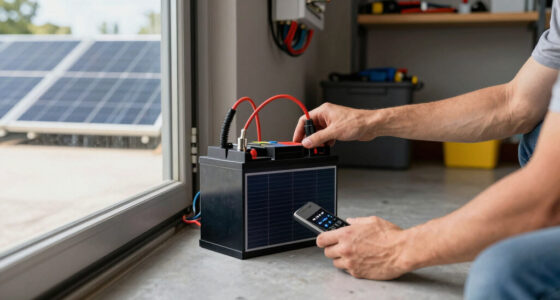
Home energy monitors show how much electricity your home uses, and some identify which circuits or appliances account for it. I’d put the Emporia Vue 3 with 16 Circuit Sensors first for its broad circuit coverage, while the Refoss EM16P stands out for local control and Home Assistant support, and the Eyedro offers a simpler whole-home view. The main tradeoff is between detailed circuit tracking and the effort, panel space, and compatibility checks that can come with installation. Data access and smart home features also vary, so the best fit depends on whether you want a quick overview or more control over the numbers. Read on for how all 12 options compare and which type of buyer each suits.

Get backup power and energy gear delivered free with Prime
- Fast, free delivery on millions of items
- Prime Video, Amazon Music and more included
- Member-only deals all year
Key Takeaways
- Emporia Vue 3 with 16 sensors leads for buyers who want circuit-by-circuit visibility; the 8-sensor version can suit a smaller set of priorities.
- Refoss EM16P is the standout for shoppers who value local control and Home Assistant integration over a cloud-centered setup.
- Eyedro’s whole-home focus makes it a simpler fit for tracking total usage, while circuit sensor kits answer more detailed questions about where electricity goes.
- The two Meross configurations and the Refoss 16-sensor model put circuit coverage at the center of the choice; check sensor count and panel fit before choosing among them.
- Leviton, Siemens Inhab, and Square D Wiser bring established electrical brands into the comparison, but buyers should weigh their specific ecosystem and installation requirements against the more feature-focused options.
| Leviton LWHEM-2R Whole Home Energy Monitor with Current Transformers |  | Best for Leviton Smart Breaker Homes | Model: LWHEM-2R | Connectivity: Wi-Fi | Included sensors: 1 pair of current transformers | VIEW LATEST PRICE | See Our Full Breakdown |
| Emporia Vue 3 Home Energy Monitor (8 Circuit Sensors) |  | Best for Straightforward Circuit Monitoring | Model: EMV3A-2P-8 | Connectivity: 2.4 GHz Wi-Fi | Included circuit sensors: 8 | VIEW LATEST PRICE | See Our Full Breakdown |
| Eyedro Smart Home Energy Monitor, 200A, WiFi and Ethernet |  | Best for Wired Connectivity | Model: EYEDRO-HOME | Current sensor capacity: 200A | Included sensors: 2 directional current sensors | VIEW LATEST PRICE | See Our Full Breakdown |
| Refoss Smart Home Energy Monitor with 16 Circuit Sensors |  | Best for Local Circuit-Level Data | Model: EM16P | Main sensors: 2, up to 200A | Branch sensors: 16, up to 60A | VIEW LATEST PRICE | See Our Full Breakdown |
| Refoss EM16P Smart Home Energy Monitor with Local Control and Home Assistant |  | Best for Home Assistant Automation | Model: EM16P | Connectivity: Local Web UI, Open API, MQTT | Home Assistant: Native integration | VIEW LATEST PRICE | See Our Full Breakdown |
| Emporia Vue 3 Home Energy Monitor |  | Best for Whole-Home Tracking | Model: EMV3A-2P-WH | Monitoring: Whole-home electricity use | Branch sensors: Supports up to 16 optional 50A sensors | VIEW LATEST PRICE | See Our Full Breakdown |
| Emporia Vue 3 Home Energy Monitor with 16 Circuit Sensors |  | Best Ready-to-Expand Kit | Model: EMV3A-2P-16 | Circuit sensors: 16 branch sensors, 50A each | Supported systems: Single phase, single-split phase, and 2-wire; some 3-wire and 3-phase systems require an additional sensor | VIEW LATEST PRICE | See Our Full Breakdown |
| Meross Smart Home Energy Monitor with 18-Circuit Monitoring |  | Best for Home Assistant and Local Data | Model: EM16 | Circuit monitoring: 2 main circuits at 200A and 16 branch circuits at 60A | Accuracy: ±2% | VIEW LATEST PRICE | See Our Full Breakdown |
| Meross Smart Home Energy Monitor with 16 Branch Circuit Sensors | | Best for More Precise Circuit Readings | Model: EM16 | Main circuit capacity: 2 circuits, 200A | Branch circuit capacity: Up to 16 circuits | VIEW LATEST PRICE | See Our Full Breakdown |
| Siemens Inhab Smart Home Energy Monitor with Circuit-Level Sensors |  | Best for Load Management | Model: INHEM1216 | Main sensors: 2 × 200A CTs | Circuit sensors: 16 × 50A CTs | VIEW LATEST PRICE | See Our Full Breakdown |
| Smart Home Energy Monitor with 16 Circuit-Level Sensors |  | Best for Local Home Assistant Control | Sensors: 16 clamp-on sensors, 50A each | Voltage support: Single-phase up to 240VAC line-neutral; split-phase 120/240VAC; three-phase up to 415Y/240VAC (no Delta) | Connectivity: 2.4GHz Wi-Fi; local MQTT mode requires Home Assistant | VIEW LATEST PRICE | See Our Full Breakdown |
| Square D Wiser Energy Monitor System |  | Best for Smart Home Alerts | Brand: Schneider Electric | Model: WISEREMPV | Compatible panels: Most single-phase 120/240V panels up to 200A | VIEW LATEST PRICE | See Our Full Breakdown |
| home energy monitor | Model | Connectivity | Warranty | Accuracy |
|---|---|---|---|---|
| Leviton LWHEM-2R Whole Home En | LWHEM-2R | Wi-Fi | — | — |
| Emporia Vue 3 Home Energy Moni | EMV3A-2P-8 | 2.4 GHz Wi-Fi | 1 year | ±2% |
| Eyedro Smart Home Energy Monit | EYEDRO-HOME | 2.4 GHz Wi-Fi or Ethernet | — | — |
| Refoss Smart Home Energy Monit | EM16P | — | — | ±1% |
| Refoss EM16P Smart Home Energy | EM16P | Local Web UI, Open API, MQTT | — | ±1%; ±2% at low current |
| Emporia Vue 3 Home Energy Moni | EMV3A-2P-WH | 2.4 GHz Wi-Fi and internet connection | 1 year | — |
| Emporia Vue 3 Home Energy Moni | EMV3A-2P-16 | 2.4 GHz Wi-Fi and internet connection | 1 year | ±2% |
| Meross Smart Home Energy Monit | EM16 | Open API and web control | 2 years | ±2% |
| Meross Smart Home Energy Monit | EM16 | Home Assistant, Open API, and web control | 2 years | — |
| Siemens Inhab Smart Home Energ | INHEM1216 | Wi-Fi and mobile app | — | — |
| Smart Home Energy Monitor with | SEM-Meter | 2.4GHz Wi-Fi; local MQTT mode requires Home Assistant | 1 year | 1% |
| Square D Wiser Energy Monitor | WISEREMPV | Wireless | 18 months | — |
More Details on Our Top Picks
Leviton LWHEM-2R Whole Home Energy Monitor with Current Transformers
The Leviton LWHEM-2R makes the most sense when monitoring is part of a broader Leviton electrical setup. Through the My Leviton app, it tracks whole-home use and generation, and owners with compatible second-generation Leviton smart breakers can also schedule or control circuits remotely. That control link gives it a different role from the Emporia Vue 3, which emphasizes circuit data, solar support, and data export rather than breaker operation. Leviton can also work with a compatible transfer switch and backup system to shed nonessential circuits, which may help manage demand during backup power. The tradeoff is ecosystem dependence: remote breaker features require compatible Leviton hardware, and measuring additional sources may require optional current transformers. Buyers seeking broad circuit-level tracking without that ecosystem should compare the Emporia or Refoss EM16P instead.
Pros:- Shows whole-home energy use and generation in real time through the My Leviton app
- Adds remote control and scheduling for compatible Leviton second-generation smart breakers
- Can shed nonessential circuits with a compatible backup power system
- Supports up to three pairs of optional current transformers
Cons:- Remote breaker control depends on compatible Leviton second-generation smart breakers
- Additional current transformers for measuring more energy sources are optional
Best for: Homeowners already using compatible Leviton second-generation smart breakers or a Leviton backup power setup who want energy monitoring and circuit control in one app
Not ideal for: Buyers who want detailed monitoring across many branch circuits without investing in compatible Leviton breakers or optional sensors
- Model:LWHEM-2R
- Connectivity:Wi-Fi
- Included sensors:1 pair of current transformers
- Additional sensor support:Up to 3 pairs of optional current transformers
- App:My Leviton
- Smart breaker compatibility:Compatible Leviton second-generation Smart Circuit Breakers
Our verdict“Choose the LWHEM-2R if compatible Leviton breakers or backup equipment make its monitoring-and-control integration useful to your home.”
Emporia Vue 3 Home Energy Monitor (8 Circuit Sensors)
The Emporia Vue 3 is a practical pick for households that want to see how selected circuits contribute to their electricity use. Its eight included circuit sensors, whole-home monitoring, and support for solar and net metering give buyers a useful mix of household and generation data. Compared with the Eyedro Smart Home Energy Monitor, which can monitor grid, solar, or net metering in one configuration at a time, Emporia is framed around circuit tracking alongside solar support. Its app works on iPhone, Android, and the web, with data export for buyers who want to review usage beyond quick checks. The limits matter: it needs 2.4 GHz Wi-Fi, and one-second data is available only while the app is open. The included eight sensors also leave less branch-circuit coverage than either Refoss EM16P model.
Pros:- Includes eight circuit sensors for tracking selected branch circuits
- Supports solar and net metering
- Works with iPhone, Android, and web app access
- Provides data export and states ±2% accuracy
Cons:- Requires a 2.4 GHz Wi-Fi connection
- One-second real-time data is available only while the app is open
- Three-phase systems require an additional sensor sold separately
Best for: Households that want app-based monitoring of whole-home use and up to eight selected circuits, including homes with solar or net metering
Not ideal for: Owners who need three-phase support out of the box, more than eight circuit sensors, or continuous one-second readings without keeping the app open
- Model:EMV3A-2P-8
- Connectivity:2.4 GHz Wi-Fi
- Included circuit sensors:8
- Compatibility:iPhone, Android, and web app
- Accuracy:±2%
- Certifications:UL Listed and CE Listed
- Dimensions:10 x 5 x 5 inches
- Warranty:1 year
Our verdict“Pick the Emporia Vue 3 if eight circuit sensors and accessible app-based solar monitoring fit your home better than a larger Refoss sensor setup.”
Eyedro Smart Home Energy Monitor, 200A, WiFi and Ethernet
The Eyedro Smart Home Energy Monitor stands out for buyers who want a choice between Wi-Fi and wired Ethernet. That flexibility can suit a utility area where wireless coverage is unreliable, while its two directional 200A sensors capture whole-home consumption or a supported solar or net-metering setup. MyEyedro cloud access includes readings in watts, amps, volts, and dollars, plus usage history, with no subscription listed in the supplied product data. The key limitation is configuration: one unit monitors grid, solar, or net metering at a time. Buyers who want grid and solar readings together from one installation may find the Emporia Vue 3 a better fit, while the Refoss EM16P offers many branch sensors for circuit-by-circuit detail. Eyedro suits simpler monitoring needs, but it is not the most expandable pick here.
Pros:- Offers 2.4 GHz Wi-Fi or wired Ethernet connectivity
- Includes two directional current sensors rated to 200A
- Provides real-time readings and usage history through MyEyedro cloud access
- Supports grid, solar, or net-metering configurations
Cons:- A single unit cannot monitor grid energy and solar generation at the same time
- Separating grid use from solar generation requires two units
Best for: Homeowners who want whole-home monitoring with Ethernet as an alternative to Wi-Fi and need to track one grid, solar, or net-metering configuration
Not ideal for: Solar households that want grid use and solar generation monitored at the same time by one unit, or buyers seeking extensive branch-circuit data
- Model:EYEDRO-HOME
- Current sensor capacity:200A
- Included sensors:2 directional current sensors
- Connectivity:2.4 GHz Wi-Fi or Ethernet
- Cloud access:MyEyedro cloud; no subscription listed
- Power source:AC
- Dimensions:8 x 8 x 3 inches
- Weight:1.54 pounds
Our verdict“Choose Eyedro if wired Ethernet and simple whole-home readings matter more than simultaneous solar tracking or extensive circuit-level detail.”
Refoss Smart Home Energy Monitor with 16 Circuit Sensors
For buyers who want broad panel coverage and access to their own data, the Refoss EM16P with 16 Circuit Sensors is the most expandable option in this group. Its two main sensors and 16 branch sensors can track up to 18 circuits, while the stated ±1% accuracy and five years of daily data support longer-term analysis. Local Web UI access, Open API, MQTT, WebSocket, Home Assistant, and CSV export give technically inclined owners several ways to use that information without relying solely on a cloud service. Compared with the Leviton LWHEM-2R, Refoss prioritizes extensive circuit data and integrations over smart breaker control. That breadth comes with panel installation complexity and system compatibility requirements; it supports specific single-phase, split-phase, and three-phase four-wire Wye systems. Choose it for data depth, not a plug-and-play setup.
Pros:- Includes 16 branch sensors and two main sensors for up to 18 circuits
- States ±1% accuracy
- Offers local Web UI, Home Assistant, Open API, MQTT, and WebSocket integrations
- Stores daily data for up to five years and supports CSV export
Cons:- Installation requires placing sensors in the breaker panel
- System support is limited to listed single-phase, split-phase, and three-phase four-wire Wye configurations
Best for: Technically confident homeowners who want local access, long-term data exports, and monitoring across many branch circuits
Not ideal for: Buyers who want a simple installation or whose electrical system does not match the supported configurations
- Model:EM16P
- Main sensors:2, up to 200A
- Branch sensors:16, up to 60A
- Maximum monitored circuits:Up to 18
- Accuracy:±1%
- Data storage:Daily data stored for 5 years
- Integrations:Local Web UI, Open API, MQTT, WebSocket, Home Assistant
- Certifications:ETL certified
Our verdict“Pick this Refoss configuration if broad circuit coverage and local, exportable data are worth the panel installation effort.”
Refoss EM16P Smart Home Energy Monitor with Local Control and Home Assistant
The Refoss EM16P with Local Control and Home Assistant fits owners who want energy readings to feed into home automations without depending on cloud services or subscriptions. Its native Home Assistant integration, local Web UI, and MQTT and Open API options make it easier to connect circuit data to alerts or solar self-consumption routines. Like the other Refoss EM16P in this roundup, it supports two main sensors and up to 16 branch sensors, with up to five years of exportable data. Compared with the Emporia Vue 3, this model puts more emphasis on local integrations and larger branch-circuit coverage; Emporia offers an app-oriented experience with eight included sensors. Refoss requires installation in a compatible circuit panel, and its stated accuracy shifts from ±1% to ±2% at low current. Buyers wanting a simpler app-first monitor may prefer Emporia.
Pros:- Provides native Home Assistant integration and local Web UI
- Supports Open API and MQTT connections
- Monitors two main circuits and up to 16 branch circuits
- Stores up to five years of exportable data
Cons:- Requires installation in a compatible home circuit panel
- Accuracy is stated as ±2% at low current, compared with ±1% otherwise
Best for: Home Assistant users who want local energy data for circuit alerts or solar self-consumption automations
Not ideal for: Buyers without a compatible circuit panel, or those who prefer an app-first monitor with less emphasis on integrations
- Model:EM16P
- Connectivity:Local Web UI, Open API, MQTT
- Home Assistant:Native integration
- Main circuit sensors:2 sensors, 2–200A each
- Branch circuit sensors:Up to 16 sensors, 1–60A each
- Accuracy:±1%; ±2% at low current
- Data storage:Up to 5 years; exportable
- Certification:ETL; complies with UL 61010
Our verdict“Choose this Refoss EM16P if local Home Assistant automations matter more to you than an app-first monitoring experience.”
Emporia Vue 3 Home Energy Monitor
The Emporia Vue 3 makes the most sense when you want a live view of household electricity use and solar activity without committing to circuit-by-circuit monitoring upfront. Its clamp-on sensors track the whole home, while the app and data export give you ways to review usage and spot changes. Compared with the Emporia Vue 3 with 16 Circuit Sensors, this package leaves branch-level detail for later: you can add up to 16 optional sensors as your needs grow, but they are not included. Solar and net metering support also make it more useful for homes that generate power than a monitor focused only on household consumption. The tradeoff is panel access for installation, plus a dependence on 2.4 GHz Wi-Fi and internet. Choose it for a clear starting point; skip it if you want appliance-level data immediately.
Pros:- Tracks whole-home electricity use in real time
- Supports solar and net metering
- App includes energy management and data export
- Can expand to 16 optional branch sensors
Cons:- Branch sensors for appliance monitoring are sold separately
- Requires 2.4 GHz Wi-Fi and an internet connection
- Installation requires access to the circuit panel
Best for: Homeowners who want whole-home and solar tracking now, with the option to add appliance monitoring later
Not ideal for: Buyers who need individual circuit readings out of the box or cannot provide 2.4 GHz Wi-Fi and internet access
- Model:EMV3A-2P-WH
- Monitoring:Whole-home electricity use
- Branch sensors:Supports up to 16 optional 50A sensors
- Sensor accuracy:±2%
- Connectivity:2.4 GHz Wi-Fi and internet connection
- Solar support:Solar and net metering
- Certifications:UL and CE
- Warranty:1 year
Our verdict“Choose this Emporia if whole-home and solar visibility matter more than having circuit-level readings included from day one.”
Emporia Vue 3 Home Energy Monitor with 16 Circuit Sensors
For buyers who already know they want to track individual loads, this Emporia Vue 3 bundle includes 16 branch sensors alongside whole-home monitoring. That makes it a more complete starting setup than the standard Emporia Vue 3, where those sensors are optional. The app can show circuit use alongside solar and net metering, helping you distinguish household demand from generation. Its listed support covers single-phase, single-split-phase, and 2-wire systems; some 3-wire and 3-phase setups call for an additional sensor, so check the panel configuration before choosing it. As with the other Emporia model, it depends on 2.4 GHz Wi-Fi and an internet connection, and installation takes place at the circuit panel. It is a strong fit for a multi-circuit view, but less suited to buyers seeking a simpler, whole-home-only setup.
Pros:- Includes 16 50A branch sensors for circuit-level monitoring
- Tracks whole-home use, solar, and net metering
- Supports several listed residential system configurations
- UL and CE listed
Cons:- Requires 2.4 GHz Wi-Fi and an internet connection
- Some 3-wire and 3-phase systems require an additional sensor
- Installation requires access to the circuit panel
Best for: Homeowners ready to monitor major appliances and branch circuits alongside whole-home and solar use
Not ideal for: Buyers who only need a whole-home reading or whose electrical system requires extra sensors they do not want to source
- Model:EMV3A-2P-16
- Circuit sensors:16 branch sensors, 50A each
- Supported systems:Single phase, single-split phase, and 2-wire; some 3-wire and 3-phase systems require an additional sensor
- Accuracy:±2%
- Connectivity:2.4 GHz Wi-Fi and internet connection
- Solar support:Solar and net metering
- Certifications:UL and CE listed
- Warranty:1 year
Our verdict“Pick this bundle over the standard Emporia Vue 3 if you want 16 circuit sensors included from the start.”
Meross Smart Home Energy Monitor with 18-Circuit Monitoring
The Meross EM16 pairs 18-circuit coverage with Home Assistant support and local storage, making it the clearest choice here for buyers who want energy data in a more self-managed smart home. It tracks two main circuits and 16 branch circuits, and keeps up to five years of data without a subscription. Solar surplus detection and unusual-use alerts can help connect readings to household routines. Compared with the Emporia Vue 3 with 16 Circuit Sensors, this Meross model emphasizes local access and Home Assistant integration; its specified branch sensors are also rated for 60A rather than 50A. The main limitation is electrical compatibility: it does not support Delta systems, and installation requires panel access. Check the supported wiring configuration before buying, especially if your home has a less common setup.
Pros:- Monitors two 200A main circuits and 16 branch circuits rated at 60A
- Supports Home Assistant and solar surplus detection
- Stores up to five years of data locally without a subscription
- Includes smart alerts and a 2-year warranty
Cons:- Does not support Delta electrical systems
- Installation requires access to the electrical panel
Best for: Home Assistant users who want local energy history, alerts, and monitoring across main and branch circuits
Not ideal for: Households with Delta electrical systems or buyers who cannot arrange circuit-panel installation
- Model:EM16
- Circuit monitoring:2 main circuits at 200A and 16 branch circuits at 60A
- Accuracy:±2%
- Supported systems:Single-phase 2-wire, split-phase 3-wire, and 3-phase 4-wire Wye with earthed TN or TT neutral; no Delta
- Integrations:Home Assistant
- Data storage:Up to 5 years, local
- Connectivity:Open API and web control
- Certification:ETL-certified; compliant with UL 61010 testing standard
- Warranty:2 years
Our verdict“Choose the Meross EM16 if Home Assistant integration and local data storage outweigh the need for Delta compatibility.”
Meross Smart Home Energy Monitor with 16 Branch Circuit Sensors
This Meross package stands out for its stated ±1% measurement accuracy and included sensors for both main circuits and up to 16 branch circuits. That makes it a fit for buyers who want detailed readings across household loads, plus voltage, current, power factor, and unusual-consumption alerts. Like the other Meross EM16, it supports Home Assistant, Open API, web control, and local storage for up to five years without a subscription. The other listed Meross model specifies ±2% accuracy and 60A branch sensors; this listing instead gives ±1% accuracy and does not state a branch sensor amperage, so compare the supplied sensor requirements against your panel before choosing. Both Meross options exclude Delta systems, and this model specifies an earthed neutral for supported configurations.
Pros:- Includes two 200A main transformers and 16 branch current transformers
- Lists ±1% measurement accuracy
- Works with Home Assistant, Open API, and web control
- Stores data locally for up to five years without a subscription
Cons:- Does not support Delta electrical systems
- Supported configurations require an earthed neutral
- Branch sensor amperage is not specified in the provided product data
Best for: Homeowners who want detailed circuit measurements, Home Assistant integration, and locally stored energy history
Not ideal for: Buyers with Delta systems, unsupported neutral configurations, or a need for clearly specified 60A branch sensors
- Model:EM16
- Main circuit capacity:2 circuits, 200A
- Branch circuit capacity:Up to 16 circuits
- Measurement accuracy:±1%
- Supported systems:Single-phase 2-wire, split-phase 3-wire, and 3-phase 4-wire Wye with earthed neutral; no Delta
- Included sensors:2 × 200A current transformers and 16 × 60A current transformers
- Data storage:Up to 5 years, local
- Connectivity:Home Assistant, Open API, and web control
- Warranty:2 years
Our verdict“Choose this Meross listing if its stated accuracy and included sensors suit your panel and local data matters to you.”
Siemens Inhab Smart Home Energy Monitor with Circuit-Level Sensors
The Siemens Inhab goes beyond showing where electricity flows: its listed features include time-of-use and peak-demand management, excess solar management, and load shedding for compatible devices. That gives it a distinct role beside the Emporia Vue 3 with 16 Circuit Sensors, which also monitors whole-home and branch-circuit use but is described more around app-based tracking and data export. Siemens includes two 200A main sensors and 16 50A circuit sensors, so it can show both overall activity and selected circuit loads. The practical tradeoff is narrower availability: the mobile app is listed for the USA and Canada, and setup requires access to the electrical panel. Buyers outside those countries, or those seeking a monitor solely for basic usage reports, may prefer a simpler option.
Pros:- Includes two 200A main sensors and 16 50A circuit sensors
- Tracks electricity use and generation through a mobile app
- Offers time-of-use, peak-demand, excess-solar, and load-shedding features
- CE marked and UL listed
Cons:- Mobile app availability is limited to the USA and Canada
- Installation requires access to an electrical panel
Best for: Homeowners in the USA or Canada who want circuit-level monitoring alongside demand, solar, and compatible load-management features
Not ideal for: Buyers outside the USA and Canada or those who only need basic energy tracking without panel installation
- Model:INHEM1216
- Main sensors:2 × 200A CTs
- Circuit sensors:16 × 50A CTs
- Monitoring:Whole-home and up to 16 branch circuits
- Connectivity:Wi-Fi and mobile app
- App region:USA and Canada
- Energy management:Time-of-use, peak demand, excess solar, net metering, and load shedding for compatible devices
- Certifications:CE marked and UL listed
Our verdict“Choose the Siemens Inhab if you want circuit readings tied to demand and load-management features and live in its supported region.”
Smart Home Energy Monitor with 16 Circuit-Level Sensors
The Fusion Energy SEM-Meter suits homeowners who want detailed circuit data and a way to keep monitoring local. Its 16 clamp-on sensors can help pinpoint which circuits drive household use, while solar support and customizable time-of-use rates add context to that data. Compared with the Emporia Vue 3 Home Energy Monitor with 16 Circuit Sensors, its clearest distinction is local MQTT operation with Home Assistant, including use without internet access. That setup gives technically confident buyers more control over their data, but requires a working Home Assistant and MQTT configuration. The monitor supports several wiring configurations, though Delta three-phase systems are excluded, and some panels need separate flexible sensors. Choose it for circuit-level visibility and local control; skip it if you want a simpler app-only setup.
Pros:- Tracks up to 16 circuits for more granular usage visibility.
- Supports solar monitoring and customizable time-of-use rates.
- Local MQTT mode works with Home Assistant without internet access.
- Provides real-time readings and historical usage exports.
Cons:- Does not support Delta three-phase systems.
- Local operation depends on Home Assistant and MQTT setup.
- Some panels require separate flexible sensors.
Best for: Homeowners with a compatible panel and an existing Home Assistant setup who want local, circuit-by-circuit monitoring.
Not ideal for: Buyers with Delta three-phase service, panels requiring separate flexible sensors, or no interest in configuring Home Assistant for local operation.
- Sensors:16 clamp-on sensors, 50A each
- Voltage support:Single-phase up to 240VAC line-neutral; split-phase 120/240VAC; three-phase up to 415Y/240VAC (no Delta)
- Connectivity:2.4GHz Wi-Fi; local MQTT mode requires Home Assistant
- Accuracy:1%
- Data history:Hourly exports available for 90 days; day, month, and year exports are permanent
- Dimensions:3.1 x 1.2 x 4.18 inches
- Model:SEM-Meter
- Warranty:1 year
Our verdict“Choose the SEM-Meter if you want 16-circuit monitoring with local Home Assistant control and can confirm your panel is compatible.”
Square D Wiser Energy Monitor System
The Square D Wiser Energy Monitor System is geared toward buyers who want household usage readings paired with appliance activity alerts and energy budgets. Its Sense app can identify usage by appliance, and compatibility with platforms such as Alexa, Google Home, Philips Hue, TP-Link, and WeMo may help fit monitoring into a broader smart home. Compared with the Fusion Energy SEM-Meter, Wiser emphasizes app-based alerts and integrations rather than 16 dedicated circuit sensors or local MQTT control. That makes it a more approachable fit for people who want prompts about activity and budgets, but it offers less circuit-level detail in the supplied product information. Panel compatibility is also limited to most single-phase 120/240V systems up to 200A, so check the electrical service before choosing it.
Pros:- Tracks household electricity use in real time.
- Offers appliance activity alerts through the Sense app.
- Integrates with Alexa, Google Home, Philips Hue, TP-Link, and WeMo.
- Supports customizable energy budgets.
Cons:- Compatibility is limited to most single-phase 120/240V panels up to 200A.
- The supplied details do not specify dedicated circuit sensor coverage.
- No local MQTT mode is listed, unlike the Fusion Energy SEM-Meter.
Best for: Smart home owners with a compatible single-phase panel who want app-based appliance activity alerts and energy budget monitoring.
Not ideal for: Buyers who need 16-circuit tracking, local Home Assistant MQTT control, or support beyond compatible single-phase 120/240V panels up to 200A.
- Brand:Schneider Electric
- Model:WISEREMPV
- Compatible panels:Most single-phase 120/240V panels up to 200A
- Voltage:240 volts
- Connectivity:Wireless
- Compatible devices:Amazon Alexa, Google Home, Philips Hue, TP-Link, WeMo
- Installation:Wireless DIY
- Dimensions:1.3 x 5.4 x 2.6 inches
- Warranty:18 months
Our verdict“Pick Wiser if smart home integrations and appliance alerts matter more to you than detailed circuit-by-circuit monitoring.”
How We Picked
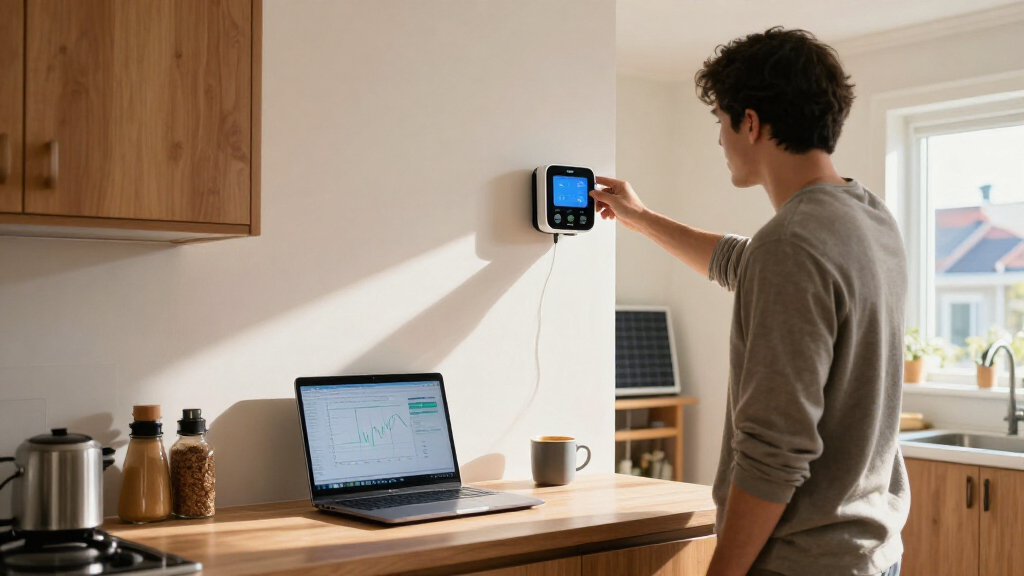
I ranked these home energy monitors by how well their stated capabilities match common buyer goals: tracking whole-home use, identifying circuit-level loads, and making the resulting data useful day to day. I also weighed sensor coverage, setup demands, data access, smart home compatibility, and the practical fit of each system with an existing electrical panel. A higher sensor count can reveal more, but only if the panel has room and the buyer can install or arrange installation safely.
The ranking favors useful visibility and flexibility over a long feature list alone. The Emporia Vue 3 with 16 sensors takes the lead for broad circuit insight; the Refoss EM16P earns a distinct place for local control and Home Assistant use; and Eyedro is a more direct option for whole-home tracking. Other models remain relevant for buyers whose priorities are a particular brand, sensor configuration, or monitoring approach, but every pick involves tradeoffs in coverage, setup, or ecosystem fit.
Factors to Consider When Choosing Home Energy Monitors
Before choosing a monitor, I’d start with the question you want the data to answer. Total household usage, individual circuit patterns, and local smart home automations call for different capabilities. These checks can help you avoid paying for coverage you cannot use or choosing a system that leaves your main question unanswered.
Decide How Much Circuit Detail You Need
A whole-home reading can show whether overall consumption rises at certain times, but it may not tell you which loads caused the change. Circuit sensors can help separate major uses such as heating, cooking, or laundry, provided those loads have distinct circuits. More sensors do not automatically mean more useful information: some homes have shared circuits, and some appliances are hard to isolate. Before buying, list the loads you want to track and compare that list with the monitor’s sensor count and supported setup. If your goal is only to see whether usage changes after a habit or equipment change, a whole-home monitor may answer the question with less setup. Choose circuit-level coverage when identifying the source matters enough to justify the extra installation and configuration work.
Check Your Panel Before Comparing Sensor Counts
Product descriptions cannot tell you whether a specific monitor will fit your electrical panel. Panel layout, available space, service configuration, and the way circuits are arranged can affect installation and what the sensors can measure. A high sensor count is useful only if the included sensors work with the circuits you want to follow. Take clear notes or photos of the panel and compare them with the manufacturer’s installation requirements before ordering. If the panel is unfamiliar or the work requires opening it, have a qualified electrician assess the fit and installation. This check can prevent a mismatch that a feature comparison alone would miss.
Choose Data Access That Matches Your Comfort Level
Some buyers are happy to check an app, while others want local data access or integration with a home automation setup. Those preferences affect how much control you have over dashboards, automations, and reliance on an outside service. Treat cloud access, local control, and platform integration as separate questions: one feature does not guarantee the others. Check what information remains available if your internet connection drops and whether the system can share data with tools you already use. If you are building automations, confirm the integration details before purchase instead of assuming a general compatibility label covers your use case. For a basic usage overview, simpler app access may be easier to maintain.
Think About What You Will Do With the Readings
Monitoring helps most when you have a next step in mind, such as checking a suspected standby load or comparing usage before and after a schedule change. A detailed dashboard can show patterns, but it cannot by itself explain every change or tell you which action will save energy. Decide whether you need live readings, historical trends, alerts, or exportable data, then verify that the monitor supports the features you will actually use. Historical data is especially useful for comparing similar periods, though weather and occupancy can make simple before-and-after comparisons misleading. If you mainly want a quick snapshot, a complex analytics workflow may add more work than insight. Match the data tools to a practical question you expect to revisit.
Account for Installation and Ongoing Setup
Many panel monitors involve work inside or around the electrical panel, so installation effort is part of the buying decision. Read the installation instructions and identify whether you can handle the setup or need to include electrician time in your plans. Also check how sensors attach, how the unit connects to your network, and what steps are needed to label circuits correctly. Poor circuit labels can make detailed monitoring harder to interpret, even when the hardware is functioning as intended. Firmware updates, app setup, and network changes can also affect the experience over time. A simpler system can be a better fit if you want low-maintenance whole-home tracking.
Pay for Coverage or Control You Will Use
Broader sensor kits and local integrations can be valuable when you have a specific need for more circuit insight or automation. They add little for a buyer who only wants to see total household usage. Compare what comes in each configuration, since products with similar names may include different sensor counts or features. The cost of installation and any required accessories also belongs in the comparison, even when the device itself appears to offer the right coverage. If you may expand later, check whether the system supports additional sensors and whether they are compatible with the original unit. The best fit is the one that answers your current questions while leaving a reasonable path for likely changes.
Frequently Asked Questions
Will a home energy monitor tell me exactly which appliance is using electricity?
Not always. A whole-home monitor reports combined usage, so it can show that consumption changed without identifying the device responsible. Circuit sensors provide more detail when an appliance is on a circuit that can be monitored separately, but several devices may share one circuit. Some systems may estimate appliance activity from usage patterns, which is different from measuring each appliance directly. If you need a clear reading for one plug-in device, check whether a compatible plug monitor is a better fit.
Do I need an electrician to install a panel-based energy monitor?
Installation depends on the monitor, your panel, and your comfort with electrical work. Many panel-based systems require access to the breaker panel, and a product’s instructions should spell out the required steps and qualifications. Do not assume a monitor is a simple plug-in device because it connects to an app. If you are uncertain about panel compatibility or safe installation, ask a qualified electrician to assess it. Factor that installation work into your choice, especially when comparing monitors with many circuit sensors.
Should I choose an 8-sensor or 16-sensor model?
Start by counting the circuits you actually want to understand, rather than selecting the larger kit by default. An 8-sensor setup may cover the major loads that matter to you, while a 16-sensor version can offer a broader picture if your panel and priorities support it. Circuit layout may prevent a one-to-one match between sensors and appliances, so check the manufacturer’s guidance before assuming every load can be isolated. If you expect to expand later, confirm whether extra sensors can be added and what they support. More coverage is valuable when it answers a real question.
Can I use a home energy monitor without cloud access?
That depends on the model. Some monitors rely on an internet-connected app or cloud service for viewing data, while others offer local control or integrations that can keep more of the monitoring workflow within your home network. Read the product’s data access and integration details, including what happens when the internet is unavailable. Home Assistant support alone does not answer every question about local operation, so verify the specific functions you need. Buyers who prioritize local access should compare those details before choosing based on sensor count.
Is a home energy monitor useful if I cannot change my electricity plan?
Yes, it can still show when and where your home uses electricity, which may help you spot unusual loads or understand the impact of equipment and daily routines. The monitor does not itself reduce usage or guarantee a lower bill; you need to act on what the data reveals. Circuit-level readings can help locate a source, while a whole-home view can be enough to compare broad patterns over time. If your main goal is savings, decide in advance what changes you are willing to make and whether the monitor can measure their effect. That makes it easier to judge whether detailed monitoring is worth the setup.
Conclusion
For the broadest circuit-level view, I’d choose the Emporia Vue 3 with 16 Circuit Sensors as the best overall pick; its 8-sensor sibling is a sensible value choice when you only need to follow a smaller set of loads. The Refoss EM16P is the best fit for buyers who want local control and Home Assistant support, while the standard Emporia Vue 3 makes a more approachable entry point for people who want a recognized monitoring setup without starting with the largest sensor kit. For whole-home tracking with a simpler focus, consider the Eyedro. Buyers drawn to Leviton, Siemens Inhab, Square D Wiser, or the Meross and Refoss circuit-focused models should compare panel compatibility, included sensors, and data access against their specific needs before deciding.