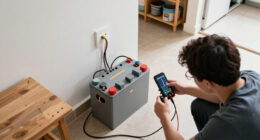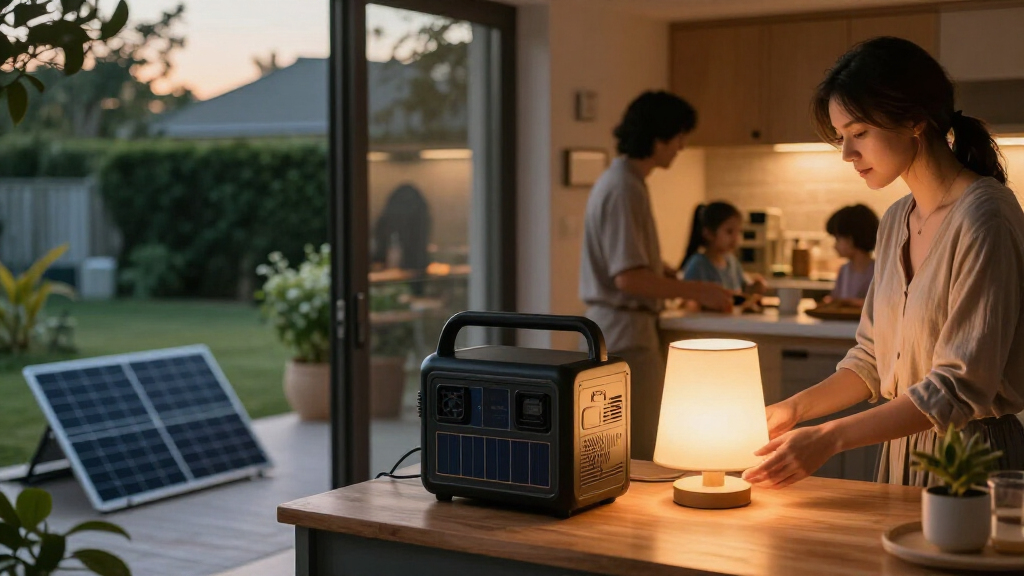
When choosing a solar generator for home backup, the main goal is reliable, clean power during outages or emergencies. The BLUETTI Elite 100 V2 stands out as the best overall due to its high capacity and robust features. For those seeking portability and quick setup, the Jackery Solar Generator 1000 v2 offers excellent versatility. The key tradeoffs involve balancing capacity, portability, and price—larger units often cost more and take longer to recharge, while smaller models may lack enough power for critical appliances. Continue reading for a detailed breakdown of these options and how to select the right one for your home.

Get backup power and energy gear delivered free with Prime
- Fast, free delivery on millions of items
- Prime Video, Amazon Music and more included
- Member-only deals all year
Complete the kit


Key Takeaways
- Higher capacity models like the Jackery HomePower 3600 Plus provide longer backup times but come with increased cost and weight.
- Fast solar recharging and AC charging options are essential for maintaining power during extended outages.
- Portability varies widely; larger units are less mobile but offer more power, while compact models excel for quick setups and limited space.
- Build quality and safety features, such as surge protection and sturdy enclosures, are critical for reliable home use.
- Price-to-capacity ratio is a key factor—spending more on a larger, more versatile generator can be worthwhile if power needs are high.
| BLUETTI Elite 100 V2 Portable Power Station, 1024Wh, 1800W |  | Best Compact Home-Backup Pick | Battery capacity: 1,024Wh | Surge power: 3,600W | Battery type: LiFePO₄ | VIEW LATEST PRICE | See Our Full Breakdown |
| ZeroKor 300W Portable Power Station with 60W Solar Panel | 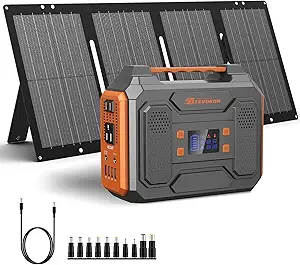 | Best Starter Solar Kit | Maximum output: 300W | Included solar panel: 60W monocrystalline | Panel conversion efficiency: 20.5% | VIEW LATEST PRICE | See Our Full Breakdown |
| Jackery Solar Generator 1000 v2 with 200W Solar Panel |  | Best Ready-to-Use Solar Bundle | Battery capacity: 1,070Wh | AC output: 1,500W | Surge peak: 3,000W | VIEW LATEST PRICE | See Our Full Breakdown |
| Anker SOLIX S2000 Portable Power Station with Power Strip |  | Best for Refrigerator Backup | Battery capacity: 2,010Wh | Peak output: 3,000W | Battery type: LiFePO₄ | VIEW LATEST PRICE | See Our Full Breakdown |
| Jackery HomePower 3600 Plus Portable Power Station with 2 × 200W Solar Panels |  | Best High-Capacity Home Backup | Battery capacity: 3,584Wh | Battery type: LFP | AC output: 3,600W | VIEW LATEST PRICE | See Our Full Breakdown |
| EF ECOFLOW DELTA 3 Max Portable Power Station with 220W Solar Panel, 2048Wh |  | Best Overall for Versatile Home Backup | Battery capacity: 2048Wh | Battery chemistry: LiFePO4 | Solar panel: 220W bifacial | VIEW LATEST PRICE | See Our Full Breakdown |
| Jackery HomePower 3000 Portable Power Station with 2 × 200W Solar Panels |  | Best for Large-Scale Backup with Fast Charging | Battery capacity: 3072Wh | Battery type: LiFePO4 | Battery cycles: 4,000 cycles to 70% | VIEW LATEST PRICE | See Our Full Breakdown |
| Jackery Explorer 1000 v2 Portable Power Station |  | Best for Compact, Reliable Backup with Long Cycle Life | Battery capacity: 1,070Wh | Battery type: LFP | Charge cycles: Over 4,000 | VIEW LATEST PRICE | See Our Full Breakdown |
| EcoFlow DELTA 3 Classic Portable Power Station, 1024Wh, 1800W |  | Best for Cost-Effective Backup with Quick Charging | Capacity: 1024Wh | AC output: 1800W | Surge output: 3600W | VIEW LATEST PRICE | See Our Full Breakdown |
| Anker SOLIX S2000 Portable Power Station, 2,010Wh |  | Best for Large-Scale Home Backup with Versatile Charging Options | Battery capacity: 2,010Wh | Battery type: LiFePO4 | Continuous output: 1,500W | VIEW LATEST PRICE | See Our Full Breakdown |
| solar generators for home backup | Battery capacity | Battery type | Weight | AC output |
|---|---|---|---|---|
| BLUETTI Elite 100 V2 Portable | 1,024Wh | LiFePO₄ | 25 lb | — |
| ZeroKor 300W Portable Power St | — | — | — | — |
| Jackery Solar Generator 1000 v | 1,070Wh | LFP | 23.8 lb | 1,500W |
| Anker SOLIX S2000 Portable Pow | 2,010Wh | LiFePO₄ | 35.7 lb | — |
| Jackery HomePower 3600 Plus Po | 3,584Wh | LFP | 77.2 lb | 3,600W |
| EF ECOFLOW DELTA 3 Max Portabl | 2048Wh | — | — | — |
| Jackery HomePower 3000 Portabl | 3072Wh | LiFePO4 | 59.5 lbs | 3600W |
| Jackery Explorer 1000 v2 Porta | 1,070Wh | LFP | 23.8 lbs | 1,500W |
| EcoFlow DELTA 3 Classic Portab | — | — | — | 1800W |
| Anker SOLIX S2000 Portable Pow | 2,010Wh | LiFePO4 | 35.7 lbs | — |
More Details on Our Top Picks
BLUETTI Elite 100 V2 Portable Power Station, 1024Wh, 1800W
The BLUETTI Elite 100 V2 is a good fit for buyers who want a useful amount of backup power without moving up to a heavier, multi-kilowatt-hour unit. Its 1,024Wh battery and 1,800W rated output can support a range of household essentials, while the 10ms UPS function helps keep connected devices running through a brief interruption. Compared with the Anker SOLIX S2000, it has less stored energy but weighs 10.7 pounds less, making it easier to reposition or store.
Fast AC charging can restore 80% in about 45 minutes, and app control adds charging and monitoring options. The tradeoff is limited runtime for larger household loads: this is a compact backup station, not a whole-home solution. At 25 pounds, it is still a substantial lift for some users, and vehicle charging at full speed requires a separate accessory.
Pros:- 1,800W rated output handles more household devices than entry-level 300W stations.
- 10ms UPS switchover helps protect connected electronics during brief outages.
- AC charging reaches about 80% in 45 minutes.
- Wi-Fi and Bluetooth app control support remote monitoring.
Cons:- 1,024Wh capacity limits runtime for refrigerators and other sustained loads.
- At 25 pounds, it is portable but not effortless to carry.
- Full-speed vehicle charging requires a separate BLUETTI Charger 1.
Best for: Households that want a portable station for a router, lights, laptops, and selected small appliances during short outages.
Not ideal for: Buyers who need extended refrigerator runtime or backup for several high-draw appliances; its 1,024Wh capacity is well below the Anker SOLIX S2000 and Jackery HomePower 3600 Plus.
- Battery capacity:1,024Wh
- Surge power:3,600W
- Battery type:LiFePO₄
- UPS switchover:10ms
- AC fast charging:About 80% in 45 minutes
- Weight:25 lb
- Connectivity:Wi-Fi and Bluetooth
Our verdict“Choose the Elite 100 V2 for portable, short-duration backup and quick recharging, not for long outages or whole-home coverage.”
ZeroKor 300W Portable Power Station with 60W Solar Panel
The ZeroKor 300W is the simplest entry in this group for buyers who want a small station and a solar panel in one package. Its included 60W monocrystalline panel can provide a charging option when grid power is unavailable, while AC, DC, and USB outputs cover phones, lights, and other low-wattage essentials. Unlike the larger Jackery Solar Generator 1000 v2, this kit is easier to approach as a basic device-charging setup, but its 300W maximum output rules out many appliances used for home backup.
That output ceiling is the central limitation: a refrigerator or other device drawing more than 300W may exceed its capacity. The panel’s junction box also needs to stay dry, so it calls for care outdoors. I’d treat it as a modest solar charging kit for small electronics during an outage, not as a substitute for a higher-capacity backup station.
Pros:- Includes a 60W monocrystalline solar panel.
- Can recharge from an AC outlet, compatible panel, or 12V car port.
- Provides AC, DC, USB, and quick-charge USB outputs.
- Flashlight includes reading and SOS modes.
Cons:- 300W maximum output excludes many household appliances.
- The included 60W panel is modest for replenishing the station during an outage.
- Solar panel junction box is not waterproof and must be kept dry.
Best for: Apartment dwellers, students, or occasional campers who mainly need to charge phones, small lights, and other low-wattage devices.
Not ideal for: Households seeking refrigerator backup, longer outage coverage, or power for appliances above 300W; the Jackery Solar Generator 1000 v2 is better suited to those loads.
- Maximum output:300W
- Included solar panel:60W monocrystalline
- Panel conversion efficiency:20.5%
- AC outlets:2
- USB ports:3
- DC output:9V–12.6V, 10A maximum
- Recharge methods:AC outlet, compatible solar panel, or 12V car port
- Protection:Short circuit, over-current, over-voltage, overload, and overheating protection
Our verdict“Pick the ZeroKor for basic device charging with a bundled panel, but choose a higher-output station for meaningful household backup.”
Jackery Solar Generator 1000 v2 with 200W Solar Panel
The Jackery Solar Generator 1000 v2 pairs a 1,070Wh station with a 200W solar panel, so buyers have a more substantial solar setup from the start than with the ZeroKor’s 60W panel. Its 1,500W AC output and 3,000W surge rating give it room for selected household essentials, while the LFP battery is rated for over 4,000 cycles before falling below 70% capacity. Compared with the BLUETTI Elite 100 V2, it offers slightly more capacity and includes a panel, though its rated AC output is lower.
App-controlled charging modes give owners flexibility, including an optional one-hour emergency charge. That fastest mode must be enabled in the app, and the solar panel and station may ship separately, so the bundle may not arrive as a single ready-to-use package. Its capacity still falls short of the Anker SOLIX S2000 for longer refrigerator backup, making this a balanced portable kit rather than a long-duration household battery.
Pros:- Includes a 200W solar panel for a stronger solar setup than the ZeroKor bundle.
- 1,070Wh capacity and 1,500W AC output support a range of essential devices.
- LFP battery is rated for over 4,000 cycles while retaining more than 70% capacity.
- App offers charging modes, including optional one-hour emergency charging.
Cons:- One-hour charging requires emergency mode to be enabled in the app.
- Station and solar panel may ship separately.
- Capacity is limited for extended refrigerator backup or multiple large loads.
Best for: Homeowners who want a mid-capacity station and a 200W solar panel for charging essentials during short outages or outdoor use.
Not ideal for: Buyers who prioritize higher rated output or longer appliance runtime; the BLUETTI Elite 100 V2 has a higher rated output, while the Anker SOLIX S2000 stores more energy.
- Battery capacity:1,070Wh
- AC output:1,500W
- Surge peak:3,000W
- Battery type:LFP
- Included solar panel:200W
- Emergency charging time:1 hour with emergency charging enabled
- Weight:23.8 lb
- Warranty:5 years
Our verdict“Choose this Jackery bundle if you want a practical mid-capacity station with a useful solar panel included, and can work within its limited runtime.”
Anker SOLIX S2000 Portable Power Station with Power Strip
For buyers focused on keeping a refrigerator and other essentials running, the Anker SOLIX S2000 offers a more useful capacity step up from the BLUETTI Elite 100 V2: its 2,010Wh battery is nearly twice as large. The manufacturer lists up to 35 hours of refrigerator backup, though actual runtime will depend on the appliance and usage. Its included power strip adds 12 AC outlets, plus USB ports, which can make it easier to connect multiple devices without crowding the station itself.
The tradeoff is that the S2000 weighs 35.7 pounds, so it is less convenient to move than the 23.8-pound Jackery Solar Generator 1000 v2. Its rated output is 1,500W, not the 3,600W offered by the Jackery HomePower 3600 Plus, and the supplied product details do not specify solar charging. I’d favor it for stored energy and outlet access, but verify solar compatibility before choosing it as a solar-first backup system.
Pros:- 2,010Wh battery provides more stored energy than the BLUETTI Elite 100 V2 and Jackery 1000 v2.
- Manufacturer lists up to 35 hours of refrigerator backup.
- Included power strip provides 12 AC outlets, USB-C, and USB-A ports.
- LiFePO₄ battery is rated for up to 10,000 cycles.
Cons:- At 35.7 pounds, it is heavier to move than the Jackery Solar Generator 1000 v2.
- 1,500W rated output is lower than the Jackery HomePower 3600 Plus.
- Solar charging specifications are not provided in the supplied product information.
Best for: Households that want a higher-capacity portable station for refrigerator backup and several smaller devices connected through a power strip.
Not ideal for: Buyers who need a clearly specified solar-charging setup, high-output support for larger appliances, or a lighter station to carry between rooms.
- Battery capacity:2,010Wh
- Peak output:3,000W
- Battery type:LiFePO₄
- Listed refrigerator runtime:Up to 35 hours
- Battery cycle life:Up to 10,000 cycles
- Weight:35.7 lb
- Included power strip:12 AC outlets, 1 USB-C, and 2 USB-A
Our verdict“Choose the S2000 for higher stored energy and convenient outlet expansion, but look elsewhere if solar input details or high appliance output are priorities.”
Jackery HomePower 3600 Plus Portable Power Station with 2 × 200W Solar Panels
The Jackery HomePower 3600 Plus is the clear choice here for buyers who need more than a few hours of essential-device backup. Its 3,584Wh battery and 3,600W AC output give it substantially more capacity and appliance headroom than the Anker SOLIX S2000, while expansion can raise storage to 21kWh per unit. Two included 200W panels provide a solar starting point, and the station can also recharge from AC, a gas generator, or hybrid AC-plus-DC input.
That capability comes with a major mobility tradeoff: at 77.2 pounds, the wheeled body and telescopic handle help with rolling, but lifting it remains a job for a sturdy grip or another person. Solar charging is listed at four hours, though real results can vary with conditions. The station and panels may ship separately, too. Compared with the smaller Jackery Solar Generator 1000 v2, this is better suited to longer outages, but it takes more space and planning.
Pros:- 3,584Wh capacity and 3,600W AC output suit larger backup loads than the other products in this batch.
- Expandable storage reaches up to 21kWh per unit.
- Supports AC, solar, gas generator, and hybrid charging.
- Wheels and telescopic handle make rolling easier than carrying its full weight.
Cons:- At 77.2 pounds, lifting it is difficult despite the wheeled design.
- The station and solar panels may arrive in separate packages.
- Its larger size and capacity are excessive for buyers who only need short-term device charging.
Best for: Homeowners preparing for extended outages who want high AC output, expandable storage, and several ways to recharge.
Not ideal for: Buyers who need a lightweight station to carry upstairs, have limited storage space, or only want to power phones and small electronics.
- Battery capacity:3,584Wh
- Battery type:LFP
- AC output:3,600W
- Expansion capacity:Up to 21kWh per unit
- Included solar panels:2 × 200W
- Charging options:Hybrid AC+DC, AC, solar, or gas generator
- Solar charging time:4 hours
- Weight:77.2 lb
- Battery cycle life:6,000 cycles
Our verdict“Choose the HomePower 3600 Plus for extended home backup and expandable power, provided you have space for a heavy station.”
EF ECOFLOW DELTA 3 Max Portable Power Station with 220W Solar Panel, 2048Wh
The EF ECOFLOW DELTA 3 Max stands out for its combination of high capacity, rapid charging, and fast transfer time, making it ideal for home backup. Its 2048Wh LiFePO4 battery ensures long-term durability, while the 220W bifacial solar panel offers efficient solar charging. Compared with the Jackery HomePower 3600 Plus, it provides quicker recharge times and a more compact form factor, though it supports fewer outlets—only three. The 2400W continuous output, with up to 3400W via X-Boost, covers essential appliances but may fall short for heavy-duty power needs. Its 10ms transfer time and app control enhance its role as a reliable backup solution. The main tradeoff is the limited number of outlets, which could restrict simultaneous device charging during outages.
Pros:- Includes a 220W bifacial solar panel for efficient solar charging
- Fast charging from 0–80% in about 1.13 hours
- LiFePO4 battery built for long-term use and safety
- App control and rapid backup transfer time
Cons:- Limited to three power outlets, restricting multiple device connections
- 3400W output is only available via X-Boost mode, not continuous
Best for: Homeowners seeking a reliable, fast-charging backup station with moderate outlet needs.
Not ideal for: Large households or those needing many simultaneous outlets, as it only provides three sockets.
- Battery capacity:2048Wh
- Battery chemistry:LiFePO4
- Solar panel:220W bifacial
- Output wattage:2400W
- X-Boost output:Up to 3400W
- Charging time:0–80% in about 1.13 hours
- Transfer time:Less than 10ms
- Outlets:3
- Dimensions:19.5 × 9.4 × 12 inches
Our verdict“This model suits users who want a compact, fast-charging, high-capacity backup with a focus on reliability and efficiency.”
Jackery HomePower 3000 Portable Power Station with 2 × 200W Solar Panels
The Jackery HomePower 3000 is designed for substantial home backup, offering a massive 3072Wh LiFePO4 battery and a robust 3600W continuous output, making it suitable for critical appliances. Its UPS function switches in under 20ms, comparable to the EcoFlow DELTA 3 Classic, but with a larger capacity and support for multiple charging options, including solar, AC, and car. The included two 200W solar panels, though shipped separately, enable significant solar recharge potential—up to 80% in 9 hours. Its wheeled design enhances portability despite its 59.5 lbs weight. The main tradeoff is the need to buy solar panels separately, which adds to initial costs, and it’s heavier than some smaller units, reducing convenience for frequent movement.
Pros:- High 3072Wh capacity supports essential appliances for extended outages
- Fast UPS switching of 20ms or less ensures seamless power transfer
- Multiple charging options including solar, AC, and vehicle power
- Wheeled design improves mobility despite weight
Cons:- Solar panels ship separately, increasing setup complexity and cost
- Heavy weight may limit portability for some users
Best for: Homes requiring high capacity, fast recharge, and portability for backup during outages.
Not ideal for: Small apartments or those with limited space, due to its weight and size.
- Battery capacity:3072Wh
- Battery type:LiFePO4
- Battery cycles:4,000 cycles to 70%
- AC output:3600W
- Surge output:7200W
- Charging time:1.7 hours via hybrid AC/DC
- Solar charging:Up to 80% in 9 hours with panels
- Weight:59.5 lbs
- Dimensions:16 × 13 × 20 inches
Our verdict“This pick makes the most sense for users who need a large-capacity backup with quick recharge and mobility features.”
Jackery Explorer 1000 v2 Portable Power Station
The Jackery Explorer 1000 v2 offers a balance of portability and power, with a 1070Wh LFP battery and 1500W AC output—adequate for smaller household backup needs. Its over 4,000 charge cycles make it a durable choice for long-term use, especially compared to the EcoFlow DELTA 3 Classic, which has a similar capacity but slightly higher output. The unit’s app-controlled modes provide flexibility, including emergency and energy-efficient settings. However, charging quickly to full capacity requires enabling an extra feature in the app, and solar charging is limited to Jackery panels, which can restrict flexibility. Its lighter weight and smaller size make it more portable but less suitable for powering larger appliances during extended outages.
Pros:- High 1070Wh capacity with over 4,000 charge cycles for longevity
- Multiple ports including USB-C, USB-A, and DC for versatile device charging
- App control with emergency and energy-saving modes
- Lightweight at 23.8 lbs for portability
Cons:- Full fast charging requires enabling an extra feature in the app
- Solar charging only compatible with Jackery panels, limiting options
Best for: Small households or individuals needing dependable backup with long-term durability.
Not ideal for: Homes with high power demands or those needing multiple simultaneous devices connected at once.
- Battery capacity:1,070Wh
- Battery type:LFP
- Charge cycles:Over 4,000
- AC output:1,500W
- Surge peak:3,000W
- Charging time:1 hour with enable feature
- Ports:3 AC, 2 USB-C, 1 USB-A, 1 DC
- Weight:23.8 lbs
- Dimensions:12.87 × 8.82 × 9.72 in
Our verdict“This unit is ideal for those seeking a dependable, long-lasting backup with portable convenience for smaller setups.”
EcoFlow DELTA 3 Classic Portable Power Station, 1024Wh, 1800W
The EcoFlow DELTA 3 Classic balances capacity and portability with 1024Wh and 1800W output, making it suitable for backup needs where space or weight is a concern. Its ability to charge to 80% in just 45 minutes and support for optional 500W solar charging offers flexibility, especially compared to larger units like the Jackery HomePower 3600 Plus. The under-10ms UPS switching ensures seamless power transfer during outages. The LiFePO4 battery’s longevity—over 10 years of daily use—adds to its appeal. However, solar charging is optional, not included, and the capacity may be insufficient for longer outages or higher power demands. It’s best suited for short-term backup and smaller appliances rather than whole-house solutions.
Pros:- Fast charging to 80% in 45 minutes
- Under-10ms UPS switching ensures seamless power transfer
- LiFePO4 battery rated for over 10 years of use
- Supports optional solar charging
Cons:- Solar panel is optional and not included, adding to cost
- Limited capacity compared to larger units like the Jackery HomePower 3600 Plus
Best for: Budget-conscious users needing quick, reliable backup for essential devices with moderate power requirements.
Not ideal for: Homes with extended outages or high power draw, as capacity and solar options are limited.
- Capacity:1024Wh
- AC output:1800W
- Surge output:3600W
- X-Boost output:Up to 2600W
- Charging time:45 minutes to 80%
- Solar charging:Optional, 2.5 hours with 500W panel
- UPS switching time:Under 10ms
- Battery chemistry:LiFePO4
Our verdict“This pick suits users who want quick, dependable backup for essential, low to moderate power needs without needing full-house capacity.”
Anker SOLIX S2000 Portable Power Station, 2,010Wh
The Anker SOLIX S2000 stands out for its substantial 2,010Wh LiFePO4 battery, making it well-suited for sustained home backup needs like refrigerator and essential appliance operation during outages. Compared with the EcoFlow DELTA 3 Max, which offers a similar capacity but slightly lower runtime, the SOLIX’s support for six recharge methods—including multiple solar options—adds flexibility for emergency and off-grid scenarios. Its eight outlets and 1,500W continuous power make it capable of running multiple devices simultaneously, a key advantage over smaller or less powerful units. However, it omits a dedicated 12V DC port, which limits some traditional DC-powered appliances, and real-world runtime depends heavily on appliance load and ambient temperature. This model is best suited for homeowners requiring reliable, high-capacity backup with diverse recharging options, especially those who prioritize long-term emergency preparedness. It’s less ideal for users needing ultra-lightweight portability or minimal backup capacity.
Pros:- Large 2,010Wh LiFePO4 battery provides extended backup power
- Eight outlets and 1,500W continuous output support multiple devices simultaneously
- Supports six recharge methods, including solar input up to 400W
Cons:- Does not include a dedicated 12V DC port, limiting certain appliance compatibility
- Actual runtime varies significantly with appliance load and ambient temperature, which could reduce expected backup time
Best for: Homeowners seeking a high-capacity, multi-method recharge backup solution for critical appliances during extended outages.
Not ideal for: Campers or travelers needing ultra-lightweight, portable power with minimal capacity and fewer outlets.
- Battery capacity:2,010Wh
- Battery type:LiFePO4
- Continuous output:1,500W
- Peak output:3,000W
- Solar input:Up to 400W
- Number of outlets:8
- Recharge methods:6
- Dimensions:8.19 × 11.1 × 12.7 in
- Weight:35.7 lbs
Our verdict“This power station is ideal for homeowners who need dependable, high-capacity backup with flexible recharging options and are willing to manage its weight and capacity tradeoffs.”

How We Picked
Each solar generator was evaluated based on capacity, recharge speed via solar and AC sources, build quality, usability, and overall value. We prioritized units that offer a balance of high power output, durability, and ease of use, especially for home backup scenarios. The ranking reflects a combination of these factors, with a focus on models suitable for sustained outages, rather than just occasional emergency use. We also considered the versatility of solar panel compatibility and the availability of features like multiple outlets and portability options, ensuring each pick serves a specific need in a home backup setup.| solar generators for home backup | Battery type |
|---|---|
| BLUETTI Elite 100 V2 Portable | LiFePO₄ |
| ZeroKor 300W Portable Power St | — |
| Jackery Solar Generator 1000 v | LFP |
| Anker SOLIX S2000 Portable Pow | LiFePO₄ |
| Jackery HomePower 3600 Plus Po | LFP |
| EF ECOFLOW DELTA 3 Max Portabl | — |
| Jackery HomePower 3000 Portabl | LiFePO4 |
| Jackery Explorer 1000 v2 Porta | LFP |
| EcoFlow DELTA 3 Classic Portab | — |
| Anker SOLIX S2000 Portable Pow | LiFePO4 |
Factors to Consider When Choosing Solar Generators For Home Backup
Selecting the right solar generator for home backup involves weighing several key factors. Capacity determines how long your essential devices can run, while recharge speed impacts how quickly you can restore power after an outage. Portability may matter if you need to move the unit easily or use it in multiple locations. Compatibility with solar panels affects ongoing recharging, especially during extended outages. Safety features and build quality ensure durability and reliable operation. Lastly, consider your budget and the balance between upfront cost and long-term value, avoiding common mistakes like underestimating power needs or choosing units with limited expandability.Capacity and Power Output
Capacity, measured in watt-hours (Wh), directly impacts how long your essential devices can run during an outage. A higher capacity means longer backup times but typically comes with increased weight and cost. Power output, often rated in watts (W), determines what appliances can be powered simultaneously. For home backup, aim for a generator that can handle your critical devices—at least 1,000Wh for basic needs and higher if you plan to power larger appliances like refrigerators or sump pumps. Balancing capacity with portability is key; larger units may be less convenient to move but provide more reliable backup power.
Recharge Speed and Solar Compatibility
Fast recharge times via solar and AC power are vital for maintaining continuous backup capability. Many units now support rapid solar input, which is crucial during prolonged outages where sunlight availability varies. Look for models with multiple solar input ports or higher wattage capacity to speed up recharging. Compatibility with various solar panels enhances flexibility—some units accept standard panels, making ongoing recharging more affordable and straightforward. Remember, a generator that recharges slowly can leave you without power longer, so prioritize those with efficient charging options for peace of mind.
Build Quality and Safety Features
Durability and safety are often overlooked but are essential for reliable home backup. Solid construction, such as sturdy enclosures and quality internal components, ensures the unit withstands frequent use or outdoor conditions. Safety features like surge protection, thermal management, and overload shutdown protect both the generator and connected devices. Units with clear indicators for battery status and error alerts help prevent misuse or damage. Investing in well-built models reduces long-term maintenance and replacement costs, making safety features a worthwhile consideration.
Portability and Expandability
While larger models deliver more power, they tend to be less portable. If you need a backup source primarily for stationary use or in a fixed location, larger units like the Jackery HomePower 3600 Plus make sense. Conversely, compact models excel if you want something easy to move around or use in different scenarios. Additionally, some units support expansion options, like adding extra batteries or solar panels, allowing future upgrades as your needs evolve. Assess your space, mobility requirements, and potential for future scaling before choosing a form factor.
Price and Long-term Value
Price often correlates with capacity and feature set, but the best choice depends on your specific needs. Spending more upfront on a larger, versatile generator can provide greater peace of mind and save money over time by reducing the need for multiple units. Conversely, smaller, less expensive models may suffice for minimal backup needs or short outages. Avoid common pitfalls like underestimating your power requirements or selecting a unit with limited solar compatibility. Consider total cost of ownership, including maintenance, potential expansion, and recharging options, to make the most cost-effective decision.
Frequently Asked Questions
How long can a solar generator power my essential appliances during an outage?
The duration depends on the generator’s capacity and the power consumption of your appliances. For example, a 1024Wh unit could run a refrigerator (about 150W) for roughly 6-7 hours, assuming no other devices are connected. Larger units like the Jackery HomePower 3600 Plus, with over 3500Wh, can sustain critical appliances for much longer, possibly through a day or more. Keep in mind that running multiple devices simultaneously reduces backup time, so it’s essential to size your generator based on your most critical loads to ensure reliable power during extended outages.
Can I recharge my solar generator during an extended outage?
Yes, most modern solar generators support recharging via solar panels, which makes them ideal for extended outages if sunlight is available. The recharge speed depends on the solar input wattage and panel quality. Some units support multiple panels or higher wattage inputs, enabling faster recharging. It’s important to match your solar panel setup with the generator’s input specifications to maximize efficiency. Always verify that your chosen solar generator is compatible with the panels you plan to use, and consider having extra panels ready for longer durations without sunlight.
Are larger solar generators worth the investment for home backup?
larger generators provide more capacity and longer backup times, making them well-suited for comprehensive home protection. If your goal is to power essential appliances during extended outages or to run a refrigerator, sump pump, or medical devices, investing in a higher-capacity unit typically pays off. However, they tend to be heavier, more expensive, and less portable. When considering a larger generator, weigh your specific needs against these tradeoffs, and consider future expansion options. For most homeowners with significant backup needs, a larger unit offers greater peace of mind and reliability.
What safety features should I look for in a home backup solar generator?
Safety features like surge protection, thermal management, and overload shutdown are vital for protecting both the generator and your connected devices. Surge protection prevents damage from power spikes, while thermal management helps avoid overheating during extended use. Overload shutdown ensures the generator automatically turns off if it detects excessive draw, preventing potential damage or fire hazards. Additionally, units with clear indicator lights or alerts for battery health and errors can help you monitor operation easily. Prioritizing safety features enhances reliability and ensures your backup power system operates smoothly during critical moments.
Can I add more solar panels or batteries to my generator later?
Many modern solar generators support expansion, allowing you to add extra batteries or solar panels as your needs grow. This flexibility can be a significant advantage, especially if you anticipate increased power demands or want longer backup durations. However, not all models are expandable, so it’s important to verify compatibility before purchasing. When choosing a generator with expansion options, consider future costs and the ease of adding components. Planning for scalability ensures your backup system can adapt to evolving needs without requiring a complete replacement.
Conclusion
For most homeowners seeking reliable backup power, the BLUETTI Elite 100 V2 offers an excellent balance of capacity, durability, and features, making it the best overall choice. If you prioritize cost-effective solutions with decent capacity, the Jackery Explorer 1000 v2 provides strong value, especially for smaller homes or limited budgets. For those needing maximum power and longer backup times, the Jackery HomePower 3600 Plus stands out as the premium pick. Beginners or those with minimal power needs might find the ZeroKor 300W more suitable due to its simplicity and compact size. Ultimately, your selection should align with your specific backup needs, budget, and future expansion plans.
Halloween Picks
halloween
As an affiliate, we earn on qualifying purchases.