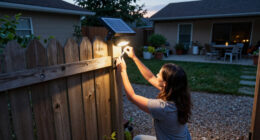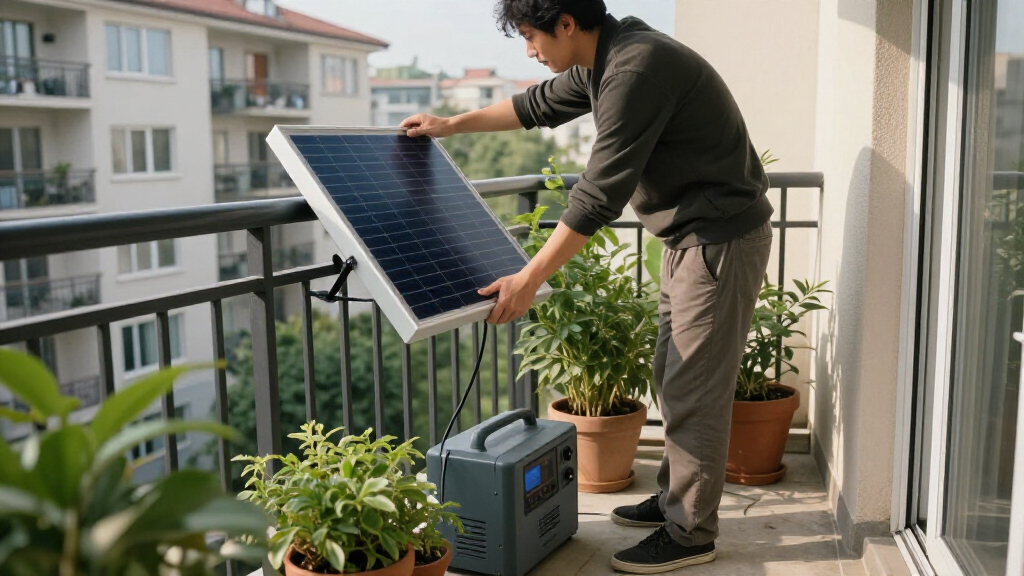
The best balcony solar panels balance useful output with a shape, mounting method, and weight that suit your balcony. My best overall pick is the Callsun 400W Bifacial N-Type Solar Panel Set, which pairs a two-panel format with bifacial cells; the Renogy ShadowFlux 200W stands out for a smaller setup, while the Callsun 400W Flexible Solar Panel Set suits buyers who need bendable panels. The main tradeoffs are rigid-panel performance versus flexible-panel mounting options, and higher combined wattage versus the space and hardware needed to use it. A panel’s rated output alone does not tell you what it will produce on a shaded, angled, or space-limited balcony. Read on for the full comparison and guidance on matching a panel to your setup.

Get backup power and energy gear delivered free — and shop member deals
- Fast, free delivery on millions of items
- Access to Prime Big Deal Days deals on October 6–7
- Prime Video, Amazon Music and more included
Key Takeaways
The Callsun 400W Bifacial N-Type set leads this lineup for buyers who can fit two panels and want bifacial construction, while the single-panel Renogy is more practical when balcony space is restricted.
Flexible panels appear across several output levels, from the 100W Viewsun and Weznbtev models to 260W and 400W sets; flexibility helps with fit, but does not replace secure mounting or a compatible power system.
The HQST 400W kit emphasizes N-Type cells, 16BB design, stated efficiency, and IP65 protection, making its listed construction details more specific than many options in the lineup.
Higher combined wattage is not automatically a better balcony choice: the 1000W flexible kit needs much more usable area and a system that can accept its output than a compact 100W or 200W panel.
Panel format and the balcony’s conditions separate these picks more than wattage alone: rigid sets suit buyers with secure mounting space, while flexible and single-panel options offer more placement choices.
| Callsun 400W Flexible Solar Panel Set (2 × 200W) |  | Best for Curved Balcony Surfaces | Panel configuration: 2 × 200W | Cell type: Monocrystalline | Efficiency: 23% | VIEW LATEST PRICE | See Our Full Breakdown |
| ECO-WORTHY 400W N-Type Monocrystalline Solar Panel Set, 4 × 100W |  | Best for Modular Balcony Layouts | Combined maximum power: 400W | Panel configuration: 4 × 100W | Cell type: N-type bifacial monocrystalline | VIEW LATEST PRICE | See Our Full Breakdown |
| Callsun 400W Bifacial N-Type Solar Panel Set, Two 200W Panels |  | Best for Bifacial Output Potential | Set power: 400W | Panel configuration: 2 × 200W | Cell type: N-type monocrystalline bifacial | VIEW LATEST PRICE | See Our Full Breakdown |
| HQST 400W Solar Panel Kit (2 x 200W), N-Type 16BB, 25.4% Efficiency, IP65 |  | Best for Compact Rigid Mounting | Total power: 400W | Panel configuration: 2 × 200W | Cell type: N-type monocrystalline silicon | VIEW LATEST PRICE | See Our Full Breakdown |
| ECO-WORTHY 260W Flexible Monocrystalline Solar Panel Set, 2 × 130W |  | Best Lightweight Flexible Pick | Combined power: 260W | Panel configuration: 2 × 130W | Efficiency: 25% | VIEW LATEST PRICE | See Our Full Breakdown |
| 1000W Portable Flexible Solar Panel Kit, 2 × 500W Monocrystalline Panels |  | Best for High-Capacity Flexible Setups | Total maximum power: 1000 watts | Included panels: 2 × 500W | Cell material: Monocrystalline silicon | VIEW LATEST PRICE | See Our Full Breakdown |
| Renogy ShadowFlux 200W N-Type Solar Panel |  | Best for Partially Shaded Balconies | Maximum power: 200 watts | Maximum voltage: 36.5 volts | Output voltage: 12 V DC | VIEW LATEST PRICE | See Our Full Breakdown |
| Viewsun 100W Flexible Monocrystalline Solar Panel |  | Best Compact Flexible Pick | Maximum power: 100 watts | Cell type: Monocrystalline, 16BB | Conversion efficiency: 23–24% | VIEW LATEST PRICE | See Our Full Breakdown |
| ECO-WORTHY 2-Pack 200W Flexible HJT Solar Panels |  | Best Flexible Two-Panel Set | Panel count: 2 | Maximum power: 200 watts (listed) | Output voltage: 18 V DC | VIEW LATEST PRICE | See Our Full Breakdown |
| Weznbtev 100W 12V Flexible Monocrystalline Solar Panel |  | Best for Deeply Curved Mounting Surfaces | Power: 100 watts | Voltage: 12 volts | Maximum voltage: 18 volts | VIEW LATEST PRICE | See Our Full Breakdown |
| balcony solar panel | Cell type | Dimensions per panel | Panel configuration | Conversion efficiency |
|---|---|---|---|---|
| Callsun 400W Flexible Solar Pa | Monocrystalline | 65.7 × 31.7 × 0.98 in | 2 × 200W | — |
| ECO-WORTHY 400W N-Type Monocry | N-type bifacial monocrystalline | 35.63 × 23.03 × 1.18 in | 4 × 100W | Up to 25% |
| Callsun 400W Bifacial N-Type S | N-type monocrystalline bifacial | 51.3 × 30.3 × 1.4 in | 2 × 200W | Up to 25.6% |
| HQST 400W Solar Panel Kit | N-type monocrystalline silicon | 46.3 × 30.1 × 1.2 in | 2 × 200W | — |
| ECO-WORTHY 260W Flexible Monoc | — | 37.8 × 27.1 × 0.1 in | 2 × 130W | — |
| 1000W Portable Flexible Solar | — | 46.26 × 21.26 × 0.14 inches | — | 23% |
| Renogy ShadowFlux 200W N-Type | — | — | — | — |
| Viewsun 100W Flexible Monocrys | Monocrystalline, 16BB | — | — | 23–24% |
| ECO-WORTHY 2-Pack 200W Flexibl | Monocrystalline N-Type HJT | — | — | — |
| Weznbtev 100W 12V Flexible Mon | — | — | — | 23% |
More Details on Our Top Picks
Callsun 400W Flexible Solar Panel Set (2 × 200W)
For a balcony with a curved awning, rounded railing cover, or another surface that can’t take rigid modules, I’d put the Callsun set ahead of the glass-panel options here. Its two flexible 200W panels can conform to suitable curved surfaces, while ETFE coating is designed to resist weathering and yellowing. The white heat-reflective backsheet may also help limit heat buildup. Compared with the lighter ECO-WORTHY 260W flexible set, Callsun provides 400W of rated capacity, but each panel is much larger and the pair needs substantial mounting area. The stated daily output of up to 2kWh depends on ideal sunlight, so I wouldn’t treat it as a guaranteed balcony yield. Its 12V DC output also means buyers should check compatibility with their controller or power station before ordering.
Pros:- Flexible construction suits curved mounting surfaces that rigid framed panels cannot follow.
- ETFE coating is designed to resist weathering, hail, yellowing, and cracking.
- Two panels provide 400W of combined rated power.
- Series or parallel connection support offers setup flexibility.
Cons:- Each panel measures 65.7 × 31.7 inches, demanding considerable mounting space.
- Flexible panels need a compatible, well-prepared mounting surface.
- The stated daily energy output applies to ideal conditions, not a dependable balcony yield.
Best for: Balcony owners with a suitable curved mounting surface who want a flexible two-panel array and have room for two large panels.
Not ideal for: People with a small, flat balcony or a power station whose solar-input limits do not match the panels’ voltage and connection setup.
- Panel configuration:2 × 200W
- Cell type:Monocrystalline
- Efficiency:23%
- Dimensions per panel:65.7 × 31.7 × 0.98 in
- Weight:22 lb
- Output voltage:12V DC
- Materials:ETFE, monocrystalline silicon
Our verdict“Choose Callsun when your balcony has a suitable curved surface and enough room for two large flexible panels; skip it for a compact, flat setup.”
ECO-WORTHY 400W N-Type Monocrystalline Solar Panel Set, 4 × 100W
I’d pick this ECO-WORTHY set when a balcony’s usable mounting area is broken into smaller sections rather than one broad rectangle. Its four 100W framed panels are easier to arrange around obstacles than the two large modules in the Callsun 400W bifacial set, and pre-drilled holes with MC4 connectors can simplify mounting and wiring. The N-type bifacial cells are rated for up to 25% conversion efficiency, while bypass diodes can reduce the impact of shade on a panel. That does not make shade irrelevant: nearby walls, railings, and neighboring buildings can still cut output. Each panel weighs 23.8 lb, so the modular layout comes with a substantial handling and support burden. I’d also check the balcony structure and local installation rules before fixing four glass panels in place.
Pros:- Four smaller panels allow more layout options than a pair of large modules.
- N-type bifacial cells are specified at up to 25% conversion efficiency.
- Bypass diodes can help limit power loss when some cells are shaded.
- Pre-drilled mounting holes and MC4 connectors support straightforward system assembly.
Cons:- Each panel weighs 23.8 lb, making mounting and support more demanding.
- Shade can still reduce production despite the bypass diodes.
- The four panels ship in two separate boxes, which can complicate delivery and setup.
Best for: Balcony owners with several separate mounting zones who want to distribute a 400W framed array around railings or other obstacles.
Not ideal for: Renters or owners with limited structural support, little installation space, or persistent shading across most of the balcony.
- Combined maximum power:400W
- Panel configuration:4 × 100W
- Cell type:N-type bifacial monocrystalline
- Conversion efficiency:Up to 25%
- Dimensions per panel:35.63 × 23.03 × 1.18 in
- Weight per panel:23.8 lb
- Maximum voltage:25.2V
- Connector:MC4
Our verdict“Choose this set if you need four smaller framed modules to fit an irregular balcony layout and can support their combined weight.”
Callsun 400W Bifacial N-Type Solar Panel Set, Two 200W Panels
Among the rigid 400W choices, this Callsun set is the one I’d shortlist when the balcony can provide light to both the front and rear of the panels. Its bifacial design may collect reflected light from behind, but that extra contribution depends on panel height, surface color, and installation—not simply the bifacial label. The two 200W modules also use N-type 16BB cells, with a stated efficiency of up to 25.6%; compared with the four-panel ECO-WORTHY set, this means fewer modules to position, though each Callsun panel is larger. At 23.8 lb apiece, they still need secure mounting, and a balcony rail or wall close behind them may limit rear-side gains. Check the series-pair voltage against your power station’s input limits before choosing this arrangement.
Pros:- Bifacial construction can capture reflected light reaching the rear of the panels.
- Up to 25.6% conversion efficiency is a strong specification for a 400W pair.
- N-type 16BB cells are designed to limit hot spots and microcrack risks.
- Tempered glass, an aluminum frame, and an IP68 junction box support outdoor use.
Cons:- Rear-side output depends on spacing, reflected light, and installation conditions.
- Each panel weighs 23.8 lb and needs secure support.
- The series-pair voltage may exceed some power stations’ solar-input limits.
Best for: Owners with a sturdy, open balcony mounting position and a light-reflective surface behind the panels who want a two-module bifacial array.
Not ideal for: Buyers mounting panels flush to a dark wall or railing, or anyone whose controller cannot accept the listed series-pair voltage.
- Set power:400W
- Panel configuration:2 × 200W
- Cell type:N-type monocrystalline bifacial
- Conversion efficiency:Up to 25.6%
- Dimensions per panel:51.3 × 30.3 × 1.4 in
- Weight per panel:23.8 lb
- Series-pair operating voltage:47.48V
- Construction:3.2 mm tempered glass, aluminum alloy frame
Our verdict“Choose this Callsun pair if you can expose both sides to useful light and have a controller compatible with its series voltage.”
HQST 400W Solar Panel Kit (2 x 200W), N-Type 16BB, 25.4% Efficiency, IP65
For a balcony that can take framed glass panels but has limited mounting area, the HQST kit offers a useful middle ground: two 200W N-type modules rather than four separate panels or the larger flexible Callsun modules. Each panel measures 46.3 × 30.1 inches and weighs 20.17 lb, making this set lighter per module than Callsun’s 400W bifacial pair, although it still requires secure supports. Its up-to-25.4% efficiency can help buyers make better use of constrained surface area, while the IP65 aluminum-frame construction is intended for outdoor exposure. The product information is aimed at vans and tight rooftops, so balcony fit still depends on local rules, wind exposure, and mounting hardware. I’d also treat the stated 30-year service life as a product claim, not a substitute for checking the actual warranty terms.
Pros:- Two-panel configuration reduces the number of modules compared with the ECO-WORTHY four-panel set.
- Up to 25.4% efficiency can make better use of limited mounting area.
- At 20.17 lb per panel, it is lighter per module than the Callsun bifacial 200W panels.
- IP65-rated aluminum-frame construction is intended for outdoor conditions.
Cons:- Two large rigid panels still need secure mounting and enough clear balcony space.
- A pair of panels can be more involved to mount than a single module.
- The listed service-life claim does not provide the same detail as explicit warranty terms.
Best for: Balcony owners with a limited but sturdy mounting area who prefer rigid framed panels and want two modules instead of a four-panel array.
Not ideal for: Renters who cannot make secure frame attachments, or balconies too narrow for panels measuring over 46 inches long.
- Total power:400W
- Panel configuration:2 × 200W
- Cell type:N-type monocrystalline silicon
- Busbar technology:16BB
- Efficiency:Up to 25.4%
- Dimensions per panel:46.3 × 30.1 × 1.2 in
- Weight per panel:20.17 lb
- Ingress protection:IP65
Our verdict“Pick HQST for a compact two-panel rigid setup when your balcony has secure mounting points and enough clear space for both modules.”
ECO-WORTHY 260W Flexible Monocrystalline Solar Panel Set, 2 × 130W
If low weight and a curved mounting surface matter more than maximum rated output, I’d favor this ECO-WORTHY set over the 400W Callsun flexible pair. Each panel weighs a listed 6.28 lb and is only 0.1 inch thick, making the two-module set easier to handle on a suitable awning or other curved surface. The 260W combined rating is a clear step down from the Callsun set’s 400W, but the smaller panels may be easier to place where rigid modules or larger flexible panels will not fit. An IP68 junction box and preinstalled MC4 cables support outdoor wiring; they don’t remove the need for sound surface preparation and compatible mounting materials. The product data also gives a separate 12.6 lb item weight, so I’d confirm the shipment’s total weight rather than assume the per-panel figure covers everything.
Pros:- Listed at 6.28 lb per panel, it is much lighter per module than the rigid 200W options here.
- Thin flexible construction suits curved and irregular surfaces.
- IP68-rated junction box supports outdoor use.
- Preinstalled MC4 cables allow series or parallel connections.
Cons:- The 260W combined rating is lower than the 400W sets in this roundup.
- Flexible panels need suitable surface preparation and mounting materials.
- The listed per-panel weight differs from the 12.6 lb item weight in the product information.
Best for: Balcony owners with a curved or irregular mounting surface who need lightweight panels and can work with a 260W array.
Not ideal for: Buyers seeking a 400W-rated setup, or anyone who needs framed panels for a conventional rigid mounting system.
- Combined power:260W
- Panel configuration:2 × 130W
- Efficiency:25%
- Maximum bending angle:270°
- Dimensions per panel:37.8 × 27.1 × 0.1 in
- Listed weight per panel:6.28 lb
- Output voltage:18V DC
- Connector:MC4
Our verdict“Choose this ECO-WORTHY set for a lightweight flexible installation on a suitable curved surface, not when 400W of rated capacity is the priority.”
1000W Portable Flexible Solar Panel Kit, 2 × 500W Monocrystalline Panels
This kit offers the largest stated output in this group: two 500W flexible panels paired with a 50A charge controller. That makes it a better fit for buyers planning a substantial off-grid system than the single-panel Viewsun 100W, though its size and setup needs make it less suited to a small balcony. The panels can bend up to 30 degrees, which may help when a mounting surface is uneven, while the ETFE coating and IP67-rated junction box support outdoor placement. The controller adds voltage monitoring and protections against overcharging, over-discharging, and short circuits. The tradeoff is physical fit: each panel is over 46 inches long, and the supplied information does not establish real-world output. I would check balcony dimensions and system compatibility before choosing this higher-capacity kit.
Pros:- Two panels provide a stated combined maximum output of 1000 watts
- Panels bend up to 30 degrees to suit uneven mounting surfaces
- ETFE surface and IP67-rated junction box are suited to outdoor exposure
- Included 50A controller provides voltage monitoring and protective functions
Cons:- Each panel’s 46.26-inch length can rule out smaller balcony mounting areas
- A 50A controller and high-capacity panel set may require careful system matching
- The supplied information does not provide real-world performance evidence
Best for: Balcony or off-grid system planners with room for two large flexible panels and a compatible battery setup
Not ideal for: Apartment dwellers with a narrow railing or limited mounting area, since each panel is over 46 inches long and the kit’s total output may exceed a compact setup’s needs
- Total maximum power:1000 watts
- Included panels:2 × 500W
- Cell material:Monocrystalline silicon
- Conversion efficiency:23%
- Bend angle:Up to 30 degrees
- Surface coating:ETFE film
- Charge controller:50A
- Dimensions per panel:46.26 × 21.26 × 0.14 inches
Our verdict“Choose this kit if you have space and a compatible system for two large panels; choose the Viewsun 100W instead for a smaller, simpler installation.”
Renogy ShadowFlux 200W N-Type Solar Panel
For a balcony where railings, nearby buildings, or plants cast intermittent shade, the ShadowFlux technology is the defining reason to choose this Renogy panel. Its 200W rating and 25% cell efficiency make it a more compact single-panel option than the 1000W flexible kit, while its rigid aluminum construction is less adaptable to curved surfaces than the Viewsun 100W. The N-Type 16BB cells are paired with a stated design focus on maintaining generation in partial shade and reducing hot-spot risks. Its IP67-or-higher protection and long output warranty add reassurance for an exposed installation. The tradeoffs are weight and footprint: at 23.8 pounds and nearly 50 inches long, this is not an easy fit for every railing or lightweight mounting system. I would choose it for shade resilience, not portability.
Pros:- ShadowFlux design targets power generation under partial shade
- 25% cell efficiency in N-Type 16BB cells
- IP67-or-higher ingress protection for outdoor exposure
- Includes a 5-year materials and workmanship commitment and 25-year output warranty
Cons:- Weighs 23.8 pounds, limiting portable or temporary mounting options
- 49.69-inch length may not fit smaller balcony railings
- Rigid construction cannot conform to curved surfaces like the flexible Viewsun 100W
Best for: Balcony owners with recurring partial shade who can securely mount a rigid panel nearly 50 inches long
Not ideal for: Renters needing a lightweight removable panel or anyone with a short, narrow railing that cannot safely support a 23.8-pound panel
- Maximum power:200 watts
- Maximum voltage:36.5 volts
- Output voltage:12 V DC
- Cell efficiency:25%
- Cell technology:N-Type, 16BB
- Ingress protection:IP67 or higher
- Dimensions:49.69 × 30.08 × 1.18 inches
- Weight:23.8 pounds
- Warranty:5-year materials and workmanship commitment; 25-year output warranty with 80% output guarantee
Our verdict“Pick the Renogy if partial shade is your main concern and your balcony can support its size and weight.”
Viewsun 100W Flexible Monocrystalline Solar Panel
The Viewsun is the most modestly sized choice here, with a 100W output and a panel weighing under three pounds. That makes it easier to handle on a small balcony than the Renogy ShadowFlux 200W, which is rigid and weighs 23.8 pounds. Its 2 mm profile and ability to bend to a 30-degree arc suit curved or uneven surfaces, while six mounting holes give buyers a straightforward way to secure it. The IP67 junction box and bypass diode add useful protections for outdoor use. This is a fit-first option rather than a high-output solution: one panel has substantially less rated capacity than the ECO-WORTHY two-panel set. Flexible construction also calls for careful support and mounting, particularly in exposed locations. I would pick it for a compact balcony installation where low weight matters more than maximum generation.
Pros:- Lightweight at 2.97 pounds and only 2 mm thick
- Bends to a 30-degree arc for curved or uneven surfaces
- IP67-rated junction box and built-in bypass diode
- Six pre-drilled mounting holes support multiple installation approaches
Cons:- 100W maximum output is lower than the 200W Renogy and ECO-WORTHY options
- Flexible construction needs careful mounting, especially in exposed locations
- The supplied product information includes no customer feedback to help gauge real-world performance
Best for: Apartment residents who need a lightweight 100W panel for a compact, curved, or uneven balcony mounting surface
Not ideal for: Buyers seeking higher output from a single installation or those who cannot provide secure support for a thin flexible panel
- Maximum power:100 watts
- Cell type:Monocrystalline, 16BB
- Conversion efficiency:23–24%
- Amperage capacity:5.45 A
- Maximum voltage:18.35 volts
- Dimensions:36 × 23 × 0.08 inches
- Weight:2.97 pounds (1.35 kg)
- Mounting:Six pre-drilled holes
- Connector:MC4
Our verdict“Choose the Viewsun for a small balcony where low weight and flexible mounting matter more than higher output.”
ECO-WORTHY 2-Pack 200W Flexible HJT Solar Panels
The ECO-WORTHY set pairs two flexible panels with N-Type HJT cells, ETFE surfaces, and up to 25% stated conversion efficiency. Its two-panel format offers more rated capacity than the single Viewsun 100W, while remaining adaptable to uneven surfaces in a way the rigid Renogy ShadowFlux is not. Mounting hardware is included: each panel has four grommets and six stainless steel zip ties, which can simplify attachment where those fixing points suit the balcony structure. A blocking diode helps limit reverse current. The main practical compromise is panel size: each unit is over 57 inches long, so a pair needs considerable rail or mounting space. The supplied description also does not state a combined maximum wattage, so I would confirm the system’s power expectations rather than infer them from the product name. This set suits buyers prioritizing flexibility and included mounting parts over a compact footprint.
Pros:- Flexible HJT panels can suit uneven surfaces
- N-Type cells with 18 busbars and up to 25% stated conversion efficiency
- ETFE surface and light transmittance stated at over 95%
- Grommets and stainless steel zip ties are included for mounting
Cons:- Each panel measures 57.09 inches long, limiting fit on compact balconies
- The listed maximum power is 200 watts, but the supplied data does not clarify combined output for the two-panel set
- Adhesive is mentioned as an installation option but is not listed as included
Best for: Balcony owners with long mounting runs who want a flexible two-panel set, efficient N-Type cells, and included tie-down hardware
Not ideal for: People with short railings or small balconies, since each panel is over 57 inches long and the pair needs substantial mounting space
- Panel count:2
- Maximum power:200 watts (listed)
- Output voltage:18 V DC
- Cell type:Monocrystalline N-Type HJT
- Busbars:18
- Maximum conversion efficiency:25%
- Surface material:ETFE
- Dimensions:57.09 × 27.17 × 0.1 inches
- Mounting:4 pre-drilled metal grommets and 6 stainless steel zip ties per panel
Our verdict“Choose this set if your balcony has room for long flexible panels and you value included mounting hardware over a compact layout.”
Weznbtev 100W 12V Flexible Monocrystalline Solar Panel
The Weznbtev is the most bend-focused option in this batch: its listing says it can flex up to 240 degrees, a much broader stated range than the 30-degree bend of the Viewsun 100W. That may suit a distinctly curved mounting surface, though a balcony buyer should verify that the panel can be installed safely without forcing or stressing it. At 100W and about three to four pounds depending on which listed weight is accurate, it is easier to handle than the rigid Renogy ShadowFlux 200W. It also includes MC4 connectors, cables, and mounting features, with an IP67-rated junction box for outdoor use. Its output is modest beside the ECO-WORTHY two-panel set, and the conflicting weight information makes planning less certain. I would choose it only when flexibility is the priority and the mounting surface truly needs that range.
Pros:- Stated bend capacity of up to 240 degrees for curved surfaces
- Lightweight format is easier to handle than the rigid Renogy ShadowFlux 200W
- IP67-rated junction box and MC4 connectors
- Includes connection cables, mounting bracket, and installation manual
Cons:- Listed weight conflicts: product information says 3 pounds, while the title and description say 4.19 pounds
- 100W maximum output is lower than the two-panel ECO-WORTHY set
- The broad bend claim may require careful installation to avoid stressing the panel
Best for: Balcony owners fitting a 100W panel to a markedly curved surface who want MC4 connections and included installation components
Not ideal for: Buyers who need clearly verified dimensions or weight, or those seeking more output than a single 100W panel can provide
- Power:100 watts
- Voltage:12 volts
- Maximum voltage:18 volts
- Amperage capacity:5.56 A
- Conversion efficiency:23%
- Bend angle:Up to 240 degrees
- Dimensions:38.1 × 20.8 × 0.3 inches
- Weight:3 pounds in product information; 4.19 pounds in title and description
- Included components:Connection cables, installation manual, mounting bracket, and solar panel
Our verdict“Consider the Weznbtev if your balcony has a deeply curved mounting surface, but verify its weight and installation limits before buying.”
How We Picked
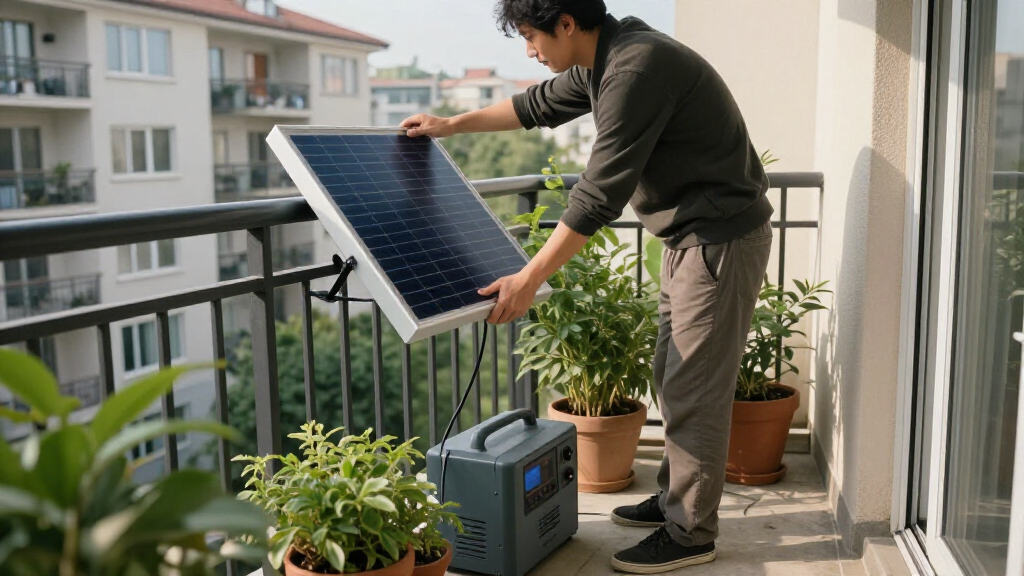
I compared these panels as balcony options rather than treating the largest wattage as the automatic winner. The ranking weighs rated output and panel count against footprint, flexibility, and the practical challenge of mounting panels safely in a restricted area. I also considered the construction details supplied for each product, including cell type, bifacial design, stated efficiency, and weather protection, while recognizing that listed specifications do not guarantee real-world energy production.
Products rank higher when their format and features make a clear case for a particular balcony setup, without asking every buyer to accept the same compromise. That favors versatile two-panel sets for buyers with room, but preserves places for compact or flexible panels that solve fit constraints. The 1000W kit is not ranked first simply for its larger rating: balcony area, mounting, shade, and system compatibility can limit the benefit of extra panel capacity.
| balcony solar panel | Cell type |
|---|---|
| Callsun 400W Flexible Solar Pa | Monocrystalline |
| ECO-WORTHY 400W N-Type Monocry | N-type bifacial monocrystalline |
| Callsun 400W Bifacial N-Type S | N-type monocrystalline bifacial |
| HQST 400W Solar Panel Kit | N-type monocrystalline silicon |
| ECO-WORTHY 260W Flexible Monoc | — |
| 1000W Portable Flexible Solar | — |
| Renogy ShadowFlux 200W N-Type | — |
| Viewsun 100W Flexible Monocrys | Monocrystalline, 16BB |
| ECO-WORTHY 2-Pack 200W Flexibl | Monocrystalline N-Type HJT |
| Weznbtev 100W 12V Flexible Mon | — |
Factors to Consider When Choosing Best Balcony Solar Panels
Choosing a balcony panel starts with the space and electrical setup you actually have, not the wattage printed in a product name. I would check these factors before comparing panel sets, since they determine whether a higher-output option can be installed and used as intended.
Measure usable area, not just balcony dimensions
Measure the surface where panels can be mounted and include room for brackets, cable routing, and access to doors or railings. A balcony may look large enough on paper but lose usable area to railings, awnings, furniture, and required clearance. Compare those measurements with the dimensions of each individual panel, not only the combined wattage or panel count. Sets such as the 4 × 100W ECO-WORTHY package may offer different placement options from two larger 200W panels, even when both sets are rated at 400W. Avoid buying a high-output kit before confirming that every panel can face the sun without blocking the space you use.
Choose flexible or rigid panels for the mounting surface
Flexible panels can suit curved or weight-sensitive mounting surfaces, but their flexibility does not make them a safe fit for every railing or balcony wall. Rigid panels generally need a suitable frame or brackets, yet a fixed angle can make positioning more predictable. Check the mounting method, attachment points, and manufacturer instructions rather than assuming a panel can be tied or pressed onto any surface. A common mistake is choosing a flexible model for convenience without planning how it will be secured against wind. If your balcony cannot support the panel’s recommended installation, a smaller panel or different mounting location may be the safer choice.
Match rated wattage to your power system
Panel wattage is a nameplate rating, not a promise of daily energy, and the power you can use also depends on the controller, battery, inverter, and wiring. Before buying, check the panel’s electrical specifications against the input limits of the equipment you already own or plan to add. A 1000W panel kit can be a poor match for a small power station if its input limit prevents you from using the full array. Conversely, a compact panel may not meet a household’s needs if the rest of the system expects greater input. Confirm compatibility with the exact equipment documentation rather than relying on wattage labels alone.
Account for shade, direction, and sun hours
Balcony railings, nearby buildings, trees, and overhangs can shade panels during the hours when sunlight is strongest. Observe the balcony at different times of day before choosing a set, and note whether shade falls across one panel or the full mounting area. A panel marketed with shade-related technology, such as the Renogy ShadowFlux, may be worth comparing for a partly shaded site, but no panel can create sunlight where the balcony receives little direct exposure. More panels may help only if they have usable sun and the system can accept their output. If sun access is limited, prioritize placement flexibility and realistic expectations over maximum rated wattage.
Check weather exposure and installation rules
Balcony panels face rain, wind, temperature changes, and possible impact, so check the stated protection ratings and installation guidance for the exact model. The HQST listing specifies IP65 protection, but buyers should still verify what the rating covers and whether connectors or other system parts have separate limits. Ask a landlord, building manager, or local authority about restrictions on exterior attachments, visible equipment, and cable routing before installation. Avoid blocking drainage or placing panels where they could fall or become a hazard. A secure, permitted installation matters more than a small difference in rated output.
Pay for useful capacity, not unused panel area
More panels can make sense when you have sufficient sun, space, mounting support, and compatible equipment; otherwise, extra capacity may add complexity without a matching benefit. A set of two 200W panels offers a different balance from a single 200W unit because it needs more room but may allow broader coverage. Smaller 100W panels can suit limited footprints or modest power needs, though multiple small units may require more installation planning. Compare the complete setup, including mounts, cables, controller, and storage, rather than treating the panel as a standalone system. Spend more for a feature that solves a real constraint, such as a needed flexible format or a suitable shade-oriented design, not merely for a larger number on the label.
Frequently Asked Questions
Can I connect these balcony panels directly to my home electrical system?
Do not assume a panel can plug directly into a household outlet. These products are solar panels, and a working setup may also need compatible power electronics, wiring, and, depending on the system, storage. Check the applicable local rules and the instructions for every component before connecting anything to household wiring. A portable power station or off-grid battery system may have different requirements from a grid-connected setup. If the connection method is unclear, ask a qualified electrician rather than improvising an adapter.
Should I choose one large panel or several smaller panels for a narrow balcony?
Compare the dimensions and mounting positions of each panel against the unobstructed area you can safely use. Several smaller panels, such as a 4 × 100W set, may fit around obstacles more easily than two larger panels, but they can add mounting and wiring work. A single 200W panel reduces panel count, though its shape may not suit a narrow or divided space. Check how the panels connect and whether your controller supports the arrangement. The best layout is the one that fits securely and receives usable sun, not necessarily the one with the most panels.
Will a flexible panel produce as much power as a rigid panel?
Both formats are rated under specified conditions, but the label alone cannot predict production on your balcony. Sun angle, shading, panel temperature, mounting position, and system losses all affect output. Flexible construction is mainly a fit and mounting advantage; it does not guarantee better performance or make a panel suitable for every surface. Compare the electrical specifications and installation instructions for the specific models you are considering. Choose flexibility when your surface or mounting plan calls for it, not as a substitute for checking output and compatibility.
Is a 1000W panel kit a sensible choice for a balcony?
It can make sense only if the balcony has enough safe, sunlit area and the rest of the system can accept the kit’s electrical output. The 1000W rating in this lineup represents two large flexible panels, so footprint and secure attachment deserve close attention. A balcony with limited space or frequent shade may make a smaller set more practical, even if its rated capacity is lower. Check the power station or controller input limits before choosing the larger kit. If those limits or the available mounting area fall short, extra panel capacity may go unused.
What should I check before mounting a panel on a rented apartment balcony?
Review your lease and ask the landlord or building manager whether exterior panels, railing attachments, or visible cables are permitted. Check that the proposed mount is approved for the railing or surface and will not damage it, block drainage, or create a falling-object risk. Flexible panels still need secure attachment and may not be allowed simply because they are lightweight. Also confirm any local requirements for wiring and grid connection before buying related equipment. When permission or safe mounting is uncertain, get written guidance before installation.
Conclusion
For most buyers with room for two panels, I would start with the Callsun 400W Bifacial N-Type set as the best overall choice in this lineup. The best value by format is the ECO-WORTHY 400W N-Type set with four 100W panels if smaller units make your balcony easier to arrange; it is not a claim about market pricing. For a premium-spec comparison, consider the HQST 400W kit for its listed N-Type 16BB design, stated efficiency, and IP65 rating. Beginners with limited space may find the Renogy ShadowFlux 200W easier to plan around than a multi-panel high-wattage kit, while buyers who need flexible mounting can compare Callsun’s 400W set with ECO-WORTHY’s 260W option. Choose the 1000W flexible kit only if your balcony, mounting plan, and power equipment can all support its larger capacity; for very small spaces, a 100W panel may be the more workable starting point.
Fall Picks
fall essentials
As an affiliate, we earn on qualifying purchases.