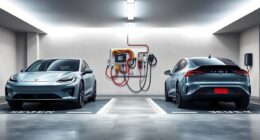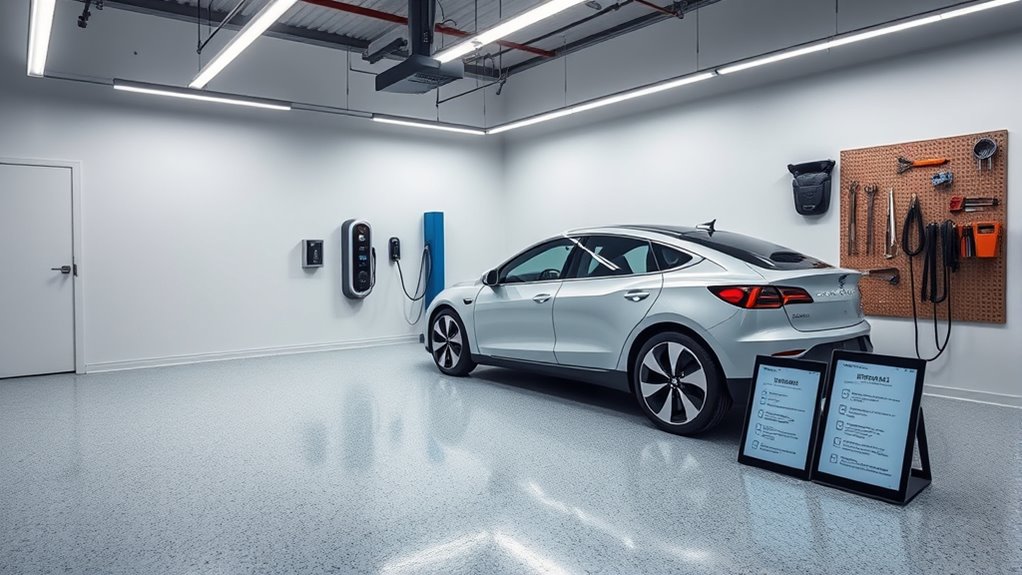

To prepare your garage for your first EV, start by evaluating your home’s electrical capacity and consider upgrading your panel if needed. Choose a convenient location near your vehicle’s charge port and make certain your garage environment is clean, well-lit, and safe from water or debris. Install the right wiring and outlet, preferably with professional help, and set up safety features like smoke detectors. For more tips on creating a reliable, safe charging space, keep exploring these essential steps.
Key Takeaways
- Assess your home’s electrical capacity and upgrade the panel if needed for safe Level 2 EV charging.
- Choose a convenient, safe location near your parking spot with proper lighting and ventilation.
- Install a dedicated 240V circuit with appropriate wiring and safety features, using licensed electricians for proper setup.
- Ensure the charging area is accessible, free of water and hazards, and equipped with safety devices like smoke detectors.
- Plan for future upgrades, regular maintenance, and explore incentives to optimize costs and ensure long-term safety.
Evaluate Your Home’s Electrical Capacity

Before installing an EV charger, you need to evaluate your home’s electrical capacity to guarantee it can support the new load. Check your main service panel to see if it’s rated for 150 amps or higher, which is typically necessary for Level 2 charging. Older homes may have panels that don’t meet this requirement, meaning upgrades could be needed. If your household has high electrical demands—like multiple appliances or HVAC systems—you might need a service upgrade. It’s best to consult a licensed electrician who can assess your panel’s capacity and determine if any upgrades are necessary. They’ll also check for potential overloading issues and recommend the appropriate circuit size. Proper evaluation ensures safe, reliable charging without risking electrical problems. Additionally, understanding your home’s electrical capacity is crucial to prevent overloads and ensure your electrical system can handle the increased load safely. Conducting a comprehensive electrical assessment can help identify any hidden issues before installation. Performing this assessment can also reveal opportunities for system optimization to improve overall electrical efficiency.
Select the Optimal Location for Your Charging Station

Choosing the right spot for your charging station makes daily charging easier and safer. Make sure it’s close to your vehicle’s charge port and easily accessible, so plugging in is quick and hassle-free. Also, select a location that’s safe from water, debris, and obstacles to keep everyone secure. Additionally, ensure the electrical system in your garage can handle the power requirements of your EV charger, following proper electrical safety guidelines. Proper garage layout can help you optimize space and accessibility for your charging needs. Considering trusted local services can help ensure your installation is done safely and correctly, especially when dealing with electrical capacity considerations. Planning your power needs carefully can prevent overloads and ensure reliable operation of your EV charger.
Proximity to Vehicle
The ideal location for your charging station is within 15 to 20 feet of your vehicle’s charge port to guarantee quick and convenient access. Placing the charger close minimizes cable clutter and makes plugging in easier, especially during cold or rainy weather. Position it near your parking spot to reduce cable length and avoid stretching or tripping hazards. Keep the charger in a spot that aligns with your vehicle’s usual parking position, ensuring the cable can reach comfortably without strain. This proximity also helps prevent unnecessary wear on the cable and connector. Additionally, integrating smart home automation can optimize charging schedules based on energy rates or household routines. Proper placement enhances convenience and protects your investment in the charging equipment. Considering safety precautions such as proper grounding and weatherproofing can further safeguard your setup and ensure reliable operation. Incorporating installation best practices can help you achieve a safe and efficient charging station setup. Remember, the goal is to streamline the charging process while maintaining a neat, safe garage environment.
Accessibility and Safety
Selecting the right location for your charging station is essential for safety and ease of use. Pick a spot that’s accessible, close to your vehicle’s charge port, and away from water or moisture. Ensure there’s enough space to connect cables without stretching or tripping. Position the charger near your main electrical panel to minimize wiring costs. Keep flammable materials away and install smoke detectors and fire extinguishers nearby. Good ventilation helps disperse heat during charging. Proper circuit management ensures your setup is both safe and reliable. Proper location choice can prevent potential hazards and make daily charging more convenient. Additionally, considering electrical load capacity is vital to avoid overloading your home’s system. Being aware of exponential growth in EV adoption can help plan for future charging needs. Here’s a quick overview:
| Factor | Key Consideration | Benefit |
|---|---|---|
| Accessibility | Easy reach and clear path | Safe and convenient |
| Safety | Away from water and flammables | Reduces fire risk |
| Ventilation | Proper airflow | Prevents heat buildup |
Install the Appropriate Wiring and Circuitry

You need the right amperage and wire gauge to guarantee your charger works safely and efficiently. A dedicated 240-volt circuit with the proper wire size, like 8-gauge for 40 amps, is essential. It’s best to hire a licensed electrician for the installation to guarantee everything meets safety standards and code requirements. Additionally, ensuring the circuit is properly wired and grounded will help prevent electrical hazards and ensure reliable operation. Proper circuit protection devices like circuit breakers are also crucial to safeguard against overloads and short circuits. Confirming that the electrical components are compliant with safety standards is vital for a secure installation. Understanding these electrical safety practices will further help protect your home and ensure your EV charger functions correctly. Incorporating a ground fault circuit interrupter (GFCI) can provide extra protection against electrical shock hazards.
Amperage and Wire Gauge
Choosing the right wire gauge and amperage for your EV charger is crucial to guarantee safe and efficient charging. The correct setup ensures your system handles the load without overheating or tripping breakers. First, determine your charger’s amperage, typically 30 to 50 amps for Level 2 charging. Then, select the appropriate wire gauge:
- Use 8-gauge wire for a 40-amp circuit.
- Opt for 6-gauge wire if wiring a 50-amp circuit.
- For higher amperages, thicker wire is necessary to prevent overheating.
- Confirm the wire insulation matches the amperage and local electrical codes.
Always consult a licensed electrician to verify your wiring choices, as improper gauge or amperage can compromise safety and performance. Proper wiring guarantees your garage’s electrical system functions reliably and meets code requirements.
Professional Circuit Installation
Professional circuit installation is essential to guarantee your garage’s electrical system can safely support an EV charger. An electrician will evaluate your existing wiring and determine if upgrades are necessary, especially if your home has an older panel or high electrical demands. For Level 2 charging, a dedicated 240-volt circuit is required, often using 8-gauge wire for a 40-amp setup. The electrician will install the proper circuitry, including outlets like the NEMA 14-50, to ensure flexibility and future compatibility. They’ll also consider the distance from your main panel to minimize wiring costs and optimize efficiency. Proper installation not only ensures safety but also prevents potential electrical issues, giving you confidence that your garage is ready for reliable EV charging. Electrical safety is paramount when working with high-voltage systems, and professional installation ensures compliance with all codes and standards. Additionally, ensuring your electrical system is up to code guarantees long-term safety and reliability for your EV charging setup. Incorporating a comprehensive electrical assessment before installation can identify any hidden issues that need attention, including potential complications related to existing electrical wiring that might require upgrades.
Implement Essential Safety Measures

Implementing essential safety measures is crucial to guarantee a secure and reliable EV charging setup in your garage. First, install smoke detectors and a fire extinguisher rated for electrical fires nearby to ensure quick response in emergencies. Second, keep flammable materials away from the charging area to reduce fire risk. Third, ensure proper ventilation to disperse heat generated during charging, preventing overheating. Fourth, follow all manufacturer safety guidelines for installation and use, ensuring your equipment functions safely. Regular inspections of your charger and electrical connections are vital, looking for signs of damage or wear. Additionally, understanding safe appliance operation can help prevent accidents and ensure your setup remains secure. Moreover, inspecting your Dog Beds for Golden Retrievers can ensure a safe environment for your pets while you work on your charging station. These steps help prevent accidents, protect your property, and ensure your EV charging process remains safe and efficient.
Enhance Your Garage Environment for Charging Efficiency

Creating a comfortable and well-organized garage environment can considerably improve your EV charging experience. Start by ensuring good lighting so you can easily see connections and prevent accidents. Keep the area clean and clutter-free to avoid tripping hazards and to make plugging in your vehicle straightforward. Maintain a stable temperature within the *ideal* range for battery health—neither too hot nor too cold—by ventilating or insulating the space as needed. Protect your charging equipment from dust, debris, and moisture, which can damage components or reduce efficiency. Finally, position your vehicle and charger thoughtfully, minimizing cable length and avoiding obstructions. A tidy, well-ventilated, and properly lit garage not only makes charging safer but also speeds up the process and prolongs the lifespan of your equipment.
Consider Additional Features and Cost Factors
Considering additional features and cost factors is essential to guarantee your EV charging setup meets your needs without overspending. First, network connectivity can enhance convenience, but installing repeaters or extenders may be necessary for reliable signals. Second, trenching and conduit installation improve safety and longevity, yet they add to overall costs. Third, think about the space required—adding extra square footage for equipment or future upgrades—so your garage remains functional. Fourth, explore available rebates or incentives, which can substantially offset installation expenses. By evaluating these factors, you ensure your charging station is efficient, reliable, and cost-effective, aligning with your budget and future plans. Being mindful of these details helps you avoid unexpected expenses and maximizes your investment.
Plan for Future Upgrades and Maintenance

Planning for future upgrades and maintenance guarantees your garage charging station remains dependable and efficient over time. Regular checks ensure connections stay secure, and updating hardware prevents obsolescence. Consider the potential need for additional circuits as your EV fleet grows. Keep spare parts like cables or adapters handy for quick replacements. Budget for periodic inspections by a licensed electrician to assess electrical capacity and safety. Also, stay informed about new charging technologies or standards that could improve performance. Here’s a quick overview:
| Maintenance Tasks | Upgrade Considerations |
|---|---|
| Inspect electrical connections | Add circuits for multiple EVs |
| Test charging performance | Upgrade to faster chargers when needed |
| Check for physical damage | Integrate smart charging features |
| Replace worn-out cables | Improve wiring or panel capacity |
| Verify safety equipment | Install weatherproof or vandal-proof enclosures |
Frequently Asked Questions
How Long Does a Typical EV Charger Installation Process Take?
The typical EV charger installation takes about one to two days, depending on your garage’s electrical setup and the complexity of the work. First, a licensed electrician assesses your electrical capacity and plans the wiring. Then, they install the circuit, outlet, and charger, testing everything thoroughly. Scheduling can vary, but most installations are completed within this timeframe, ensuring you’re ready to charge your EV efficiently.
Are There Tax Incentives or Rebates Available for Installing an EV Charger?
Yes, there are tax incentives and rebates available for installing an EV charger. You can often claim federal tax credits, which might cover up to 30% of installation costs, including equipment and labor. Many states and local governments also offer additional rebates or incentives. Check with your utility provider or local government for specific programs. These incentives can substantially reduce your overall expenses and make your EV setup more affordable.
Can I Install an EV Charger Myself, or Should I Hire a Professional?
You should hire a licensed electrician to install your EV charger. While some DIY enthusiasts might feel confident, electrical work is complex and risky if not done correctly. A professional ensures the wiring meets safety codes, assesses your electrical capacity, and handles permits. This way, you avoid potential hazards, costly mistakes, and make certain your charger is installed safely and reliably for long-term use.
What Maintenance Is Required to Keep My EV Charging Station Safe?
Think of your EV charging station as a garden needing regular care. You should regularly inspect cables and connections for damage, ensuring no frayed wires or corrosion. Keep safety devices like smoke detectors and fire extinguishers in working order, and clean dust or debris from the unit. Also, verify that the circuit breaker functions properly. A little routine maintenance keeps your charging station safe, reliable, and ready when you need it most.
How Can I Ensure My Garage Remains Weatherproof and Vandalism-Proof?
You can keep your garage weatherproof by sealing all gaps and installing weather-resistant covers on outlets and charging stations. Use durable, vandal-proof enclosures to protect your equipment from theft and damage. Regularly inspect for cracks or leaks, and maintain good drainage around your garage. Installing security cameras and motion-activated lighting further deters vandalism, ensuring your EV charging setup stays safe and protected from the elements.
Conclusion
Preparing your garage for your first EV is like planting a sturdy seed that will grow into a reliable, efficient charging station. By evaluating your electrical capacity, choosing the right spot, and installing safety features, you’re laying a strong foundation. Think of each step as nourishing roots that guarantee your charging setup thrives. With careful planning and future upgrades in mind, you’ll watch your EV experience blossom smoothly and confidently, mile after mile.