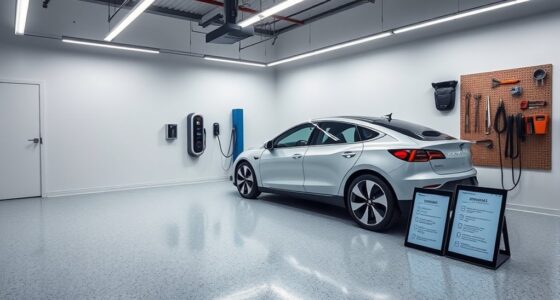
To future-proof your garage for multiple EVs, start by understanding local regulations and ensuring your electrical system can handle increased loads. Plan for scalable solutions like EV-ready or EV-capable spaces, including pre-wiring and conduit installation. Consider modular chargers that can expand easily as demand grows, and incorporate safety features and accessibility. Staying ahead with emerging technologies will keep your garage flexible. To discover how to implement these strategies effectively, keep exploring these essential tips.
Key Takeaways
- Install EV-capable wiring and conduit during initial construction to simplify future charger additions and upgrades.
- Assess and enhance electrical service capacity with dedicated panels and load management systems for multiple EVs.
- Use modular, scalable charging stations supporting various speeds and smart features to adapt to evolving vehicle needs.
- Strategically distribute chargers and parking layouts to enable simultaneous multi-vehicle charging with minimal congestion.
- Plan for future technologies like fast chargers, wireless options, and renewable energy integration to ensure long-term flexibility.
Understanding Local Regulations and Building Codes
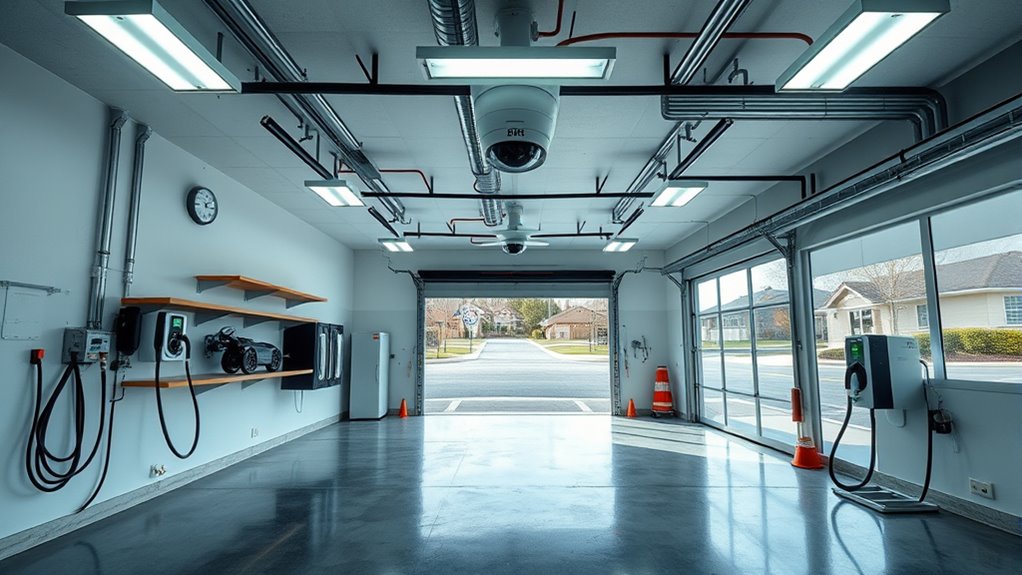
Understanding local regulations and building codes is essential when planning to future-proof your garage for EV charging. These rules dictate how many EV-ready or capable parking spaces you’ll need and specify electrical requirements. Many states require new buildings to include a percentage of EV-ready spots—ranging from 5% to over 25%, depending on location and building type. For example, Washington State mandates at least one or 10% of parking spaces be prepared for Level 2 chargers. Electrical capacity must support simultaneous charging on 40-amp circuits, so your wiring and transformers need to be appropriately sized. Ensuring compliance with electrical standards is crucial to avoid potential safety issues and future upgrades. Failing to comply can lead to delays, penalties, or costly retrofits. Knowing these regulations now helps you design a garage that meets current standards and is ready for future upgrades. Incorporating European cloud innovation principles can also help ensure your electrical infrastructure remains scalable and adaptable for future technological advancements. Additionally, understanding the permitting process ensures smooth approval and implementation of your EV infrastructure plans. Being aware of the home security systems available can also help you integrate safety features into your garage, protecting your investments as you upgrade. Planning for future technological changes ensures your garage remains compatible with upcoming advancements in EV technology.
Assessing Electrical Capacity and Load Management

Evaluating your garage’s electrical capacity is a key step in ensuring it can support multiple EV chargers without causing overloads or disruptions. Start by assessing your main electrical service size—often measured in amps—and determine if it can handle added loads from multiple chargers running simultaneously. Check your breaker panel for available circuits or space for expansion, and consider the wiring gauge to support higher current demands. Planning for load management is essential; smart chargers or load sharing systems can optimize power distribution, preventing overloads and reducing utility costs. Pre-wiring conduit and branch circuits during initial construction simplifies future upgrades. Ensuring your electrical infrastructure is scalable now saves costs and minimizes disruption as your EV fleet grows. Additionally, understanding your electrical capacity helps you plan effectively and avoid costly upgrades later.
Designing for Scalability and Future Growth

To prepare your garage for future growth, focus on creating a flexible electrical infrastructure that can accommodate increasing demand. Incorporate modular charging stations and wiring that allow easy upgrades as vehicle types evolve. By planning for diverse vehicle sizes and charging needs, you’ll ensure your setup remains scalable and ready for the years ahead. Additionally, understanding sound healing science can inspire innovative ways to incorporate calming and energizing elements into your workspace, fostering a more productive environment. Considering natural integration can also help your garage blend seamlessly with outdoor elements, promoting sustainability and aesthetic harmony. Implementing smart home technology solutions can further enhance convenience and energy efficiency, ensuring your garage stays adaptable to emerging innovations. Incorporating scalability principles from electrical systems planning will help ensure your setup can grow alongside your needs without costly overhauls. Recognizing the importance of future-proofing in electrical design can guide you to select adaptable components that support long-term growth.
Flexible Electrical Infrastructure
Designing a flexible electrical infrastructure for your garage guarantees it can adapt to future EV growth without costly upgrades. Start by installing conduit and wiring during initial construction, making spaces ready for additional chargers later. Distribute electrical circuits evenly across your garage to support multiple simultaneous charges, ideally at 40 amps or more per station. Incorporate dedicated electrical panels or subpanels to handle increased loads as more EVs come into play. Use load management systems to optimize power distribution and prevent overloads. Planning for scalable infrastructure also means leaving room for future upgrades or higher-capacity chargers. Additionally, considering electrical system flexibility during design ensures your setup can accommodate technological advancements and increased demand over time. An understanding of electric power generation with bike generators can also inspire innovative solutions for off-grid energy needs. By ensuring your electrical system is adaptable, you save time and money down the road, making your garage truly future-proof for multiple EVs. Moreover, integrating modular electrical components can facilitate easier upgrades as your energy requirements evolve. Exploring options like backup power systems can further enhance your garage’s resilience and readiness for future energy demands.
Modular Charging Stations
Modular charging stations offer a flexible approach to building EV infrastructure that can grow alongside your needs. Instead of installing all chargers upfront, you can start with a few and add more as demand increases. This approach saves costs and minimizes disruptions during initial setup. Planning for modular systems means installing conduit and electrical capacity with future expansion in mind, allowing you to easily upgrade or add chargers later. You can also choose stations that support different charging speeds or smart features, giving you options to optimize performance and energy use. Distributing chargers strategically across your garage or parking lot ensures simultaneous charging for multiple vehicles. Incorporating scalable infrastructure from the outset enables seamless growth and adaptability as your EV fleet expands. Properly planning your electrical wiring and network connections during initial installation ensures reliable operation and easier integration of additional chargers later. Additionally, considering connected charging management systems can help monitor and optimize energy use across multiple chargers. Designing your system with future-proofing in mind ensures that your garage remains adaptable to evolving EV adoption trends, making it ready for multiple electric cars.
Anticipate Future Vehicle Types
As electric vehicle technology advances, planning for a variety of future vehicle types becomes essential to guarantee your garage remains adaptable. You should consider how different EVs—such as heavy-duty trucks, medium-duty delivery vans, or compact city cars—will impact your infrastructure. To prepare, think about:
- Installing conduit and wiring in accessible areas to support diverse charger types and future upgrades.
- Distributing charging stations throughout your garage to accommodate multiple vehicles charging simultaneously.
- Incorporating smart load management systems to balance power and prevent overloads as vehicle types and numbers grow.
Choosing Between EV-Ready, EV-Capable, and Installed Solutions

Choosing between EV-Ready, EV-Capable, and Installed solutions depends on your current needs, future plans, and budget. EV-Ready spaces have the wiring and conduit installed, allowing you to add chargers later without tearing up the pavement. EV-Capable spaces include pre-wired conduit and stub-outs, making future upgrades easier and more affordable. Installed solutions mean the charger is already in place, providing immediate usability but at higher upfront costs. If you plan to add multiple EVs soon, investing in EV-Ready or EV-Capable options now saves money and reduces disruption later. Consider your long-term vehicle growth and electrical capacity to choose the best solution for your garage. Additionally, understanding wave and wind considerations can help ensure your electrical system is adequately protected from environmental factors, supporting the longevity of your EV charging infrastructure. Proper planning for electrical system resilience can help prevent costly repairs and ensure reliable operation over time. Balancing current needs with future expansion ensures your investment remains flexible and cost-effective.
Practical Planning for Multi-Vehicle Charging Layouts

Planning for multiple vehicle charging in your garage requires careful layout to guarantee convenience and efficiency. You need to contemplate how to position chargers and parking spaces to maximize usability. Here are key steps:
Optimize your garage with strategic charger placement for seamless multiple EV charging.
- Distribute charging stations evenly across the garage to allow simultaneous charging without congestion.
- Install Level 2 chargers or pre-wire EV-capable spaces with conduit and wiring during construction to avoid future costly retrofits.
- Arrange parking spots so cables reach comfortably from chargers to vehicles, minimizing obstruction and cable stress.
Incorporating Safety, Accessibility, and User-Friendly Features
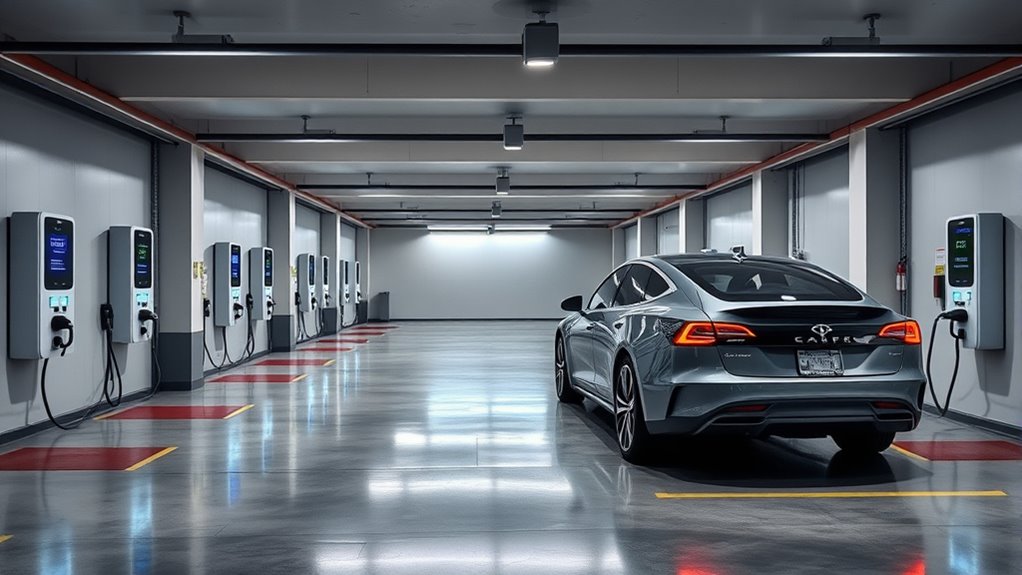
Ensuring safety, accessibility, and user-friendliness in your garage’s EV charging setup is essential for a seamless and secure experience. Start by installing proper signage and clear pathways to prevent accidents. Use weatherproof, grounded outlets and surge protectors to safeguard equipment and users. Incorporate accessible features like ramps, wide pathways, and height-appropriate controls for all users, including those with mobility challenges. Ensure cable management systems keep cords organized and off walkways, reducing trip hazards. Install emergency shutoff switches near charging stations for quick response if needed. Good lighting and visible instructions make charging safer and easier, especially at night. Prioritizing these features creates a safer, more inclusive environment that encourages regular use and minimizes risks. Additionally, understanding the importance of heat distribution and proper ventilation can help prevent overheating and ensure safe operation of electric vehicle chargers. Incorporating smart‑home integrations can further enhance safety and convenience by allowing remote monitoring and control of your charging station. Paying attention to field‑of‑view considerations can also improve the overall usability and monitoring of your setup, especially if multiple users share the space. Being aware of user ergonomics can improve comfort and ease of use for everyone involved.
Staying Ahead With Emerging Technologies and Trends

Staying ahead with emerging technologies and trends is essential for future-proofing your garage, as advancements are rapidly transforming EV infrastructure. To keep up, focus on these key areas:
Future-proof your garage by embracing emerging EV tech and trends today.
- Smart charging systems: These optimize energy use, balance loads, and enable remote management, ensuring efficient charging for multiple vehicles.
- Higher-capacity chargers: Expect faster Level 3 (DC fast chargers) and wireless charging options to become common, requiring adaptable wiring and space planning.
- Grid integration and renewable energy: Incorporate solar panels and battery storage to reduce costs and support sustainability, aligning with evolving energy management trends.
Frequently Asked Questions
How Do I Estimate Future Electrical Load Requirements for Multiple EVS?
To estimate future electrical load requirements, start by calculating the number of EVs you expect to charge simultaneously. Use the charging rate, typically 40 amps per Level 2 charger, and multiply by the number of vehicles. Add a buffer for future expansion, and consider load management systems to optimize capacity. Consult local codes and work with an electrician to guarantee your electrical infrastructure can support your evolving EV needs.
What Are Best Practices for Distributing Charging Stations in a Multi-Car Garage?
You should distribute charging stations evenly throughout your garage to maximize convenience and accessibility. Place chargers near parking spots where vehicles are most likely to park, ensuring cables reach comfortably without stretching. Consider installing Level 2 chargers with proper wiring and conduit, and plan for future expansion by integrating smart load management systems. This approach balances electrical loads and prevents overloading, making charging efficient and user-friendly for multiple EVs.
How Can I Ensure My Garage Design Remains Adaptable for Emerging EV Technologies?
You can keep your garage ready for the future by installing conduit, raceways, and ample electrical capacity now—think of it as building a highway for tomorrow’s electric fleet. Make spaces EV-capable or ready, plan for smart load management, and leave room for larger chargers or new tech. This way, your garage stays as adaptable as a chameleon in a paint store, ready for whatever EV innovations come next.
What Incentives Are Available for Multi-Vehicle EV Charging Infrastructure?
You can access various incentives to support multi-vehicle EV charging infrastructure. Many states, like California and Washington, offer rebates, grants, or tax credits for installing EV-ready spaces and chargers. Utility companies may also provide incentives for upgrading electrical service or implementing smart charging systems. Check local, state, and federal programs, as well as utility offerings, to maximize financial support and reduce upfront costs for your multi-vehicle charging setup.
How Do I Incorporate Load Management Systems for Multiple Simultaneous EV Charges?
You should install a load management system that dynamically balances power across multiple EV chargers. Connect it to your electrical panel and set priority levels for each vehicle, ensuring no overloads. Use smart technology that communicates with chargers, adjusting power during peak times or when multiple cars charge simultaneously. Regularly monitor and update the system to optimize performance, prevent tripping breakers, and extend your electrical infrastructure’s capacity for future EV growth.
Conclusion
By planning now, you’ll future-proof your garage like planting a sturdy tree that grows stronger with time. Stay informed about regulations, assess your electrical needs, and choose flexible solutions to accommodate multiple EVs. Incorporate safety features and stay ahead of emerging tech so your garage remains a reliable, efficient space. With proactive planning, you’ll turn your garage into a charging hub as adaptable as a chameleon, ready for whatever electric future lies ahead.