To plan a long-distance EV road trip, choose apps like PlugShare or ABRP to map chargers along your route and input your vehicle details. Build in extra time for charging and potential delays, and pack essential cables, adapters, and supplies. Focus on fast chargers near amenities in safe, well-lit areas. Analyzing your route with vehicle and weather data helps optimize efficiency. Keep exploring for detailed tips to ensure a smooth, stress-free journey.
Key Takeaways
- Use dedicated trip planning apps to locate fast chargers, route options, and amenities along your EV route.
- Build charging buffers into your schedule to prevent range anxiety and accommodate unexpected delays.
- Pack essential equipment like adapters, charging cables, and emergency supplies to ensure charging readiness.
- Prioritize charging stations with fast chargers in safe, well-equipped locations near attractions or amenities.
- Analyze terrain, weather, and vehicle range beforehand to optimize routes and ensure efficient energy use.

16A Portable Level 1&2 EV Charger-ETL Certified,110V-240V Car Charger with 25FT Charging Cable, NEMA 6-20 Plug & NEMA 5-15 Adapter EV Charging Station, Backup EV Chargers for All SAE EVSE J1772 Cars
✅【Fast and Efficient Charging】 The eTimxon level 2 EV charger is equipped with NEMA 6-20 Plug, supports 240V,…
As an affiliate, we earn on qualifying purchases.
As an affiliate, we earn on qualifying purchases.
Choosing the Right Planning App for Your Journey
Selecting the right planning app is essential for a smooth EV road trip. You want an app that efficiently maps charging stations, provides accurate route data, and considers your vehicle’s specifics. PlugShare offers a Trip Planner that locates chargers along your route and details nearby amenities, making it easy to find suitable stops. A Better Route Planner (ABRP) allows you to input your car model and battery level, generating detailed charging plans with cost estimates. Google Maps now includes features to identify charging stations along your route, integrating seamlessly into your navigation. ChargeHub’s trip planner maps journeys across North America with customizable options, while EV Navigation provides smart routing with turn-by-turn voice guidance. Considering contrast ratio in your planning can also help you choose routes that optimize visibility and safety, especially in varying lighting conditions. Incorporating safety considerations such as lighting and visibility can further enhance your trip planning experience. Choosing an app that matches your needs ensures energy-efficient cloud servers for reliable, sustainable, and convenient trip planning.

INIU 45W Fast Charging Portable Charger, 40% Smaller 10000mAh with Detachable Cable, Flight-Safe Travel Power Bank, USB C External Phone Battery Pack for iPhone 17 16 Pro iPad Samsung S26 Google etc
40% Smaller & Lighter Portable Charger: Powered by the industry’s first TinyCell high-density battery technology, this ultra-compact 10,000mAh…
As an affiliate, we earn on qualifying purchases.
As an affiliate, we earn on qualifying purchases.
Accounting for Extended Travel Time and Charging Buffers
When planning your EV road trip, it’s important to account for the additional time charging requires. Charging can add hours to your schedule, especially at busy stations or during peak hours. To stay on track, build in buffers for unexpected delays and avoid only just reaching a station with minimal charge. Weather, terrain, and extra passengers impact energy consumption and should influence your timing. Always have a backup plan for unavailability of chargers. Incorporating smart tweaks based on sleep science can help you remain alert and adaptable during long drives, improving overall trip safety and enjoyment.
long distance EV trip planning app
As an affiliate, we earn on qualifying purchases.
As an affiliate, we earn on qualifying purchases.
Essential Equipment and Supplies for Long-Distance Travel
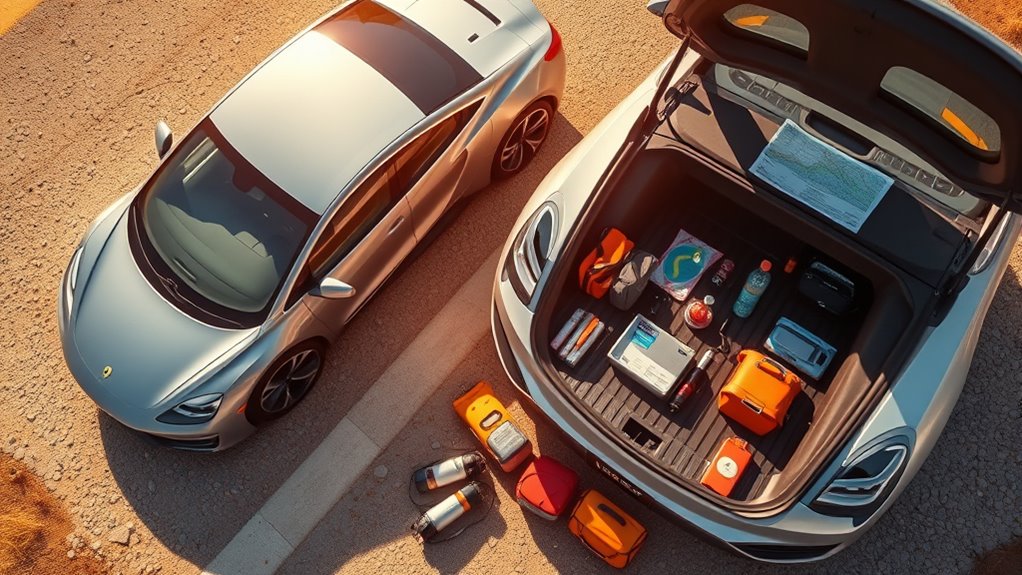
Preparing your EV for long-distance travel requires packing essential equipment and supplies that guarantee safety, efficiency, and convenience. Bring level 2 charging cables, which are crucial for quick, reliable access to public AC outlets. If you’re driving a Tesla or using third-party networks, carry the necessary adapters to ensure compatibility. Emergency supplies like water and energy-efficient snacks help keep you fueled and alert during long charging stops. Include vehicle-specific charging cables and adapters to navigate various charging stations smoothly. Load and test navigation apps, charger locators, and backup power banks before departure to avoid surprises. Having these essentials on hand guarantees you’re prepared for different charging scenarios, reduces downtime, and keeps your journey safe and enjoyable.
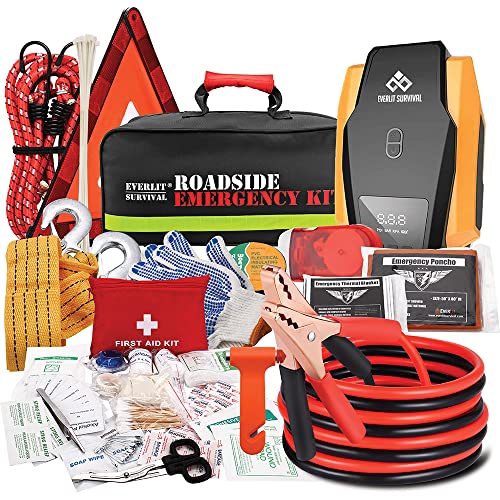
Everlit Survival Car Emergency Kit, Roadside Safety Tool Kit with Gloves,Digital Auto Air Compressor Tire Inflator, First Aid Kit, 12 Feet Jumper Cable, Tow Strap, Flashlight for Women, Men, Teenagers
The Road Guardian- The portable roadside assistance kit is designed and hand picked by a group of experienced…
As an affiliate, we earn on qualifying purchases.
As an affiliate, we earn on qualifying purchases.
Strategically Selecting Charging Stations Along Your Route

Choosing the right charging stations along your route can make or break your EV road trip. To do this effectively, consider these key factors:
Selecting the best charging stations ensures a smooth, enjoyable EV road trip experience.
- Charging Speed – Opt for stations with fast chargers to minimize downtime and keep your trip on schedule.
- Network Compatibility – Confirm that the station belongs to your vehicle’s charging network or supports universal connectors.
- Amenities – Check if nearby amenities like restrooms, food options, or lounges are available for longer stops.
- Location Safety – Select stations in well-lit, secure areas, preferably with nearby attractions or facilities for a comfortable break.
Pre-Trip Vehicle and Route Analysis for Optimal Planning

Conducting a thorough pre-trip vehicle and route analysis is essential for ensuring a smooth and efficient EV road trip. You need to input your vehicle’s range, battery capacity, and current charge level into your chosen planning app. This helps generate accurate route suggestions that suit your car’s capabilities. Consider terrain elevation, weather forecasts, and seasonal factors, as they directly influence energy consumption. Modern EVs often have built-in navigation systems that provide vehicle-specific routing, so use those to refine your plan. Review route alternatives the night before or upon entering your vehicle to confirm charger availability and avoid surprises. Additionally, factor in safety considerations like hazard awareness, emergency supplies, and weather conditions to prepare for unexpected situations, ensuring your trip remains on track and hassle-free.
Maximizing Efficiency During Your Electric Road Trip
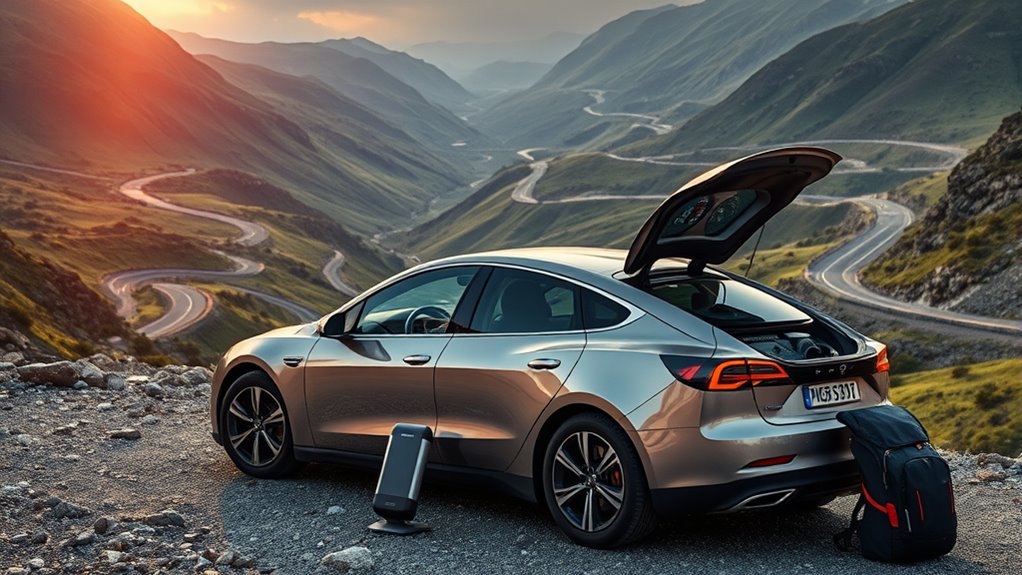
To maximize efficiency during your electric road trip, leverage advanced trip planning tools that optimize route selection based on your vehicle’s capabilities and charging infrastructure. These apps help you avoid unnecessary stops and reduce energy waste. Consider these strategies:
- Use route planning apps like ABRP or ChargeHub to identify the fastest and most efficient charging stations along your route.
- Maintain a steady speed and avoid rapid acceleration to conserve battery life.
- Minimize climate control use, as HVAC systems can drain your battery faster.
- Pack lightweight luggage and remove unnecessary accessories to reduce vehicle weight, improving efficiency. Additionally, monitoring battery health can help you better understand your vehicle’s performance and plan accordingly.
Tips for Managing Unexpected Delays and Ensuring Smooth Travel

Unexpected delays can disrupt even the best-planned electric road trip, so preparing for them is vital to keep your journey smooth. Start by carrying backup charging options like portable power banks and extra adapters to stay connected if station availability changes. Always maintain a buffer of at least 10% charge to handle detours or unforeseen stops. Use real-time navigation apps to monitor traffic, charging station status, and route adjustments. Avoid high-traffic charging locations during peak hours to reduce wait times. Keep a list of secondary charging stations along your route in case your primary plan falls through. In addition, understanding charging infrastructure can help you better navigate potential obstacles during your trip. Familiarize yourself with local regulations related to electric vehicle charging to avoid surprises. Being aware of charging station networks can help you plan more effectively. Additionally, understanding charging standards can prevent compatibility issues during your stops. You can also benefit from advanced navigation tools that provide real-time updates on station availability and route optimizations. Pack essentials like snacks, water, and emergency supplies to stay comfortable and alert during unexpected delays. Staying flexible and prepared ensures your trip remains stress-free despite unforeseen obstacles.
Frequently Asked Questions
How Do I Find Charging Stations With the Fastest Charging Speeds?
To find charging stations with the fastest speeds, use apps like Electrify America, ChargePoint, or PlugShare that include filters for charging speed. Check station details for the latest charging rates and compatibility with your vehicle. Before your trip, review station ratings and real-time availability. Always plan to stop at stations offering fast chargers to minimize downtime and keep your trip efficient.
What Should I Do if a Charging Station Is Out of Service?
If a charging station is out of service, you should quickly open your preferred charging app or navigation system to find nearby alternatives. Check for stations with similar or faster charging speeds and verify their availability. Avoid waiting around, and reroute to the next accessible station. Always have backup options pre-selected, and keep your vehicle’s charge above 10% to prevent being stranded. Stay calm and adapt your plan as needed.
Can I Reserve a Charging Station in Advance?
Yes, you can reserve a charging station in advance. For example, using the ChargePoint app, you might secure a spot before your trip starts, ensuring a charger is waiting for you when you arrive. This helps you avoid waits and plan your stops efficiently. Just check app availability, select your preferred station, and reserve it. Doing so minimizes delays and keeps your journey smooth.
How Does Weather Affect My Ev’s Range During Travel?
Weather considerably impacts your EV’s range during travel. Cold temperatures can reduce battery efficiency, causing your vehicle to use more energy and decreasing distance between charges. Hot weather may also affect battery performance and increase energy consumption due to climate control systems. Wind, rain, and snow create additional resistance, further draining your battery. Always check weather forecasts before your trip, adjust your route if necessary, and maintain a buffer to prevent range issues.
What Are the Best Practices for Nighttime or Low-Visibility Charging?
Think of your EV as a lighthouse guiding you through foggy nights—clarity is key. When charging in low visibility or at night, always use well-lit, familiar stations with good signage. Keep your headlights on, and rely on navigation apps with real-time updates to find nearby chargers. Carry backup supplies like flashlights, and make certain your charging cables are accessible. Staying prepared keeps your journey safe and smooth, even in the darkest conditions.
Conclusion
As you plan your EV road trip, remember that a smooth journey often comes down to good prep and a bit of luck. With the right app, strategic stops, and a calm mindset, you might find unexpected scenic spots or friendly faces along the way. Sometimes, the best moments happen when plans shift. Trust your prep, embrace the adventure, and enjoy the journey—because the road is full of surprises waiting just around the bend.