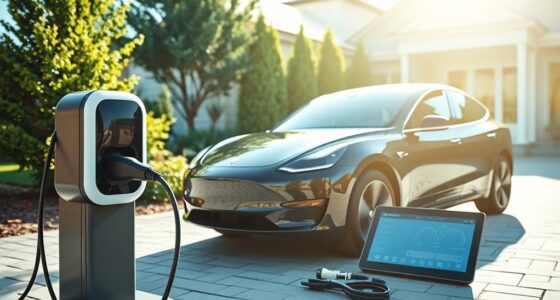
Electric cars generally cost more to insure than gas-powered vehicles because of higher repair expenses, advanced technology, and pricey components like batteries. Factors like the EV model, safety features, and regional differences also impact premiums. Luxury and high-performance models tend to have higher rates, while some regions and insurers offer discounts or tailored coverage. Want to know how these factors specifically affect your potential costs? Keep exploring for a deeper understanding.
Key Takeaways
- On average, electric vehicle insurance costs are about 49% higher than gas-powered vehicles.
- Higher premiums are mainly due to costly repairs, advanced technology, and expensive battery replacements.
- Luxury and high-performance EVs tend to have significantly higher insurance premiums than more affordable models.
- Regional factors, such as repair infrastructure and state regulations, influence EV insurance costs.
- Safety features and vehicle design can help lower insurance premiums for electric cars.
How Do EV Insurance Costs Compare to Gas-Powered Vehicles?
Electric vehicle (EV) insurance costs considerably surpass those for gas-powered cars. On average, insuring an EV costs about $4,058 annually, which is 49% higher than the $2,732 you’d pay for a gas-powered vehicle. Over the past year, EV insurance premiums have increased by 16%, while traditional car insurance rates stayed steady. Luxury models like Tesla’s Model X and Model 3 lead to higher premiums, with Model X averaging $4,765 yearly. This difference mainly stems from higher repair costs, advanced technology, and more expensive parts like batteries. Additionally, insurance costs vary by state, with California drivers paying up to 31% more. Overall, EV insurance tends to be markedly more expensive, reflecting the unique risks and repair expenses involved. Natural landscape features can also influence insurance costs, especially when considering how natural landscapes and backyard features impact overall risk profiles. Insurance premiums are influenced by various factors, including vehicle type, location, and repair costs, which are generally higher for EVs.
What Factors Lead to Higher Insurance Premiums for Electric Cars?

Higher insurance premiums for electric cars primarily stem from the higher costs associated with repairs and replacements. Electric vehicles have expensive batteries that can cost between $6,000 and $15,500 to replace, making repairs costly. Additionally, specialized labor and fewer trained technicians drive up repair bills. The advanced tech features in EVs, like sensors and software, increase repair complexity and claim frequency. Even minor accidents can lead to total loss due to difficulty evaluating battery damage. Plus, EVs tend to be more expensive upfront, prompting insurers to offer higher coverage amounts and premiums. These factors combined make insuring electric cars more costly, as insurers must account for the higher potential repair expenses and the vehicle’s higher value. Understanding repair costs and technological complexity plays a key role in shaping insurance premiums for electric vehicles. Furthermore, the repair infrastructure for EVs is still developing, which can lead to longer repair times and higher costs. Ensuring adequate technician training is crucial for efficient repairs and cost management in the evolving EV market. Additionally, the limited availability of specialized repair centers can lead to increased repair delays, which can also contribute to higher insurance costs for electric vehicle owners. Moreover, the scarcity of comprehensive insurance policies tailored for EV-specific risks may further influence premium rates.
How Does the Choice of EV Model Affect Insurance Rates?
Your choice of EV model directly impacts your insurance rates because repair costs vary widely between models, especially for luxury or high-performance vehicles. Safety features also play a role, with some models offering advanced tech that can lower premiums, while others with costly repairs or higher claim risks drive rates up. Understanding these factors can help you pick an EV that fits your budget both upfront and in insurance costs. Additionally, attention to detail in the vehicle’s design can influence repair expenses and insurance premiums. For example, models equipped with advanced safety features may be eligible for discounts, further affecting overall insurance costs. Moreover, the availability of repair parts for certain models can also impact the speed and cost of repairs, influencing insurance premiums. Ensuring the vehicle’s reliability and repairability can further help in managing long-term insurance expenses. Considering a vehicle’s repairability and ease of maintenance can also result in lower insurance premiums by reducing the potential repair time and costs.
Repair Cost Variability
The choice of EV model markedly impacts insurance rates because repair costs vary widely depending on the vehicle’s design, parts, and technology. Some models have more expensive batteries, complex electronics, or specialized components, making repairs costly. For example:
- Tesla models often have high repair costs due to their advanced tech and battery packs, which can cost thousands to replace.
- Luxury EVs like Porsche Taycan require specialized labor, increasing repair expenses.
- More affordable EVs, such as the MINI Electric, tend to have lower repair costs, resulting in somewhat lower insurance premiums.
Additionally, Battery technology can also impact repair complexity and costs, further influencing insurance premiums. precious metals used in some EV batteries can influence repair costs and, consequently, insurance rates, as they affect the overall expense of repairs. The repairability of an EV, which varies depending on design and technology, directly affects the insurance premium because higher repair costs lead to increased rates. Your insurance premium reflects these repair cost differences, with higher-cost repairs leading to increased rates. Choosing a model with simpler technology or lower repair expenses can help reduce your insurance costs over time.
Model Safety Features
Choosing an EV model with advanced safety features can substantially influence insurance rates. Vehicles equipped with the latest collision avoidance systems, lane departure warnings, and automatic emergency braking often qualify for discounts, reducing premiums. For example, models with high safety ratings and active safety tech tend to have fewer accidents and claim instances, which insurers favor. The presence of safety features can also signal lower risk, prompting insurers to offer better rates. Additionally, reliable safety performance can enhance a vehicle’s reputation and further influence insurance discounts. Moreover, the insurance industry’s preferences tend to favor vehicles with proven safety records, making these models more attractive for discounted premiums. Implementing proper maintenance of safety features and keeping up with manufacturer updates can also positively impact insurance considerations. However, the specific model’s safety reputation and technological sophistication play key roles. Ultimately, selecting an EV with robust safety features can help you save on insurance while providing peace of mind on the road.
In What Ways Do Regional Differences Influence EV Insurance Pricing?

Regional differences play a big role in EV insurance pricing because repair costs vary by location, affecting premiums. State regulations can also influence rates, with some states imposing stricter rules or offering more discounts. Additionally, EV adoption levels in your area impact data availability and competition, which can either raise or lower your insurance costs.
Regional Repair Costs Variance
Regional differences in repair costs considerably influence EV insurance pricing because where you live affects the availability of parts, labor rates, and technician expertise. If you’re in an area with limited EV repair shops, expect higher costs due to longer waits and expensive imports. Conversely, regions with more EV technicians and accessible parts can lower repair expenses, reducing premiums. Additionally, smart appliance integration and advanced diagnostics can streamline repairs, further impacting costs. These repair shop density factors can significantly alter repair expenses across regions, influencing insurance premiums accordingly. In regions with high demand, labor rates tend to be higher, increasing repair costs. Areas lacking trained EV technicians may face longer repair times and higher labor charges. Limited local parts availability can lead to costly imports and delays, raising insurance claims. These regional factors directly impact how much insurers charge, making your location a key element in your overall EV insurance costs. Furthermore, availability of specialized repair facilities plays a significant role in determining repair costs and thus insurance premiums. For example, areas with well-established EV service networks tend to have more efficient repair processes, which can help lower insurance costs.
State Regulations Impact
Have you ever wondered how state regulations shape your EV insurance costs? State laws influence premiums through factors like minimum coverage requirements, no-fault rules, and accident claim processes. Some states, like California, have stricter safety and repair standards, which can increase insurance costs but also improve safety. Others, with fewer regulations, might keep premiums lower but risk less extensive coverage. Additionally, states with higher crime rates or accident frequencies often see higher premiums for EVs due to increased risk.
| State | Regulation Impact | Example Effect |
|---|---|---|
| California | Strict safety standards | Higher repair costs, higher premiums |
| Texas | Fewer regulations | Lower premiums, limited coverage options |
| New York | No-fault insurance laws | Faster claims but potentially higher rates |
| Florida | Higher accident rates | Increased premiums |
| Oregon | Emphasis on safety tech mandates | Slight premium increase |
EV Adoption Levels
Ever wondered how the number of EVs in your area impacts your insurance costs? Higher regional adoption levels can influence premiums in several ways:
- Increased insurer experience: More EVs mean insurers gather better data, leading to more accurate risk assessments and potentially lower premiums.
- Competitive pricing: Popular markets with many EV owners often see insurers offering discounts or better rates to attract drivers.
- Repair infrastructure: Regions with high EV adoption typically have more trained technicians and repair shops, reducing costs and claims frequency.
- Odor detection and safety considerations: In areas with high EV adoption, the odorless nature of Fentanyl makes it challenging for emergency responders to detect potential hazards, influencing insurance risk assessments.
- Market maturity: Regions with well-developed EV markets often have established safety standards, which can positively impact insurance premiums.
- Data availability: Regions with widespread EV adoption provide insurers with robust data, enabling more precise pricing strategies.
In contrast, areas with low EV adoption lack data and repair resources, which can keep premiums high. Your location and local market maturity play a significant role in how much you’ll pay for EV insurance.
How Do Insurance Providers Vary in Covering Electric Vehicles?
Insurance providers vary markedly in how they cover electric vehicles, shaping the overall costs and benefits for drivers. Some insurers offer EV-specific discounts or tailored policies that account for the unique repair and safety features of electric cars. Others may apply standard coverage, but differences in pricing and claim handling can be significant. For example, certain companies have more experience with EV repair costs, which can result in lower premiums or faster service. Conversely, some insurers view EVs as higher risk, leading to higher premiums or stricter coverage limits. Your choice of provider impacts not only the price but also the extent of coverage, claims process, and available discounts. Shopping around and comparing quotes is essential to find the best coverage suited to your EV and driving profile.
What Are the Future Trends in Electric Vehicle Insurance Costs?
As the electric vehicle market continues to grow, so do the trends shaping future insurance costs. You can expect premiums to gradually stabilize as insurers gather more data and adapt their models. Increased adoption, especially in states like California, will likely lead to more competitive rates and better discounts. Advances in repair technology and technician training could reduce repair costs, narrowing the gap with gas vehicle insurance. Additionally, as EVs become more affordable and mainstream, insurers may offer more tailored policies and incentives.
- Growing EV adoption may lead to more accurate risk assessments and potential premium reductions
- Technological advances could cut repair costs, making insurance more affordable
- Market competition and expanded EV-specific discounts will likely benefit consumers
Frequently Asked Questions
Are There Specific Insurance Discounts Available Exclusively for Electric Vehicle Owners?
Yes, there are specific discounts available exclusively for electric vehicle owners. You can often find incentives like EV-specific discounts, loyalty rewards, or bundling offers from insurers. Some companies also provide discounts for installing home charging stations or for driving fewer miles annually. To maximize savings, shop around and ask insurers about these specialized discounts, as they vary by provider and location.
How Do EV Battery Replacement Costs Impact Long-Term Insurance Premiums?
Battery replacement costs considerably impact your long-term insurance premiums. When your EV’s battery needs replacing, it can cost between $6,000 and $15,500, which raises repair expenses. Insurers anticipate these high costs and often include them in coverage estimates, leading to higher premiums over time. As batteries age or get damaged, your insurance may adjust, making your overall insurance costs more expensive compared to traditional gas-powered vehicles.
Do Insurance Policies Differ Significantly for Older Versus Newer EV Models?
Your insurance policies differ dramatically between older and newer EV models, like night and day. Newer EVs often come with the latest tech, higher repair costs, and more advanced safety features, making premiums skyrocket. Older models, with simpler tech and lower repair expenses, usually cost less to insure. So, if you’re eyeing a vintage EV, expect significant savings, but with a new model, brace for premiums that can feel like a luxury.
How Does the Availability of Specialized EV Repair Shops Affect Insurance Claims?
Having access to specialized EV repair shops can impact your insurance claims considerably. When these shops are available nearby, repairs tend to be quicker and potentially less costly, which may lower your premiums or claim costs. Conversely, limited access can lead to longer repair times and higher expenses due to the need for specialized parts or technicians from farther away, increasing overall claim costs and possibly raising your insurance premiums.
Are Federal Incentives Influencing Insurance Premiums for Electric Vehicles?
Federal incentives don’t directly lower your insurance premiums, but they influence the overall cost of owning an EV. Since incentives help reduce the purchase price, your vehicle’s value drops, which can lead to lower coverage costs. However, as incentives end and tariffs increase prices, insurance premiums may rise because higher vehicle costs generally mean higher coverage and repair expenses. So, the policy landscape impacts your long-term EV ownership costs, including insurance.
Conclusion
So, despite electric cars often costing more upfront and having higher insurance premiums, you might find it amusing that they’re supposed to save you money in the long run. Ironically, the future may bring cheaper premiums as technology advances and insurers catch up. Until then, it seems your wallet will get a little more charged—just like your EV—reminding you that sometimes, going green comes with a surprisingly hefty price tag.