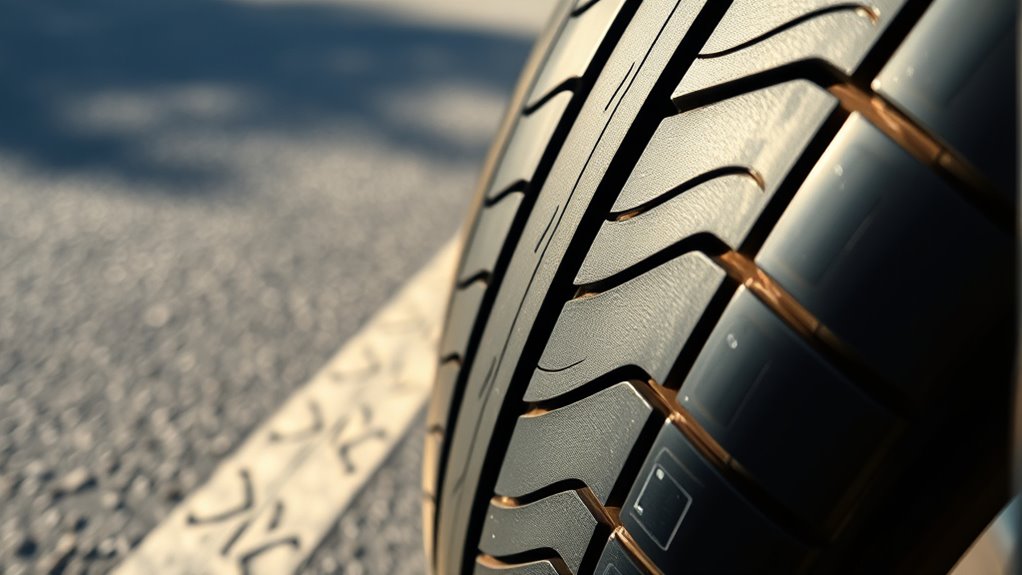

Electric cars wear tires faster because of their increased weight, instant torque, and regenerative braking, which all put extra stress on tires. Stronger sidewalls and specialized tread patterns help improve durability, but your driving style also matters. To get the most out of your tires, keep up with proper maintenance, such as regular pressure checks and rotations. Stick around, and you’ll learn tips to extend your tires’ lifespan and save money over time.
Key Takeaways
- EVs are heavier due to large batteries, increasing tire wear from added mass and torque demands.
- Instant torque and rapid acceleration cause uneven tire contact, accelerating degradation.
- Regenerative braking leads to frequent, smoother contact that can unevenly wear tires.
- High torque and aggressive driving styles speed up tire wear compared to traditional vehicles.
- Proper maintenance, including regular pressure checks and rotations, extends tire life in EVs.
Understanding the Unique Weight and Torque of Electric Vehicles
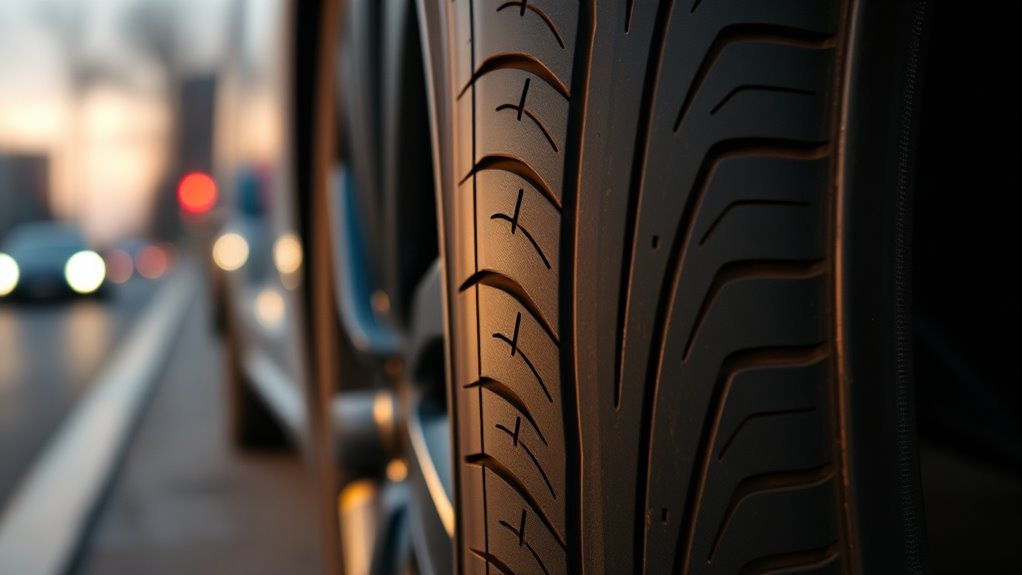
Electric vehicles (EVs) are often heavier than traditional cars because of their large batteries, which adds significant weight. This extra mass impacts tire wear, as your tires must support more weight and handle higher torque levels. Battery efficiency plays a key role here; more efficient batteries can reduce weight, lessening strain on your tires. Additionally, the charging infrastructure influences your driving habits and vehicle design, indirectly affecting tire longevity. Fast-charging options, for example, may cause your EV to generate more heat during rapid acceleration, increasing tire stress. Understanding these factors helps you appreciate why EV tires wear faster and highlights the importance of choosing tires suited for the unique weight and torque characteristics of electric vehicles. Moreover, the Free Floating design of certain EVs can contribute to uneven tire wear, emphasizing the need for regular maintenance and proper alignment. Proper tire maintenance and wear monitoring are essential to extend tire lifespan and ensure safety. Regularly checking tire pressure and tread depth is crucial to accommodate the additional weight, prevent uneven wear patterns, and support the vehicle’s handling capabilities. Additionally, the tires’ construction must accommodate higher torque levels to prevent premature failure and ensure optimal performance.
How Regenerative Braking Affects Tire Wear
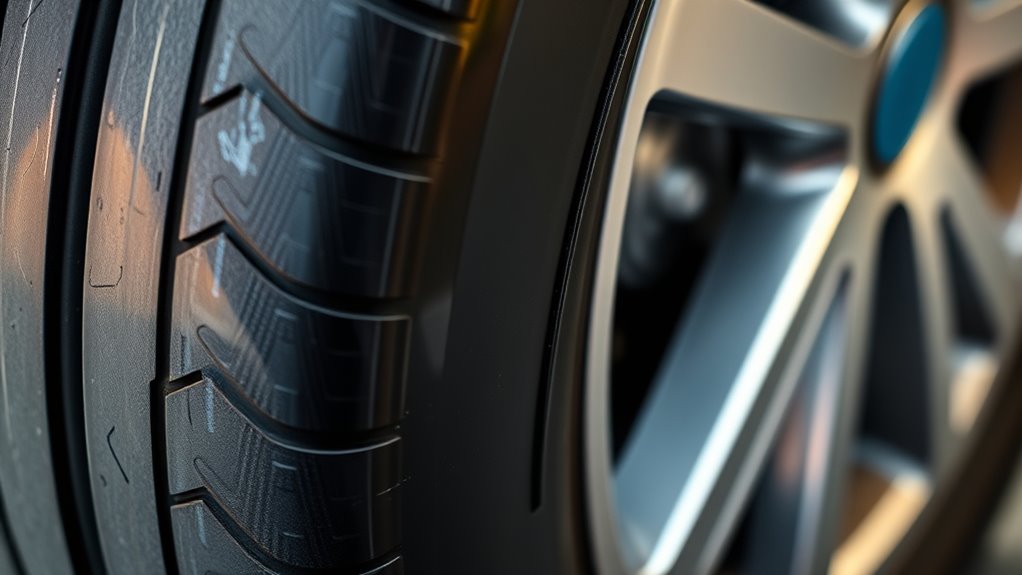
Because regenerative braking systems slow your vehicle by converting kinetic energy into electrical energy, they can influence tire wear in several ways. When you brake using regenerative braking, the system reduces the need for traditional friction brakes, which can lessen some tire stress during deceleration. However, regenerative braking often results in smoother, more frequent adjustments to your tire contact with the road, potentially leading to uneven tire wear over time. The increased reliance on regenerative braking can cause certain tires, especially those on the front axle, to wear faster due to the consistent transfer of energy during deceleration. Additionally, adaptive driving features such as regenerative braking settings can be customized to optimize tire longevity. The design of electric tires and their tire composition may also influence how quickly they wear under these conditions. Proper tire pressure management is essential, as it helps distribute forces evenly across the tire surface and reduces uneven wear. Moreover, tire rotation practices are important to ensure even wear and extend tire life in electric vehicles. Implementing advanced tire monitoring systems can provide real-time feedback on tire health, further supporting maintenance efforts. Overall, while regenerative braking can help extend brake life, it also subtly impacts tire wear patterns, emphasizing the importance of regular tire rotation and maintenance.
The Impact of Instant Torque on Tire Traction and Degradation
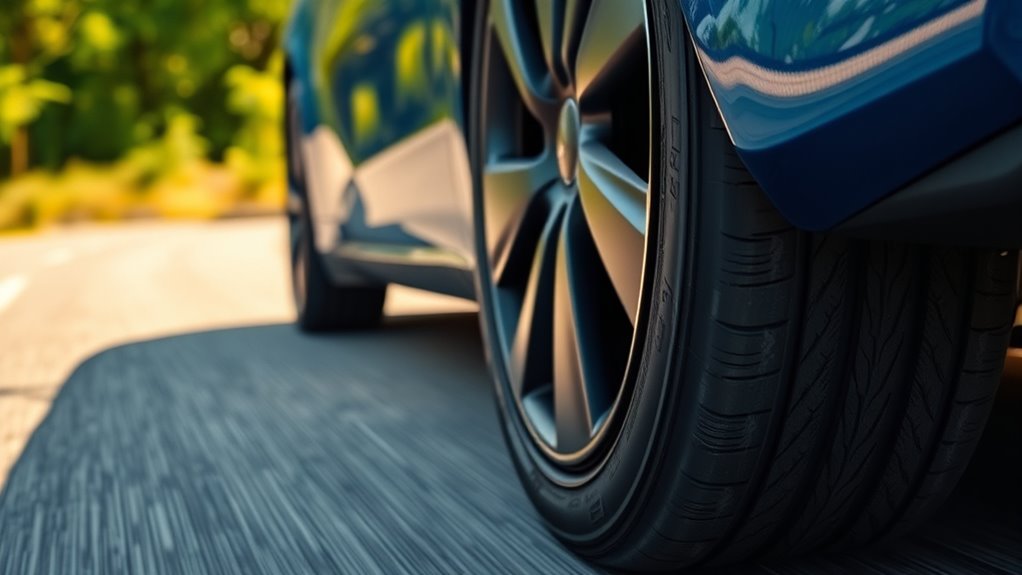
When you hit the accelerator, instant torque can cause sudden power surges that challenge your tires’ grip. This rapid acceleration often leads to grip challenges and uneven wear patterns over time. Understanding how these forces impact tire traction and degradation helps you maintain ideal performance and tire longevity. Additionally, the increased demand on tires during rapid acceleration can accelerate wear and tear, reducing their lifespan more quickly. The high stress from instant torque also influences the traction control systems, which work harder to maintain stability.
Sudden Power Surges
Sudden power surges in electric vehicle tires can substantially impact their traction and longevity. When your EV delivers instant torque, it can cause rapid tire slip or uneven wear, accelerating degradation. To handle these surges, consider these tips:
- Maintain proper tire balancing to distribute forces evenly.
- Regularly perform tire rotation to prevent uneven wear caused by power spikes.
- Adjust driving habits to avoid aggressive acceleration that strains tires.
- Keep an eye on tire pressure, as underinflation worsens traction issues during surges.
Tire Grip Challenges
Instant torque in electric vehicle tires can especially challenge their grip on the road, especially during rapid acceleration. This sudden power surge can cause tire slip and reduce traction, making it harder to maintain control. Tire grip challenges are more pronounced because electric motors deliver immediate torque, unlike traditional engines. To manage this, many EVs employ traction control systems that limit wheel spin and optimize grip. However, maintaining consistent traction under high torque loads can still accelerate tire wear. If you frequently push your EV hard, you’ll notice increased tire degradation due to the stress on contact patches. Understanding these grip challenges helps you drive more smoothly and choose tires designed to handle high-torque demands, ultimately extending tire life and safety. Additionally, selecting appropriate tires that are engineered for high-torque applications can further mitigate wear and enhance overall driving experience. Recognizing the importance of traction management can help drivers adapt their driving style to reduce unnecessary tire stress and prolong tire lifespan.
Accelerated Wear Patterns
The immediate torque delivered by electric motors puts significant stress on tire contact patches, leading to uneven wear patterns over time. This accelerated wear can cause tires to degrade faster if not managed properly. To combat this, you should regularly perform tire rotation to guarantee even wear across all tires. Maintaining proper tire alignment is essential, as misalignment worsens uneven degradation. Additionally, keep an eye on traction control settings, which influence how torque is delivered during acceleration. Consider upgrading to tires designed for EVs, which handle instant torque better. Ultimately, monitor tire pressure consistently, as proper inflation reduces uneven wear and prolongs tire life. Addressing these factors helps mitigate accelerated wear patterns caused by the unique demands of electric vehicle torque.
Differences in Tire Construction for EVs Versus Gas-Powered Cars
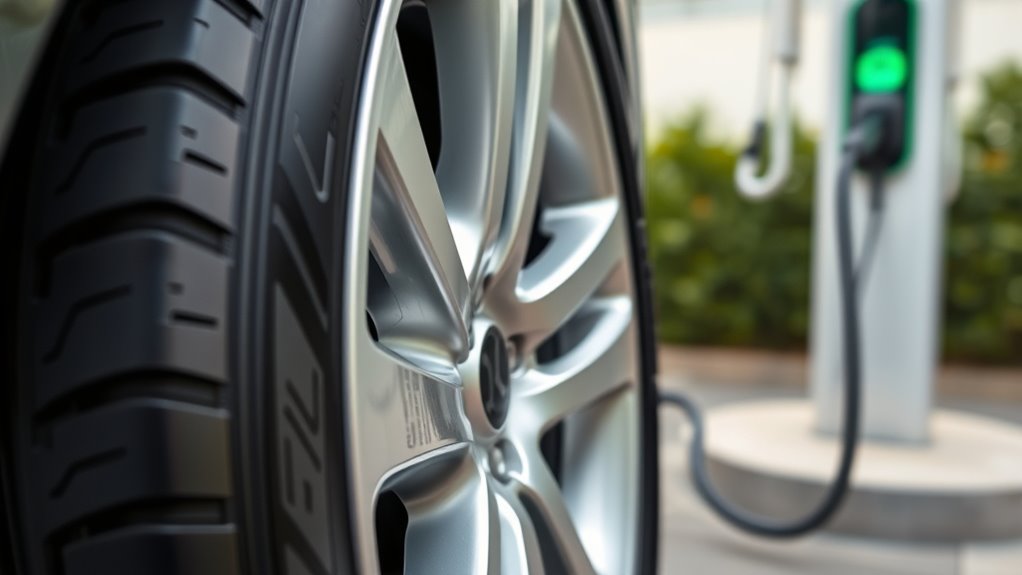
EV tires often have reinforced sidewalls to handle the additional weight and torque from electric motors. They also feature tread patterns optimized for quieter, more efficient rolling. Understanding these construction differences can help you choose the right tires for your EV’s performance and longevity. Additionally, AI tools can assist in selecting tires that best suit your driving habits and vehicle specifications. Proper tire maintenance, including regular rotations and pressure checks, is essential to maximize lifespan, especially given the increased stress placed on EV tires. Incorporating specialized tire compounds designed for EVs can further improve durability and reduce wear. Recognizing that tire design plays a crucial role in managing heat and wear can help extend your tire life even further.
Reinforced Sidewalls Design
Because electric vehicles generate higher torque and experience different driving dynamics, their tires need reinforced sidewalls to handle the increased stresses. Reinforced sidewalls provide extra tire reinforcement, preventing damage from rapid acceleration, cornering, and rough roads. To achieve this, manufacturers incorporate stronger materials and additional layers into the sidewall construction. Here are four key points about reinforced sidewalls:
- They improve durability against side impacts and potholes.
- They help maintain proper tire shape under high torque.
- They reduce the risk of sidewall punctures and blowouts.
- They contribute to overall tire longevity on EVs.
This tire reinforcement ensures your EV’s tires can withstand the unique demands of electric driving, ultimately improving safety and lifespan.
Tread Pattern Differences
Tread patterns for electric vehicle tires differ markedly from those used in gas-powered cars to optimize performance and efficiency. These tire design variations focus on reducing rolling resistance, enhancing grip, and managing noise. EV-specific treads often feature smoother patterns with fewer grooves, which lessen energy loss. Additionally, they may incorporate specialized siping or tread block arrangements to improve traction without increasing wear. Understanding these tread pattern differences helps you select tires that sustain EV performance and lifespan. The table below highlights key distinctions:
| Feature | Gas-Powered Cars | Electric Vehicles |
|---|---|---|
| Tread Pattern Complexity | More aggressive, deeper grooves | Simpler, smoother designs |
| Noise Management | Less emphasis | Focused on noise reduction |
| Energy Efficiency | Moderate | High, minimizes rolling resistance |
| Traction Optimization | Varies by model | Enhanced grip for instant torque |
The Role of Driving Style and Behavior in Tire Longevity
Your driving style and behavior play a significant role in how long your tires last. Aggressive driving, like rapid acceleration and hard braking, causes uneven wear and reduces tire life. To promote eco friendly driving and extend tire lifespan, consider these tips:
- Drive smoothly, avoiding sudden starts and stops.
- Keep your tires properly inflated to the recommended pressure.
- Rotate your tires regularly to promote even wear.
- Practice gentle cornering to reduce stress on tires and improve overall tire maintenance.
- Maintaining proper tire maintenance routines can significantly extend the lifespan of your tires. Additionally, attention to attention to detail in driving habits helps identify early signs of tire issues, preventing premature wear. Being aware of common financial mistakes like neglecting regular maintenance can also help you save money in the long run. Research indicates that understanding tire wear patterns from reputable sources can further enhance your ability to spot issues early, especially since wear patterns can indicate specific underlying problems.
Best Practices for Maintaining and Extending Tire Life in EVs

Maintaining and extending tire life in electric vehicles requires consistent care and proactive habits. Regularly checking and maintaining proper tire pressure is vital, as under- or over-inflation can cause uneven wear and reduce tire lifespan. Aim to keep your tires inflated to the manufacturer’s recommended PSI, which you can find in your vehicle’s manual or on the door jamb. Tire rotation is also essential; rotating your tires every 5,000 to 8,000 miles helps ensure even wear across all tires, especially since EVs often experience more rapid tire wear. Additionally, maintaining smooth driving habits, avoiding aggressive acceleration and braking, and keeping your wheels aligned can further prolong tire life. These simple practices help maximize tire performance and save you money over time.
Selecting the Right Tires for Your Electric Vehicle
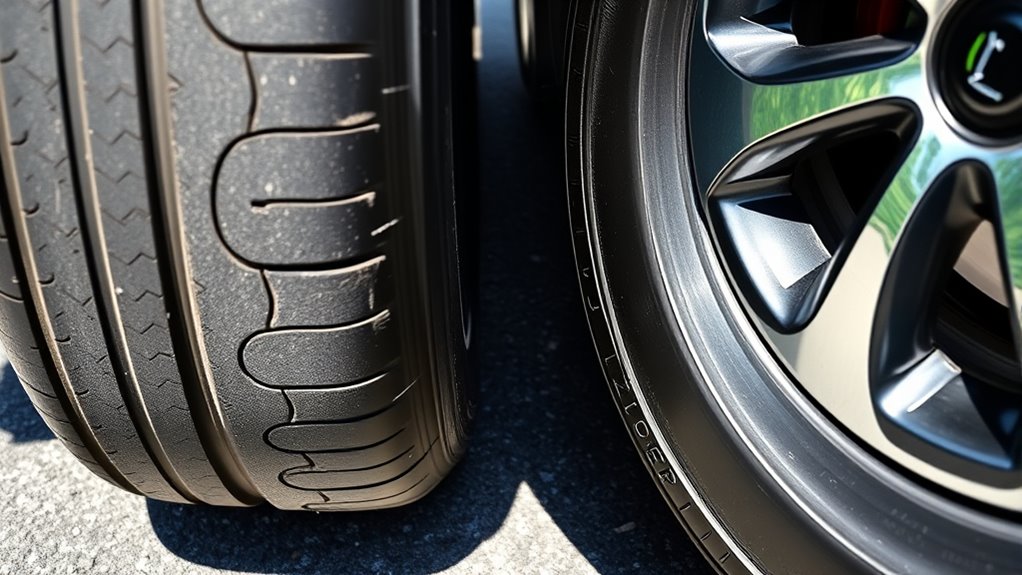
Choosing the right tires for your electric vehicle is essential to optimize performance, safety, and efficiency. When selecting tires, consider options that support eco-friendly materials and promote tire recycling to reduce environmental impact. Here are four key factors:
- Tire Type: Choose low rolling resistance tires to improve efficiency and extend battery life.
- Materials: Opt for eco-friendly compounds that minimize environmental footprint and enhance durability.
- Traction: Prioritize tires with excellent grip for safety during acceleration and braking.
- Durability: Select tires designed to withstand higher torque and faster wear common in EVs, while supporting sustainable practices like tire recycling.
Making informed choices helps your EV perform better while contributing to a greener, more sustainable future.
Frequently Asked Questions
How Does Ambient Temperature Influence EV Tire Wear?
Ambient temperature substantially impacts your EV tire wear because it affects tire material performance. In hot weather, high ambient temperatures cause the tire material to soften, increasing friction and accelerating wear. Conversely, cold temperatures make tires stiffer, reducing grip but potentially causing uneven wear. To prolong tire life, monitor ambient temperature and choose tires suited to your climate, ensuring ideal performance and longevity for your electric vehicle.
Are There Specific Tire Pressures Recommended for Electric Vehicles?
You should always follow the recommended inflation for your electric vehicle’s tires. The manufacturer provides specific tire pressure guidelines in your owner’s manual or on a sticker inside the door frame. Maintaining proper tire pressure ensures ideal performance, safety, and tire longevity. Regularly check your tire pressure, especially as temperature changes, to prevent uneven wear and improve efficiency, ultimately helping your EV tires last longer.
Can Tire Rotation Frequency Differ Between EVS and Traditional Cars?
Your tire rotation schedule can differ for EVs because of their unique demands. With a heavier battery weight and regenerative braking, tire wear patterns shift, often requiring more frequent rotations. Think of it like a dance—EVs need a different rhythm to keep tires balanced. Regular rotations help distribute wear evenly, ensuring your tires last longer and perform better, especially with the added strain from the extra weight and braking forces.
Do EVS Require Specialized Tire Alignment or Balancing?
Yes, electric vehicles often require specialized tire alignment and balancing to optimize tire wear. You should regularly check your tire pressure, as under- or over-inflation can affect alignment settings and cause uneven wear. Proper alignment ensures your tires wear evenly, extending their lifespan. Balancing helps prevent vibrations that can accelerate tire degradation. Keep up with these maintenance steps to ensure your EV’s tires last longer and perform better.
How Do Charging Habits Impact Tire Longevity?
Charging habits are like watering a delicate plant; too much or too little can stunt growth. Frequent rapid charging accelerates battery degradation and increases tire wear due to intense regenerative braking, which causes sudden stops and starts. To preserve your tires and battery life, opt for slower, consistent charging. This balanced approach reduces stress on your vehicle’s components, ensuring smoother rides and longer-lasting tires.
Conclusion
To make your EV tires last longer, treat them like delicate petals in a storm—gentle but resilient. Understand the weight and torque they carry, and adapt your driving style accordingly. Think of your tires as the heartbeat of your electric journey; nurturing them with proper maintenance keeps your ride smooth and steady. With mindful care, you’ll turn your tire wear into a slow dance, ensuring your EV’s performance stays bright mile after mile.