
To extend your EV’s battery life, keep your charge between 20% and 80%, avoiding frequent full charges or discharges. Practice gentle acceleration and deceleration, and maintain steady speeds to reduce strain and energy waste. Minimize exposure to extreme temperatures by parking in shaded areas and using climate controls. Use fast charging sparingly and strategically to prevent undue heat. If you follow these tips, you’ll learn more ways to maximize your battery’s longevity.
Key Takeaways
- Maintain battery charge between 20% and 80% to reduce degradation.
- Practice gentle driving habits, such as smooth acceleration and steady speeds.
- Use climate controls and park in shaded areas to prevent extreme temperature exposure.
- Limit fast charging to essential trips and avoid frequent full charges.
- Regularly monitor battery health and follow manufacturer maintenance guidelines.
Keep Your Battery Charge Level in the Optimal Range

Keeping your battery charge level in the ideal range is essential for prolonging its lifespan. Understanding battery chemistry helps you see why staying within certain charge limits matters. Most EV batteries perform best when kept between 20% and 80% charge; frequent full charges or discharges can accelerate degradation. This is because constant deep cycling stresses the battery’s chemistry, leading to faster capacity loss over time. By maintaining your charge within this suitable window, you minimize stress on the battery’s cells and reduce the number of charging cycles, ultimately extending its overall life. Additionally, many modern EVs feature adaptive charging systems that help optimize battery health by managing charge levels intelligently. Proper charge management not only preserves battery capacity but also enhances overall vehicle performance. Understanding battery lifespan factors can further help you make informed decisions about your charging habits. For example, avoiding frequent rapid charging can significantly reduce heat buildup, which damages battery cells over time. Proper care and monitoring of your battery health can also help detect early signs of degradation, allowing timely maintenance. Consistent care in managing charge levels ensures your battery remains healthy longer, saving you money and avoiding premature replacements. Keep an eye on your charge, and your battery will thank you. Additionally, maintaining optimal temperature conditions during charging can further improve battery longevity.

Porch Shield Waterproof Universal Generator Cover 38 x 28 x 30 inch - for Most Generators 5500-15000 Watt, Black
- Compatibility: Fits 5500W to 15000W generators
- Durable Material: Made of 600D water-resistant polyester
- All-Weather Protection: Protects against sun, rain, snow, wind, dust
As an affiliate, we earn on qualifying purchases.
Avoid Frequent Fully Charging or Discharging
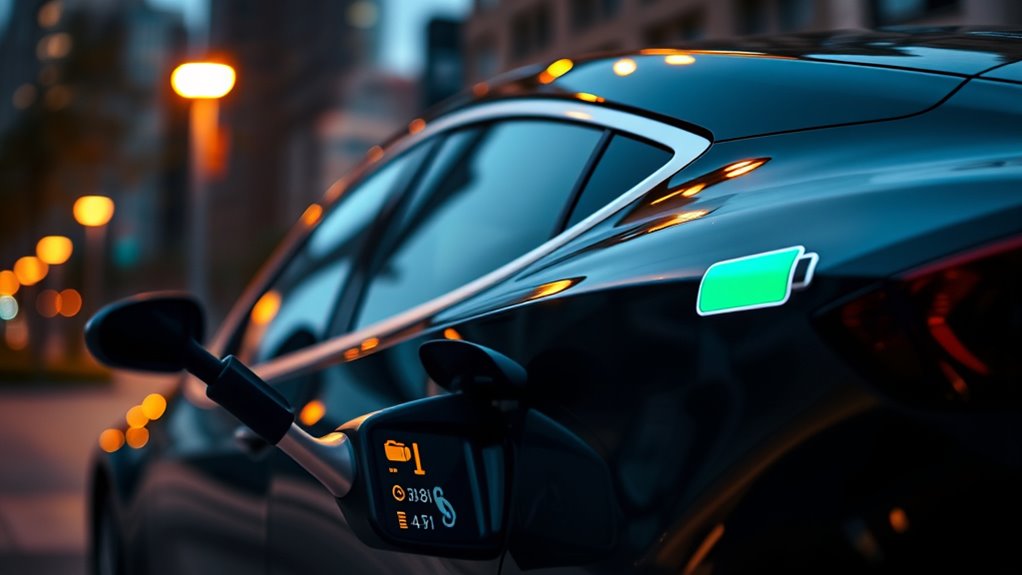
You should avoid fully charging or discharging your battery too often, as it can harm its lifespan. Keeping your charge levels within a safe range helps prevent deep discharges that strain the battery. By maintaining ideal charge levels, you extend your battery’s overall health and performance. Additionally, battery management systems play a crucial role in monitoring and optimizing your battery’s charge cycles to ensure longevity. Properly managing charging habits can further minimize wear and tear on the battery over time. Implementing advanced nanomaterials in battery design can also enhance durability and reduce degradation during use, especially when combined with smart charging techniques that adapt to usage patterns. Incorporating temperature control is another key factor in preserving battery health, as extreme temperatures can accelerate degradation.
Maintain Optimal Charge Levels
To extend your battery’s lifespan, it’s best to avoid frequently charging it to 100% or letting it drain completely. Keeping your EV’s charge level between 20% and 80% helps protect the battery from unnecessary stress, which can degrade its capacity over time. Proper battery storage habits, like maintaining moderate charge levels when not in use, also support longevity. Relying on a robust charging infrastructure ensures you can easily access quick and reliable charging options without pushing your battery to extremes. Consistently maintaining ideal charge levels reduces wear and tear, preserving your battery’s health longer. Additionally, following recommended charging practices can further minimize battery degradation over time. Being mindful of your battery management habits ensures you maximize your EV’s battery lifespan and maintain reliable performance over the years.
Prevent Deep Discharges
Avoiding deep discharges is essential for preserving your battery’s health. When you frequently let your battery fully drain or charge it to 100%, it can harm the cells and shorten lifespan. Instead, aim to keep your battery’s state of charge between 20% and 80%. This prevents stress on the battery and helps maintain peak performance. Regularly performing battery calibration can also help you monitor the true state of charge, ensuring you don’t unintentionally discharge too deeply. Avoiding deep discharges reduces the risk of capacity loss and improves overall longevity. Remember, deep discharges strain the battery’s chemistry, leading to faster degradation. By managing charge levels carefully, you’ll extend your EV’s battery lifespan and ensure reliable performance for years to come. Additionally, understanding the importance of proper charging practices can make your charging routine more effective and prolong your battery’s life.

Portable Solar Generator 300W Portable Power Station with 60W Solar Panel
- Powerful 300W Portable Generator: Charges smartphones, tablets, laptops, and small devices
- Includes 60W Foldable Solar Panel: Recharges via solar, AC, or carport
- Multiple Charging Outlets: AC, DC, USB, and quick charge ports
As an affiliate, we earn on qualifying purchases.
Practice Gentle Acceleration and Deceleration

When you accelerate smoothly and avoid harsh braking, you reduce strain on your battery. Maintaining steady speeds helps conserve energy and keeps your battery healthier over time. Practice gentle driving habits to maximize your battery’s lifespan and efficiency.
Smooth Driving Starts Here
Have you ever noticed how sudden bursts of acceleration or harsh braking can strain your car’s battery? Gentle acceleration and deceleration reduce stress on your EV’s power system, helping preserve battery health. When you accelerate smoothly, your vehicle can utilize regenerative braking more effectively, recapturing energy and improving efficiency. Maintaining proper tire pressure also plays a critical role; underinflated tires increase rolling resistance, making your motor work harder and wasting battery power. By practicing smooth driving techniques—avoiding rapid throttle changes—you help extend your battery’s lifespan and improve overall efficiency. Using solar panels with battery storage can further optimize energy use and support your EV’s needs. Small habits like these make a big difference in maintaining battery performance over time.
Minimize Rapid Braking
Minimizing rapid braking is essential for preserving your EV’s battery life. Your braking habits directly impact energy efficiency, as sudden stops consume more power and strain the battery. Instead, practice gentle deceleration by easing off the accelerator early and anticipating stops. This smooth approach reduces wear on your braking system and conserves energy. Remember, quick or emergency stopping forces your vehicle to use more power to regain momentum, which can shorten your battery’s lifespan over time. By adopting a calmer driving style, you minimize unnecessary strain on your battery, extend its overall health, and improve your vehicle’s efficiency. Incorporating driver behavior modifications can significantly enhance your EV’s longevity. Focus on smooth, gradual deceleration whenever possible, and reserve emergency stopping only for genuine hazards. Additionally, understanding battery management techniques can further optimize your battery’s lifespan. Being mindful of regenerative braking settings can also help maximize energy recovery and preserve battery health. Being aware of driving habits and how they influence energy consumption can lead to more efficient charging routines and better overall battery performance. Ear wax odor can sometimes be an indicator of underlying health issues, so paying attention to unusual smells in your environment can be beneficial. Your habits today will help your EV run reliably for years to come.
Maintain Steady Speeds
Ever wondered how maintaining a steady speed can boost your EV’s battery life? Practicing gentle acceleration and deceleration promotes eco-friendly driving and reduces unnecessary energy drain. When you keep your speed consistent, your vehicle’s motor works more efficiently, minimizing stress on the battery. Traffic flow management plays a key role—by anticipating stops and easing into acceleration, you avoid abrupt braking and acceleration cycles. This smooth driving style not only conserves energy but also extends your battery’s lifespan over time. Instead of constantly speeding up and slowing down, aim for a steady pace, especially on highways or open roads. By adopting these habits, you help your EV operate more efficiently, save energy, and contribute to a cleaner environment.

Takki Solar Generator 120W Peak Portable Power Station with 21W Solar Panel 88.8Wh Battery Power Bank with 110V AC Outlet for Camping RV Tent Home Outages Emergency
- Lightweight and Compact: Weighs only 2.29 lbs, fits in backpack
- Fast Charging: Charges from 0% to 80% in 2 hours
- Includes Solar Panel: Foldable 21W high-efficiency solar panel
As an affiliate, we earn on qualifying purchases.
Minimize Exposure to Extreme Temperatures
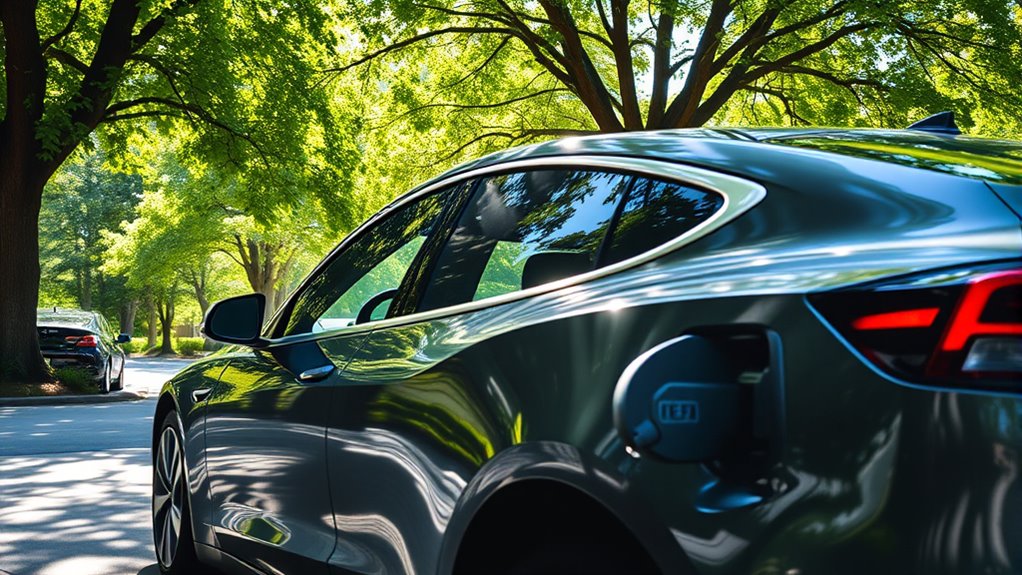
Extreme temperatures can markedly shorten your battery’s lifespan, so it’s essential to keep your device within a moderate temperature range. Exposure to heat or cold accelerates battery degradation, especially during temperature fluctuations. Using climate control features in your EV helps maintain a stable environment, reducing stress on the battery. To protect your battery:
Extreme temperatures speed up battery decline—use climate controls and shade to protect your EV’s lifespan.
- Park in shaded or covered areas during hot weather.
- Use pre-conditioning to warm or cool the cabin before driving.
- Avoid leaving your EV in extremely cold or hot environments for extended periods.
Regularly Maintain and Monitor Battery Health

To keep your battery in perfect condition, it’s important to regularly maintain and monitor its health. Check your vehicle’s battery status through the onboard diagnostics or dedicated apps to catch issues early. Staying aware of battery performance helps prevent unexpected failures and extends its lifespan. Follow the manufacturer’s guidelines for maintenance, including regular software updates and proper charging habits. When your battery reaches the end of its life, prioritize responsible battery recycling to minimize environmental impact. Additionally, review your battery warranty to understand coverage and protection against defects or early deterioration. Keeping track of your battery’s health and adhering to recommended maintenance routines ensures peak performance and longevity, saving you money and supporting sustainable practices.
Use Fast Charging Sparingly and Strategically

While fast charging can quickly power up your battery when you’re in a hurry, using it sparingly and strategically helps preserve your battery’s overall health. Frequent fast charging can generate heat and accelerate battery wear over time. To maximize battery lifespan, consider these tips:
- Limit fast charging sessions to essential situations rather than daily use.
- Plan your charging stops ahead of time for longer trips, balancing fast and regular charging.
- Avoid charging to 100% or letting the battery drop below 20%, especially with fast charging, to reduce stress.
Frequently Asked Questions
How Does Battery Age Affect Overall EV Performance?
As your EV’s battery ages, battery degradation begins, leading to reduced capacity and shorter driving range. Age-related performance declines mean you’ll notice less power and possibly longer charging times. Over time, the battery’s ability to hold a full charge diminishes, affecting overall vehicle efficiency. To maintain peak performance, it’s crucial to monitor battery health, follow proper charging routines, and consider professional assessments as your battery advances in age.
Can Using Aftermarket Chargers Harm My EV Battery?
Using aftermarket chargers can harm your EV battery if they don’t meet charging safety standards or aren’t compatible with your vehicle. Always check for proper aftermarket compatibility and verify the charger is certified. Poor-quality chargers may deliver inconsistent power or incorrect voltage, risking battery damage. To protect your investment, stick with original or certified chargers, and never ignore compatibility guidelines for safe, efficient charging.
What Are the Signs of Declining Battery Health?
You might notice your EV’s range shrinking unexpectedly, signaling battery degradation. Watch for a consistent voltage decline during charging or driving, which indicates your battery’s health is declining. Other signs include longer charging times, sudden power drops, or the battery feeling unusually hot. These clues point to your battery’s performance waning, so keep an eye on them to catch issues early and extend your battery’s lifespan.
Does Software Update Improve Battery Longevity?
Yes, software updates can improve your EV’s battery longevity. They often include enhancements to battery management systems, optimizing charge cycles and temperature control. By installing these updates, you guarantee your vehicle uses the latest technology to protect and extend your battery’s health. Regularly updating your vehicle’s software helps maintain peak performance, reduces degradation, and can even improve overall range, making your EV more reliable and cost-effective over time.
How Does Driving Style Impact Battery Lifespan?
Your driving style considerably impacts your EV’s battery lifespan. Aggressive driving habits, like rapid acceleration and hard braking, strain the battery, causing faster degradation. Instead, use smooth acceleration techniques and gentle braking to reduce stress on the battery. Maintaining consistent speeds and avoiding frequent rapid acceleration helps preserve your battery’s health, ensuring it lasts longer. Adopting these driving habits can make a real difference in extending your EV’s battery longevity.
Conclusion
Think of your EV battery as a delicate plant that thrives with gentle care. By keeping your charge within ideal levels, avoiding extremes, and practicing mindful driving, you help it grow strong and last longer. Regular maintenance and smart charging habits are like watering and pruning — essential for healthy growth. Treat your battery with care, and it’ll serve you well for miles to come, turning every drive into a smooth, reliable journey.