
To protect your EV battery during summer heatwaves, avoid parking in direct sunlight and use shaded spots or sunshades when possible. Precondition your vehicle with the AC before driving, especially if parked in a shaded area, and keep the battery charge between 20-80%. Limit fast charging during the hottest parts of the day, and monitor your battery’s temperature regularly. Ensuring your cooling system works well can make a big difference—discover more tips to keep your EV safe in the heat.
Key Takeaways
- Park in shaded areas and use sunshades to reduce interior and battery heat buildup.
- Pre-cool the vehicle while parked and plugged in to lower cabin and battery temperatures.
- Maintain battery charge levels between 20% and 80%, avoiding extreme charges during hot weather.
- Limit fast charging during peak heat to prevent additional thermal stress and battery degradation.
- Regularly check and maintain cooling systems, coolant levels, and ventilation to ensure effective heat dissipation.
Avoid Parking in Direct Sunlight

To keep your car cooler and protect its interior, avoid parking in direct sunlight whenever possible. Choosing shaded parking spots provides essential sun protection, reducing the heat buildup inside your vehicle. When you park in the shade, your car’s interior stays cooler, which helps prevent damage to the dashboard, seats, and electronics. Shade also minimizes the temperature stress on your EV battery, maintaining excellent performance. If shaded parking isn’t available, consider using a sunshade or window visor to block direct sunlight and keep the interior cooler. Remember, consistent exposure to high temperatures accelerates interior wear and may impact your vehicle’s overall longevity. Prioritizing shaded parking not only preserves your car’s interior but also supports the health of your EV’s battery during those scorching summer days. Additionally, proper ventilation considerations can help dissipate heat more effectively and further protect your vehicle’s components from thermal stress. Ensuring good air circulation inside your vehicle can further aid in maintaining optimal temperatures and prolonging the life of your battery and interior. Being aware of cooling technologies designed for EVs can also enhance thermal management during extreme heat. Incorporating thermal management systems can significantly improve your vehicle’s ability to handle heat stress effectively. Moreover, selecting the right cooling strategies tailored for your vehicle can further optimize its thermal performance in hot weather.
Use Climate Control Settings Wisely
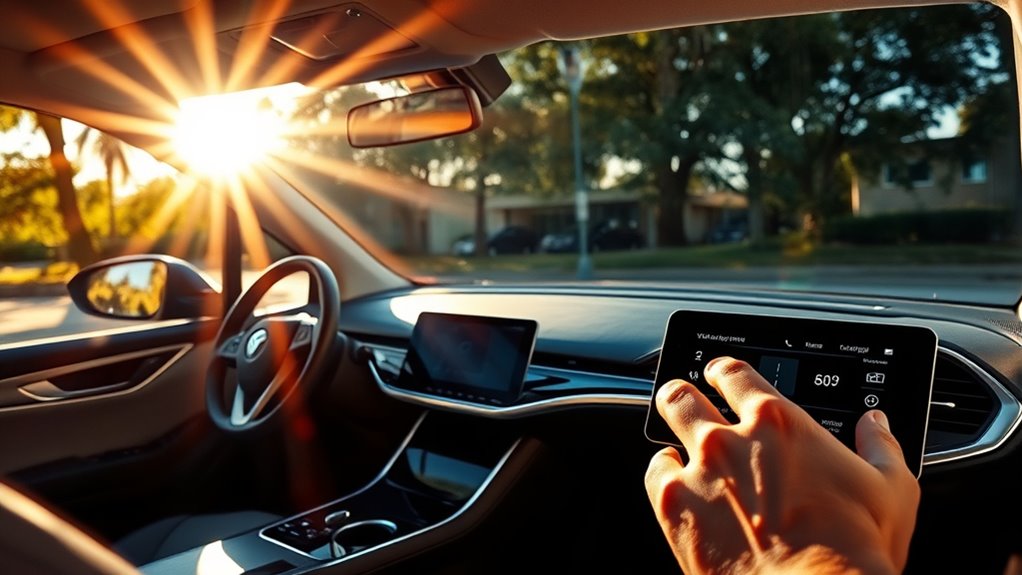
Before you hit the road, pre-cool your car to reduce the workload of the AC once you’re inside. Set the temperature to a comfortable level—not too cold—to save energy and keep the interior cool. Use the ventilation system strategically by opening windows or vents when needed to quickly circulate air without overusing the AC. Being aware of electric vehicle battery management can also help optimize your car’s performance during hot weather, especially since vetted vacuum cleaners demonstrate the importance of proper maintenance and efficiency in device performance. Additionally, understanding climate control settings can help you make smarter choices to extend your vehicle’s battery life and enhance overall comfort during your summer drives. Utilizing smart climate control features can further enhance temperature regulation and energy efficiency during your summer drives. Proper use of climate control systems can also prevent unnecessary strain on your battery caused by excessive cooling or heating.
Pre-cool Before Driving
Since cars can quickly heat up on hot days, pre-cooling your vehicle before driving helps create a more comfortable environment. Use your climate control system to lower the cabin temperature while the car is still parked, which aids in thermal management and reduces the strain on your battery when you start driving. This pre-cooling process allows the vehicle’s battery insulation to work more effectively, minimizing heat buildup inside the battery pack. By cooling the interior first, you prevent the need for excessive air conditioning once on the road, saving energy and preserving battery life. Remember, a well-cooled cabin from the start also reduces the risk of your battery overheating, helping maintain ideal performance during summer heatwaves.
Set Appropriate Temperatures
After pre-cooling your car, setting the right temperature is key to maintaining comfort and efficiency. Proper climate control helps your EV’s thermal regulation system stay within ideal temperature thresholds, preventing the battery from overheating. Avoid setting the AC too cold, as extreme temperatures can strain the system and reduce battery life. Instead, aim for a moderate, comfortable temperature—around 72-75°F—using your vehicle’s climate controls. This balance ensures you stay comfortable without overtaxing the cooling system. Remember, maintaining appropriate temperatures not only improves passenger comfort but also protects your battery’s health during intense heat. Keep an eye on the dashboard indicators, and adjust the climate control as needed to sustain safe thermal regulation throughout your drive. Additionally, Free Floating environments can help dissipate heat more effectively, further safeguarding your EV battery during hot weather. Being mindful of your vehicle’s thermal management can make a significant difference in battery longevity during summer heatwaves. Optimizing ventilation techniques, such as parking in shaded areas or using window vents, can also aid in cooling your vehicle efficiently during prolonged exposure to high temperatures.
Use Ventilation Strategically
Using your vehicle’s ventilation system strategically can help you stay comfortable and conserve energy during hot weather. To optimize airflow, set your climate control to a moderate temperature and avoid overcooling the interior, which can drain your battery. Proper vent placement is key—aim to direct airflow toward your face or torso to quickly improve comfort without running the system excessively. Use the vents near the windshield and side windows to promote airflow circulation, helping to reduce interior heat buildup. Additionally, turning on the recirculation mode can cool the cabin faster, but don’t leave it on too long, as fresh air is better for overall ventilation. These adjustments optimize airflow and help protect your EV battery from unnecessary strain during summer heatwaves. Understanding the importance of vetted privacy and cookie management can also help you control your data while using vehicle apps or online resources related to your EV.]
Precondition Your EV Before Driving

Before hitting the road, pre-cool the cabin to make your drive more comfortable and reduce strain on your battery. Keep an eye on your battery temperature to prevent overheating and maintain peak performance. Taking these steps helps your EV stay efficient and safe in hot weather. Additionally, smartphone settings can be adjusted to monitor and alert you about battery health during extreme temperatures. Being aware of thermal management strategies can further protect your battery during heatwaves. Proper workshop and garage setup, such as ensuring adequate ventilation and cooling, also plays a crucial role in maintaining optimal battery conditions during prolonged hot periods. Incorporating essential oils for temperature regulation may also aid in creating a cooler environment around your vehicle.
Pre-cool the Cabin
Want to beat the heat before you hit the road? Pre-cooling your EV cabin helps protect your battery and guarantees a comfortable drive. Use ventilation strategies like activating the climate control system while still plugged in to precondition the interior. This process cools the cabin without draining your battery during travel. Good cabin insulation keeps the heat out, making pre-cooling even more effective. Imagine:
- Turning on the AC with the car parked in the shade, letting the cool air circulate.
- Using the remote start feature to cool the interior before entering.
- Ensuring vents are open and unobstructed for maximum airflow, creating a comfortable environment.
- Incorporating air purification techniques to improve cabin air quality during pre-cooling, ensuring a healthier environment inside your vehicle.
- Selecting the appropriate ventilation settings to optimize energy efficiency and maintain battery health during hot days.
- Understanding battery thermal management strategies to help keep your EV’s battery cool and performing optimally during summer heatwaves.
- Implementing thermal regulation practices to further enhance battery longevity and performance in extreme temperatures.
Pre-cooling helps maintain excellent battery performance and reduces strain during hot days, making your summer drives safer and more enjoyable.
Monitor Battery Temperature
Monitoring your battery temperature is essential to guarantee ideal performance and safety during hot days. Keep an eye on your EV’s thermal management system, which helps regulate battery heat, preventing overheating. If your vehicle offers preconditioning or remote monitoring, use these features to check the battery’s temperature before driving. Proper battery insulation can also help maintain a stable temperature, reducing heat transfer from the environment. When the battery gets too hot, it can degrade faster or cause safety concerns, so timely monitoring is critical. If you notice elevated temperatures, consider parking in shaded areas or using cooling features if available. Staying proactive ensures your battery remains within safe temperature ranges, prolonging its lifespan and ensuring your safety during summer heatwaves.
Keep Your Battery at an Optimal Charge Level

During hot weather, keeping your battery at an essential charge level is vital to prevent damage and guarantee reliable performance. Maintaining optimal battery capacity helps reduce stress on the cells and minimizes heat buildup. Your charging habits play a crucial role in this process—avoid letting the battery drain completely or stay fully charged for long periods. Instead, aim to keep your battery between 20% and 80%. Visualize these tips:
- Charging your EV in the early morning or late evening to avoid peak heat
- Using a moderate charging rate instead of fast chargers during high temps
- Regularly monitoring your battery’s charge level to prevent extremes
Limit Fast Charging During Peak Heat

Fast charging your electric vehicle during peak heat can accelerate battery degradation and cause overheating, so it’s best to limit its use when temperatures soar. Fast charging generates additional heat, increasing the risk of battery overheating and reducing its lifespan. To protect your battery, avoid frequent fast charges during hot days, especially during midday heat. Instead, plan your charging sessions during cooler parts of the day or use slower charging options. Use the table below to understand how heat impacts fast charging and battery health:
| Charging Speed | Effect on Battery | Recommended During Heat |
|---|---|---|
| Fast Charging | Increases heat, accelerates degradation | Limit or avoid during peak heat |
| Standard Charging | Less heat, safer for battery | Preferred during hot weather |
| Slow Charging | Minimal heat, preserves battery | Ideal in high temperatures |
| Overheating Risk | Battery damage, reduced lifespan | Avoid fast charging in heat |
| Battery Longevity | Prolongs life | Use slower charges in summer |
Regularly Monitor Battery Temperature

Keeping a close eye on your electric vehicle’s battery temperature helps prevent overheating and extends its lifespan, especially during hot weather. Regular monitoring allows you to spot rising temperatures early and take action. This is where good battery insulation and thermal management come into play, helping keep temperatures stable. To effectively monitor, consider using your vehicle’s built-in temperature sensors or dedicated apps that display real-time data. Visualize your battery as a delicate core surrounded by protective layers, working tirelessly to maintain safe heat levels. Remember these key points:
- Feel the battery area for excessive warmth during stops
- Watch for warning lights or temperature alerts
- Keep an eye on ambient conditions that might influence heat buildup
Maintain Your EV’s Cooling System
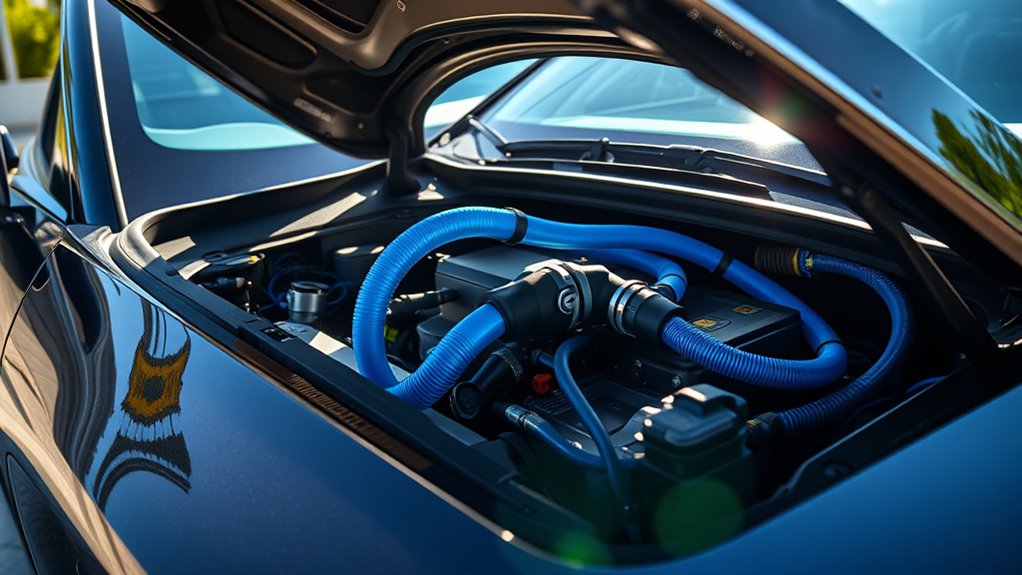
To guarantee your electric vehicle stays cool and performs at its best in hot weather, maintaining your cooling system is essential. Regular cooling system maintenance ensures ideal airflow and prevents overheating. Check that your battery insulation is intact, as it helps regulate temperature and protect the battery from excessive heat. Keep an eye on coolant levels and replace or top off fluids as needed. Inspect hoses and connections for leaks or wear, and listen for unusual noises that may indicate issues. A well-maintained cooling system allows heat to dissipate efficiently, reducing the risk of thermal stress. By staying on top of cooling system maintenance, you help safeguard your EV’s battery and ensure reliable performance during scorching summer days.
Frequently Asked Questions
How Does High Ambient Temperature Affect EV Battery Longevity?
High ambient temperatures accelerate battery degradation, reducing your EV’s lifespan. When it gets hot, the battery’s thermal management system works harder to keep temperatures in check, but prolonged heat can still cause wear over time. To protect your battery, avoid parking in direct sunlight, use pre-conditioning features, and guarantee proper cooling. These steps help maintain ideal thermal management, extending your battery’s longevity and ensuring reliable performance.
Can Using Solar Covers on My Car Protect the Battery From Heat?
Using solar covers on your car can help provide heat protection for your EV battery. Solar covers block direct sunlight, reducing the interior temperature and preventing the battery from overheating. When you cover your vehicle, you’re actively controlling the heat exposure, which can extend battery lifespan and improve performance during hot days. Just make sure the cover is breathable and fits well to maximize its effectiveness in heat protection.
What Are Signs of Overheating or Thermal Stress in My EV Battery?
You’ll notice signs of overheating or thermal stress in your EV battery if the battery temperature rises sharply or if thermal indicators show warning signals. You might experience reduced range, sluggish acceleration, or warning lights on your dashboard. Pay attention to unusual sounds or a sudden decrease in battery performance. Monitoring your vehicle’s temperature gauges and thermal indicators helps prevent damage, ensuring your EV stays safe and efficient during hot weather.
Is There an Ideal Time of Day to Charge During Summer Heatwaves?
You should charge your EV early in the morning or late evening, avoiding peak sunlight hours when temperatures soar. This charging schedule minimizes heat exposure, protecting your battery from thermal stress. During summer heatwaves, timing your charge outside peak sunlight ensures your battery stays cooler and maintains ideal performance. Keep an eye on the weather, and plan your charging sessions strategically to extend your battery’s lifespan and ensure safety.
How Do Different Climate Zones Influence EV Battery Cooling Needs?
Different climate zones greatly influence your EV battery cooling needs. In hot climates, you must prioritize climate adaptation by utilizing advanced cooling technologies like liquid cooling systems and active thermal management. These features help maintain ideal battery temperatures, preventing overheating. In cooler regions, you might need less intensive cooling, but still, guarantee your EV’s thermal system is functioning properly to maximize performance and extend battery life during varied seasonal conditions.
Conclusion
Staying cool is key to protecting your EV battery during summer heatwaves. Did you know that high temperatures can reduce battery lifespan by up to 20%? By following these tips—avoiding direct sunlight, preconditioning, and monitoring battery temp—you can keep your EV running smoothly. Remember, regular maintenance and smart charging habits help prevent heat-related damage, ensuring your vehicle stays efficient and reliable all summer long. Stay cool and drive safely!