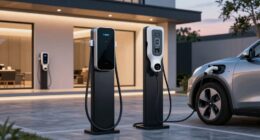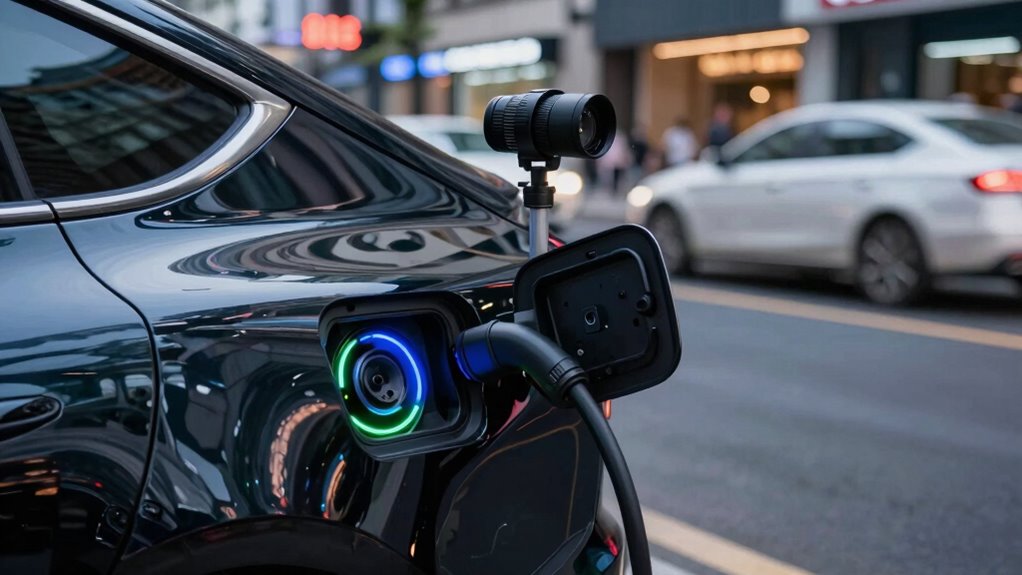
Your EV’s charging speed can vary more than expected due to several factors. As your battery ages, it accepts charge more slowly, especially after frequent fast charging that speeds up degradation. Environmental conditions like cold or hot weather also affect the process. Additionally, not all charging stations provide the same power, and your vehicle’s compatibility matters. System protections and dust on ports can further reduce speeds. To understand these influences better, there’s more to explore below.
Key Takeaways
- Battery age and degradation reduce its ability to accept high charging speeds over time.
- Compatibility between the vehicle’s capacity and charging station output affects actual charging speed.
- Temperature extremes, such as cold or hot weather, can slow down charging to protect the battery.
- Charging management systems may limit power to prevent overheating or damage, reducing speed.
- Dust and dirt on ports can impair connections, leading to slower charging than expected.
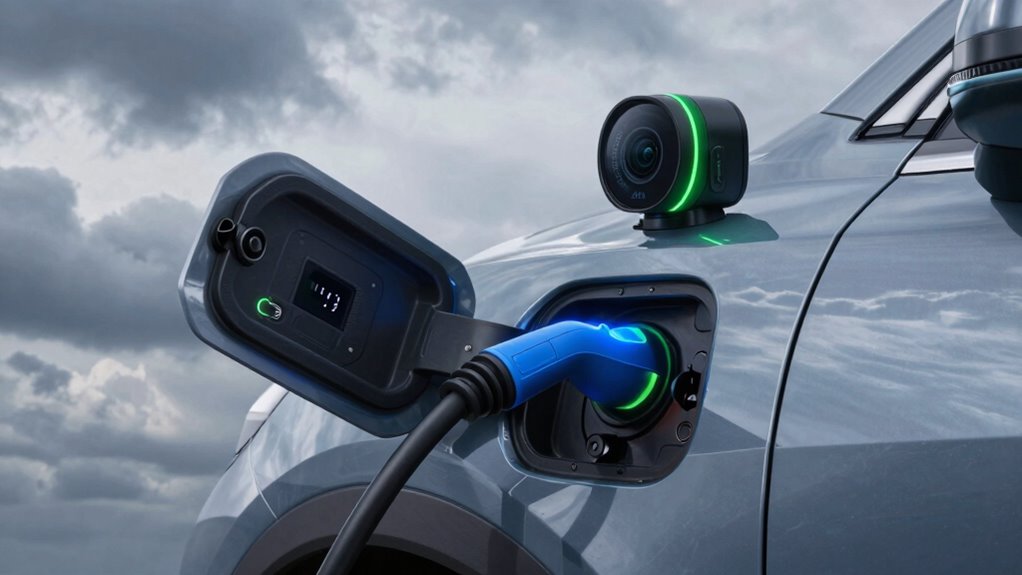
Electric vehicle (EV) charging speeds vary widely, influencing how quickly you can get back on the road. You might expect a straightforward process—plug in, wait, then drive off—but the reality is more complex. Several factors cause these speeds to fluctuate more than you might think, and understanding them can help you make smarter decisions about charging your EV.
One key factor is battery degradation. Over time, your battery’s ability to accept charge diminishes, especially if you frequently rely on fast charging. As batteries age, they become less capable of handling high power inputs without risking damage, which often results in slower charging speeds. This process is influenced by microplastics in dust, which can settle on charging ports and interfere with optimal contact, further affecting charging efficiency. It’s not an immediate change but a gradual process, meaning your EV might start charging more slowly after several thousand miles or years of use. Recognizing this helps you set realistic expectations, especially if you’re used to rapid top-ups at fast chargers. It also underscores the importance of gentle charging habits to prolong battery health, preserving *ideal* charging speeds over the vehicle’s lifespan.
Battery degradation over time reduces charging speed, emphasizing the importance of gentle charging habits to maintain optimal battery health.
Charging station compatibility also plays a *considerable* role in speed variations. Not all stations deliver the same power levels, and your EV’s ability to draw maximum current depends on its specifications. Some models support ultra-fast chargers, capable of adding hundreds of miles of range in just minutes, while others are limited to slower, Level 2 chargers. If you connect to a station that isn’t compatible with your vehicle’s fast charging capabilities, your charging speed will drop *notably*. Additionally, even when your vehicle supports high-speed charging, the station itself must be equipped to deliver that power. This mismatch often results in longer wait times than expected, especially if you’re not aware of your vehicle’s charging limits or the station’s output capacity. It’s also helpful to consider the availability of charging stations in your area to better plan longer trips and avoid delays.
Beyond hardware, software and environmental factors also influence charging speeds. Your vehicle’s charging management system might reduce power intake to protect the battery from overheating or to manage overall health, leading to slower charging if conditions aren’t ideal. Temperature plays a role too—cold weather can slow down chemical reactions inside your battery, reducing charging efficiency, while extreme heat can trigger protective measures that throttle charging speeds.
In the end, these variables—battery health, station compatibility, environmental conditions—combine to make EV charging speeds more unpredictable than a simple plug-and-play process. By understanding these factors, you can plan your charging stops better, avoid frustration, and extend your battery’s lifespan. Recognizing that charging isn’t always a quick fix helps you manage expectations and ensures you’re making the most of your EV experience.
Frequently Asked Questions
Do Temperature Changes Affect EV Charging Speeds?
Temperature changes do affect EV charging speeds because colder or hotter weather impacts battery chemistry, making it harder for batteries to charge efficiently. When temperatures are extreme, your vehicle’s charging system might slow down to protect the battery, especially if the charging infrastructure isn’t equipped with thermal management. To optimize charging, pre-condition your battery and use charging stations designed to handle temperature variations effectively.
Can Software Updates Improve Charging Speed?
A software update can dramatically boost your EV’s charging speed, almost like giving it superpowers. Software optimization and firmware enhancements directly improve how efficiently your vehicle communicates with chargers, reducing wait times. Manufacturers release updates to fix bugs, optimize charging algorithms, and enhance compatibility. So, yes—updating your EV’s software can make a noticeable difference, turning long charging sessions into quick, almost instant power-ups.
How Does Charger Age Impact Performance?
Charger age impacts performance because, over time, battery degradation and power output decline occur. As chargers age, their internal components wear down, reducing efficiency and charging speeds. You might notice longer charging times or inconsistent performance. Regular maintenance and upgrades help mitigate these issues, but ultimately, older chargers tend to deliver slower speeds due to the natural decline in power output and the effects of battery degradation.
Do Different EV Models Charge at Different Rates?
Think of EV models as different athletes—each with unique strengths. Yes, they charge at different rates because of variations in battery capacity and how their charging systems interact with the charging infrastructure. Some cars can take advantage of faster chargers, while others might need more time. Your vehicle’s design and battery tech influence charging speed, so understanding your model helps set expectations for how quickly your car gets back on the road.
Is There an Optimal Time to Charge for Speed?
The best time to charge for speed is when your battery is moderately empty, ideally around 20-80%, to avoid slowing down charging due to battery capacity considerations. Make sure your charging station is compatible with your EV to maximize speed. Charging at off-peak hours can also help, but focus on using high-capacity chargers for faster results, especially when your vehicle’s battery capacity allows for rapid charging.
Conclusion
Understanding why EV charging speeds fluctuate helps you plan your trips better. Did you know that charging speeds can vary by up to 50% depending on factors like temperature and charger type? This means your quick stop might not always be so quick, especially in cold weather. Staying aware of these variables guarantees you can optimize your charging strategy, saving time and reducing frustration. So next time you plug in, remember—speed isn’t just about the charger; it’s about the conditions too.