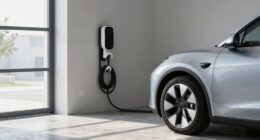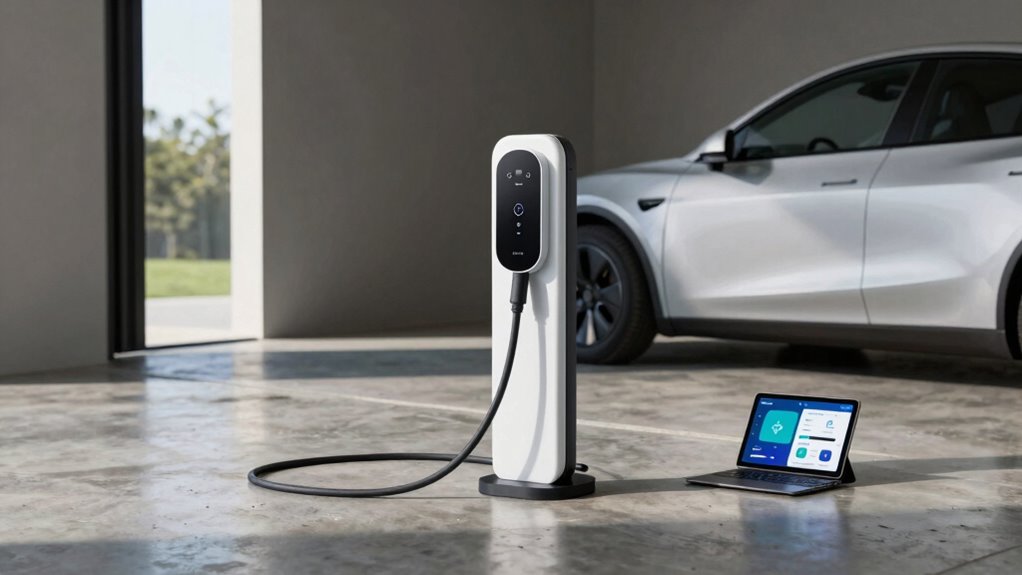

When buying a home charger, focus on future-proof features like higher power output, compatibility with various EV models, and smart capabilities such as app control and scheduling. Consider modular components for easy upgrades and check your electrical capacity to avoid limitations later. Stay aware of emerging charging standards and protocols to guarantee your charger remains relevant. By considering these factors now, you’ll make a smart investment that adapts to evolving EV technology; keep exploring for more insights.
Key Takeaways
- Choose chargers supporting higher power levels to accommodate faster future vehicle charging needs.
- Ensure compatibility with various EV models and future connector standards through universal connectors or adapters.
- Opt for modular and upgradable chargers to adapt to evolving technology and household electrical capacity.
- Select chargers that support emerging protocols and standards for long-term relevance.
- Balance current charging needs with flexibility for upgrades to extend the charger’s lifespan and utility.
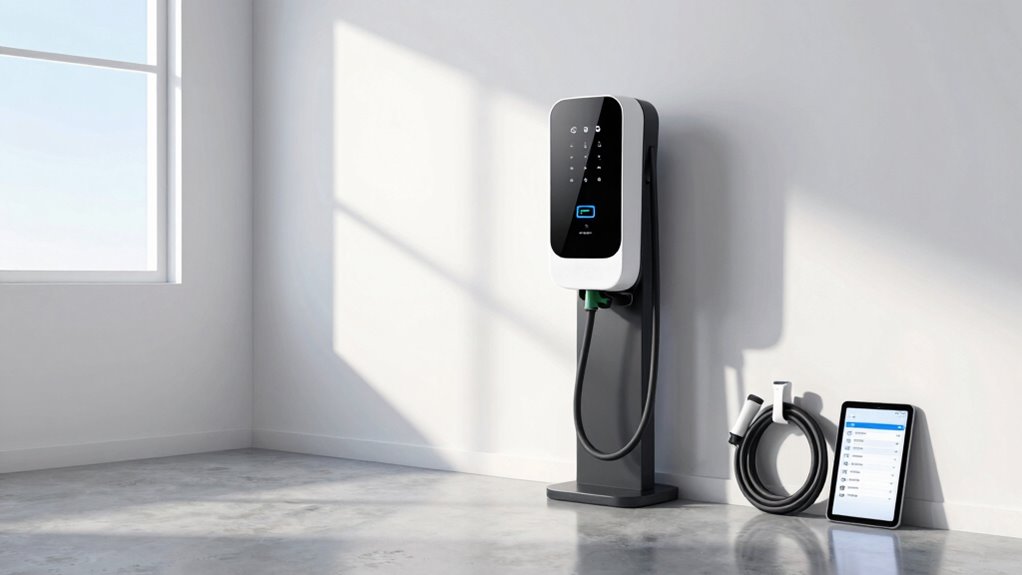
When you’re buying a home charger for your electric vehicle, thinking about future-proofing can save you money and hassle down the line. As EV technology advances rapidly, selecting a charger with the right features guarantees you won’t need to upgrade too soon. The first key aspect to consider is charging speed. A faster charger can considerably cut down your charging time, making your daily routine more convenient. While a Level 2 charger offering 240 volts is standard, you might want to look for units that support higher power outputs if your vehicle can handle them. Faster charging options are especially beneficial if you’re planning to keep your EV for years or anticipate upgrading your vehicle, as they’ll be able to utilize higher power levels without needing a new charger.
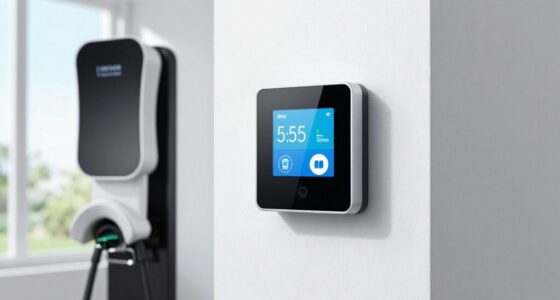
Beyond charging speed, compatibility features are equally important. Your home charger should be compatible with various EV models and future vehicles you might purchase. Check for universal connectors or adapters that can accommodate different plug types. Additionally, look into smart features like Wi-Fi connectivity or app control, which allow you to monitor charging status, schedule charging sessions, and receive updates remotely. These features help you optimize your charging and adapt to new EV models or charging standards as they emerge. Keeping an eye on industry standards can help you stay ahead of upcoming changes and ensure your charger remains relevant. Staying informed about emerging EV technologies can also guide your choices to future-proof your setup. Moreover, considering the availability of upgrade options in your area can help you select a charger that will grow with your needs over time.
Ensure your charger supports multiple EVs and smart features for seamless, future-ready charging management.
Another aspect of future-proofing involves considering the electrical capacity of your home. Installing a charger with adjustable power settings or one that can be upgraded easily means you won’t need to replace it when your electrical system or household needs change. Some chargers are designed with modular components, enabling you to upgrade their capabilities without full replacement, which can be a wise investment. Additionally, evaluating your current electrical infrastructure can help identify potential upgrades needed to support higher charging capacities in the future.
You should also think about the infrastructure in your area, particularly the availability of higher power supplies or upcoming charging standards. Opting for a charger that supports future charging protocols guarantees compatibility with evolving standards, preventing obsolescence. If your area plans to upgrade to faster charging stations or new connector types, having a versatile home charger will make adopting those new standards seamless.
Ultimately, future-proofing your home charger involves balancing current needs with anticipated advancements. Prioritize models with flexible charging speeds, broad compatibility, and upgrade options. Doing so ensures your investment remains relevant and functional for years to come, saving you money and reducing the need for early replacements. Staying informed about EV and charging technology trends will help you make smarter choices, ensuring your home charger continues to meet your needs well into the future.
Frequently Asked Questions
What Is the Average Lifespan of a Home EV Charger?
You can expect a home EV charger to last around 10 to 15 years, depending on charger durability and usage. To guarantee longevity, look for models with solid build quality and extensive warranty coverage. Proper installation and regular maintenance also help extend its lifespan. Choosing a charger with a good warranty gives you peace of mind, knowing that any potential repairs or replacements are covered, protecting your investment over the years.
How Often Should I Upgrade My Home Charging Station?
Like upgrading your software, you should consider upgrading your home charging station every few years to keep up with technology. Typically, you’ll want to check charger compatibility with new EV models and charging standards. An upgrade frequency of about 3-5 years guarantees your charger remains efficient and compatible. Staying proactive prevents compatibility issues, maximizes charging speed, and future-proofs your investment, so you’re always ready for the next step in EV technology.
Are There Any Upcoming Standards for EV Chargers?
Upcoming standards for EV chargers are focusing on wireless compatibility and faster charging speeds. You should look for chargers that support emerging wireless charging tech and are capable of handling higher voltages for quicker charging times. This way, you’ll stay ahead of the curve, ensuring your home charger remains compatible with future EV models and charging infrastructure advancements. Investing in adaptable technology now saves you from frequent upgrades later.
Can I Use a Future-Proof Charger With Older Vehicles?
Coincidentally, your future-proof charger can work with older vehicles, but you need to check vehicle compatibility and charger compatibility first. Many modern chargers are designed to be adaptable, supporting various charging standards. However, some older vehicles might require specific connectors or power levels. Always verify that your vehicle’s charging port and power needs match your chosen charger to confirm safe and efficient charging, now and in the future.
What Are the Hidden Costs of High-Capacity Chargers?
High-capacity chargers may seem worth it but watch out for hidden costs. The cost versus benefit might favor a smaller unit initially, especially considering installation considerations like wiring upgrades or additional electrical panels. These upgrades can substantially increase expenses. Plus, a high-capacity charger might be underutilized if your current vehicle doesn’t need that power, leading to unnecessary expenses. Weigh these factors carefully to avoid overspending on features you won’t fully utilize.
Conclusion
By choosing a home charger with future-proof features, you’re planting a seed for effortless growth. Think of it as laying a sturdy foundation that can support your EV journey for years to come. With smart, adaptable technology, you’ll stay ahead of the curve and avoid costly upgrades. So, invest wisely today, and watch your home charging setup flourish like a well-tended garden—ready to blossom as your needs evolve.