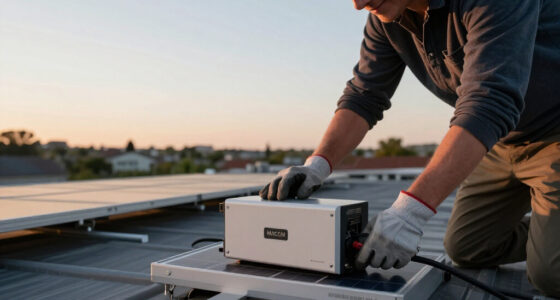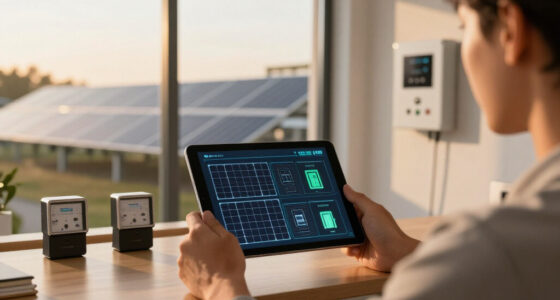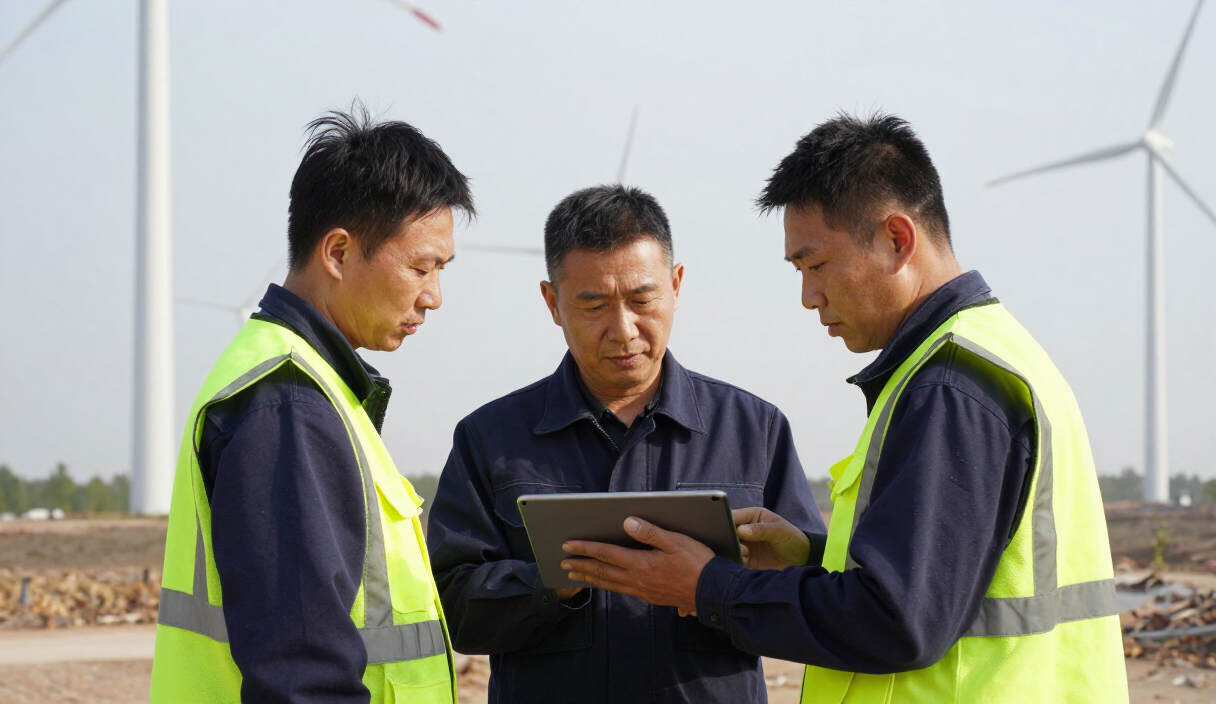
Renewable-energy construction rarely fits neatly inside a single site boundary. A wind farm can involve dozens of turbine positions, rotating crews and acceptance walks spread across a wide area. Some locations have reliable connectivity; others have dead zones. Yet the obligation to record what happened does not disappear when the signal does.
Wind farms · documentation beyond the signal
The evidence has to follow the work.
Across turbine positions, rotating crews and dead zones, documentation cannot wait for a return to the desk. Gewerkton makes the field the point of capture—and keeps the resulting record connected.
Dead zones do not break the record
Crews can capture observations during acceptance walks without a live connection. Synchronisation follows when coverage returns.
Content languages
Cross-border teams can work in their own language—including Chinese, Korean and Vietnamese—while the evidence original remains unambiguous.
AI providers through BYO-AI
Customers bring their own keys and select provider regions across the EU, US and Asia, including mainland China.
Data-residency paths
Projects can use an EU cloud or their own infrastructure—treating hosting as a project choice for global delivery.
One evidence chain across the project
Field information stays usable beyond the turbine position, the crew and the person who first recorded it.
“On site, what counts is what’s proven.”
This is the environment Gewerkton is designed to address. The voice-first construction documentation and defect management platform treats documentation as field work rather than an administrative step postponed until someone returns to a desk. For wind farms, renewable-energy projects and charging-infrastructure construction, that distinction matters: the evidence has to follow the work across distributed locations, changing teams and periods without connectivity.
The guiding idea is expressed in Gewerkton’s marketing line: “On site, what counts is what’s proven.” For sustainable construction, proof is more than a project-control concern. Documentation discipline is what makes claims about how something was built verifiable. A renewable asset may represent the energy transition, but its construction still depends on clear records of field activity, decisions, defects, acceptance and handover.
As an affiliate, we earn on qualifying purchases.
Distributed sites change the documentation problem
A conventional construction site can already produce a demanding flow of reports, photographs, instructions and open items. Wind farms add distance and repetition. Work moves between turbine positions, while crews and responsibilities rotate. Acceptance walks happen in the field, not in a stable office environment. Meetings may cover issues affecting several positions, but the resulting decisions still need to remain connected to the relevant work.
That creates a basic challenge: documentation must stay coherent even when the project itself is geographically fragmented. A note that makes sense to one person at one turbine position is not automatically useful to another crew arriving later. A meeting decision is valuable only if it remains available as part of the project record. A documented defect needs its evidence, deadline and context rather than becoming an isolated line in somebody’s personal notes.
The same pattern appears in charging-infrastructure construction. Although the physical assets differ, the sites can still be distributed and the work can still involve teams moving between locations. Field documentation therefore has to work where the construction activity occurs, including places where a live connection cannot be assumed.
Gewerkton Field is the product line at the centre of this workflow. It is the voice-first construction site app, covering dictation to evidence, defects, daywork reports, takt and portal. Its role is to make the field the point of capture rather than the place from which information must later be reconstructed.
offline field data collection tools
As an affiliate, we earn on qualifying purchases.
As an affiliate, we earn on qualifying purchases.
Offline capture is essential in renewable-energy field work
Dead zones are not an edge case when documentation takes place across widely distributed renewable-energy sites. A field acceptance walk may continue beyond reliable coverage, and the team still needs to record what it encounters. Waiting for connectivity creates a gap between observation and capture. Offline capture allows documentation to continue in that moment, with the information synced later.
This does not make connectivity irrelevant. It separates the act of recording from the availability of a network. The worker can capture information while standing at the relevant location, and the system can handle synchronisation when a connection becomes available. For rotating crews, this supports a more continuous record across turbine positions instead of making each dead zone a break in the documentation chain.
Voice-first capture also matches the practical rhythm of a field walk. The Field app turns dictation into evidence and supports the recording of defects and daywork reports. The emphasis is not on adding another communication channel. It is on converting spoken site information into structured project documentation while the context is still immediate.
That distinction is especially useful on distributed sites. The person documenting the work does not have to rely solely on memory after moving to another turbine position or returning from the field. The original capture belongs to the project record, where it can support later review, reporting and acceptance.
multi-language field reporting devices
As an affiliate, we earn on qualifying purchases.
As an affiliate, we earn on qualifying purchases.
Keeping meetings and defects connected across turbine positions
A wind-farm meeting may involve issues from many parts of the project. The risk is not simply that a decision will be forgotten. It is that the decision becomes detached from the turbine position, crew or task to which it applies. As the project moves forward, that separation makes it harder to understand what was decided and what still requires attention.
Gewerkton’s broader approach connects field capture with a workspace for plans and models and a coordination layer for operations and data. This matters because site records do not exist in isolation. Evidence gathered in the field may need to remain usable alongside plans, models, reports and information from third parties.
Gewerkton Studio is the browser workspace for plans and models. Where no model exists, the site team can create one in the browser. That provides a way to organise project information even when the job did not begin with a complete model already in place.
Gewerkton Cloud handles operations and model or data coordination between Field, Studio and third parties. Together, the three product lines form one branded platform: Field for site capture, Studio for the browser workspace, and Cloud for coordination.
For renewable-energy construction, Field carries the main story because the critical information begins on site. Studio and Cloud extend that information into the project environment without changing the basic principle: capture the evidence where the work occurs, then keep it available as the project moves across locations and teams.
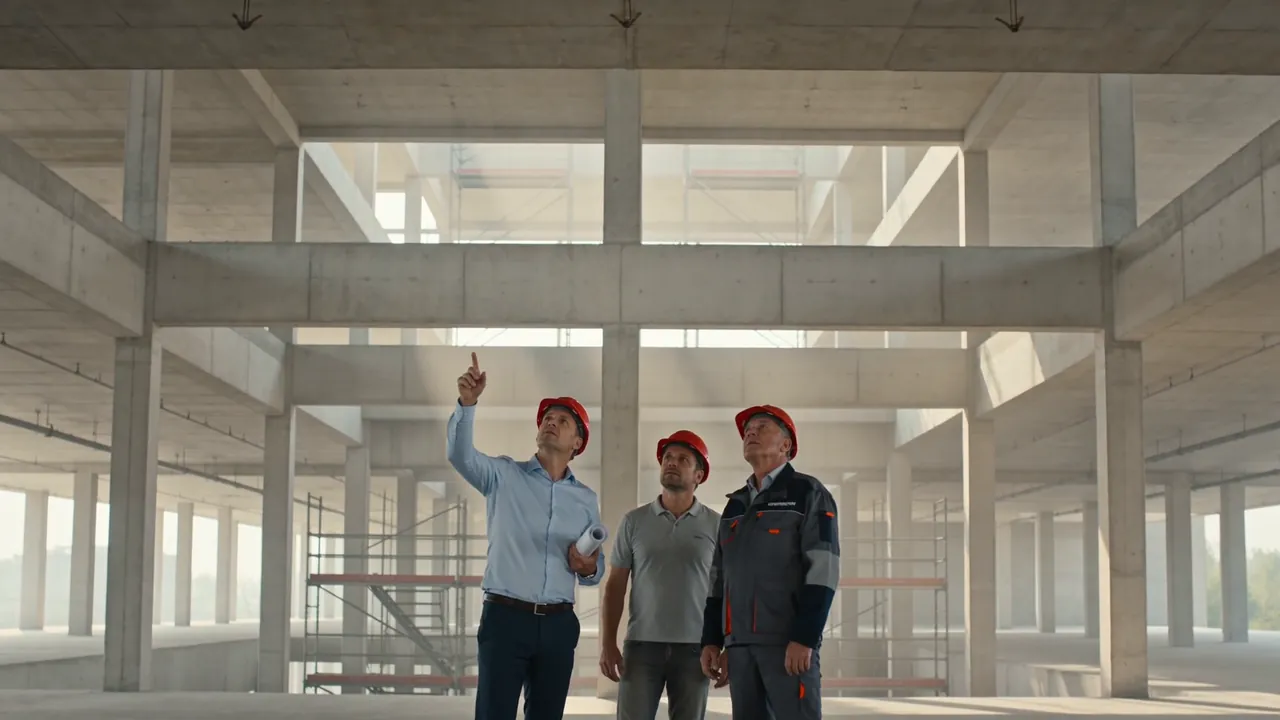
cloud-based project management for wind farms
As an affiliate, we earn on qualifying purchases.
As an affiliate, we earn on qualifying purchases.
Documentation is part of a credible sustainability story
Renewable assets are highly visible symbols of sustainable infrastructure. Charging sites also sit close to the public discussion around cleaner transport and energy use. But the environmental purpose of an asset does not, by itself, document the construction process behind it.
For eco-conscious audiences, this is an important separation. A sustainability claim becomes more credible when the underlying work can be checked against a consistent project record. Field evidence, recorded decisions, acceptance information, daywork reports and documented defects make it possible to examine what happened rather than relying on an account assembled after the event.
Documentation discipline is therefore not peripheral to sustainable building. It is part of what makes the work verifiable. The value lies in continuity: records need to survive changing crews, multiple locations, language differences and periods without connectivity. When information remains attached to the project, renewable construction can be discussed in terms of evidence as well as intention.
This is also where the phrase “On site, what counts is what’s proven” has practical meaning. Proof is not created by a slogan. It is created through repeated field capture and a record that remains usable beyond the person who first observed the work.
Cross-border crews need more than simple translation
Large energy and infrastructure projects can bring together teams from the EU, US and APAC. Gewerkton supports 27 content languages, allowing people on the same project to work in their own language while the evidence original remains unambiguous. For projects in Asia, this includes multilingual capture and reporting for Chinese, Korean and Vietnamese crews.
The distinction between language access and the original evidence matters. Multilingual reporting helps information circulate across teams, but the project still needs a clear underlying record. Gewerkton’s approach is intended to let each participant work in their own language without making the evidence itself uncertain.
Regional AI-provider choice is part of the same global-market design. Gewerkton’s BYO-AI model supports 13 AI providers, lets customers bring their own keys and offers selectable regions covering the EU, US and Asia, including mainland China. The stated aim is to avoid vendor lock-in while allowing projects to choose a provider region appropriate to their setting.
Data residency is also selectable: projects can use an EU cloud or their own infrastructure. For teams operating across borders, language, provider region and infrastructure are therefore treated as project choices rather than a single fixed setup.
German commercial integration within a global platform
Gewerkton was born in the German market and has its deepest German commercial integration there, including GAEB, REB, XRechnung and DATEV. At the same time, it is positioned for global markets through its language coverage and regional AI-provider options.
That combination is relevant to renewable-energy and charging-infrastructure work because the sector often spans local commercial processes and international project teams. A platform can require substantial regional depth without limiting every project to one language, one provider or one infrastructure arrangement.
The six deployment fields described by Gewerkton reflect that range. Alongside wind farms and renewables, they include data centres and industrial plants, housing and building construction, infrastructure and tunnels, cross-border teams, and projects in Asia.

The documentation needs differ by field. Data centres and industrial plants involve many trades working in parallel under tight deadlines, with meeting decisions becoming trade-sorted task lists. Housing and building construction includes defects with a photograph and deadline, dictated daywork reports, and signatures on the device at handover. Infrastructure and tunnel projects run for long periods, generate many change orders and need instructions backed by original audio.
These are separate deployment settings, but they share one principle: site information needs to become durable project evidence. In wind and renewables, distribution, rotating crews, field acceptance and offline capture make that requirement particularly visible.
A beta product with an unusual development model
Gewerkton is in beta now. A public beta is planned for fall 2026. That status should be understood plainly: this is not being presented as a finished, generally released product.
The platform is being built by a solo founder directing a fleet of coding agents using Codex and Claude. In one night, that fleet shipped 21 software packages, verified with negative controls and mutation tests. The development approach is unusual, but the relevant point for prospective users remains the current product status. Field, Studio and Cloud are beta products, with the public beta still planned rather than already available.
The surrounding marketing operation follows an equally self-contained approach. The Gewerkton website is available in 27 languages and uses a fully egress-free architecture with zero trackers and no cookie banner. Its media bank contains more than 51 self-produced clips and posters.
What the Field approach means for renewable projects
For a wind-farm team, the appeal of voice-first documentation is not abstract automation. It is the ability to keep capturing evidence while work moves between turbine positions. It is the ability to continue in a dead zone and sync later. It is the ability to document defects, daywork and acceptance activity without treating the field record as an afterthought.
The strongest use case is continuity across a project that refuses to stay in one place. Distributed sites make fragmented information more likely. Rotating crews make personal knowledge less dependable. Cross-border teams increase the need for multilingual access. Offline areas expose any workflow that assumes permanent connectivity.
Field addresses the point where those pressures meet: the site itself. Studio provides the plan and model workspace, including browser-based model creation when no model exists. Cloud coordinates operations and model or data exchange between the product lines and third parties. The structure is straightforward, but the centre of gravity for wind farms remains the Field app.
Renewable construction cannot make every site connected, every crew permanent or every project monolingual. It can, however, treat documentation as infrastructure for the work. When meetings, evidence and defects remain documented across turbine positions, the project has a clearer basis for acceptance, coordination and later review.
That is also the link between construction quality and environmental credibility. Sustainable assets need more than a green purpose. They need a record showing how field work, decisions and open issues were handled. On a wind farm—or an EV-adjacent charging-infrastructure site—that record has to begin where the work is happening, even when the network does not.