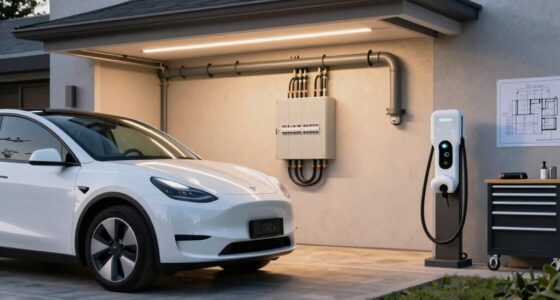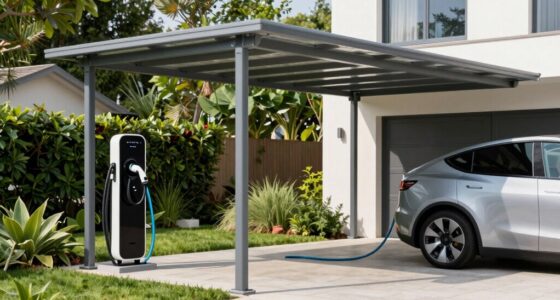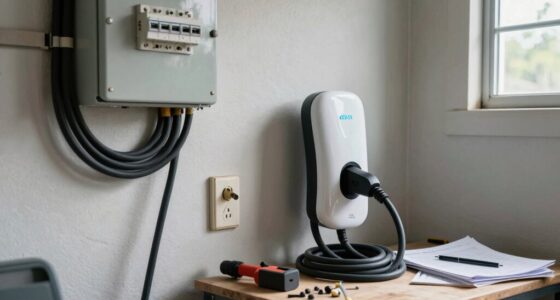
Even with an electric vehicle, garage ventilation remains essential because charging or malfunctions can release harmful VOCs and gases that build up in confined spaces. Without proper airflow, you risk exposure to health issues like dizziness, nausea, or worse over time. Good ventilation helps clear out these pollutants, protecting your health and maintaining indoor air quality. If you want to understand more about how ventilation safeguards you and your garage, keep going.
Key Takeaways
- EV charging can emit VOCs and gases, which may accumulate in enclosed garages without proper ventilation.
- Ventilation reduces health risks like dizziness, nausea, and long-term exposure to harmful gases.
- Proper airflow prevents the buildup of moisture and mold, protecting both the vehicle and garage structure.
- Effective ventilation systems ensure indoor air quality and compliance with safety standards.
- Regular maintenance of ventilation enhances safety and prolongs the lifespan of garage and vehicle.
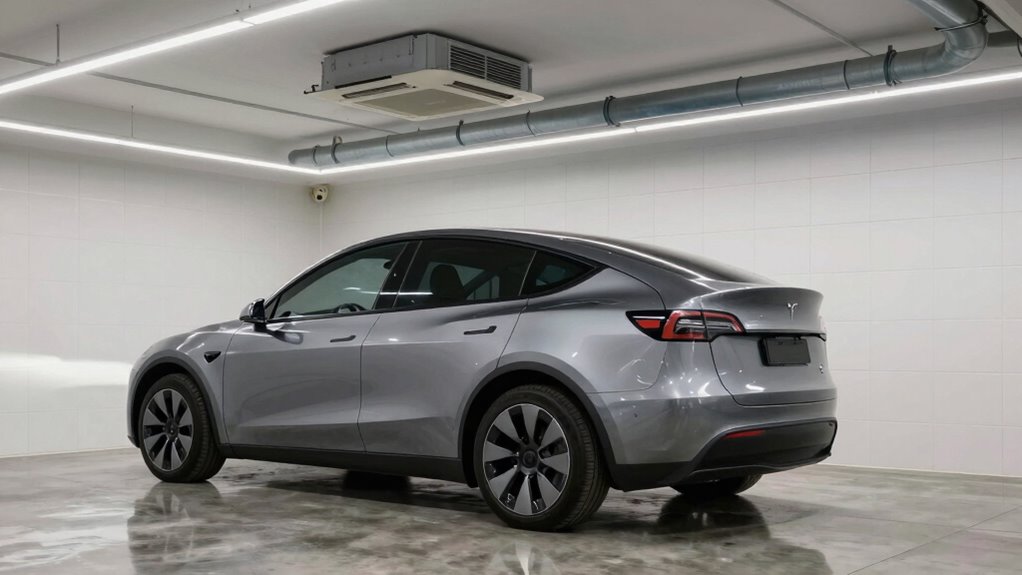
As electric vehicles become more common, guaranteeing proper garage ventilation is essential for safety. Even though EVs produce no tailpipe emissions, they still release small amounts of volatile organic compounds (VOCs) and other gases, especially during charging or if there’s a malfunction. These emissions are typically low, but they can build up in a confined garage space. Without adequate ventilation, you risk inhaling these gases over extended periods, which could cause dizziness, nausea, or more serious health problems. Proper ventilation systems help prevent this by ensuring a steady flow of fresh air, reducing the concentration of any residual gases and keeping indoor air quality at safe levels. Installing an effective ventilation system isn’t just about safety; it’s also about compliance and peace of mind. Modern garages often incorporate exhaust fans, air exchangers, or even advanced mechanical ventilation systems that automatically activate when needed. These systems are designed to remove pollutants efficiently and are particularly important if your garage is attached to your home, where air exchange is vital. You should also consider the size of your garage and the frequency of vehicle use to determine the right level of ventilation. Larger garages or those used more frequently may require more robust systems to maintain proper indoor air quality. Additionally, understanding the importance of garage ventilation can help you make informed decisions to protect your health and your investment. Proper ventilation is crucial because air quality management plays a vital role in preventing the buildup of harmful gases in enclosed spaces. Regularly inspecting and maintaining your ventilation systems ensures they work effectively. Simple measures, like opening a window during charging or using a mechanical system, can make a significant difference. Moreover, considering air exchange efficiency can help optimize ventilation performance for your specific garage setup. Staying aware of VOC emissions and their potential health impacts can further motivate the implementation of proper ventilation measures. Remember, even with an electric vehicle, good garage ventilation isn’t optional; it’s a key safeguard for your indoor air quality and overall safety. Proper ventilation not only protects your health but also extends the longevity of your garage space by reducing moisture buildup and preventing mold growth.
Top picks for "garage ventilation still"
Open Amazon search results for this keyword.
As an affiliate, we earn on qualifying purchases.
Frequently Asked Questions
How Often Should I Check My Garage Ventilation System?
You should check your garage ventilation system at least once every three to six months to guarantee ideal air quality. Regular ventilation maintenance helps remove any buildup of fumes or pollutants, especially with an electric vehicle that still emits some emissions during charging or if there’s a malfunction. Keep an eye on airflow and filters, and address any issues promptly to maintain a safe, healthy environment in your garage.
Are There Specific Ventilation Requirements for Different Electric Vehicle Models?
Think of your garage like a vintage radio—each model has unique needs. While electric vehicles produce fewer emissions, they still require proper ventilation to manage vehicle air exchange and prevent buildup of fumes. Specific ventilation standards may vary based on your EV model’s size and battery type. Check your vehicle’s manual and local codes to guarantee your garage’s ventilation system is tailored accordingly, keeping safety front and center.
Can Poor Garage Ventilation Affect My Electric Vehicle’s Battery Life?
Poor garage ventilation can negatively impact your electric vehicle’s battery life. Insufficient air exchange hampers battery cooling, leading to overheating and potential damage. When airflow is limited, heat builds up, reducing battery efficiency and longevity. To protect your EV, guarantee proper ventilation, promoting effective air exchange and helping maintain ideal battery temperature. Good ventilation is essential for prolonging your vehicle’s battery health and overall performance.
What Signs Indicate My Garage Ventilation System Is Failing?
Your garage ventilation system is like a vigilant guardian, and signs of failure include persistent garage odor and moisture buildup. If you notice a musty smell or damp spots on the walls or floor, it indicates poor air circulation. Also, condensation on windows or surfaces suggests inadequate ventilation. These issues can harm your EV’s battery and promote mold growth, so addressing ventilation problems promptly keeps your garage safe and healthy.
Are There DIY Methods to Improve Garage Air Circulation With an EV?
Yes, you can improve your garage air circulation with DIY methods. Start by installing exhaust fans or vent openings to promote airflow, and make sure to keep these clear of obstructions. Use portable fans to direct air outside, especially when charging your electric vehicle. Regularly open windows and doors to boost ventilation, and consider adding a carbon monoxide detector for safety. These simple steps help maintain better air quality in your garage.
Conclusion
Just as Icarus soared too close to the sun, neglecting safety can lead to unintended consequences. With electric vehicles becoming more common, your garage’s ventilation isn’t just a detail—it’s essential. Proper airflow guarantees you’re not risking silent dangers lurking in the shadows, much like the hidden perils of hubris. So, don’t let complacency be your downfall; prioritize good ventilation today, and keep your home and loved ones safe from the quiet hazards that still exist.