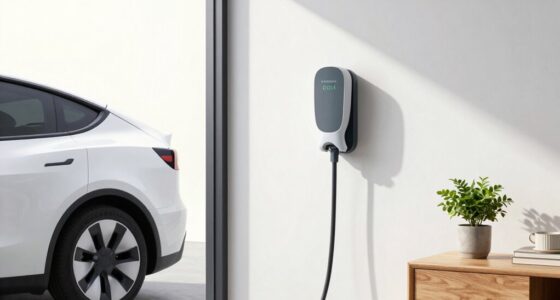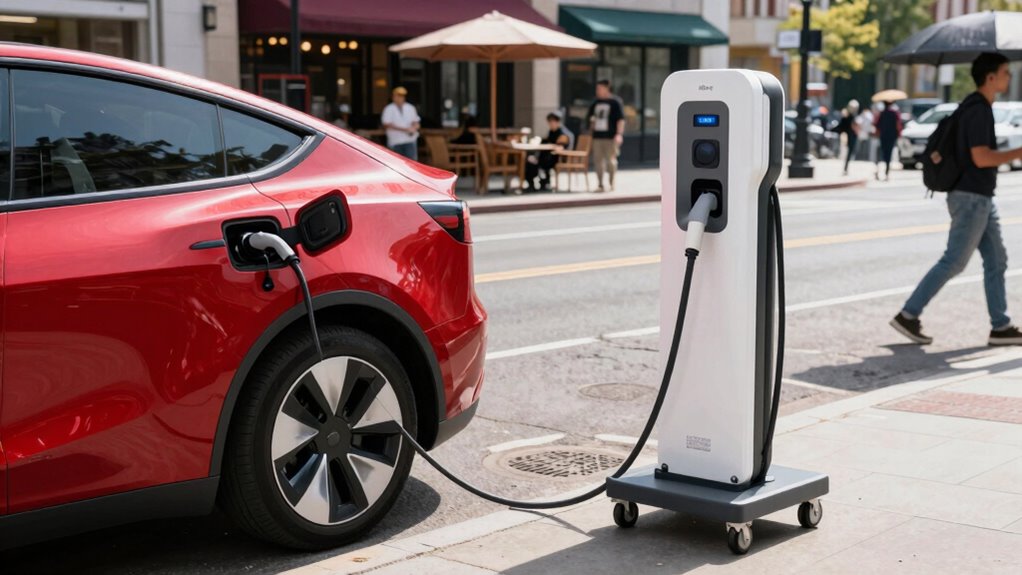
If you don’t have a garage, you can still charge your EV easily by utilizing public charging stations, which are found throughout cities, shopping centers, and highways, often available 24/7. Carry a portable charger for emergencies and topping up at public spots or workplaces. Use apps and navigation tools to locate chargers and plan your trips around charging needs. Staying informed about local options helps manage your EV charging routine effectively—there’s much more to discover beyond these tips.

Get backup power and energy gear delivered free with Prime
- Fast, free delivery on millions of items
- Prime Video, Amazon Music and more included
- Member-only deals all year
Key Takeaways
- Utilize public charging stations at shopping centers, workplaces, and highways for convenient, regular charging.
- Carry a portable charger for emergencies and situations with limited access to public chargers.
- Plan trips around available charging stations using apps for real-time location and availability updates.
- Opt for fast chargers when possible to reduce charging time and stay mobile.
- Incorporate a mix of public stations and portable chargers into your routine for flexible, home-independent charging.

Charging your electric vehicle without a garage can seem challenging, but there are practical solutions available. You don’t need a private garage to keep your EV charged; instead, you can rely on public charging stations and portable chargers to stay powered up. Public charging stations are scattered throughout cities, shopping centers, and along highways, making them a convenient option for daily charging or long trips. Many of these stations are accessible 24/7 and vary in charging speeds, from Level 2 chargers to rapid DC fast chargers, so you can pick the best fit for your schedule. Using public stations means you can simply plug in your vehicle while running errands or during work hours, ensuring your EV remains ready to go without needing a dedicated home setup.
Public charging stations offer convenient, 24/7 options for keeping your EV powered without a private garage.
In addition to public charging stations, portable chargers give you even more flexibility. These compact devices are designed to be portable, allowing you to carry them in your trunk or a bag. With a portable charger, you can charge your EV from standard power outlets, including those at public rest stops, cafes, or even your friend’s house. While portable chargers typically charge at slower rates compared to dedicated station chargers, they are invaluable for emergency situations or when you’re on the move and no public stations are nearby. They also give you the peace of mind that you can top up your vehicle whenever needed, without relying solely on public infrastructure. Incorporating charging infrastructure knowledge can help you better understand the different options available and optimize your charging strategy.
To maximize convenience, it’s worth researching charging station locations near your daily routes and work. Smartphone apps and EV navigation tools help you locate nearby public charging stations, check real-time availability, and sometimes even reserve a spot. This way, you can plan your trips to include charging stops, minimizing the risk of running low on power. Many public chargers now support contactless payments, making the process straightforward. Some workplaces and shopping centers also offer free or paid charging options for employees and customers, so take advantage of those when possible. Additionally, understanding the different charging speeds available can help you better plan your charging needs for efficiency. Recognizing the importance of charging options can empower you to choose the most suitable methods for your lifestyle.
Ultimately, handling EV charging without a garage involves combining public charging stations and portable chargers into your routine. By staying informed about your local charging infrastructure and carrying a portable charger for backup, you can confidently manage your EV’s needs without the traditional home setup. It’s all about making smart choices and utilizing the resources available, so you can enjoy the benefits of electric driving without the hassle of a private garage.
As an affiliate, we earn on qualifying purchases.
Frequently Asked Questions
Can Public Charging Stations Fully Meet Daily Charging Needs?
Public charging stations can meet your daily charging needs if you plan carefully, but they might not always be enough. You’ll want to contemplate home installation options for convenience and reliability. Also, practice good charging etiquette at stations, like moving your vehicle promptly after charging, to help others. Relying solely on public stations could be challenging during peak times, so combining both options often works best for daily EV charging.
Are There Portable Charging Options Available for Outdoor Use?
Imagine a sunny day when you realize you forgot to charge your EV overnight. Portable chargers with outdoor compatibility are available, making this moment less stressful. These portable chargers are designed for outdoor use, allowing you to charge your vehicle conveniently without a garage. You can easily carry them, connect at various locations, and guarantee your EV stays ready for daily drives, no matter where you find yourself.
How Do I Find Reliable Public Charging Networks?
To find reliable public charging networks, start by using apps like PlugShare or ChargePoint, which show accessible stations nearby. Pay attention to charging station accessibility and guarantee they’re compatible with your vehicle. Follow charging etiquette by occupying a station only as long as needed, and be considerate of others. Regularly check station status updates to avoid surprises, and consider joining membership programs for added reliability and perks.
What Safety Precautions Should I Take With Outdoor Chargers?
When using outdoor chargers, prioritize indoor safety by guaranteeing the charging station is properly installed and grounded. Protect the charger from weather exposure with weatherproof covers or enclosures, especially during rain or snow. Always inspect cables and connectors for damage before use, and avoid charging in wet conditions. Keep the area clear of debris, and follow manufacturer instructions to ensure safe, reliable outdoor EV charging.
Can Solar Panels Be Used to Charge an EV Without a Garage?
Did you know that solar panels’ efficiency has increased by over 20% in recent years? Yes, you can use solar panels to charge your EV without a garage, especially when paired with battery storage. This setup allows you to store excess solar energy for later use, making charging more reliable. Properly installed, outdoor solar panels can efficiently power your EV, giving you a sustainable, garage-free charging solution.
As an affiliate, we earn on qualifying purchases.
Conclusion
Without a garage, you can explore public charging stations, install a wall-mounted charger outdoors, or use portable chargers to keep your EV powered. Each option offers convenience, flexibility, and peace of mind. Embrace the variety, navigate the options, and adapt to your lifestyle. Whether you’re parking on the street, in a driveway, or at a community lot, your choices can keep you moving smoothly, reliably, and confidently—no garage required.
As an affiliate, we earn on qualifying purchases.
As an affiliate, we earn on qualifying purchases.
Halloween Picks
halloween
As an affiliate, we earn on qualifying purchases.