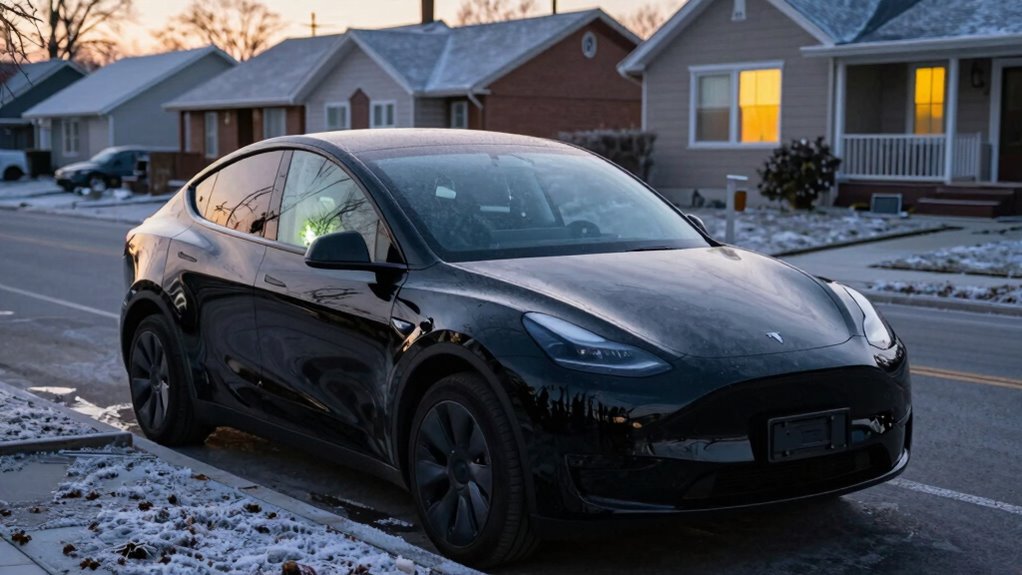

To make cold-morning EV driving easier, start by preconditioning your vehicle while it’s still plugged in to warm the battery and cabin. Keep your tires properly inflated and switch to winter tires for better traction on icy roads. Drive cautiously, slow down, and increase your following distance to stay safe on slippery surfaces. Regularly check your battery health and avoid fast charging in extreme cold to preserve capacity. Want more tips? Stay tuned to learn how thermal management can further improve your cold-weather driving experience.
Key Takeaways
- Precondition your EV and cabin remotely while plugged in to warm the battery and interior before driving.
- Keep the battery’s charge above 20% to maintain efficiency and avoid capacity loss in cold weather.
- Switch to winter tires for better traction on icy or snowy roads.
- Drive slowly, increase following distance, and avoid sudden maneuvers on slippery surfaces.
- Regularly check tire pressure and ensure proper tire inflation for optimal grip and safety.

Driving your electric vehicle on cold mornings can be challenging, but with the right preparation, you can start your day with ease. Cold weather affects your EV’s performance, especially when it comes to battery life and tire traction. Taking proactive steps helps guarantee your vehicle runs smoothly and safely, even when temperatures drop.
First, focus on battery maintenance. Cold weather reduces your battery’s efficiency because chemical reactions inside the cells slow down. To combat this, try preconditioning your vehicle while it’s still plugged in. Many EVs allow you to heat the battery and cabin remotely through an app, so you can warm up your car before you step outside. This process helps preserve battery charge and improves overall range. Additionally, keep your battery’s state of charge above 20%. A fuller battery performs better in the cold, so avoid letting it drain to very low levels. Regularly check your battery health and ensure your charging routine adapts to winter conditions—charging a bit more frequently may help maintain peak performance. Also, avoid rapid or frequent fast charging during extreme cold, as it can strain the battery and accelerate capacity loss. Battery preconditioning can significantly improve your EV’s cold-weather performance.
In addition, understanding thermal management systems in EVs can help you better optimize battery temperature regulation, further enhancing efficiency in cold climates. Moreover, maintaining a healthy battery temperature through proper preconditioning and system checks can extend your vehicle’s range and longevity. It’s also beneficial to keep an eye on cold-weather driving tips, which encompass best practices for operating your EV safely and efficiently in low temperatures.
Tire traction is equally critical for safe driving in winter. Cold temperatures cause tire rubber to harden, reducing grip on icy or snowy roads. To improve traction, consider switching to winter tires, which are specifically designed to maintain flexibility and grip in low temperatures. If you’re using all-season tires, make sure they have sufficient tread depth—at least 6/32 inch—so they can better channel snow and slush. Keep your tires properly inflated; under-inflated tires lose contact with the road and compromise traction, especially in cold weather when air pressure drops. Check your tire pressure regularly and top off as needed. Slowing down and increasing your following distance also give you more control and time to react to slippery conditions. Be cautious around icy patches, and avoid sudden acceleration, braking, or sharp turns, which can cause loss of traction.
EV battery preconditioning remote app
As an affiliate, we earn on qualifying purchases.
As an affiliate, we earn on qualifying purchases.
Frequently Asked Questions
How Does Cold Weather Affect EV Battery Lifespan?
Cold weather can reduce your EV battery lifespan because low temperatures decrease battery efficiency, making it harder to hold a charge and perform well. To combat this, your vehicle’s thermal management system works to keep the battery at ideal temperatures, protecting its longevity. Regularly pre-conditioning your EV while it’s still plugged in helps maintain the battery’s health, ensuring you get the most from your battery despite the chill.
Are There Specific EV Models Better Suited for Winter Conditions?
Some EV models handle winter conditions more gracefully, giving you a smoother ride through colder months. Look for vehicles with advanced thermal management systems and quick-heating features, making your commute more reliable. Keep in mind, charging stations equipped with fast chargers and winter apparel will keep you warm and make sure your battery stays healthy. Choosing these models and preparing with the right gear makes winter driving less of a challenge.
Can Pre-Heating My EV Drain the Battery Quickly?
Pre-heating your EV can drain the battery quickly, especially if you do it without considering battery efficiency and thermal management. When you pre-heat, the system uses energy, reducing your overall range. To minimize impact, pre-condition your vehicle while it’s still plugged in, allowing the thermal management system to maintain ideal battery temperature. This way, you keep your battery efficient and preserve range during cold mornings.
What Safety Precautions Should I Take During Winter EV Driving?
Driving in winter is like steering a icy dance floor—you need to stay alert and steady. To guarantee road safety, check your tires for proper inflation and traction, and drive with gentle maneuvers to avoid skidding. Pay attention to driving ergonomics—adjust your seat and mirrors for clear visibility and comfort. Keep a safe distance from other vehicles and stay aware of changing road conditions, making your winter EV journey safer and smoother.
How Often Should I Check Tire Pressure in Winter?
You should check your tire pressure at least once a month during winter, as cold temperatures cause tire inflation to decrease. Regular pressure monitoring helps guarantee your tires stay properly inflated, improving safety and efficiency. Cold weather can lead to under-inflated tires, so it’s especially important to verify pressure before long drives. Keep a tire pressure gauge handy and adjust as needed to maintain peak performance and avoid unnecessary wear.
winter tires for electric vehicle
As an affiliate, we earn on qualifying purchases.
As an affiliate, we earn on qualifying purchases.
Conclusion
Remember, every journey starts with a single step—and in cold mornings, that first warm start makes all the difference. By preparing your EV with these tips, you’ll face chilly mornings with confidence and ease. Keep your battery charged, pre-condition your car, and plan your drive wisely. As the saying goes, “A smooth sea never made a skilled sailor.” With patience and preparation, you’ll master cold-weather driving and keep your EV running smoothly all winter long.
As an affiliate, we earn on qualifying purchases.
cold weather EV charging station
As an affiliate, we earn on qualifying purchases.
As an affiliate, we earn on qualifying purchases.