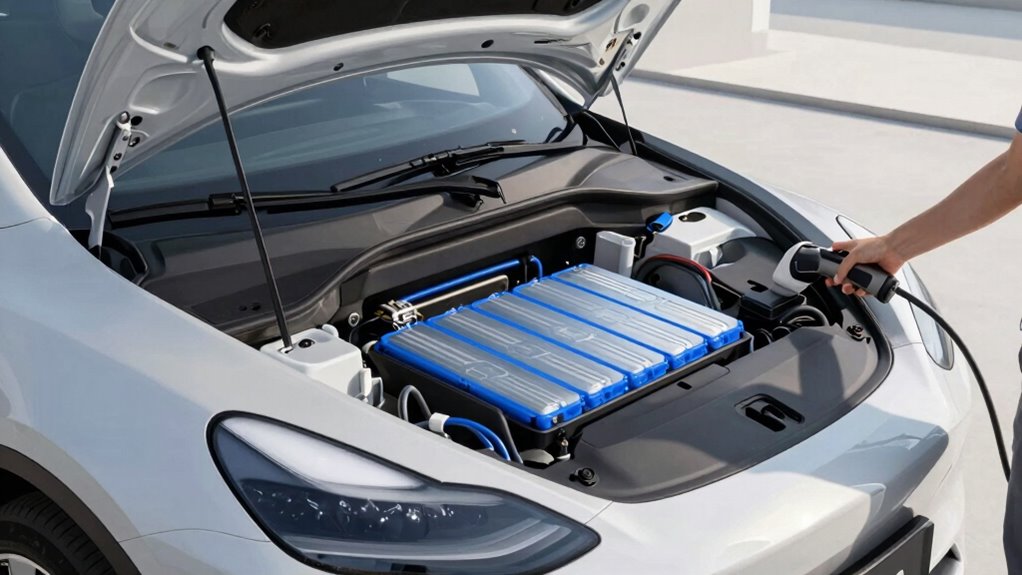

EV maintenance is simpler because electric vehicles have fewer moving parts, meaning you won’t need oil changes, spark plug replacements, or exhaust repairs. You mainly focus on battery care and charging, while routine checks are minimal. With fewer mechanical issues, you’ll spend less time and money on repairs. Plus, many updates are just software-based. Keep exploring to discover even more ways EVs make maintenance easier for you.

Get backup power and energy gear delivered free with Prime
- Fast, free delivery on millions of items
- Prime Video, Amazon Music and more included
- Member-only deals all year
Key Takeaways
- EVs have fewer mechanical parts, reducing potential failure points and routine maintenance needs.
- No oil changes or exhaust system repairs are required, simplifying upkeep.
- Regenerative braking extends brake life, decreasing repair frequency.
- Charging infrastructure and battery management lessen the need for traditional service visits.
- Maintenance primarily focuses on battery health and software updates, streamlining the process.

Electric vehicle maintenance may seem complex at first, but it’s actually quite straightforward once you understand the basics. Unlike traditional gas-powered cars, EVs have fewer moving parts, which means there’s less that can go wrong. You won’t need to worry about oil changes, spark plugs, or exhaust system repairs. Instead, your focus shifts to maintaining the battery and ensuring your charging infrastructure is dependable. Battery longevity is a vital factor in keeping your EV running smoothly, and with proper care, your battery can last for many years. Regularly monitoring your battery’s health and avoiding extreme charging habits can extend its life and save you money in the long run. Since EV batteries are built to withstand thousands of charge cycles, you don’t need to worry about frequent replacements if you follow recommended practices.
Maintaining your EV’s battery and charging setup is key to hassle-free, long-lasting electric vehicle ownership.
Charging infrastructure plays a key role in simplifying EV maintenance. Unlike gas cars that require visits to fuel stations, EV owners benefit from an expanding network of charging points. Home charging stations make it convenient to plug in your vehicle overnight, while public chargers are becoming more widespread, offering faster and more accessible options. This reduces the need for frequent trips to service centers for fuel or oil, streamlining your routine. Additionally, many EVs include advanced battery management systems that monitor charge levels and temperature, alerting you to potential issues before they become serious. This proactive approach minimizes maintenance surprises and keeps your vehicle in prime condition.
Another advantage is the simplicity of routine checks. EVs generally require less frequent maintenance—no oil changes, no brake fluid replacements, and fewer parts to inspect. Braking systems tend to last longer thanks to regenerative braking, which recovers energy and reduces wear on brake components. When you do need to service your EV, it’s usually straightforward, often involving software updates or battery health assessments rather than complex repairs. Plus, EVs tend to have fewer mechanical problems overall, meaning fewer trips to the repair shop and less time spent on maintenance.
In essence, EV maintenance is less about constant upkeep and more about monitoring the health of your battery and ensuring your charging setup remains dependable. With the right approach—keeping an eye on battery longevity and utilizing the expanding charging infrastructure—you’ll find that owning and maintaining an EV is not only simpler but also more convenient than traditional gas-powered vehicles. As technology advances, maintenance becomes even easier, making EV ownership a hassle-free experience.
As an affiliate, we earn on qualifying purchases.
Frequently Asked Questions
How Often Do EV Batteries Need Replacement?
EV batteries typically last between 8 to 15 years, depending on usage and climate, with many maintaining good performance beyond that. You won’t need frequent replacements thanks to their long battery longevity. Replacement frequency is generally low, often only when the battery starts to degrade considerably or shows signs of failure. Proper maintenance, avoiding extreme temperatures, and regular charging help prolong your EV battery’s lifespan, reducing the need for early replacements.
Are EVS Less Costly to Insure Than Gas Cars?
You’ll find EVs are generally less costly to insure than gas cars, with some studies showing up to 20% lower insurance premiums. This is mainly due to fewer moving parts and reduced repair expenses, which also lead to lower maintenance costs. Insurance costs for EVs tend to be more predictable, helping you save money long-term. So, choosing an EV can be a smart move for saving on both insurance and maintenance expenses.
What Are the Environmental Benefits of EV Maintenance?
EV maintenance offers environmental benefits like reducing emissions and promoting sustainability. You help cut pollution by avoiding oil changes and exhaust emissions, contributing to cleaner air. Plus, you can participate in battery recycling programs that minimize waste and recover valuable materials. Regular EV upkeep ensures longer battery life and peak performance, further reducing environmental impact. Overall, maintaining your EV supports emission reduction efforts and promotes eco-friendly transportation choices.
How Does EV Maintenance Affect Resale Value?
Ever wondered how EV maintenance impacts resale value? By maintaining your EV properly, you preserve battery longevity and guarantee the vehicle remains reliable, which boosts resale value. A well-kept EV with a solid charging infrastructure shows buyers it’s been cared for, making it more appealing. Since EVs typically have fewer moving parts, maintenance costs stay lower, further increasing resale potential. Isn’t that a smart investment for your future?
Do EVS Require Special Tools for Maintenance?
Yes, EVs often require special tools for maintenance, especially for routine diagnostics and servicing high-voltage components. These tools help guarantee safety and precision when working with sensitive electric systems. However, many routine checks, like tire rotations or brake inspections, don’t need specialized equipment. Overall, while some tools are unique to EVs, their maintenance remains straightforward, reducing complexity compared to traditional gas-powered vehicles.
electric vehicle battery monitor
As an affiliate, we earn on qualifying purchases.
As an affiliate, we earn on qualifying purchases.
Conclusion
Switching to an electric vehicle simplifies your maintenance routine considerably. For example, imagine you own an EV and only need to check the brakes and tire pressure regularly, unlike gas cars that require oil changes and engine tune-ups. This straightforward upkeep not only saves you time but also reduces costs over time. Embracing EVs means fewer visits to the mechanic and more peace of mind, making your driving experience smoother and less stressful.
As an affiliate, we earn on qualifying purchases.
As an affiliate, we earn on qualifying purchases.
Fall Picks
fall essentials
As an affiliate, we earn on qualifying purchases.