
TL;DR
This article explains how local AI tools can transform one source video into a full suite of publishing assets—transcripts, social snippets, articles, and media kits—without needing cloud services. It highlights the benefits of offline processing, ownership, and multi-format outputs for creators seeking control over their content pipeline.
Imagine finishing a video and immediately getting a package of ready-to-publish assets—transcripts, social snippets, articles, thumbnails, and more—without ever uploading to the cloud. Sounds like a dream? It’s becoming real with local AI tools that handle everything on your machine. This approach puts you in the driver’s seat, giving you privacy, control, and speed—especially when handling sensitive or proprietary content. Learn more about how offline tools give you control.
In this article, you’ll learn how a single source video can become a full publishing kit—delivered straight from your local machine. We’ll explore how offline AI processing changes workflows, what a complete publishing kit looks like, and why more creators are choosing to keep their content off the cloud. Buckle up—this isn’t just a tech update. It’s a shift in how you manage, publish, and own your work.
Key Takeaways
- A single source video can generate a full suite of publishing assets—transcripts, snippets, articles, and media kits—using local AI processing.
- Offline tools like ChannelHelm protect your privacy and give you instant control, avoiding delays and risks associated with cloud services.
- Creating a comprehensive publishing kit improves consistency, speeds up launches, and reduces manual editing across multiple platforms.
- While local AI requires good hardware and quality input, it offers unmatched reliability and customization for serious creators.
- Start small: use open-source tools, organize your files, and gradually build your own offline publishing workflow.
![WavePad Audio Editing Software - Professional Audio and Music Editor for Anyone [Download]](https://m.media-amazon.com/images/I/B1fcLEGCs6S._SL500_.png)
WavePad Audio Editing Software – Professional Audio and Music Editor for Anyone [Download]
- Professional Audio Editing: Record and edit music, voice, and audio
- Audio Effects: Add echo, noise reduction, reverb, and more
- Wide Format Support: Supports WAV, MP3, FLAC, OGG, and others
As an affiliate, we earn on qualifying purchases.
As an affiliate, we earn on qualifying purchases.
What’s a ‘Publishing Kit’ and Why It Changes Everything
A ‘publishing kit’ is the set of assets you assemble before launching a book, video series, or product. Think high-res covers, metadata files, marketing snippets, and formatted files for different platforms. For creators, it’s the difference between a chaotic scramble and a smooth launch.
Take a YouTube creator preparing a new series. They need a compelling thumbnail, social posts, article drafts, and, of course, the video itself in multiple formats. Traditionally, this meant juggling many tools, uploads, and manual edits. Now, imagine all that packed into one automated process, generated from a single video file, ready for distribution on YouTube, TikTok, Instagram, and email newsletters.
This shift isn’t just about convenience. It’s about consistency, control, and speed. When everything’s built into a single workflow, you reduce errors, keep your branding tight, and speed up your launch cycle.


YouTube for Authors: How to Use Video to Sell More Books and Build Your Brand (Self-Publishing with Dale Book 8)
As an affiliate, we earn on qualifying purchases.
As an affiliate, we earn on qualifying purchases.
How Local AI Transforms Your Workflow — Fast, Private, and Reliable
Local AI tools like ChannelHelm run entirely on your machine. No cloud, no external servers. This means faster processing, because data doesn’t need to travel over the internet. Discover more about reliable automotive tech tools. It also means your content stays private—no third-party servers storing your raw footage or proprietary scripts.
Imagine you’re editing a sensitive product launch video. With cloud AI, you’d worry about leaks or delays. With local processing, you control every step. You drop your video into the software, and it analyzes the audio and visuals—detecting scene changes, reading on-screen text, and understanding the context—all offline.
Plus, this setup offers reliability. You’re not dependent on internet speed or service outages. If your connection drops, your work continues uninterrupted. And you can process videos anytime, anywhere—perfect for remote or mobile workflows.
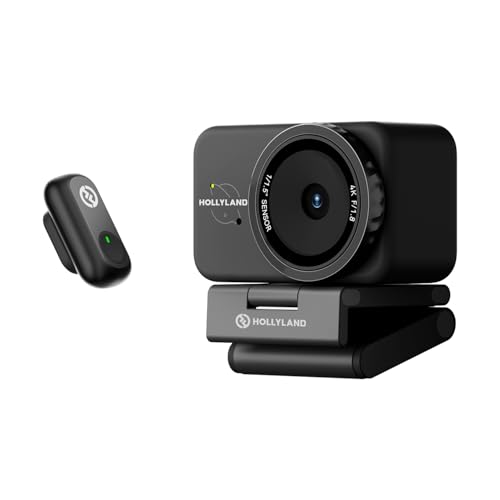
Hollyland Lyra 4K Webcam with 1/1.5" Sensor, 50MP PDAF Autofocus, AI Tracking & Auto-Framing, Direct Wireless Mic Support, Privacy Shutter, PC/Mac Camera for Zoom, TikTok & Streaming
- 4K Ultra HD Resolution: Captures stunning 4K video at 30fps
- Large 1/1.5" CMOS Sensor: Provides superior low-light performance
- 50MP Lens with f/1.8 Aperture: Ensures sharp, high-quality images
As an affiliate, we earn on qualifying purchases.
As an affiliate, we earn on qualifying purchases.
From One Video to a Full Range of Assets — The Step-by-Step Process
Here’s how a creator can turn one video into a complete publishing kit with local AI: Learn about creating comprehensive publishing kits offline.
- Drop or link: Insert your raw video file or paste a YouTube link into the tool. It automatically detects the source and prepares for analysis.
- Understand: The AI transcribes the audio, detects scene cuts, reads on-screen text, and fuses these layers into a structured scene log.
- Generate assets: Based on this understanding, it drafts titles, descriptions, social snippets, article summaries, and media assets like thumbnails—ready for review.
- Review & Edit: You check the drafts in a dedicated workspace, make adjustments, regenerate assets if needed, and approve.
- Distribute: The system packages everything in one folder—editable, branded, and ready to upload across platforms.
Within minutes, you transform a single raw video into a launch-ready set of materials—no cloud, no waiting.


AI Social Media Content Generator For Real Estate Agents: A Prompt-to-Post AI Playbook for Social Posts, Reels, Local Marketing, Lead Follow-Up, Open … … Advantage for Real Estate Agents Series)
As an affiliate, we earn on qualifying purchases.
As an affiliate, we earn on qualifying purchases.
The Power of One Package for Multiple Platforms
One video, many assets, many platforms. That’s the promise of a unified publishing package. For example, a YouTube video can generate: Explore how to efficiently publish across multiple channels.
- A detailed transcript for blogs or captions
- Multiple social snippets tailored for Twitter, Instagram, TikTok, and LinkedIn
- Thumbnail concepts aligned with the hook moments
- A set of metadata—titles, tags, categories—optimized for each platform
- Short vertical clips for reels, Shorts, and TikTok
- An article draft or newsletter summary
This isn’t just automation; it’s strategic repurposing. You get consistent messaging across channels, faster content rollout, and less manual editing.
Imagine launching a product with a handful of files and then turning that into a media blitz—without endless uploads or format conversions. It’s about owning your content, not renting it from a platform.

Privacy and Control: Why Offline Processing Matters
Running AI locally means you keep your content private. No data leaves your machine. This is a game-changer for sensitive projects—think confidential interviews, proprietary product demos, or unpublished manuscripts. Find out how automotive tools support privacy and control.
In a world increasingly wary of data privacy, many creators prefer staying offline. It’s also about control. When you own your tools and files, you avoid vendor lock-in and streamline your workflow.
For example, a self-publishing author preparing a launch kit for a new book can work entirely offline—drafting metadata, cover images, and promotional content—without exposing their work to third-party servers. Once finished, they can upload the assets directly to their chosen platform.

Comparing Cloud vs. Local AI for Content Creation
| Feature | Cloud AI | Local AI |
|---|---|---|
| Processing Speed | Dependent on internet speed, can be slow during peak hours | Fast, instant processing once data is in |
| Privacy | Data leaves your device, potential security risks | Data stays on your machine, full control |
| Reliability | Depends on internet connection; outages disrupt workflow | Independent of internet; always available |
| Customization | Limited to platform features | Highly customizable with local tools and integrations |
| Cost | Subscription-based, ongoing payments | One-time purchase or open-source options |
Choosing between cloud and local AI depends on your priorities—speed, privacy, or flexibility. For creators handling sensitive or proprietary content, local AI offers peace of mind and control.
Limitations & Risks: When Offline AI Isn’t Perfect
While local AI offers privacy and speed, it’s not without challenges. Transcription accuracy depends on the quality of your audio and visuals. Complex visuals or noisy backgrounds can trip up even the best models.
Editing time can increase if you need to fine-tune outputs. And, of course, the hardware matters—powerful processors, ample RAM, and decent storage speed make a difference.
For example, a creator working on a noisy outdoor shoot might find the transcription less precise, requiring manual correction. But despite these hurdles, the tradeoff often favors control and privacy, especially for sensitive projects.

Getting Started: Tools and Tips for Building Your Offline Publishing Engine
Ready to give this a try? Start with tools like ChannelHelm. It’s open-source, designed for local processing, and supports a wide range of assets and outputs. Installation typically requires a decent computer—think 16GB RAM and a multi-core processor.
Here are quick tips:
- Use high-quality audio recordings to improve transcription accuracy
- Organize your source files with clear folder structures
- Leverage the software’s preview and editing features to refine outputs
- Keep your hardware and software updated for best performance
- Regularly back up your assets to prevent data loss
Building your own offline publishing engine isn’t just feasible—it’s empowering. It means owning your content pipeline and safeguarding your work’s privacy.
Frequently Asked Questions
Can I generate all my marketing assets from one video?
Yes. Modern local AI tools can produce transcripts, social snippets, articles, thumbnails, and metadata from a single source video, streamlining your entire launch process.
Does it need internet connection for AI features?
No. Once installed, many tools like ChannelHelm run entirely offline, ensuring privacy and reducing dependence on internet speed.
What file formats can I export?
You can typically export in formats suitable for editing and publishing—such as MP4, PNG, JPEG, DOCX, and plain text—making it easy to integrate into your existing workflow.
Is it suitable for authors or only video creators?
It’s ideal for both. Authors can generate book launch assets, and video creators can craft multi-platform campaigns—anyone who needs to automate content repurposing while maintaining control.
How accurate is the transcription and summarization?
Accuracy depends on audio quality and complexity. High-quality recordings yield near-human precision, but manual review is recommended for critical content.
Conclusion
Owning your content pipeline starts with control. With local AI, you turn one video into a full publishing kit—entirely offline, private, and tailored to your brand. That’s more than convenience; it’s the future of creator independence.
Imagine a workspace where every asset is crafted on your terms, ready to go live without waiting for cloud processing or risking leaks. That’s the new standard. Will you take the leap and build your own offline publishing engine?