
In EV batteries, kilowatts (kW) measure how quickly energy is delivered, impacting acceleration and charging speeds, while kilowatt-hours (kWh) show the total energy stored, influencing your driving range. The State of Charge (SOC) indicates how full the battery is at a given moment, affecting how far you can go. Understanding these terms helps you optimize your EV’s performance and longevity; exploring further reveals how they work together for your driving experience.
Key Takeaways
- Kilowatt-hours (kWh) measure the battery’s total energy capacity, indicating how far an EV can travel on a full charge.
- Kilowatts (kW) represent the power output rate, affecting how quickly the vehicle accelerates and charges.
- State of Charge (SOC) shows the current remaining energy in the battery, similar to a fuel gauge.
- Higher kWh means longer driving range, while higher kW allows faster acceleration and charging.
- Battery management systems monitor kWh, kW, SOC, and other factors to ensure safety and optimize performance.
What Is Power and How Is It Measured in EV Batteries?

Power in EV batteries refers to the rate at which they can deliver energy to the vehicle, enabling acceleration and high-speed driving. It’s measured in kilowatts (kW) and reflects how quickly your battery can provide energy when needed. Good battery management is essential for maintaining *ideal* power output, preventing overheating, and ensuring safety. When you accelerate or drive at high speeds, the battery’s power output becomes more apparent, highlighting the importance of efficient battery management systems. Additionally, power influences charging speed—higher power ratings often allow faster charging, reducing downtime. Understanding this helps you appreciate how your EV delivers performance and how well the battery manages energy flow during demanding driving conditions. Proper battery performance is crucial for maximizing vehicle efficiency and longevity. Efficient power distribution ensures the battery operates optimally under various driving conditions, contributing to the overall health of the EV. Moreover, power management systems play a key role in balancing performance with safety and durability, and their effectiveness is vital for maintaining optimal battery health. Maintaining optimal thermal regulation of the battery is essential for consistent power delivery and prolonged lifespan.
Understanding Energy Capacity: The Role of KWh
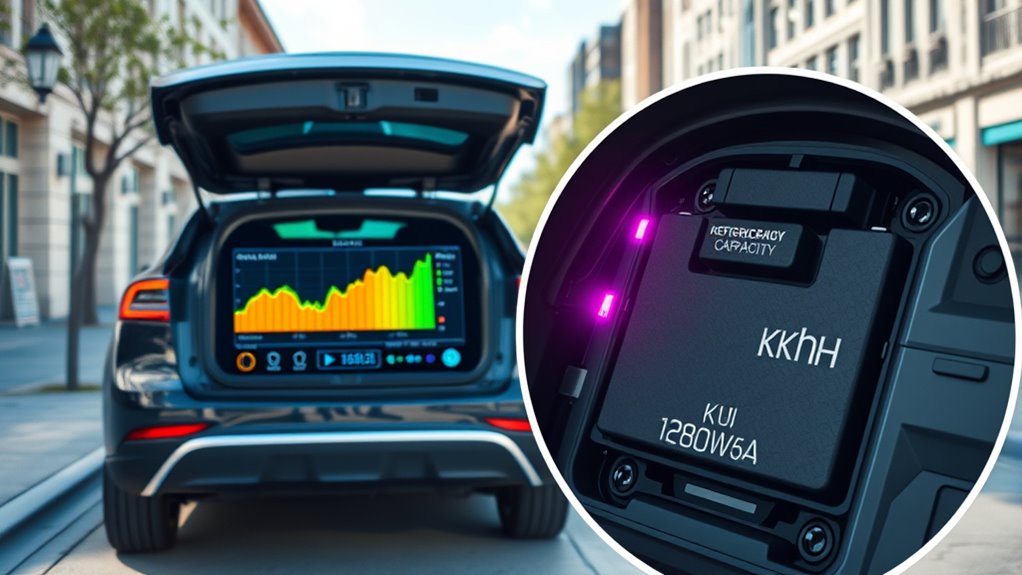
Have you ever wondered what determines how far an electric vehicle can go on a single charge? The key is its energy capacity, measured in kilowatt-hours (kWh). This number reflects how much energy the battery can store, influenced by battery chemistry and design. The higher the kWh, the more energy it holds, enabling longer trips. Keep in mind, charging cycles—how often you recharge—affect battery health and capacity over time. Regular charging cycles can slightly diminish the total energy capacity, but modern batteries are built to last. Here’s a simple breakdown:
| Aspect | Impact | Explanation |
|---|---|---|
| Battery Chemistry | Determines energy density | Affects kWh capacity |
| Charging Cycles | Affects long-term capacity | More cycles can reduce capacity |
| Energy Storage | Directly impacts range | Higher kWh = longer driving range |
Additionally, advancements in battery technology continue to improve energy retention and longevity, making electric vehicles more reliable over their lifespan. Some modern batteries also benefit from thermal management systems, which help maintain optimal operating temperatures and enhance performance and durability.
The Concept of State of Charge and Why It Matters
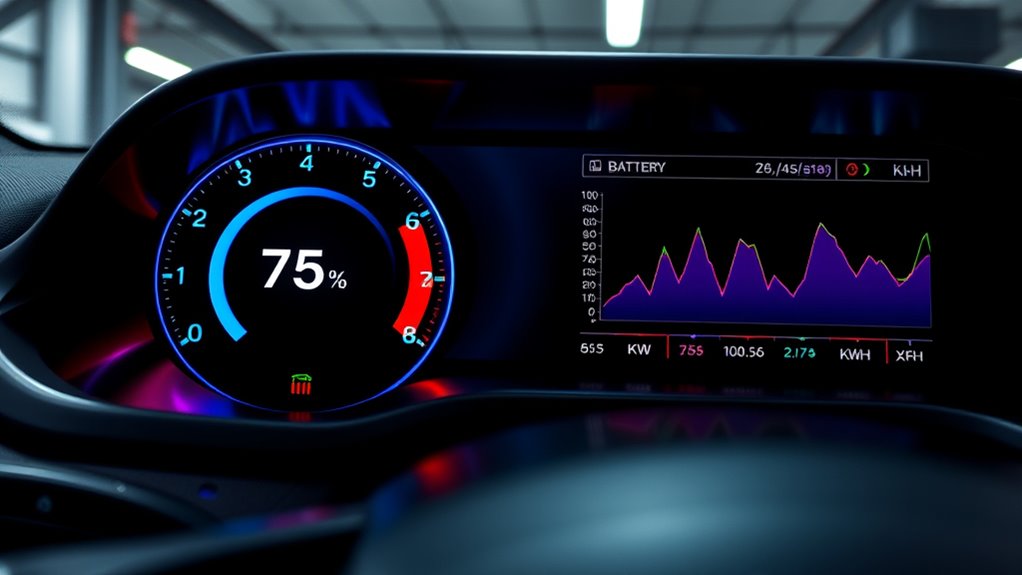
Understanding how much energy a battery holds is just the beginning; knowing how much of that energy is available for use depends on the battery’s current charge level, called the state of charge (SOC). Your SOC indicates how full or empty the battery is, directly affecting driving range. As your battery ages, its capacity diminishes, and maintaining ideal SOC becomes even more important to ensure efficiency. Charging efficiency influences how quickly and effectively you can restore the SOC, with some energy lost during charging. Monitoring your SOC helps prevent overcharging or deep discharging, both of which can accelerate battery aging. Additionally, smart gear and proper management practices can help optimize battery performance and longevity. Keeping the SOC within recommended levels maximizes battery lifespan and ensures you get the most reliable performance from your EV. Implementing advanced monitoring tools can further improve the accuracy of SOC readings and help maintain optimal battery health. Being aware of battery capacity and how it changes over time is essential for making informed charging and usage decisions. Regularly assessing battery health can provide early warnings of capacity loss and help plan maintenance. Maintaining proper SOC levels also involves understanding how battery aging impacts overall performance and capacity over the vehicle’s lifespan.
How Power and Energy Ratings Affect Driving Range and Performance

Your vehicle’s driving range and overall performance are directly influenced by its energy and power ratings. Higher energy capacity (kWh) means you can travel farther before recharging, enhancing battery longevity and reducing charging frequency. Meanwhile, power ratings (kW) determine how quickly your vehicle accelerates and handles demanding driving conditions. Consider these points:
- A larger kWh battery improves range but may require more robust charging infrastructure for faster recharges.
- Higher kW power ratings boost acceleration and performance, especially in demanding situations, but can impact battery longevity if used excessively. Battery management systems play a crucial role in maintaining optimal health during such use.
- Balancing energy and power ratings ensures an ideal driving experience while maintaining battery health and supporting charging options.
- Understanding the importance of battery capacity helps you select an EV that aligns with your driving needs and charging capabilities. Additionally, knowing how power-to-energy ratio affects vehicle behavior can optimize your driving experience, ensuring better efficiency and safety.
Understanding these ratings helps you choose the right EV for your driving habits, maximizing range and performance.
Common Terms and Units Used in EV Battery Specifications

EV batteries are rated using specific terms and units that help you understand their capacity, power, and performance. Key terms include kilowatt-hours (kWh), which measure energy capacity, and kilowatts (kW), indicating charging or discharging power. State of charge (SOC) shows how much energy remains, vital for battery management systems that optimize lifespan and safety. When evaluating a vehicle, consider the charging infrastructure compatibility—higher kW ratings mean faster charging. Battery management plays a vital role in maintaining health and efficiency, monitoring temperature, voltage, and SOC. Knowing these terms helps you choose the right EV based on your driving needs, charging options, and long-term performance expectations. Understanding battery capacity and specifications ensures you get the most out of your electric vehicle. Clear understanding of these specifications ensures you get the most out of your electric vehicle, especially when it comes to battery longevity and overall system performance. Additionally, familiarizing yourself with charge time estimation can help plan your daily routines more effectively.
Frequently Asked Questions
How Does Temperature Affect EV Battery Performance?
Temperature considerably impacts your EV battery performance through thermal effects. When it’s too cold, your battery’s chemical reactions slow down, reducing range and charging speed. Conversely, high temperatures can cause overheating, degrading battery life. Effective temperature management keeps your battery within an ideal range, ensuring consistent performance and longevity. Proper thermal regulation helps you maximize efficiency, safety, and battery health, regardless of weather conditions.
What Is the Difference Between Cycle Life and Calendar Life?
Cycle life refers to how many complete charge and discharge cycles your EV battery can handle before its performance drops markedly, while calendar life is the total time your battery lasts regardless of usage. Battery degradation occurs over both, affecting capacity and range. Knowing these helps you understand warranty coverage, as manufacturers usually set limits based on cycle count or calendar years, whichever comes first.
How Do Fast Chargers Impact Battery Longevity?
Fast charging can accelerate battery degradation if used frequently, as it generates more heat and stress on the battery cells. While it’s convenient for quick top-ups, relying heavily on fast chargers may shorten your EV’s battery lifespan. To protect your battery, try to limit fast charging sessions and opt for slower charges when possible. Proper usage helps maintain battery health and prolongs overall longevity.
What Are the Safety Features Related to EV Batteries?
Did you know that EV batteries are equipped with multiple safety features? Battery safety is prioritized through advanced thermal management systems that prevent overheating, reducing fire risks. Many batteries also include safety disconnects and sensors to detect faults or abnormal temperatures, automatically shutting down or isolating the battery if needed. These safeguards guarantee your EV remains safe, reliable, and efficient, even during extreme conditions.
How Does Battery Aging Influence Capacity and Range?
Battery aging causes capacity fade, which means your EV’s overall range decreases over time. As your battery undergoes degradation, it can’t hold as much charge, leading to reduced driving distance between charges. You might notice shorter trips or needing to recharge sooner. Regular use, high temperatures, and charging habits accelerate this process. Ultimately, understanding battery degradation helps you plan better and maintain your EV’s performance longer.
Conclusion
Think of your EV battery like a fuel tank—you want enough capacity to reach your destination without running out. Understanding kW and kWh is like knowing your engine’s power and how far it can take you. Just as a full tank gives peace of mind on a long trip, a well-understood battery helps you drive confidently, knowing you’re topped up and ready to go. Master these terms, and you’ll navigate your EV journey with confidence.