Your EV’s range of 300 miles can drop considerably due to factors like cold or hot weather, driving styles, terrain, and carrying extra cargo. Rapid acceleration, high speeds, or hilly roads use more energy, while rough surfaces and vehicle modifications increase resistance. Weather and load can cut your distance by 20-40%, making real-world range less predictable. Continue exploring to uncover how to better manage these variables and get closer to your ideal range.
Key Takeaways
- Weather extremes, like cold or heat, can reduce EV range by 20-40%, making 300 miles less achievable.
- Real-world driving habits, such as rapid acceleration and high speeds, significantly lower actual range.
- Terrain and road conditions, like hills or rough surfaces, increase energy use and reduce mileage.
- Additional cargo, roof racks, or modifications increase drag and decrease achievable distance.
- Official range estimates are based on ideal tests, often overestimating real-world performance.
The Impact of Weather Conditions on Range
Weather conditions considerably affect your EV’s range, often more than you might expect. Cold temperatures reduce battery efficiency, forcing your vehicle to use more energy for heating and decreasing available capacity by 20-30% or more in extreme cold. This means you’ll get fewer miles out of a full charge. Conversely, hot weather increases energy consumption for air conditioning and cooling systems, which can cut your range by about 20%, especially in desert climates. Moderate temperatures between 50°F and 88°F help your EV perform at its best, maximizing range. Seasonal shifts and sudden weather changes also impact your driving distance. Both cold and hot extremes cause your battery to work harder, reducing efficiency and shortening your overall range. Battery performance is a critical factor that can vary significantly with weather, influencing your vehicle’s real-world driving distance.
How Driving Habits Influence Actual Distance
Your driving habits have a significant impact on how far your EV can go on a single charge. Accelerating quickly and driving at high speeds consume more energy, reducing your range. Maintaining steady speeds, ideally under 100 kph, helps maximize efficiency. Frequent stop-and-go driving activates regenerative braking, which recovers some energy and can extend your distance slightly. Using heating or air conditioning during drives also drains the battery faster, lowering your overall range. Smooth, predictable driving habits can boost your achievable distance by up to 32%. Conversely, aggressive driving and unnecessary acceleration waste energy. Planning routes to avoid heavy traffic and limiting sudden stops can make a noticeable difference. Your driving style directly influences how many miles you get from each charge, so mindful habits matter. Being aware of aerodynamic factors such as driving in a streamlined manner can further improve your EV’s efficiency. Additionally, driving position and maintaining proper tire pressure also play crucial roles in optimizing range and reducing energy consumption. Employing efficient driving techniques, like coasting to decelerate instead of braking abruptly, can also help conserve battery power and extend your range. Incorporating driving habits that focus on gradual acceleration and deceleration can significantly boost your EV’s overall efficiency. Practicing eco-friendly driving habits consistently can lead to measurable improvements in your vehicle’s range over time.
Terrain and Road Surface Effects on Battery Life
The type of terrain and road conditions you encounter can markedly influence your EV’s battery life and overall range. Steep inclines demand more energy, cutting your range by up to 30%. Conversely, downhill stretches let you recover energy through regenerative braking, boosting efficiency. Poor road surfaces—wet, snowy, or rough—increase rolling resistance, causing your battery to work harder and reducing distance. Flat, smooth roads help maximize your vehicle’s efficiency, giving you the best possible range. Carrying extra cargo or passengers adds weight, further draining the battery. Here’s what to keep in mind:
- Uphill drives eat up more power, lowering range.
- Downhill segments can recover some energy.
- Rough or slippery surfaces increase resistance and energy use.
- Proper tire maintenance and inflation also play a crucial role in maintaining optimal vehicle efficiency and extending your range. Additionally, driving behavior such as acceleration habits can significantly impact energy consumption. Being mindful of terrain variations can help you plan routes that preserve your EV’s battery life. Regularly monitoring your vehicle’s battery health can also ensure optimal performance over time. Incorporating efficient driving techniques can further maximize your vehicle’s range and longevity.
The Role of Vehicle Load and Aerodynamics
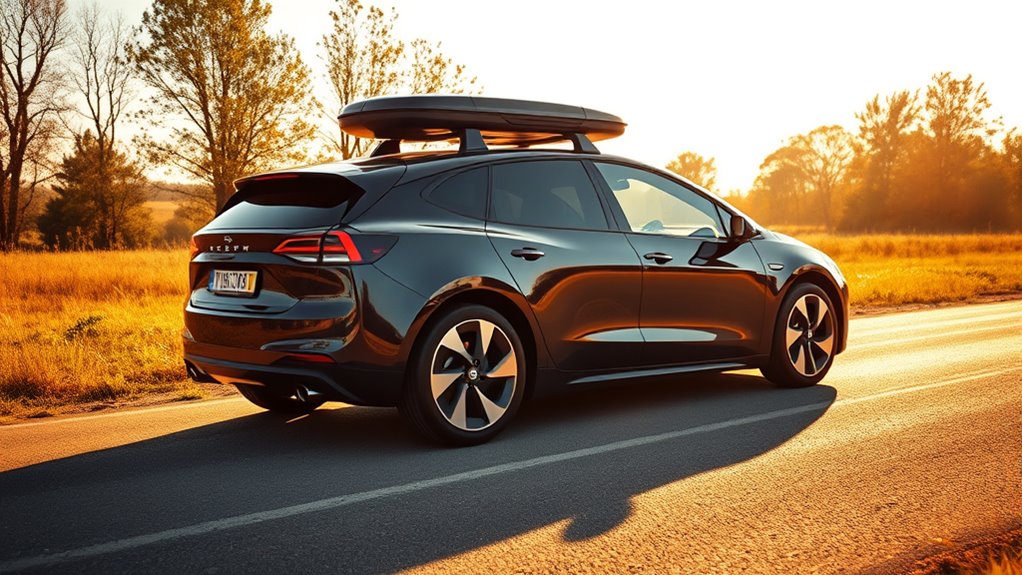
Vehicle load and aerodynamics play a crucial role in determining your EV’s range because added weight and less streamlined shapes increase energy consumption. When you carry extra cargo, passengers, or use roof racks, your vehicle requires more power to move. Similarly, modifications like larger wheels or accessories that disrupt airflow raise drag, forcing your battery to work harder. The table below highlights how different factors impact efficiency:
| Load & Accessories | Effect on Range | Example Impact |
|---|---|---|
| Extra passengers or cargo | Decreases range by up to 15% | Long trips with full car |
| Roof racks or carriers | Increases drag, reduces range | Traveling at highway speeds |
| Larger, less aerodynamic wheels | Boosts rolling resistance | Sporty modifications |
| Vehicle modifications | Raise aerodynamic drag | Spoilers, bike racks |
Understanding these factors helps you plan better and optimize your EV’s performance.
Variability in Range Testing and Real-World Results
Range estimates from testing procedures can vary markedly from real-world results due to differences in driving conditions and measurement methods. You might see a vehicle rated at 300 miles, but actual range depends on factors like weather, driving style, and terrain. Here are some key reasons:
- Testing Standards: Different tests, like WLTP in Europe or EPA in the U.S., use varied methods, so estimates aren’t directly comparable.
- Ideal Conditions: Advertised ranges assume perfect conditions — no cold, no hills, steady speeds — which rarely match everyday driving.
- Real-World Variability: Your actual range fluctuates based on temperature, traffic, load, and driving habits, often falling short of official figures.
Managing Expectations for Your EV’s Performance

Since real-world conditions often differ from official estimates, managing your expectations is key to avoiding surprises with your EV’s performance. Understand that environmental factors like cold or hot weather can cut your range by 20-40%, so plan for less than the rated distance. Your driving style matters—aggressive acceleration and high speeds drain the battery faster, while smooth, moderate driving extends range. Terrain also plays a role; hills and rough roads increase energy consumption, especially uphill. Additional payload or aerodynamic modifications can further reduce efficiency. Remember, official range figures are often based on ideal tests, not everyday driving. Moreover, Free Floating techniques in planning routes can help optimize your driving conditions and conserve battery life. Staying aware of battery management techniques can further improve your overall range and efficiency. By staying aware of these variables, you can set realistic goals, plan trips accordingly, and avoid frustration when your EV’s actual range doesn’t match the advertisements.
Frequently Asked Questions
How Does Battery Age Affect Actual EV Range Over Time?
As your EV battery ages, your range drops because it loses about 2% of its capacity annually. This means you won’t get the same distance as when it was new. Over time, the battery’s ability to hold charge diminishes, so you’ll notice shorter trips between charges. To manage this, keep an eye on your battery’s health and plan for slightly more frequent charging as it gets older.
Can In-Car Temperature Controls Significantly Reduce Range During Driving?
Imagine your EV’s battery as a delicate garden that needs sunlight to thrive. When you turn on in-car temperature controls, it’s like shading that garden, blocking essential energy from reaching the plants. This process can sap your battery’s strength, shrinking your range considerably—up to 20-30% in extreme conditions. So, yes, using climate controls during driving can drain your battery faster, reducing how far you can go.
Do Different Brands or Models Have Consistent Real-World Ranges?
Different brands and models don’t have consistent real-world ranges. You’ll find that factors like battery health, weather, driving habits, and terrain affect each vehicle uniquely. Some EVs perform better in certain conditions, while others may fall short of their rated range. So, don’t rely solely on manufacturer estimates; instead, consider real-world experiences and environmental influences when planning your trips to guarantee you meet your range expectations.
How Do Charging Habits Impact Long-Term Battery Health and Range?
Charging habits are the steering wheel of your EV’s long-term health and range. If you often charge to 100%, you’re pushing your battery to its limits, causing faster degradation. Instead, keeping charges between 20-80% acts like a gentle hand guiding your battery’s lifespan. Regularly fast charging can heat up the battery, shortening its life. Smart, balanced charging preserves your range and keeps your EV running smoothly for miles to come.
What Are the Best Strategies to Maximize EV Range in Cold Climates?
To maximize your EV range in cold climates, precondition your vehicle while plugged in to warm the battery and cabin. Drive smoothly at moderate speeds, avoid aggressive acceleration, and minimize use of heating to reduce energy drain. Keep tires properly inflated and remove unnecessary cargo to lessen weight. Consider using seat heaters instead of cabin heating and park in sheltered spots to shield from cold, all helping your EV go farther.
Conclusion
Remember, your EV’s range can vary considerably based on factors like weather, driving style, and terrain. For example, extreme cold can reduce range by up to 40%, so don’t rely solely on the advertised 300 miles. By understanding these variables, you can better manage expectations and plan your trips accordingly. Stay mindful of real-world conditions, and you’ll enjoy a smoother, more reliable EV experience—because range isn’t just about the numbers on paper, but how you use your vehicle every day.